Challenger – Tractors, Sprayers, Combines & More
Browse the complete Challenger model lineup across large-scale arable farming, crop protection, and harvesting equipment. Explore by series and year, compare specifications, and find verified active listings from sellers worldwide.

About Challenger
Challenger began with an idea that the tractor industry had largely dismissed: that rubber tracks could replace wheels on a large-scale farming machine without sacrificing the ground speed, road capability, and operator comfort that made wheeled tractors the default choice for commercial production agriculture. When Caterpillar introduced the Challenger 65 in 1987, it proved the concept definitively. The machine's rubber belt track system delivered dramatically lower ground pressure than conventional tires, reduced soil compaction across the full width of the field, and maintained traction in wet conditions that brought wheeled tractors to a standstill – without the ride quality penalties that steel-tracked crawlers imposed on operators working long days across large acreage. The concept was not a niche proposition. It addressed real agronomic and productivity problems that serious grain producers had been working around for years. When AGCO acquired the Challenger brand from Caterpillar in 2002, it inherited both the technology and the customer base that the original machine had built – a following concentrated in the largest commercial grain operations in North America, Australia, and the major arable regions of Europe and South America, where field scale and soil management justify the investment in track technology. Today Challenger is a brand of AGCO Corporation, headquartered in Duluth, Georgia, alongside Fendt, Massey Ferguson, and Valtra. The current lineup spans rubber track and wheeled tractors across a wide horsepower range, self-propelled sprayers, combines, and hay equipment – a breadth that has expanded considerably since the original single-product focus on the rubber track tractor. The MT series rubber track tractors remain the brand's most recognizable machines and the ones for which Challenger commands the strongest brand loyalty among operators who have experienced the agronomic and productivity benefits that track technology delivers at commercial scale. Equipment is sold through AGCO's dealer network across over 140 countries, with the brand's strongest market presence in North America, Australia, and the major grain-producing regions of Europe and South America.
Founded
1987
Headquarter
Duluth, GA, USA
Categories
6
Models in database
25
Active listings
4Browse Challenger by category
All equipment categories Challenger manufactures, with model counts per segment.
No image
Tracked Tractors (2 Tracks)
No image
Articulated 4WD Tractors
Combines
No image
Row Crop Tractors
No image
Self-Propelled Sprayers
Popular Challenger models
Most viewed and most listed Challenger equipment on JumboBee this month.
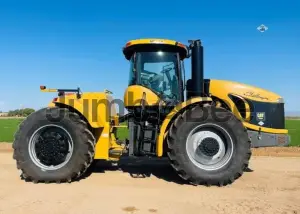
2009 Challenger MT955B Articulated 4WD Tractors
350 hp
18872 kg
3353 mm × 1117.6 mm × 2413 mm
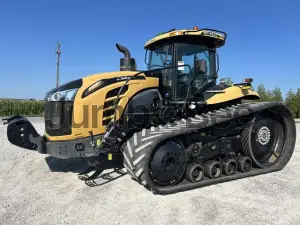
2020 Challenger MT865E Tracked Tractors (2 Tracks)
540 hp
19321 kg
6700 mm × 3710 mm × 3400 mm
4 Challenger units listed right now
Ready to buy a Challenger? Browse active listings from verified sellers worldwide — filter by series, year, hours, and location. Financing and global shipping supported.
2
Tracked Tractors (2 Tracks)
1
Articulated 4WD Tractors
1
Miscellaneous Farm Attachments & Parts
Heavy equipment insights from JumboBee
October 5, 2026
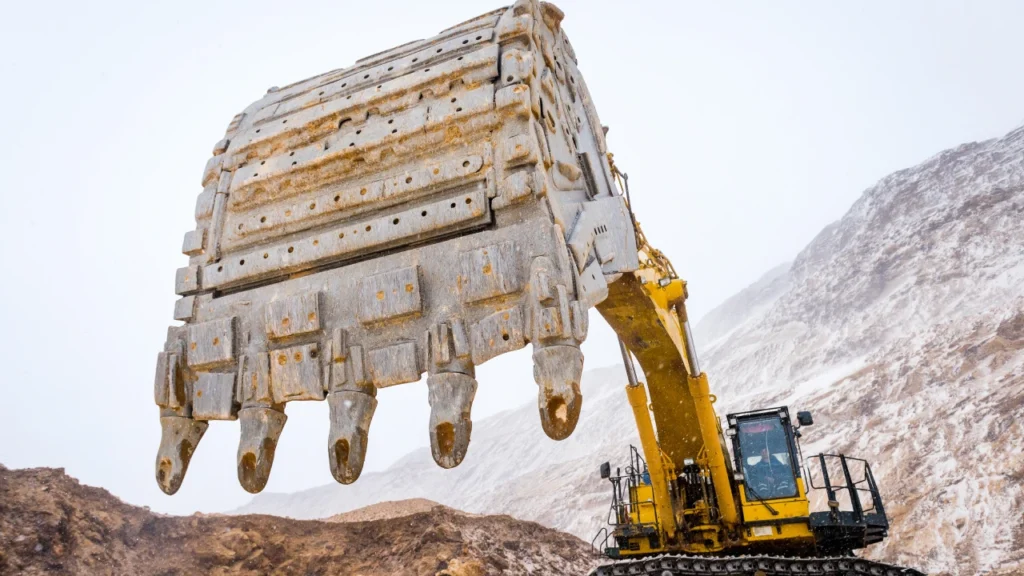
How to Choose the Right Excavator Bucket: Types, Sizes, and Contractor Buying Guide
This guide covers excavator bucket types, capacities, compatibility, and how to choose the right bucket for your jobsite.
September 28, 2026
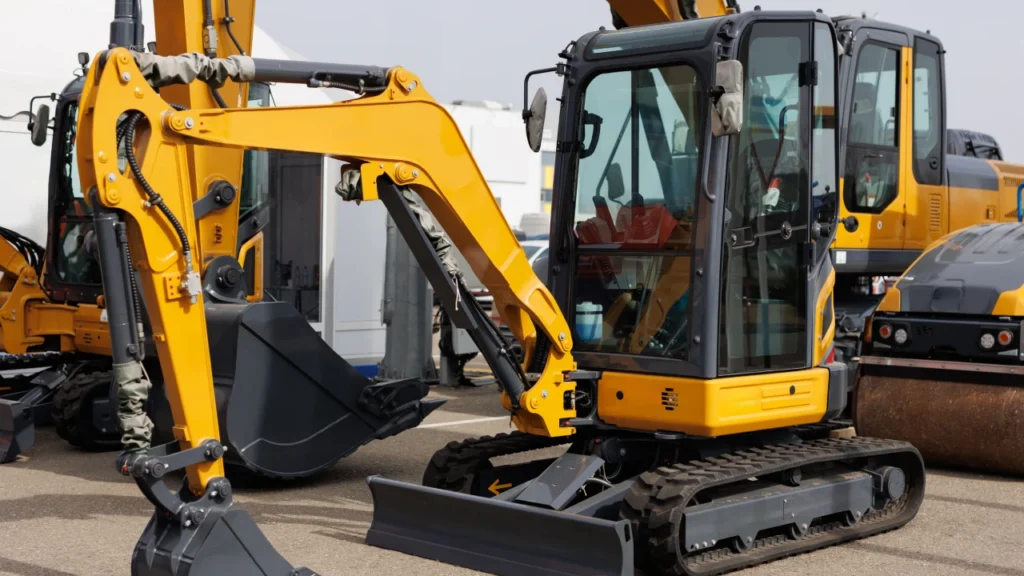
Mini Excavator Buying Guide 2026: Best Models, Sizes and How to Choose
This guide breaks down everything you need to know about compact earthmoving equipment.
September 21, 2026
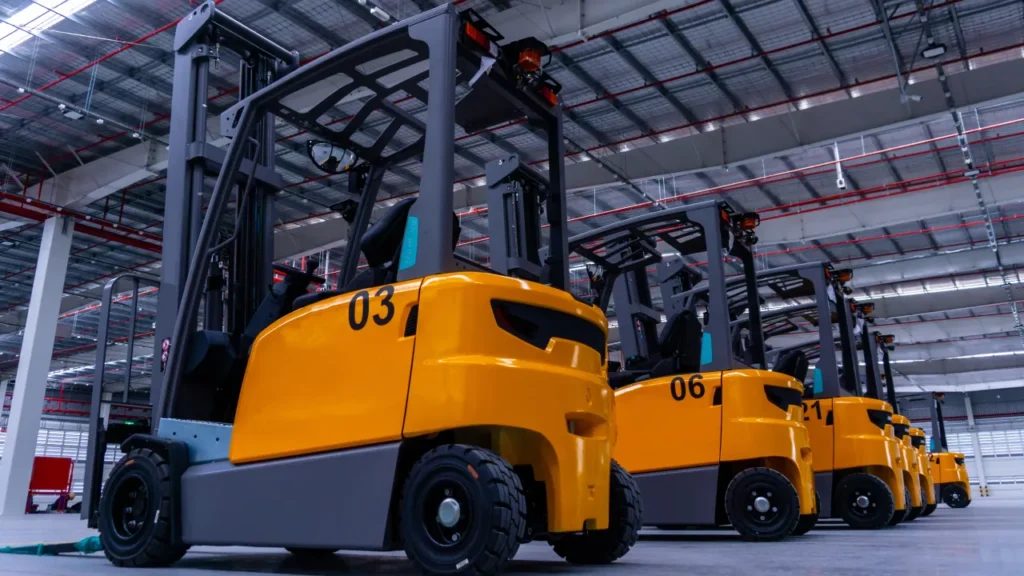
Types of Forklifts: Complete Guide to Classes, Uses, and Applications
This guide covers official forklift classes, physical machine variations, and load capacities.
August 25, 2026
Repair, Rebuild or Replace Heavy Equipment: 2026 Cost-Based Decision Guide
This guide provides a mathematical approach to help you decide what to do with your aging machinery in 2026.
July 31, 2026
How to Inspect Used Heavy Equipment Remotely: Practical Checklist for International Buyers
This article provides a practical, step-by-step guide for evaluating machinery without physical access.
July 10, 2026
New vs Used Heavy Equipment in 2026: Cost, Risk, ROI & When Each Option Wins
This guide explores new vs. used machinery investments, from costs and risks to financing and ROI.
Got Questions?
Our FAQ section covers everything from shipping and listing to buying with confidence.
What is the average price of a Challenger machine?
Challenger pricing is anchored by the MT series rubber track tractors, which command a consistent premium over wheeled tractors of equivalent horsepower – a premium that reflects the track system's agronomic value and the smaller pool of available used machines relative to conventional competitors. Older, higher-hour MT series machines in operational condition can be found from around $60,000, while mid-life MT700 and MT800 series tractors with serviceable track systems and reasonable hours commonly run from $150,000 to $350,000 depending on horsepower, age, and specification. Late-model, low-hour MT900 series machines from large commercial operations push from $300,000 to $600,000 or more depending on configuration and documented service history. Wheeled tractors in the MT500 and related series sit closer to the pricing of equivalent AGCO platform machines – typically $50,000 to $200,000 depending on horsepower and age. Self-propelled sprayers in the Rogator series run from $80,000 for older, operational examples to $400,000 for recent, low-hour machines with current precision application technology. Track condition is the single most important value driver for MT series tractors on the used market – a machine with significant track wear or undercarriage issues can require $30,000 to $80,000 in remediation before it is fully productive, a cost that needs to be reflected in the acquisition price.
How can I search for a specific Challenger model?
Type the model name or series directly into the search bar, or start from the Challenger manufacturer page and filter by category.
Do I need to create an account to browse Challenger listings?
No. All listings and model pages are open to browse without an account. You'll only need to register when you're ready to contact a seller, save a listing, or use the platform's buyer tools.
Does the platform provide pricing or valuation guidance for Challenger equipment?
JumboBee reflects live market activity – active listings and sold machines give you a current picture of where Challenger prices are sitting across categories and model years. The MT series rubber track tractor is the brand's most consistently listed category on the platform, with enough trading volume across the MT700 and MT800 series to support reliable price benchmarking for commonly traded model years. For MT900 series machines and current-generation Rogator sprayers, which trade in smaller volumes, the platform provides useful directional pricing that buyers should complement with dealer valuations and – particularly for track tractors – professional track and undercarriage inspection before committing.
What year was Challenger founded, and are they still in production?
The Challenger brand was introduced by Caterpillar in 1987 with the launch of the Challenger 65 – the machine that demonstrated rubber track technology could work in production agriculture at commercial scale. Caterpillar developed the brand through the 1990s, expanding the tractor range and refining the rubber track system across successive generations before making the decision to exit the agricultural equipment market and selling the Challenger brand to AGCO Corporation in 2002. Under AGCO, the brand has expanded considerably beyond its original rubber track tractor focus – the Rogator self-propelled sprayer range, combine harvesters, and wheeled tractor lines have all been added to the portfolio since the acquisition. Manufacturing of current Challenger equipment is conducted through AGCO's production network, with rubber track tractors built in Jackson, Minnesota – the same facility where the original Caterpillar Challenger machines were produced. The brand remains in full production today with regular generation updates across all major categories.
What engine technology does Challenger use in its machines?
Challenger sources engines from AGCO Power – the dedicated engine manufacturing division within the AGCO group, based in Linnavuori, Finland – for its higher-horsepower MT series rubber track tractors, drawing on the same powertrain platform that supplies Fendt and Massey Ferguson's high-output tractor ranges. AGCO Power engines are engineered specifically for sustained high-load agricultural applications, with torque curves and thermal management systems calibrated for the extended full-power duty cycles that large-scale tillage and seeding operations with rubber track tractors demand. The Rogator sprayer range uses Cummins engines – a supply choice that prioritizes the broad service network availability that spray operators working across large, often remote operations require. Current production across all categories meets Tier 4 Final standards in North America and Stage V in Europe, with AGCO actively evaluating alternative fuel and electrification options across the group's product development roadmap.
What transmission and drivetrain options does Challenger offer?
Challenger's MT series rubber track tractors use CVT and powershift transmission options developed and refined specifically around the demands of track tractor operation – a use profile that differs from wheeled tractor work in ways that have direct implications for drivetrain engineering. The rubber track system's dramatically higher tractive efficiency compared to conventional tires means the transmission sees sustained high-torque demand during tillage work that powershift systems need to manage without the slippage losses that conventionally cushion drivetrain stress in wheeled machines. The PowerShift transmission available across the MT series delivers 16 speeds forward with full power shifting capability, engineered to handle the load characteristics of track tractor field work without the heat buildup that would compromise longevity in continuous operation. The Rogator sprayer range uses the same hydrostatic drive system approach as Miller Equipment's Nitro series – stepless ground speed control that maintains application rate accuracy as the machine's rate controller manages output relative to actual forward speed across variable field conditions.
What is the fuel efficiency of Challenger equipment?
Fuel efficiency in rubber track tractors is evaluated through a different lens than in conventional wheeled machines – the track system's ability to maintain consistent forward motion without wheelspin across a full tillage pass, while delivering more of the engine's output as productive work rather than tire slip loss, means that a Challenger MT tractor covering the same acreage as a comparable wheeled machine typically does so with fewer passes, less total operating time, and lower fuel cost per acre even when per-hour consumption is similar. That agronomic efficiency advantage is the fundamental economic argument for track technology in large-scale production agriculture, and it is one that used market pricing reflects in the MT series premium over wheeled alternatives. On the machine management side, AGCO's Fuse Technologies telematics platform – integrated across current Challenger production – tracks fuel consumption per machine, per field, and per operation, giving fleet managers the data to compare efficiency across equipment types and identify where operating practice or machine condition is affecting performance. When evaluating a used Challenger MT tractor, track system condition assessment and documented service history are the two most important factors after the hour meter reading – a well-maintained track system on a machine with complete service records represents a fundamentally different acquisition risk than the same hours on a machine without either.