 Buying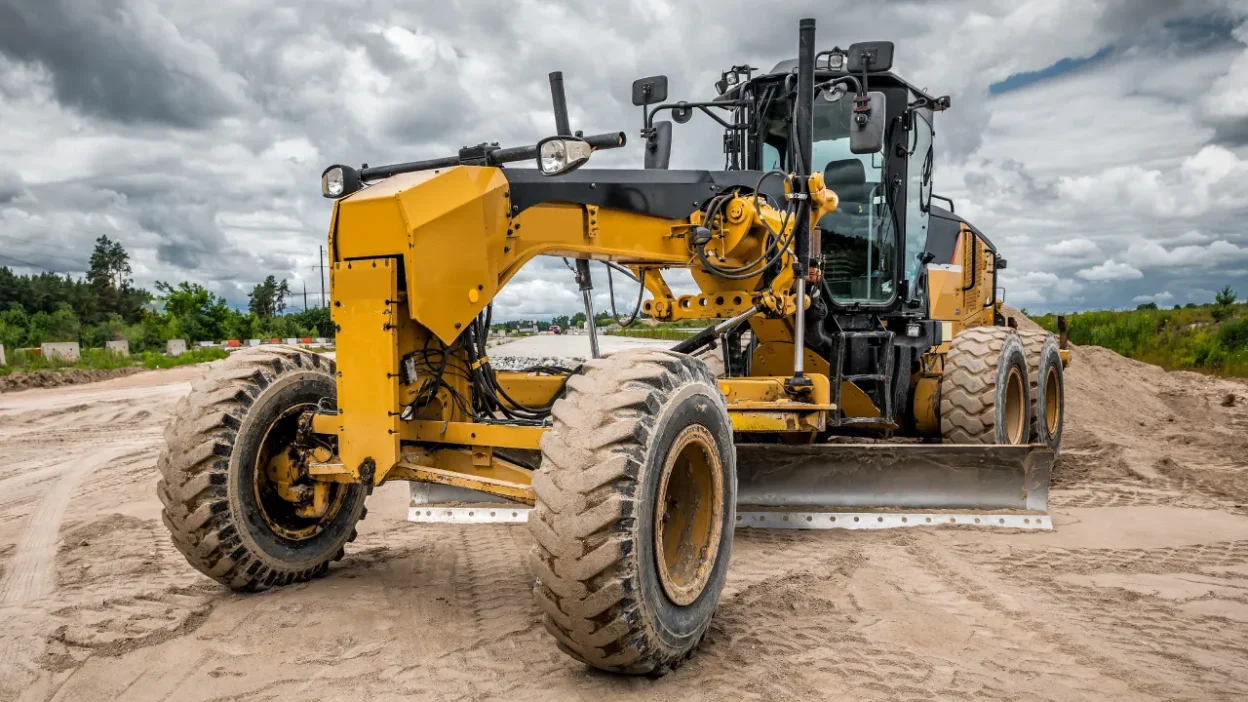
Motor graders are the ultimate precision tools of the jobsite — but they are also incredibly unforgiving. Buy the wrong size, blade configuration, or control system, and you will immediately bleed money through poor grading quality, wasted fuel, and stalled production. In 2026, tight margins and severe labor shortages mean you can no longer afford equipment mismatches.
Many buyers make the mistake of focusing strictly on horsepower, but a grader’s true value lies in blade stability, cab visibility, and articulation. Buying massive power without considering turning radius or transport limits creates instant logistical nightmares.
This comprehensive guide cuts through the marketing noise to help fleet managers, municipalities, and contractors make profitable, data-driven purchasing decisions.
Inside this guide, you will learn how to:
- Match machine size and specs to your exact jobsite requirements.
- Evaluate top motor grader brands and their specific strengths.
- Balance horsepower with crucial features like intuitive controls and operator ergonomics.
- Maximize ROI across heavy highway construction, site development, mining, and snow removal.
What Is Motor Grader and What Is It Used For?
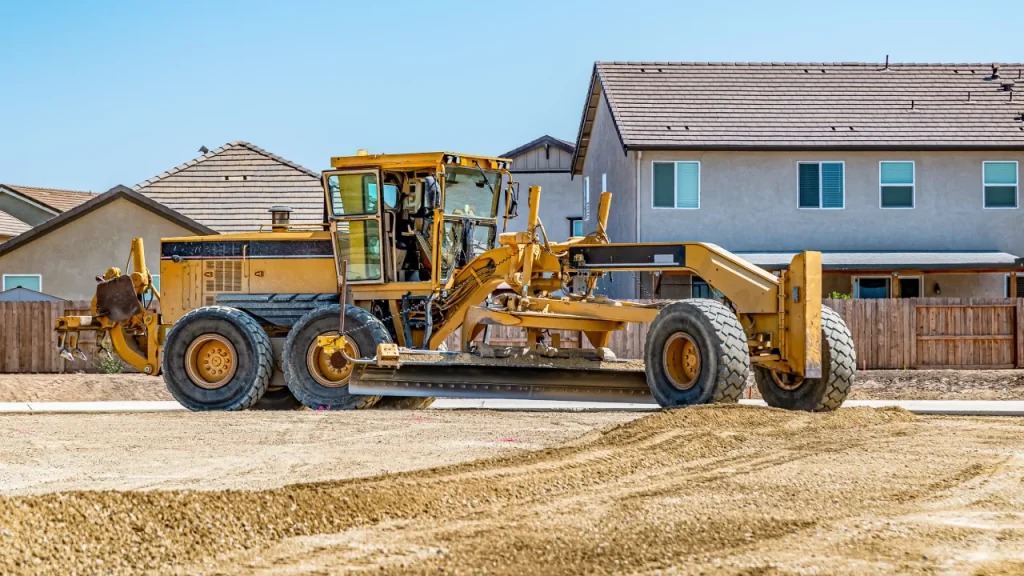
Understanding what is a motor grader requires looking past its basic appearance. A motor grader is a heavy equipment machine equipped with a long blade used to create a flat surface during the grading process. Unlike bulldozers that push massive amounts of heavy material, graders are designed for finishing work, slope control, and precision leveling.
Main machine components include:
- Moldboard or blade
- Articulation joint
- Tandem axle drive system
- Cab and operator station
- Scarifier or rear ripper
- Circle and drawbar assembly
The difference between graders and bulldozers comes down to material volume versus surface accuracy. Bulldozers excel at rough grading, clearing land, and pushing heavy dirt. Graders step in when the surface needs exact slopes, crowns, and smooth finishes.
If you ask what is a motor grader used for in modern construction, the answer revolves around precision. Motor graders are often used late in the earthmoving process where surface accuracy becomes more important than raw material movement volume.
Consider a practical calculation regarding material waste. If a contractor is laying base aggregate for a new road that is 24 feet wide and one mile long, the total surface area is 126,720 square feet. If a bulldozer is used for the final pass and leaves the base just one inch too low across the entire road, the contractor will need an extra 10,560 cubic feet (about 391 cubic yards) of paving material to make up that depth. In hot-mix asphalt, that’s roughly 765 tons.
At typical prices of $90 to $150 per ton, that single inch of inaccuracy could cost $70,000 to $115,000 in extra paving material.
Applications for these machines include:
- Road construction and paving preparation
- Road maintenance for dirt and gravel roads
- Site leveling for commercial buildings
- Ditch shaping and slope cutting
- Snow removal on highways and rural routes
- Mining haul road maintenance
- Fine grading for athletic fields
- Utility corridor preparation and finish grading over backfilled trenches
Motor Grader Sizes Explained
Choosing between different grader sizes dictates what jobs your company can bid on and how easily you can move equipment between sites. Grader sizes generally fall into three categories based on operating weight, horsepower, and physical dimensions.
Compact Motor Graders
Compact graders are highly maneuverable machines designed for tight spaces and lighter materials. They typically feature smaller frames, allowing operators to navigate around obstacles easily.
Best applications:
- Municipalities managing tight city streets
- Urban maintenance and alleyway grading
- Residential projects and driveways
- Parking lots and landscaping
- Snow removal in confined areas
These machines typically weigh under about 25,000 pounds and output roughly 60 to 140 horsepower. Because of their narrow width, they can usually be hauled within legal width limits, avoiding oversize permits.
Mid-Size Motor Graders
Mid-size graders represent the backbone of most construction fleets. They offer the perfect balance of pushing power, blade width, and maneuverability. When contractors search for the best motor grader for versatile, everyday use, they almost always look at this size class.
Best applications:
- General road construction and highway expansion
- Utility work and trench leveling
- Commercial site development
- County road maintenance and gravel spreading
Operating weights in this class typically range from about 25,000 to 50,000 pounds, with engines producing roughly 140 to 250 horsepower. They handle heavy base materials easily but remain agile enough for subdivision work.
Large Motor Graders
Large graders are massive earthmoving tools built for continuous heavy-duty operation. These machines prioritize maximum blade downforce and material moving capacity over agility.
Best applications:
- Mining haul roads and open-pit maintenance
- Large infrastructure projects and airport runways
- Quarry operations
- High-production grading in tough soil conditions
Heavy graders exceed 50,000 pounds, and the largest mining models weigh around 135,000 to 140,000 pounds. Horsepower ranges from 250 to over 500. Transporting these machines requires multi-axle lowboy trailers, pilot cars, and oversize load permits.
Motor Grader Size Chart
| Operating Weight | Horsepower | Blade Width | Transport Width | Ideal Applications |
|---|---|---|---|---|
| Under 25,000 lbs | 60 – 140 HP | 8 – 10 feet | Under 8 feet | Urban maintenance, parking lots, landscaping |
| 25,000 – 50,000 lbs | 140 – 250 HP | 12 – 14 feet | 8 – 9 feet | Road construction, county maintenance, commercial sites |
| Over 50,000 lbs | 250 – 500+ HP | 16 – 24 feet | Over 10 feet | Mining haul roads, heavy infrastructure, quarry work |
What Motor Grader Specifications Matter Most?
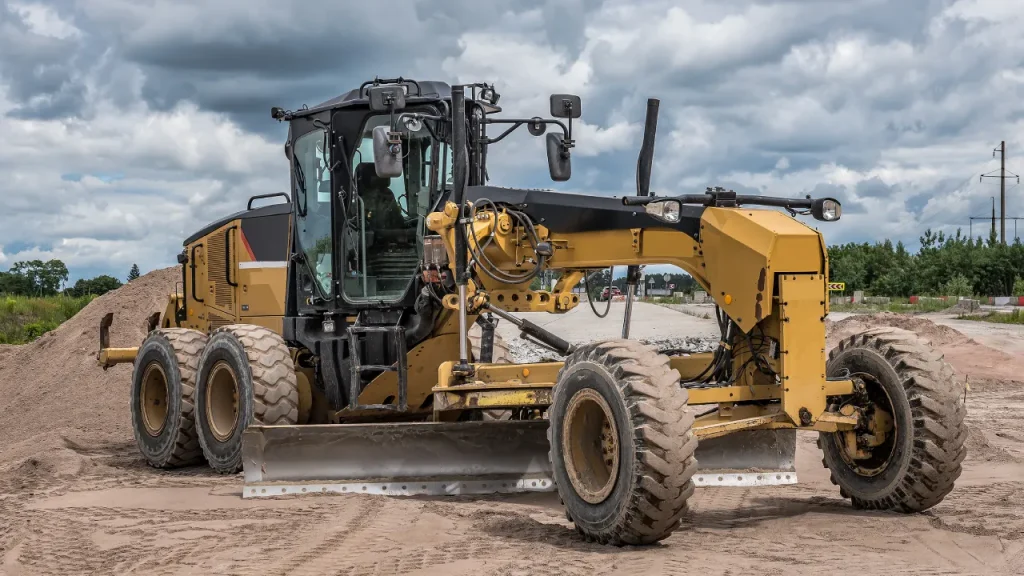
When evaluating motor grader specifications, buyers must look beyond simple engine output. The way a machine delivers power to the ground and manipulates the blade determines its true value on a job site.
Horsepower dictates how much material the machine can push without stalling or slowing down. However, horsepower must be matched with adequate operating weight. If a machine has massive horsepower but lacks weight, the tires will simply spin when the blade hits a heavy load. This balance is known as blade pull, which measures the actual force the machine can exert against the material.
Blade width determines how much surface area the machine can grade in a single pass. While a wider blade increases open-road productivity, it can reduce maneuverability and grading precision in tight urban environments.
Moldboard reach allows the operator to extend the blade outside the width of the tires. This specification is critical for cutting ditches or grading slopes while keeping the machine on flat, stable ground.
Articulation angle measures how far the rear frame can bend relative to the front axle. High articulation angles allow the machine to turn in extremely tight circles, crab-steer along slopes, and avoid obstacles.
Wheelbase and turning radius directly affect agility. A longer wheelbase provides better stability and a smoother finish on straight roads, but a shorter turning radius is necessary for residential cul-de-sacs. For example, a grader with a 24-foot turning radius needs a circle roughly 48 feet across, so it can turn around in a typical residential cul-de-sac (40- to 50-foot radius) without constant reversing, saving significant time.
Hydraulic responsiveness determines how quickly the blade reacts to operator inputs. Sluggish hydraulics lead to wavy grading patterns, especially when operating at higher speeds.
Visibility remains one of the most overlooked motor grader specifications. Operators need clear lines of sight to the heel and toe of the blade, the front tires, and the rear ripper. Poor visibility leads to operator fatigue, slower working speeds, and increased risk of job site accidents.
Cab ergonomics impact daily productivity. Features like adjustable air-ride seats, low-effort joysticks, and advanced climate control keep operators comfortable during twelve-hour shifts.
How Blade Size and Moldboard Design Affect Performance
Understanding motor grader blade size is critical because the moldboard is the primary tool of the machine. The physical dimensions of the blade dictate material rolling efficiency and overall slope grading performance.
Moldboard dimensions typically range from 12 to 14 feet for standard construction machines, though mining models can utilize blades up to 24 feet wide. The height and curvature of the blade are equally important. A properly curved moldboard creates a rolling action in the dirt. Instead of simply bulldozing material forward, the curved blade causes the dirt to tumble, mixing it thoroughly and requiring less horsepower to move.
Blade reach and blade angle allow operators to perform complex tasks like windrowing, which involves funneling loose material into a continuous ridge along the side of the machine. Proper windrowing prevents material spill control issues, keeping aggregate out of freshly graded lanes.
Fine finish work requires exceptional blade stability. If the blade chatters or bounces, it leaves ripples in the road surface. This stability comes from tight tolerances in the circle drive gear and heavy downward pressure capabilities.
Improper blade sizing can overload smaller graders and create inconsistent grading results. Installing a 14-foot blade on a lightweight machine might seem like a good way to increase coverage, but if the machine lacks the weight to hold that blade steady against hard-packed soil, the grader will bounce, and the tires will lose traction. Conversely, an oversized blade on a small machine increases operator fatigue as they constantly fight to maintain machine balance.
AWD vs Standard Motor Graders
Standard motor graders utilize a tandem drive system at the rear. The four rear wheels provide excellent traction for pushing forward, while the front wheels are used solely for steering and leaning against side drafts. For dry dirt, standard gravel roads, and flat commercial sites, standard drive machines offer plenty of pushing power and lower upfront costs.
AWD motor grader models feature hydrostatic drive motors in the front wheels, providing power to all six tires. This configuration delivers massive traction advantages.
Wet soil performance improves dramatically with AWD. When standard graders sink or spin their rear tires in mud, AWD machines can pull themselves through by engaging the front wheels.
Snow and winter operations practically demand AWD capabilities. Municipalities dealing with heavy snowpack or ice rely on the extra traction to push large snow wings and heavy V-plows without sliding off crowned roads.
Loose aggregate applications also benefit from AWD. When grading deep sand or loose gravel, the front wheels help maintain forward momentum, preventing the machine from bogging down.
Fuel consumption differences exist between the two setups. AWD systems require extra hydraulic flow, which draws more power from the engine and burns more fuel. Additionally, the maintenance complexity of AWD systems is higher. Front wheel drive motors, extra hydraulic lines, and complex sensors require specialized servicing.
WD typically adds roughly 10% to 15% to the purchase price, though the premium varies by brand and model. However, for municipalities and contractors operating in snow or soft ground conditions, AWD may significantly improve year-round machine utilization, easily justifying the higher ownership and maintenance costs. An AWD machine handles heavy snow, ice, and soft spring ground more reliably, keeping it productive in conditions where a standard machine may struggle.
| Feature | Standard Motor Graders | AWD Motor Graders |
|---|---|---|
| Drive System | Rear tandem drive only (front wheels just steer/lean) | Power to all 6 wheels (front hydrostatic drive motors) |
| Ideal Applications | Dry dirt, standard gravel roads, flat commercial sites | Wet soil/mud, snow/ice, deep sand, loose aggregate |
| Traction | Excellent rear pushing power | Massive overall grip; front wheels pull machine forward |
| Fuel Consumption | Lower | Higher (due to extra hydraulic flow requirements) |
| Maintenance | Standard complexity | Higher complexity (extra front motors, lines, sensors) |
| Upfront Cost | Baseline cost | 10% to 15% higher than standard models |
| Year-Round ROI | Good in dry conditions; less effective in heavy snow and soft ground | Higher in snow and soft-ground regions; stronger winter utilization |
Modern Grade Control Systems and Operator Technology
The integration of grade control systems has revolutionized the earthmoving industry. In the past, achieving perfectly flat surfaces or exact slopes required decades of operator experience. Today, technology bridges the gap between novice operators and master graders.
GPS grading systems use satellite positioning to track the exact location and elevation of the blade in real-time. The system compares the blade position to a digital 3D model of the job site loaded into the cab monitor.
Laser grading systems utilize a rotating laser transmitter set up on the job site. Receivers mounted on the grader blade detect the laser beam, providing extreme accuracy for flat surfaces like concrete preparation or athletic fields.
Automatic blade control takes this technology a step further. Instead of just showing the operator where the blade should be, the integrated machine control system automatically raises, lowers, and tilts the blade to match the design plan. The operator simply steers the machine and manages speed.
Slope assist features allow operators to set a specific cross-slope percentage. The machine will automatically maintain that exact slope regardless of terrain changes, freeing the operator to focus on material flow and obstacles.
Reduced rework is the biggest financial benefit of these systems. Grading a road twice because the first pass was inaccurate wastes fuel, labor, and machine hours. Grade control ensures the job is done right the first time.
Productivity improvements are massive. Manufacturers and contractors commonly report grading tasks finishing 30% to 50% faster with 3D GPS systems compared to traditional staking and string-line methods.
Easier operator training helps combat the ongoing skilled labor shortage. Modern grade control systems can improve grading consistency while reducing material waste and operator fatigue, allowing less experienced workers to achieve professional results safely.
Fuel savings through grading precision also add up quickly. Eliminating unnecessary passes means fewer engine hours, lower fuel consumption, and extended intervals between scheduled maintenance.
Top Motor Grader Brands and What They Are Known For
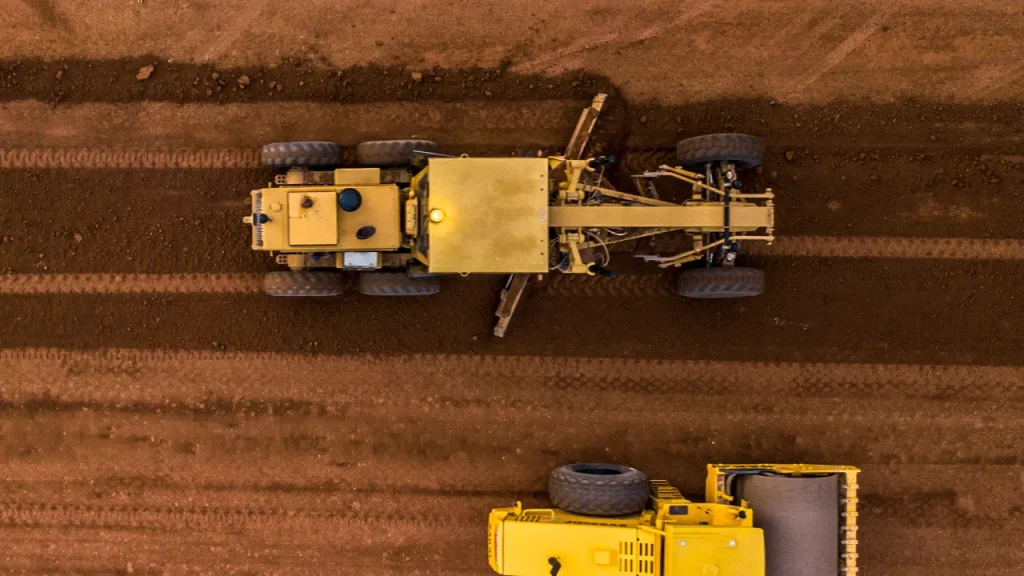
When buyers research motor grader manufacturers, they encounter a mix of legacy American and European brands alongside rapidly expanding Asian manufacturers. Each brand brings different strengths to the market. Understanding motor grader brands helps contractors align machine capabilities with their specific business models.
Caterpillar: Undisputed Giant
Cat graders are known for exceptional durability, advanced joystick controls, and massive dealer support networks. Their M Series and newer next-generation models offer industry-leading cab ergonomics. Contractors typically prefer these machines for heavy highway construction and mining due to their high resale reputation.
John Deere: Versatile Favorite
Having built a fiercely loyal following with their G-Series grader lineup, Deere machines are famous for pairing traditional steering wheel options with intuitive fingertip controls. They offer excellent visibility and robust engine performance. Many county municipalities and mid-sized contractors consider them the premier choice for versatile road maintenance.
Komatsu: Powertrain and Tech Innovators
Focusing heavily on technological integration and powertrain efficiency, these graders feature dual-mode transmissions that combine torque converter drive for heavy loads and smooth low-speed work with direct drive for efficient grading and travel at higher speeds. They are highly respected in mining and heavy infrastructure applications.
Volvo: Used-Market Option
Volvo graders, known for comfortable cabs, smooth hydraulics, and capable all-wheel-drive systems, still appear on the used market. However, Volvo has largely exited motor grader production, so buyers should confirm parts and service availability before purchasing.
CASE: Rugged Practicality
Offering practical, durable machines designed for reliability and ease of maintenance, these graders feature straightforward controls and excellent rear visibility. This no-nonsense design makes them incredibly popular among governmental fleets and rental yards.
LiuGong: High-Value Internal Components
Representing the growing presence of Chinese heavy equipment manufacturers, these models utilize proven internal components like Cummins engines and ZF transmissions at a highly competitive price point. They are quickly gaining traction among cost-conscious contractors.
SANY: High Breakout Force on a Budget
Aggressively expanding their global footprint, these machines deliver heavy operating weights and raw power for a fraction of the cost of premium brands. Their competitive warranty programs and rapidly expanding dealer networks make them a serious consideration for mid-size fleets.
XCMG: Heavy-Duty Global Performers
Offering an extensive lineup, this brand is known for heavy-duty frames and reliable performance in harsh environments. They are rapidly capturing market share in developing nations and budget-focused operations worldwide.
Motor Grader Brand Comparison
| Brand | Typical Strengths | Popular Applications | Technology Focus | Price Category |
|---|---|---|---|---|
| Caterpillar | Joystick controls, resale value | Highway, Mining | Advanced 3D integration | Premium |
| John Deere | Visibility, control options | County roads, Site prep | SmartGrade factory integration | Premium |
| Komatsu | Transmission tech, durability | Heavy infrastructure | Machine control integration | Premium |
| Volvo | Cab comfort, AWD systems | Snow removal (used units) | Snow removal, Forestry | Operator ergonomics | Used market only | Premium |
| XCMG | Heavy-duty frames, harsh-environment durability | Developing markets, budget fleets | Standard electronic controls | Value |
| CASE | Easy maintenance, reliability | Municipalities, Rental | Straightforward telematics | Mid-Tier |
| SANY | Cost-to-weight ratio, warranty | General construction | Basic automated features | Value |
| LiuGong | Proven components, value | Budget fleets, Export | Standard electronic controls | Value |
How Contractors Choose the Right Motor Grader
Finding the best motor grader requires honest assessment of daily operations. The best motor grader depends far more on operating conditions and utilization than simply buying the largest machine available.
Application-based selection is the first step. Road construction versus maintenance dictates machine size. Building a new highway requires heavy machines with massive pushing power to move thick lifts of dense aggregate. Maintaining an existing dirt road favors a lighter, faster machine that covers more miles per day at lower fuel and operating cost.
Urban versus mining environments dictate maneuverability needs. A 12-foot blade and tight articulation are mandatory for city streets, while a 24-foot blade is necessary for wide-open haul roads.
Surface finish expectations determine technology requirements. If you are grading parking lots for asphalt paving, laser or GPS integration is almost mandatory to meet strict drainage tolerances.
Machine transport limitations cannot be ignored. If your crew moves to a new job site every three days, buying a machine that requires oversize load permits will destroy your profit margins.
Fleet compatibility matters for maintenance. Buying a brand that matches your excavators and wheel loaders simplifies filter inventory and allows mechanics to use the same diagnostic software across the fleet.
Operator experience level influences control choices. Veteran operators often prefer traditional steering wheels and lever-style controls, while younger operators tend to adapt faster to dual-joystick setups resembling video game controllers.
Utilization rates and long-term ownership planning dictate budget. If a machine will run 2,000 hours a year, investing in a premium brand with high fuel efficiency and strong resale value makes financial sense. If the machine will only run 400 hours a year for seasonal snow removal, a value-tier brand or a used machine is much more practical.
How Grader Size Affects Transportation and Mobilization Costs
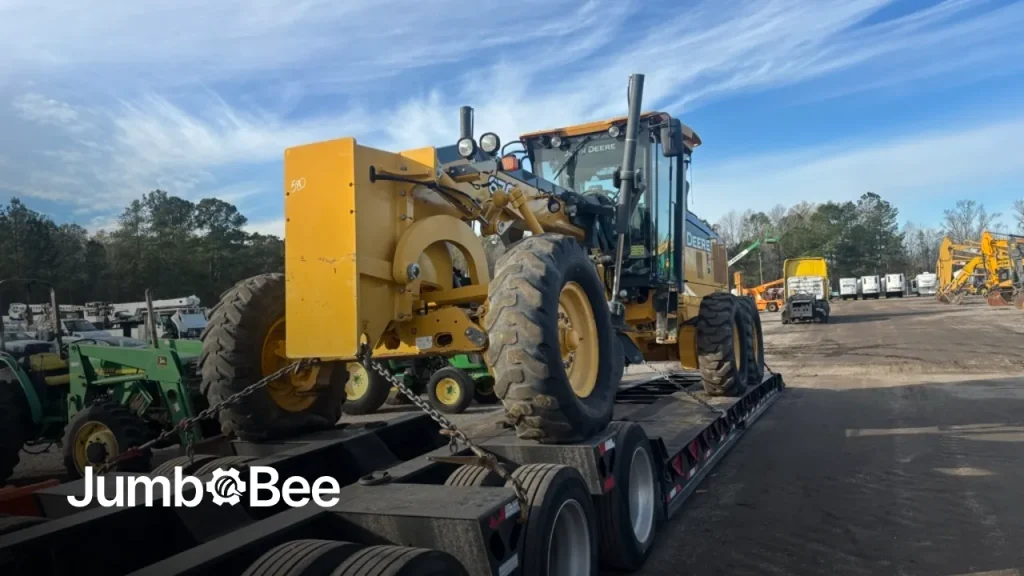
Many buyers forget to calculate mobilization between jobsites when researching motor grader specifications. Oversize transport considerations can drastically alter the total cost of ownership.
Blade transport width is usually the limiting factor. Standard highway transport regulations in North America generally limit load widths to 8 feet 6 inches before requiring permits. Most mid-size graders feature 12-foot or 14-foot blades. To transport these legally without permits, operators must angle the moldboard sharply under the frame, and even then, the tires or cab might exceed limits depending on the model.
Permit requirements add administrative headaches and daily costs. Moving a large grader might require pilot cars, restricted travel hours, and specific route planning to avoid low bridges or weight-restricted roads.
Weight restrictions also dictate trailer size. A 45,000-pound grader requires a heavy-duty lowboy trailer and a Class 8 semi-truck, and the combined weight can approach or exceed the 80,000-pound US federal gross limit, which may require overweight permits. The fuel consumption during transport for these heavy rigs adds up quickly over a busy construction season.
Multi-jobsite contractor considerations often lead buyers to downsize. A contractor managing five concurrent residential subdivision projects might realize that buying two compact graders is more profitable than buying one large grader, simply because the compact machines can often be moved with the contractor’s own trucks and equipment trailers, reducing or eliminating third-party hauling fees. Check towing ratings and licensing: in the US, combinations over 26,001 pounds with a trailer over 10,000 pounds require a Class A CDL. Transportation costs can influence grader size decisions for contractors managing multiple projects just as much as horsepower requirements.
Common Mistakes Buyers Make When Purchasing Motor Grader
Even experienced fleet managers can make costly errors when navigating a motor grader guide and selecting machinery. Avoiding these pitfalls saves thousands of dollars in hidden costs.
Oversizing the machine is the most frequent error. Buyers assume bigger is always better. However, a massive grader on a small commercial site lacks the turning radius to grade corners effectively, forcing the contractor to bring in a skid steer to finish the edges, defeating the purpose of the grader.
Focusing only on horsepower while ignoring blade configuration leads to unbalanced machines. If the machine has high horsepower but lacks the weight to hold a wide blade steady, the grading finish will be poor.
Underestimating visibility importance causes daily operational struggles. If an operator has to lean out of the window to see the heel of the blade, they will work slower and suffer from back pain.
Buying based only on price often ignores long-term reliability. A cheap initial purchase price can be quickly wiped out by excessive downtime waiting for parts to ship from overseas.
Ignoring transport limitations, as mentioned earlier, can trap a machine on a single job site or inflate hauling budgets beyond profitability.
Overlooking operator comfort leads to high employee turnover. In a competitive labor market, forcing an operator to sit in a hot, noisy cab with stiff hydraulic levers will cause them to leave for a company with newer, comfortable equipment.
Ignoring local service support is dangerous. Even the best motor grader breaks down. If the nearest dealer mechanic is four hours away, a simple sensor failure could halt production for three days.
Underestimating tire and maintenance costs is a financial trap. Grader tires are highly specialized and expensive. A set of six premium radial tires can cost $15,000 to $25,000 or more. Buyers must factor these wear items into their hourly operating rates.
What to Check Before Buying Used Motor Grader
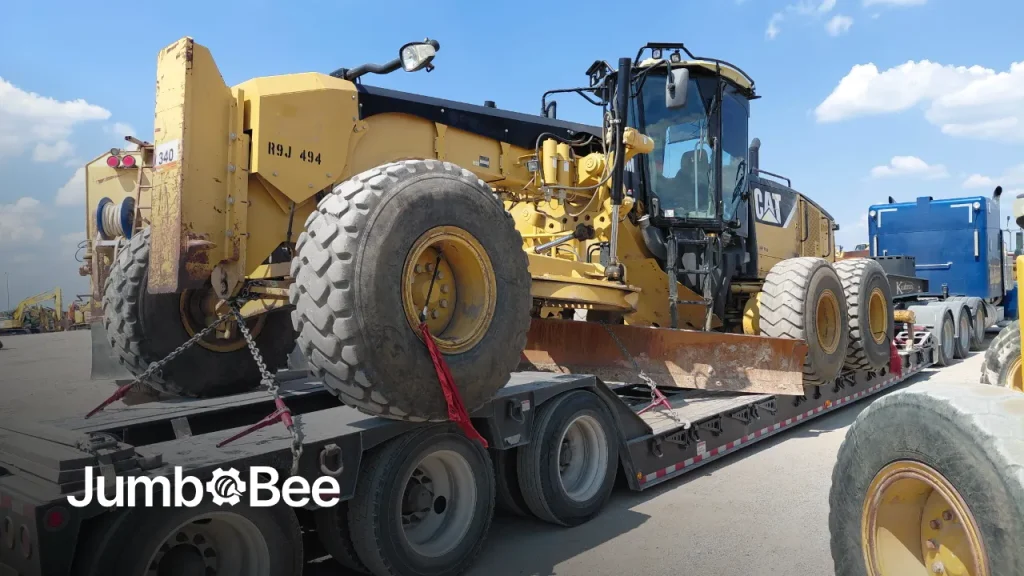
New machinery prices continue to climb, driving massive demand for late-model used equipment. A used motor grader can offer strong long-term value, but articulation wear and circle drive condition often determine future repair costs. Run through this checklist before making an offer:
- [ ] Inspect Frame Articulation Wear: Park the machine on flat ground, engage the articulation joint, and watch for excessive play or clunking sounds. Loose articulation pins cause the rear frame to wander, making straight grading impossible.
- [ ] Check the Circle Drive: The circle is the large gear that rotates the blade. Check the wear inserts and the pinion gear teeth. If the circle shifts up and down or side to side more than a fraction of an inch, the machine will leave a wavy finish. (Note: Replacing a circle drive is extremely expensive).
- [ ] Measure Moldboard Wear: Check the slide rails for grooving and ensure the cutting edge mounting holes are not stretched or cracked.
- [ ] Hunt for Hydraulic Leaks: Inspect the blade lift cylinders, steering cylinders, and wheel motors for weeping fluid, which indicates poor maintenance.
- [ ] Examine the Tandem Boxes: These house heavy drive chains. Check the oil level and look for metal shavings. If the tandem boxes are leaking oil onto the inner tires, the seals are blown.
- [ ] Evaluate Tire Condition: Replacing six heavy-duty tires is a massive expense. If the current rubber is bald or chunked, deduct the replacement cost from the asking price.
- [ ] Test Transmission Under Load: Shift through all gears in both forward and reverse. Feel for hard engagements or slipping, and listen for whining.
- [ ] Review Engine Hours & Service Records: Documentation is everything. A machine with 8,000 hours and comprehensive dealer service records is often a safer buy than a 4,000-hour machine with zero history.
- [ ] Test Cab Controls & Electronics: Verify that every switch, joystick, and air conditioning vent works perfectly. Modern machines rely heavily on computers, and replacing a faulty cab display monitor costs thousands.
- [ ] Verify Grade Control Calibration: If the machine includes 3D technology, ensure the receivers connect to satellites and that the software licenses are fully transferable to the new owner.
Where to Buy Motor Grader
Deciding where to buy a motor grader depends on your budget, timeline, and risk tolerance. Buyers have more options today than ever before.
Dealers offer the safest route for new and late-model used purchases. Buying from a local dealer ensures access to warranty support, factory-trained mechanics, and immediate parts availability. However, dealer inventory is often limited to specific brands, and premium pricing is standard.
Auctions provide opportunities to secure machines below market value. Unreserved auctions move inventory quickly, but buyers must be cautious. You frequently cannot test the machine under load before bidding, and all sales are final.
Online marketplaces have transformed equipment sourcing. Platforms allow buyers to browse thousands of machines across the country or around the world from their office.
International sourcing is becoming increasingly popular. Many contractors now compare local dealer inventory with international used grader listings to improve pricing and machine availability. A machine located in Europe or Asia might be priced significantly lower than a comparable model in North America, even after factoring in shipping. However, imported machines must meet the destination country’s emissions rules, such as EPA nonroad standards in the US, so confirm a machine is eligible for import before buying.
Used equipment markets remain strong, particularly for machines in the 3,000 to 6,000-hour range. These units have depreciated past their initial steep drop but still offer thousands of hours of reliable service.
Financing considerations play a major role. Lenders often require professional appraisals and inspections before financing used equipment purchased across borders.
Comparing inventory globally ensures you find the exact motor grader specifications you need rather than settling for whatever happens to be parked at the local lot. Late-model used grader demand means the best machines sell quickly, so having access to a broad market is essential.
How JumboBee Helps Buyers Compare Motor Graders
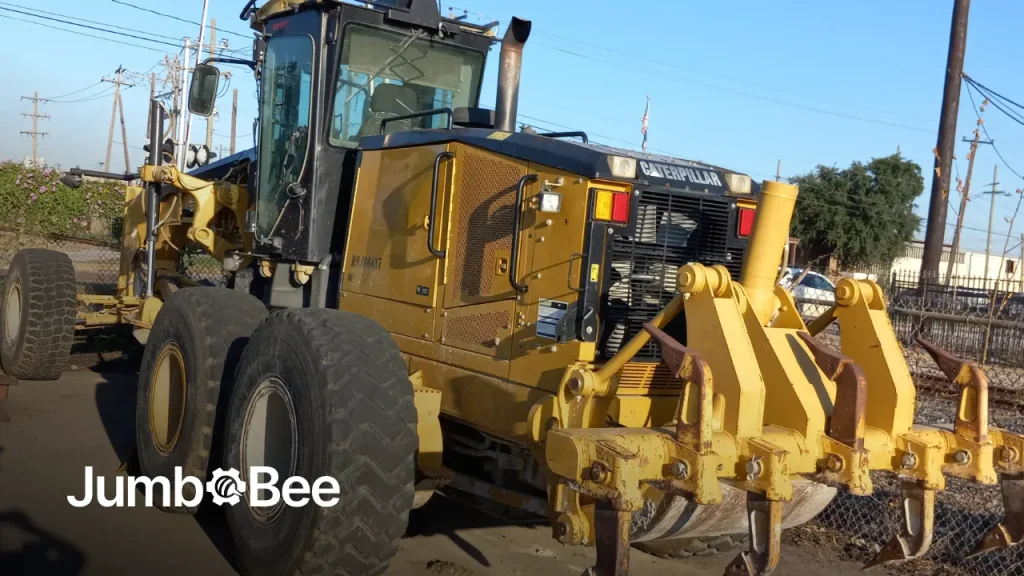
Navigating the global equipment market can be intimidating, especially when dealing with international sellers, customs, and complex logistics. This is where modern platforms streamline the process.
Global grader listings provide buyers with access to machinery located in over 150 countries. Instead of calling dozens of regional dealers, buyers can view a massive inventory in one place.
Equipment comparisons become simple. Buyers can line up motor grader specifications side by side, comparing a Caterpillar 140M in Texas against a John Deere 772G in Germany.
Model research is supported through detailed condition reports, high-resolution photos, and transparent pricing.
Specification visibility ensures you know exactly what you are buying. Listings highlight critical details like motor grader blade size, AWD capabilities, and installed grade control systems.
International inventory access opens up new pricing tiers. Buyers can capitalize on favorable currency exchange rates or regional market fluctuations to secure better deals.
Easier sourcing workflows take the stress out of purchasing. From initial contact to final payment, the platform provides a secure environment for communication and negotiation.
Visibility into machine options across markets ensures contractors find the exact configuration required for their specific applications. Furthermore, built-in logistics support handles the complicated aspects of heavy equipment shipping, customs clearance, and import compliance, allowing buyers to focus on their construction projects while their machinery is delivered directly to the job site.
Choosing Right Motor Grader for Your Projects
Selecting the right equipment requires balancing current job requirements with future business growth.
No single grader fits every application. A massive 500-horsepower mining grader is useless in a residential subdivision, just as a compact grader cannot maintain a major logging road.
Machine size should match workload and transport needs. Calculate your mobilization costs before committing to a heavy, wide machine that requires expensive hauling permits.
Blade control matters as much as horsepower. The ability to manipulate the moldboard precisely dictates the quality of the final surface.
Visibility and operator comfort affect grading quality. An operator who can clearly see the blade and sit comfortably will produce smoother roads and work faster.
Grade control systems increasingly influence productivity. Investing in GPS or laser technology can drastically reduce rework, save fuel, and allow less experienced operators to succeed.
Contractors increasingly optimize graders based on utilization and operating cost rather than maximum size alone. Evaluate tire replacement costs, fuel burn rates, and maintenance complexity before finalizing a purchase.
Conclusion
Motor grader selection dictates your jobsite’s profitability. As this guide highlights, buying based on horsepower alone is a costly mistake. True performance comes from the perfect balance of weight, traction, and precise hydraulics.
Key takeaways for your next purchase:
- Specs over raw horsepower: Blade width, cab visibility, and articulation dictate your daily efficiency.
- Invest in tech: 3D grade control transforms a slow crew into a highly profitable operation by eliminating wasted material and extra passes.
- Inspect used iron carefully: Prioritize checking the circle drive and articulation joints to find massive value without the hidden repair bills.
- Calculate mobilization: Do not ignore transport costs. Compact or mid-size machines often offer better fleet agility and lower logistical overhead.
- Streamline sourcing: Partner with heavy machinery procurement leaders like JumboBee to easily locate, vet, and secure the exact global inventory you need without the traditional purchasing friction.
By cutting through the marketing hype and matching machine capabilities to your exact operational realities, you can secure the right grader to build a more profitable fleet in 2026 and beyond.






Be the first to leave a comment
There are no replies to this post yet. Share your thoughts and help start the conversation.