 Shipping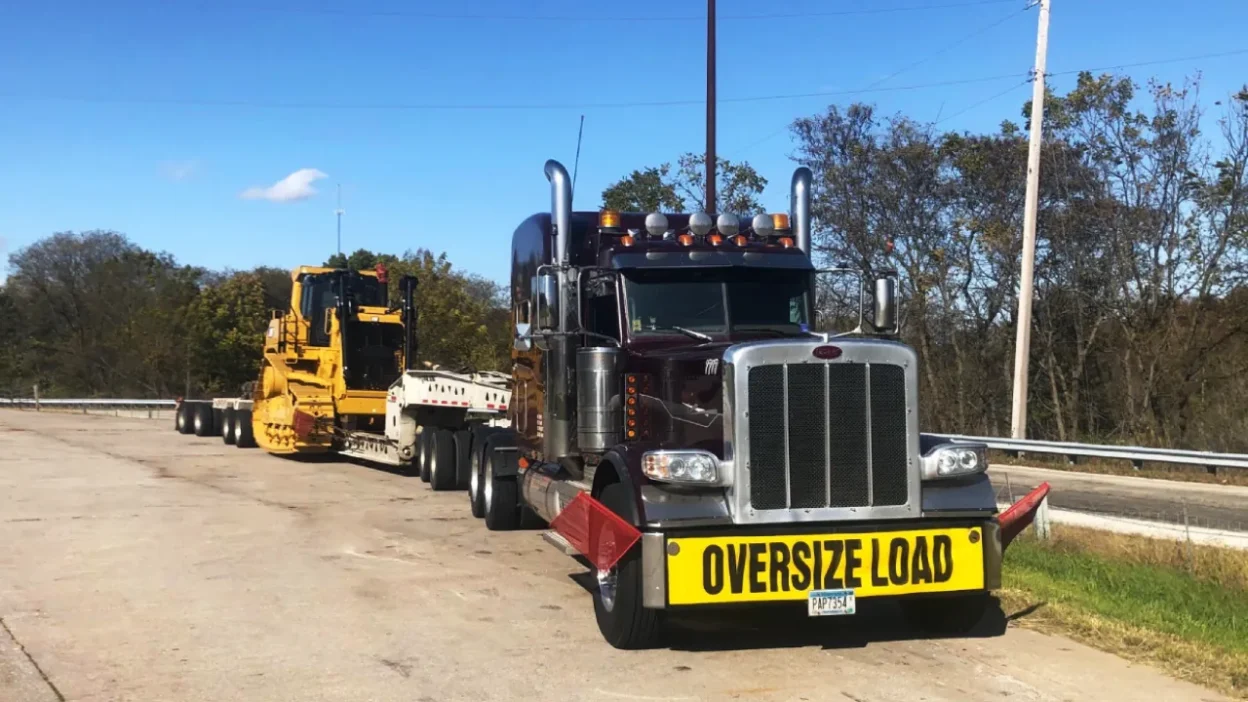
Moving massive machinery across oceans requires intense planning, engineering, and financial investment. Buyers and project managers often celebrate once a vessel docks and cargo is discharged. However, assuming the hardest part is over is a massive oversight. Moving oversized cargo from the arrival port to the final job site is where logistics often break down.
Inland distribution involves navigating complex highway networks, strict state regulations, and unpredictable weather. As we move through 2026, infrastructure updates and tighter federal safety regulations make domestic transport more complex than ever. One wrong turn or missing permit can erase your profit margins.
This article breaks down the most critical heavy equipment transport mistakes companies make after their cargo arrives. We will look at real financial risks, practical ways to prevent delays, and how professional post-port delivery logistics can save your company thousands of dollars.
Why Inland Transport Is the Most Underestimated Stage in Equipment Shipping
Many importers treat domestic trucking as an afterthought. They assume that once a tractor or excavator clears customs, a standard truck can simply pick it up and drive away. This assumption leads to catastrophic financial losses.
Ocean freight is highly standardized. Ships travel on set routes with predictable schedules. Inland heavy equipment transport is entirely different. Roads have weight limits. Bridges have height restrictions. Construction zones appear overnight. Local municipalities require specific permits for oversized loads.
When you ignore these variables, you expose your project to hidden costs. Ports charge daily storage fees if your machinery sits on the terminal waiting for an available specialized trailer. These fees, known as demurrage, compound quickly. In 2026, US ports frequently charge upwards of $250 per day after the initial free time expires, scaling up to $500 per day if the cargo sits for over a week.
Failing to plan post-port delivery logistics means your equipment becomes a financial liability before it even reaches your facility. Proper planning transforms this risky final leg into a smooth, predictable process.
Mistake #1: Incorrect Route Planning for Oversized Equipment
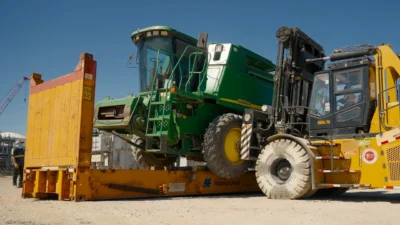
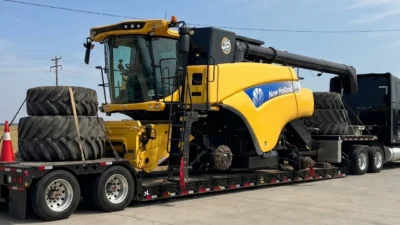
Assuming a truck can take the shortest route on a GPS map is one of the most common heavy equipment transport mistakes. Standard navigation tools do not account for the physical realities of moving a 50-ton bulldozer or a massive agricultural harvester.
Heavy loads require pre-planned engineering route analysis. Logistics teams must survey every mile of the intended path.
Critical factors often ignored include:
- Bridge weight capacities and structural limits
- Overpass height clearances
- Tunnel restrictions for hazardous or heavy cargo
- Turning radii on rural roads
- Active construction zones and lane closures
When a driver encounters a low bridge that was not on the route survey, they cannot simply back up on a busy highway. They must stop, contact local authorities, and arrange for a police escort to safely reverse the vehicle.
Consequences are severe. Forced rerouting adds miles and hours to the trip. Trucking companies charge between $15 and $25 per mile for oversized transport. A forced 60-mile detour instantly adds up to $1,500 in mileage alone. You also face fines from the Department of Transportation, which can exceed $5,000 for violating weight restrictions. Furthermore, your original permits become void if you deviate from the approved route, forcing you to buy new permits and wait days for approval.
Mistake #2: Choosing the Wrong Type of Inland Transport
Not all flatbed trucks are created equal. Assigning the wrong trailer to your machinery guarantees damage, safety violations, or total transport failure.
Machinery varies wildly in weight distribution, track width, and center of gravity. You must match the equipment to the precise trailer type.
Common trailer types include:
- Standard flatbeds for basic, within-gauge machinery parts
- Step-deck trailers for taller equipment requiring lower clearance
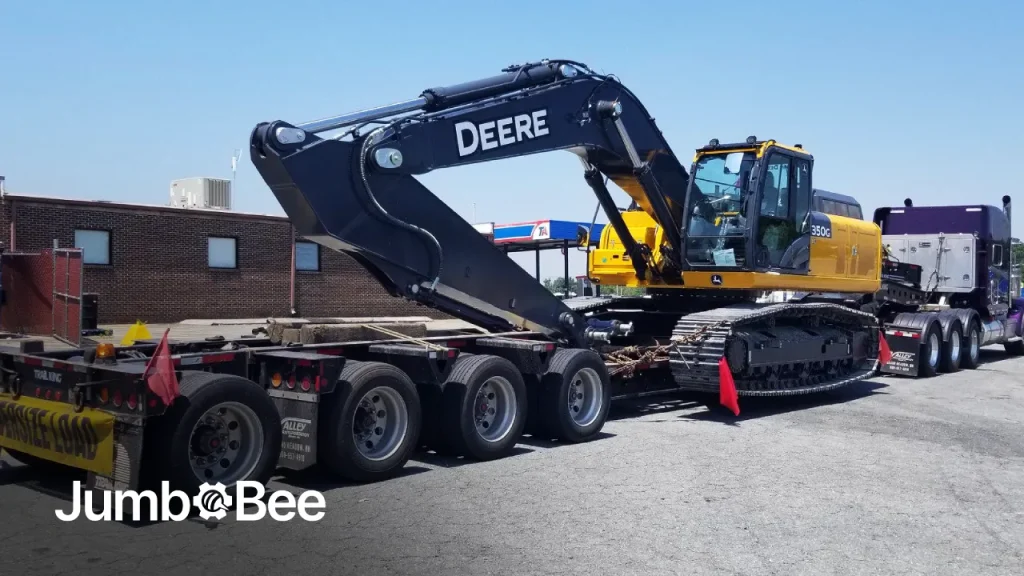
- Lowboy trailers for extremely heavy or tall machinery like excavators
- Multi-axle modular trailers for ultra-heavy project cargo
Underestimating weight distribution causes severe safety risks. If a 40-ton machine is loaded onto a trailer with insufficient axles, the weight per tire exceeds legal limits. This blows out tires, damages the road surface, and causes the trailer to sway dangerously at highway speeds.
The center of gravity is equally critical. Tall agricultural sprayers have a high center of gravity. If loaded onto a standard flatbed instead of a lowboy, the load becomes top-heavy and prone to tipping on highway curves.
If you are importing farming machinery, you must work with teams that understand these specific dimensions. You can explore specialized solutions for your machinery in our Shipping Services section or reach out so we can match exact machine specs to the correct hauling equipment.
Mistake #3: Poor Coordination Between Port and Inland Teams
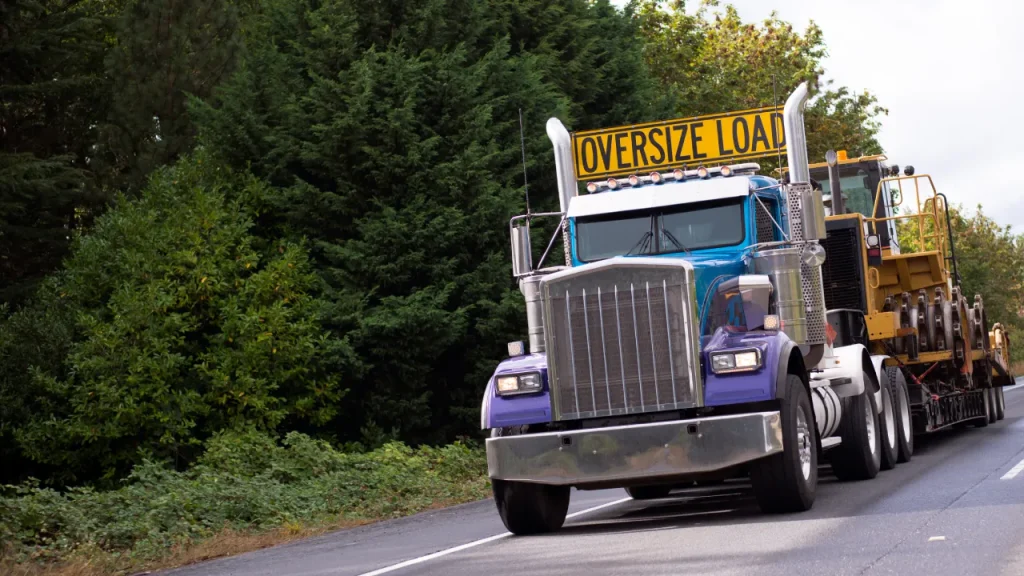
Disconnection between the customs broker, the port terminal, and the trucking company creates massive bottlenecks. Coordination is the backbone of successful inland heavy equipment transport.
Truck drivers often arrive at the port only to find that customs has not released the cargo. Alternatively, the cargo is released, but the terminal requires a specific appointment time that the trucking company failed to book.
When equipment is stuck at the port, costs skyrocket. Let us look at a basic calculation of poor coordination for a single piece of heavy machinery over five days:
- Demurrage fees: $300 per day x 5 days = $1,500
- Truck order cancellation fee: $500
- Chassis rental penalties: $150 per day x 5 days = $750
- Total wasted capital: $2,750
This money is entirely preventable with end-to-end logistics coordination. Professional freight forwarders synchronize customs clearance with terminal availability and truck dispatch. They ensure all documents, including the Delivery Order and customs release, are processed before the driver even starts their engine.
Mistake #4: Ignoring Local Regulations and Permits
Moving oversized cargo across state or national borders is a legal minefield. Every jurisdiction has its own rules for heavy transport. Assuming federal compliance covers local laws is a fast track to getting your cargo impounded.
Missing oversized transport permits is a frequent error. If your machinery exceeds standard legal limits (usually 80,000 pounds gross vehicle weight, 8.5 feet wide, or 13.5 feet tall in the US), you need specialized permits for every state the truck enters.
Country-specific transport requirements complicate international moves. If you import equipment through a Canadian port for delivery in the US Midwest, you must comply with both Canadian provincial laws and US state laws.
Escort vehicle regulations also vary wildly. Some states require one pilot car in front of the truck. Others require a front and rear escort, plus a police escort if the load exceeds specific widths. In 2026, many states have updated their pilot car requirements to include mandatory dash-cams and real-time GPS sharing with highway patrols. Failing to hire the correct number of certified escort vehicles will result in the Department of Transportation shutting down your transport immediately.
Mistake #5: Underestimating Loading and Securing Risks
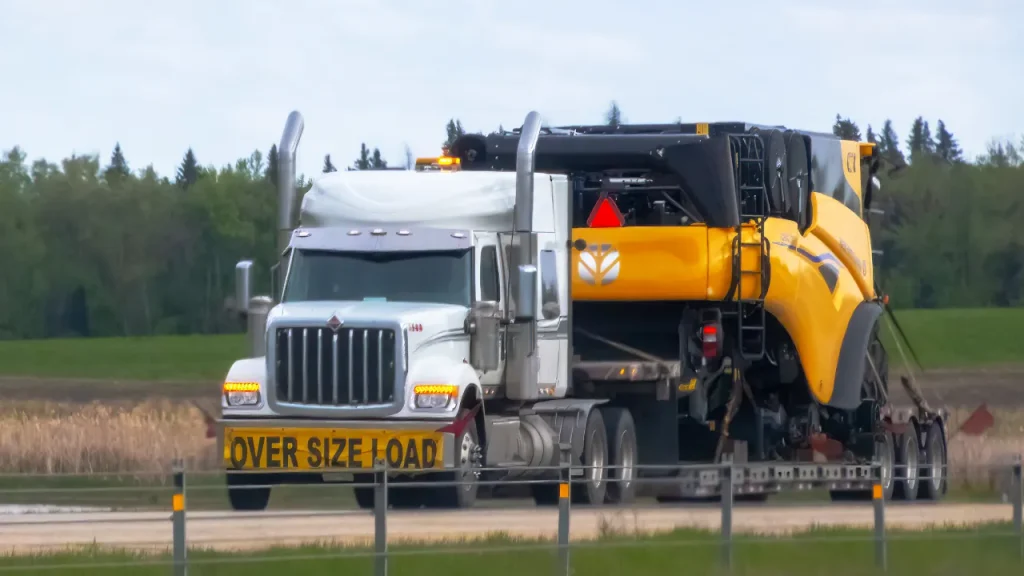
Improper securing of machinery leads to catastrophic accidents. Heavy equipment is built to withstand tough environments, but it is highly vulnerable to shifting during highway transport.
Movement during transport alters the center of gravity. If a 20-ton wheel loader shifts just six inches to the left during a sharp turn, it can flip the entire truck.
Lack of inspection before departure is a critical failure. The Federal Motor Carrier Safety Administration dictates strict cargo securement rules. Heavy machinery requires specific tie-down techniques using heavy-duty chains and binders. Nylon straps are entirely insufficient for steel tracks or heavy counterweights.
Proper securement requires mathematics. The aggregate working load limit of all tie-downs must equal at least 50% of the weight of the cargo.
- Equipment weight: 60,000 pounds
- Required tie-down strength: 30,000 pounds minimum
- Chain capacity: 6,600 pounds per chain
- Minimum chains required: 5 (though industry best practice demands 6 to 8 for redundancy)
Logistics providers who skip these calculations risk the lives of drivers and the total loss of your equipment.
Mistake #6: No Contingency Planning for Delays
Supply chains are unpredictable. Even with perfect routing and securement, external factors will disrupt your schedule. Failing to plan for these disruptions is a major flaw in post-port delivery logistics.
Weather disruptions play a massive role. A sudden snowstorm in the mountains or heavy rain flooding coastal highways will halt oversized transport. Oversized loads are legally prohibited from traveling during severe weather or low visibility conditions.
Road closures happen without warning due to accidents or emergency infrastructure repairs. If your permitted route is suddenly closed, your truck cannot simply take a detour. The driver must park safely and wait for authorities to issue a revised permit for an alternate route.
Professional logistics providers always plan for contingencies. They build buffer days into delivery schedules. They secure secondary route approvals in advance. They maintain open lines of communication with local highway patrols to get real-time updates on road conditions.
Real Case: How One Routing Mistake Increased Costs by 40%
To understand the financial impact of these heavy equipment transport mistakes, consider a realistic scenario based on frequent industry occurrences.
A mid-sized construction firm imported a 65-ton crawler crane into the Port of Savannah, Georgia, destined for a job site in Tennessee. Wanting to save money, the buyer hired a standard freight broker instead of a specialized project cargo forwarder.
The broker used basic commercial routing software to plan the trip. They secured legal weight permits but failed to conduct a physical engineering route survey.
On day two of the journey, the truck approached a rural bridge in northern Georgia. The bridge had recently been downgraded to a 40-ton maximum capacity due to structural aging in early 2026. The 65-ton load could not cross.
Because it was a two-lane rural highway, the 100-foot-long truck and trailer combination could not turn around.
Here is how the costs broke down:
| Expense Type | Description | Cost |
|---|---|---|
| Police Escort | Required to block the highway and safely reverse the truck for 3 miles | $1,200 |
| Fines | Highway patrol fines for approaching restricted infrastructure | $2,500 |
| Standby Time | Truck parked at the weigh station for 3 days waiting for new permits | $4,500 |
| New Permits | Expedited fees for revised routing through South Carolina | $800 |
| Extra Mileage | Detour added 180 miles to the trip at $18 per mile | $3,240 |
| Total Extra Cost | Unplanned expenses due to skipped route survey | $12,240 |
The original inland transport quote was $28,000. The final bill came to $40,240. A single routing mistake increased the inland delivery cost by over 40% and delayed the construction project by four days, causing further losses on the job site.
How to Avoid These Mistakes in Inland Equipment Transport
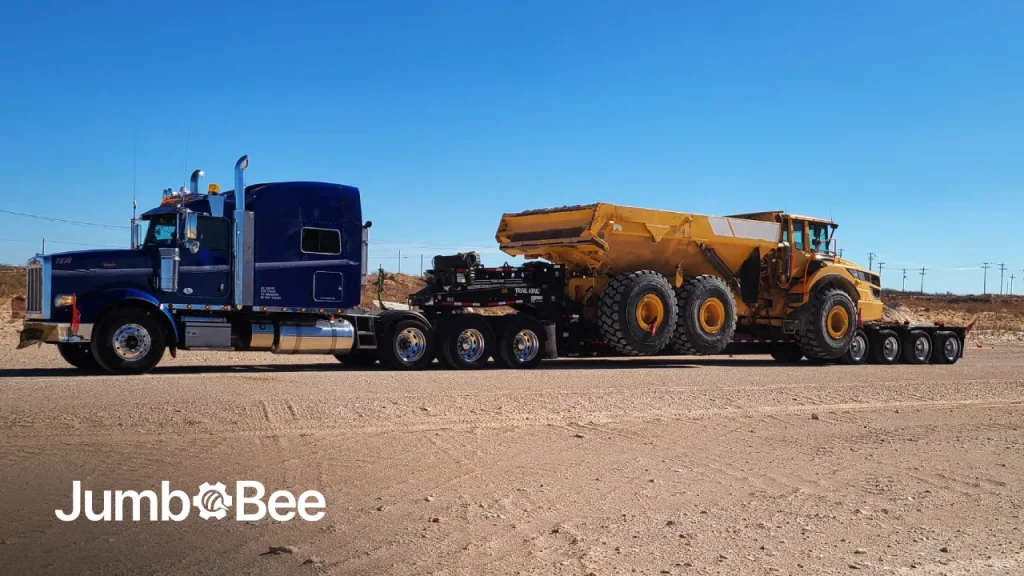
Preventing financial losses requires a proactive, detailed approach. Use this practical checklist to safeguard your machinery during the final leg of its journey.
- Conduct physical route surveys for any load exceeding standard legal dimensions
- Match trailer specifications perfectly to the machinery weight and dimensions
- Align customs clearance schedules with truck dispatch times to avoid demurrage
- Apply for all state and local permits at least two weeks before port arrival
- Verify tie-down calculations against federal safety regulations before the truck moves
- Hire certified pilot cars familiar with the specific highway corridors you are using
- Build a 10% contingency budget for unexpected weather or road delays
- Partner with drivers who have specific experience hauling your exact brand and type of machinery
Why Professional Inland Logistics Makes a Difference
Managing these variables internally drains your resources and exposes your company to massive liability. This is why integrated logistics management is a critical cost-saving solution.
Professional freight forwarders specialize in risk reduction and cost control. We do not just book a truck; we engineer the entire movement. We handle the complex permit applications, coordinate with terminal operators to eliminate storage fees, and deploy specialized trailers designed specifically for oversized cargo.
Experience with oversized cargo means we anticipate problems before they occur. We know which ports have chassis shortages. We know which highways have active construction. We know exactly how many chains are required to secure a 50-ton excavator.
By utilizing a dedicated partner for your inland heavy equipment transport, you eliminate the guesswork. Whether you are moving mining machinery or need comprehensive Agricultural Equipment logistics, professional oversight ensures your cargo arrives safely, legally, and on budget.
Conclusion: Inland Transport Is Where Costs Are Won or Lost
The journey from the factory to the destination port is only half the battle. Post-port delivery logistics define the overall success or failure of your equipment purchase. Ignoring route planning, choosing the wrong trailer, or failing to secure permits will rapidly erase any savings you achieved during the purchasing or ocean freight stages.
Proper planning, precise engineering, and seamless coordination are non-negotiable. Protect your investment by treating the inland journey with the same level of respect and detail as the ocean crossing.
Ready to plan your next heavy machinery move without the hidden costs? Use our form, or contact JumboBee today to engineer a flawless inland delivery strategy.
Inland transportation refers to the movement of machinery over land, typically via specialized trucks and trailers, from a seaport or manufacturing facility to the final job site or dealership. It involves complex routing, permitting, and securement protocols.
Poor coordination leading to delays is the most common risk, resulting in thousands of dollars in port storage fees (demurrage). However, the most dangerous and expensive risk is incorrect route planning, which can lead to bridge strikes, massive fines, and severe equipment damage.
Minor delays can add $500 to $1,500 in port fees. Major mistakes, such as forced rerouting or permit violations, easily increase total transport costs by 30% to 50%, often adding $10,000 or more to a single shipment invoice.
Yes. If your machinery and trailer combined exceed standard legal limits for weight, height, or width, you must obtain oversized load permits for every state or jurisdiction the truck travels through.
Trailer selection depends entirely on the cargo. Lowboy trailers are best for tall, heavy machinery like excavators to clear bridges. Step-decks work well for medium-sized tractors. Multi-axle modular trailers are required for ultra-heavy industrial or mining equipment to distribute weight safely across the pavement.





Be the first to leave a comment
There are no replies to this post yet. Share your thoughts and help start the conversation.