


 Equipment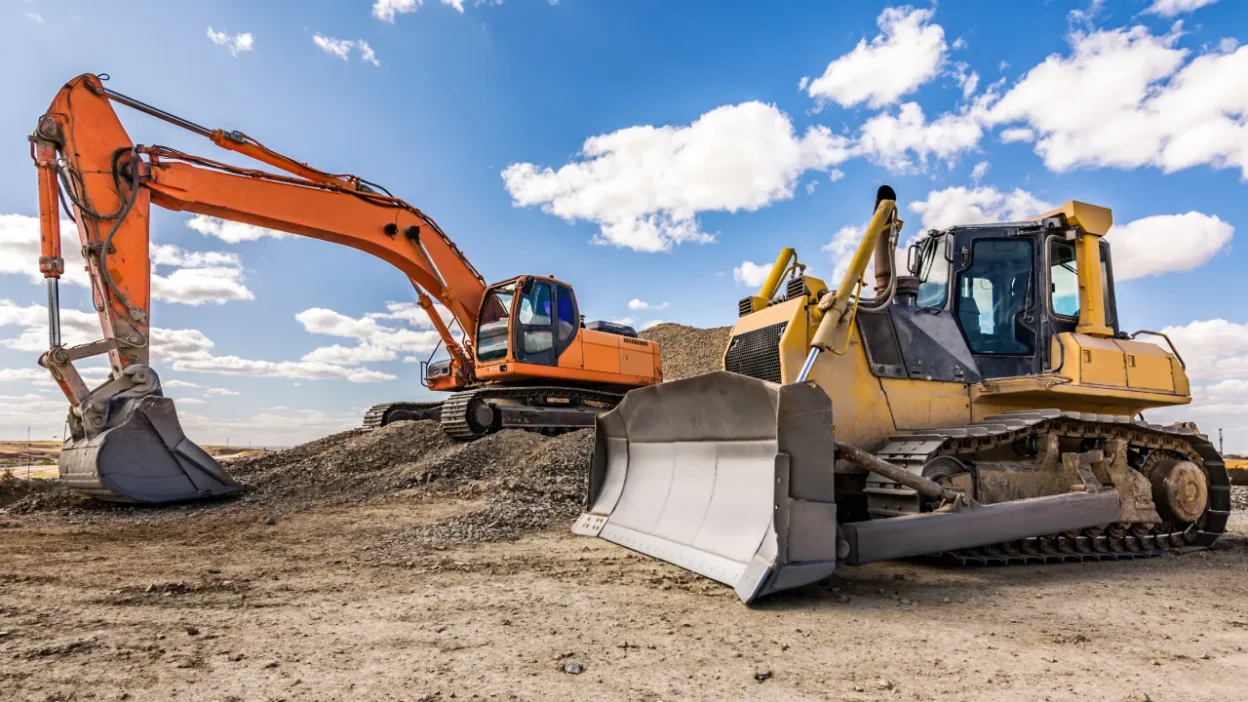
Fundamentally, bulldozers push and level mass quantities of earth. Excavators dig, lift, and handle materials with pinpoint precision. Picking the wrong machine kills your margins: bringing a bulldozer to a deep trenching job stalls the schedule, while forcing an excavator to grade a massive site burns time and fuel doing work it wasn’t built for. These mismatches bleed your budget through wasted labor, blown deadlines, and idle equipment.
This guide breaks down bulldozer vs. excavator dynamics using real-world applications, hard performance metrics, and financial calculations. By the end, you will know which machine your project needs.
Bulldozer vs Excavator: Quick Comparison
| Function | Primary Use | Precision | Mobility | Versatility | Cost of Ownership |
|---|---|---|---|---|---|
| Bulldozer | Pushing, grading, earthmoving, and leveling | Low to medium | Continuous forward/backward | Moderate | High undercarriage maintenance |
| Excavator | Digging, lifting, trenching, and demolition | Extremely high | Stationary 360-degree rotation | Very high | Moderate hydraulic maintenance |
Reviewing the table above reveals a clear operational divide. Bulldozers act as the brute force of a job site, moving massive amounts of material across open spaces. Excavators serve as the multi-tool, offering pinpoint accuracy for digging, lifting, and specialized tasks through various attachments.
What Is Bulldozer
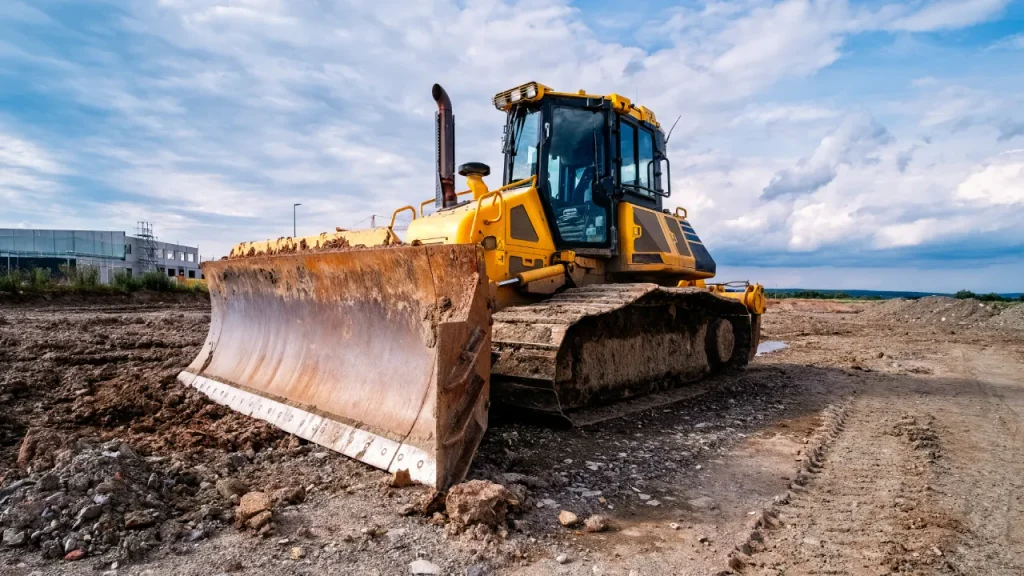
Bulldozers are powerful track-laying tractors equipped with a substantial metal plate, known as a blade, mounted on the front. These machines rely on immense weight and superior traction to push soil, sand, rubble, and rock.
Key components define their capability. Front blades come in various shapes, such as straight blades for fine grading, universal blades for moving large volumes of material, and combination blades. Rear rippers break up densely compacted earth or rocky terrain, allowing the front blade to move the material efficiently. Tracks provide a massive surface area, preventing the heavy machine from sinking into soft mud or loose sand.
Types of bulldozers vary based on project scale. Crawler bulldozers feature heavy steel tracks for maximum traction on rugged sites. Wheel bulldozers use large, heavy-duty tires for faster movement across solid ground without damaging paved surfaces. Mini bulldozers offer compact solutions for residential grading and tight urban spaces.
Main use cases revolve around surface-level earthmoving. Land clearing operations rely on bulldozers to push down trees, remove stumps, and sweep away boulders. Grading projects use GPS-guided bulldozer blades to create perfectly leveled foundations for massive warehouses.
Real-world scenarios highlight their strength. Imagine preparing a 50-acre site for a new solar farm in early 2026. Terrain consists of uneven hills and thick brush. Deploying a heavy-duty crawler bulldozer clears the vegetation and flattens the hills in steady, continuous passes, creating a uniform subgrade ready for solar panel installation.
What Is Excavator
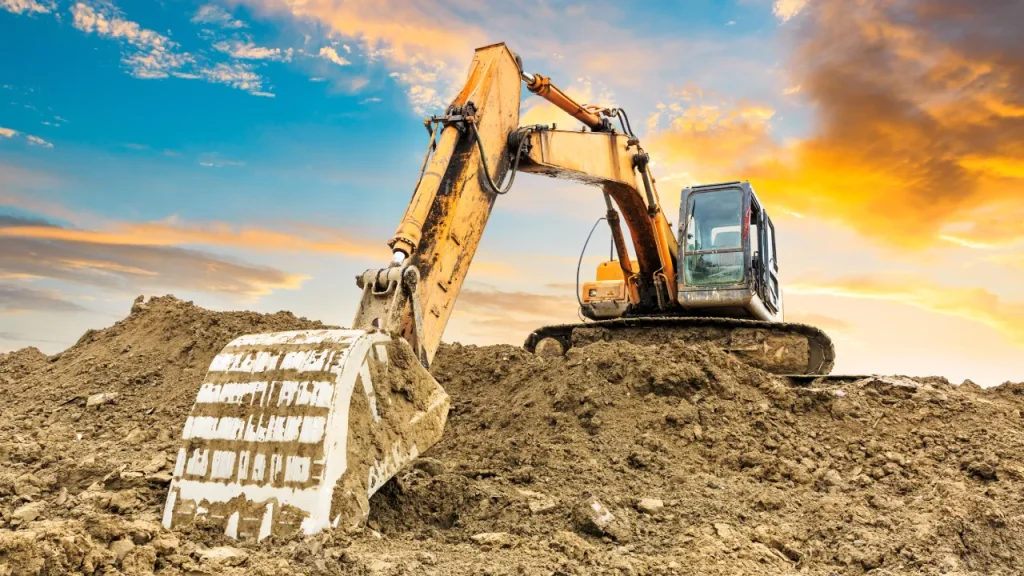
Excavators are versatile earthmoving vehicles featuring a rotating cab mounted on an undercarriage with tracks or wheels. Their primary design focuses on digging below machine level and lifting heavy materials.
Key components make excavators incredibly adaptable. Booms provide the main lifting arm, extending outward from the cab. Arms connect to the boom, providing the digging motion. Buckets attach to the arm to scoop earth, though operators frequently swap buckets for other specialized tools.
360-degree rotation stands out as the defining feature. Operators can dig a trench in front of the machine, swing entirely around, and dump the excavated dirt into an articulated truck waiting behind them, all without moving the tracks.
Types of excavators cater to specific environments. Crawler excavators dominate muddy, uneven construction sites. Wheeled excavators travel quickly on urban roads, making them perfect for city utility repairs. Mini excavators fit through standard backyard gates for residential plumbing or landscaping tasks. Long-reach excavators feature extended booms for dredging rivers or deep foundation work.
Main use cases center around subterranean work and material handling. Trenching for underground utilities requires the precise digging capabilities of an excavator. Demolition crews use excavators equipped with hydraulic shears to tear down multi-story buildings safely.
Key Differences Between Bulldozers and Excavators
Function and Purpose
Machine design dictates function. Bulldozers generate horizontal pushing force. Their center of gravity remains low, translating engine power directly into forward momentum. Excavators generate vertical pulling and lifting force. Hydraulic cylinders push and pull the boom and arm, allowing the machine to break through hard ground, scoop material, and lift it into the air.
Precision and Control
Modern construction demands millimeter accuracy. Excavators excel at micro-precision. Skilled operators can dig around fragile underground gas lines or precisely place heavy concrete pipes into a trench. Bulldozers handle macro-precision. While modern 3D GPS systems allow bulldozers to grade surfaces to exact specifications, their primary function remains broad surface manipulation rather than delicate point-to-point work.
Terrain and Mobility
Weight distribution affects where these machines can safely travel. Bulldozers distribute their massive weight across long, wide tracks, giving them incredible flotation on soft ground. They travel continuously across the site to perform their work. Excavators typically drive to a specific spot, plant themselves securely, and rely on their rotating upper structure to do the work. Once the immediate area is cleared or dug, they track forward a few feet and repeat the process.
Attachments and Versatility
Versatility heavily favors excavators. While bulldozers can change front blades or add rear winches and rippers, their core function rarely changes. Excavators transform completely based on their attachments. Swapping a bucket for a hydraulic breaker turns an excavator into a rock-smashing demolition machine. Attaching a grapple allows it to sort recycling materials or load logging trucks.
Operator Skill
Learning curves differ significantly. Driving a bulldozer requires mastering the physics of pushing dirt, understanding how material rolls off the blade, and maintaining traction without spinning the tracks. Operating an excavator requires advanced hand-eye coordination to manage the boom, arm, bucket, and swing simultaneously.
Efficiency Comparison: Output and Speed
Bulldozers move material in continuous passes, which makes them extremely efficient over short hauls but increasingly wasteful as distance grows. A dozer is most productive pushing material up to roughly 100 to 200 feet; beyond about 300 feet, output drops sharply and a hauling unit becomes the smarter choice.
Excavators, by contrast, work in load-and-swing cycles, completing roughly 3 to 6 dig-and-dump cycles per minute on a medium machine, regardless of where the spoil pile sits within their swing radius.
The table below shows typical productivity ranges for medium-class machines under good conditions. Real-world output varies with soil type, operator skill, haul distance, and bucket or blade size, so treat these as planning baselines rather than guarantees.
| Metric | Medium Bulldozer (130–205 HP) | Medium Excavator (130–250 HP) |
|---|---|---|
| Primary motion | Horizontal push | Dig, swing, load |
| Typical output | ~300–600 loose cubic yards/hour (short haul) | ~100–250 cubic yards/hour (dig & load) |
| Effective range | Best under ~200 ft of push | 360° within swing radius, no repositioning |
| Strongest task | Grading and leveling open ground | Trenching and truck loading |
| Efficiency drop-off | Falls fast as haul distance grows | Limited by truck cycle / spoil placement |
The practical takeaway is task-driven. For spreading and grading aggregate across a wide, open subgrade, a bulldozer will out-produce an excavator several times over because it never stops to reposition. For digging a defined trench and loading the spoil straight into a dump truck, an excavator finishes far faster, since the dozer simply cannot dig below grade or load high-sided trucks at all.
Matching the motion to the task is where the real productivity gains and cost savings come from.
When to Use Bulldozer
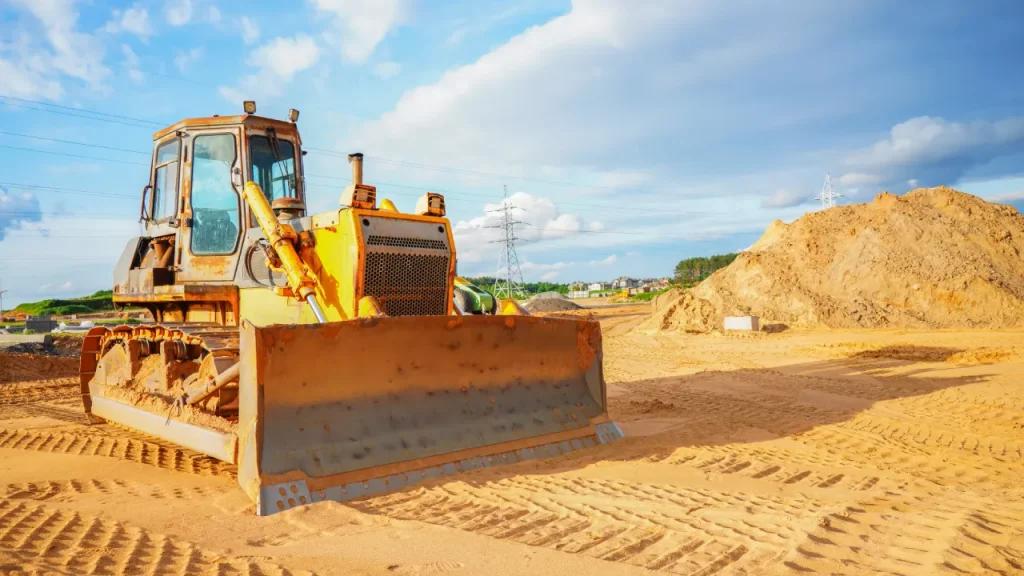
- Land clearing remains the undisputed domain of the bulldozer. Pushing over thick brush, small trees, and heavy debris requires the continuous forward momentum and protective armor that dozers provide.
- Grading large areas demands bulldozer efficiency. Creating the base layer for a massive logistics center or leveling agricultural fields requires moving soil from high spots to low spots seamlessly.
- Road construction relies heavily on dozers during the initial phases. They strip away topsoil, push aggregate base materials into place, and profile the roadbed before compactors and graders finish the surface.
- Site preparation for residential subdivisions involves shaping the earth to manage water drainage. Bulldozers carve out retention ponds and establish the broad contours of the neighborhood.
- Bulk material movement at mining operations needs continuous pushing power to maintain haul roads or push blasted rock toward loading zones.
When to Use Excavator
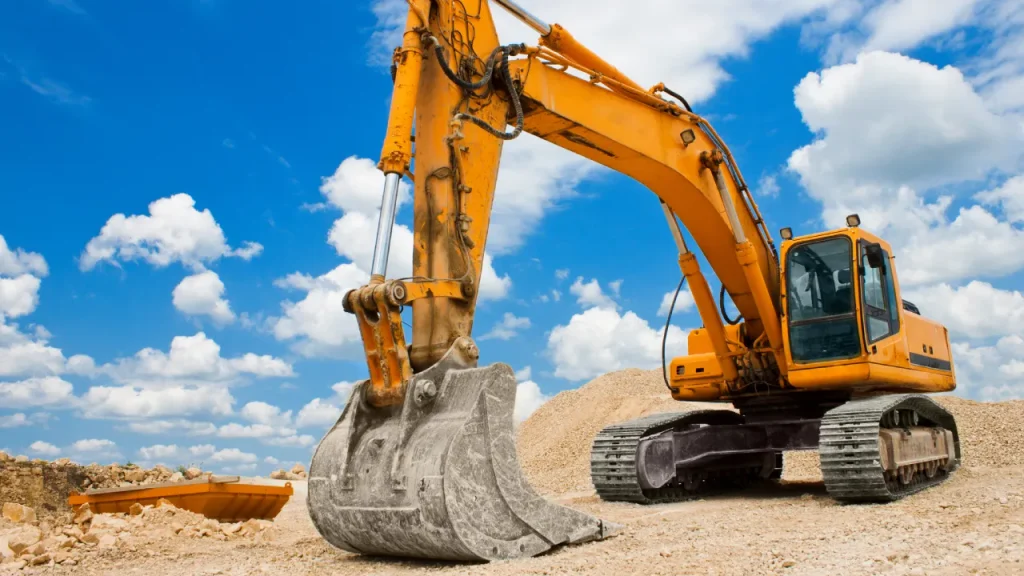
- Digging deep holes and trenches requires an excavator. Whether installing miles of fiber optic cables or placing municipal water mains, excavators pull earth out of narrow channels efficiently.
- Trenching cannot be done effectively with a bulldozer. Excavators equipped with specialized trenching buckets create clean, vertical walls necessary for safe pipe installation.
- Foundations for commercial high-rises or residential basements require excavators to remove thousands of cubic yards of soil from a confined footprint, loading it directly into dump trucks.
- Demolition projects utilize the excavator’s reach and hydraulic power. Operators safely dismantle structures from the top down, using grapples to separate steel rebar from concrete on the spot.
- Material handling showcases excavator versatility. Unloading heavy concrete barriers from flatbed trailers or placing large boulder retaining walls requires the lifting capacity and precise placement an excavator provides.
Cost Comparison: Bulldozer vs Excavator
Understanding excavator vs bulldozer cost dynamics involves analyzing initial investments, daily fuel consumption, and long-term mechanical upkeep.
Purchase Price
Heavy equipment prices fluctuate based on size, horsepower, and technological integrations. In the 2026 global market, purchasing new machinery requires significant capital.
Recent data compiled by Heavy Equipment Appraisal shows that new small bulldozers (80-92 HP) range from $147,000 to $222,000. Medium models (130-205 HP) cost between $180,000 and $340,000, while massive mining dozers easily exceed $1.3 million. On the secondary market, entry-level used dozers generally start between $30,000 and $100,000.
Mini excavators offer a slightly lower barrier to entry, typically ranging from $30,000 to $80,000. Medium crawler excavators cost between $130,000 and $250,000. Large production excavators range from $350,000 to $800,000 depending on hydraulic configurations. Used equipment markets often reduce purchase prices by 30 to 50 percent for machines with moderate operating hours.
Operating Costs
Fuel consumption and operator wages drive daily expenses. A medium-sized 200-horsepower bulldozer running at high engine load consumes approximately 6 to 8 gallons of diesel per hour. At an average fuel cost of $4.00 per gallon, fuel expenses reach $32 per hour.
A similarly sized 200-horsepower excavator typically burns slightly less fuel, averaging 4 to 6 gallons per hour, as it spends time idling while waiting for dump trucks or performing lighter lifting tasks. This puts excavator fuel costs around $24 per hour.
As for wages, the latest data from the U.S. Bureau of Labor Statistics (BLS) lists the median annual wage for construction equipment operators at $55,270 (about $26.57 per hour). However, the top 10 percent of highly skilled operators in specialized sectors or unions earn over $94,800 ($45.57 per hour).
Total operating costs, factoring in fuel, wages, and basic fluids, often hover around $80 to $110 per hour for either machine.
Cost Per Task in Practice
Translating an hourly rate into a per-job figure makes the comparison concrete. Using a working rate of roughly $100 per hour, clearing and rough-grading one acre of light brush with a medium bulldozer typically takes 4 to 8 hours, putting the task in the range of $400 to $800 per acre depending on vegetation density and terrain. On the excavation side, digging a 500-foot utility trench in normal soil with a medium excavator runs about 5 to 10 hours of work, landing the job around $500 to $1,000 before pipe and backfill.
These figures shift with soil conditions, operator skill, and haul logistics, but they show how quickly the right machine on the right task keeps cost per job predictable, and how easily the wrong one doubles it.
Maintenance
Undercarriage wear represents the largest maintenance expense for tracked machinery. According to service centers like Carter Machinery, undercarriage maintenance routinely composes up to 50% of your total investment in machine care. Because dozers travel constantly under heavy loads, replacing a full undercarriage on a medium bulldozer can cost upwards of $20,000 to $30,000.
Excavators experience less undercarriage wear because they remain stationary during most operations. However, their complex hydraulic systems require strict maintenance. Replacing blown hydraulic hoses, rebuilding cylinders, and servicing swing motors represent their primary maintenance costs. Ultimately, lifecycle costs remain highly dependent on operator skill and preventative maintenance schedules.
Which Machine Is Better for Your Project
Deciding when to use bulldozer vs excavator equipment comes down to analyzing your primary material movement goals.
Choose Bulldozer if:
- Project requires pushing material over distances.
- Site needs broad surface grading and leveling.
- Task involves clearing dense brush, stumps, and topsoil.
- Operation demands continuous forward earthmoving.
- Terrain consists of steep, uneven grades requiring high traction.
Choose Excavator if:
- Project involves digging below the surface level.
- Site requires loading material into high-sided dump trucks.
- Task demands precise placement of heavy objects like pipes or boulders.
- Operation involves demolition or sorting mixed materials.
- Space is confined and requires a stationary machine with a rotating reach.
Provide clear decision logic for your team. If the dirt needs to move horizontally across the ground, get a bulldozer. If the dirt needs to move vertically out of the ground, get an excavator.
Can You Use Both Together
Combined usage represents the gold standard for large-scale construction, civil engineering, and mining operations. These machines complement each other perfectly, covering each other’s blind spots.
Real project scenarios demonstrate this synergy clearly. Consider a new highway construction project. The excavator goes to work first, digging deep trenches along the sides of the proposed road to install concrete drainage culverts. The excavator operator carefully lowers the pipes into the trench and backfills the immediate area.
Once the drainage is secure, the bulldozer enters the site. It pushes massive piles of gravel and aggregate base down the center of the proposed highway, grading the material into a perfectly flat, compacted layer over the newly installed drainage system.
Popular Bulldozer and Excavator Models
Industry leaders like Caterpillar, Komatsu, Volvo Construction Equipment, and John Deere produce highly reliable machinery engineered for modern emission standards and fuel efficiency.
- Caterpillar D6 represents a legendary medium-sized bulldozer. Known for its balanced weight-to-power ratio, it features advanced grading technology and a fully automatic transmission, making it a staple on commercial building sites.
- Komatsu D61EX offers exceptional operator visibility due to its steeply sloped hood design. This bulldozer excels in fine grading applications and features highly durable undercarriage components.
- Volvo EC200E stands out as a highly efficient medium crawler excavator. It delivers impressive fuel economy through optimized hydraulic systems and provides a spacious, ergonomic cab that reduces operator fatigue.
- John Deere 350 P-Tier excavator provides massive breakout force for tough digging conditions. It features upgraded technology packages, including factory-integrated 3D grade control.
Find Bulldozers and Excavators for Sale
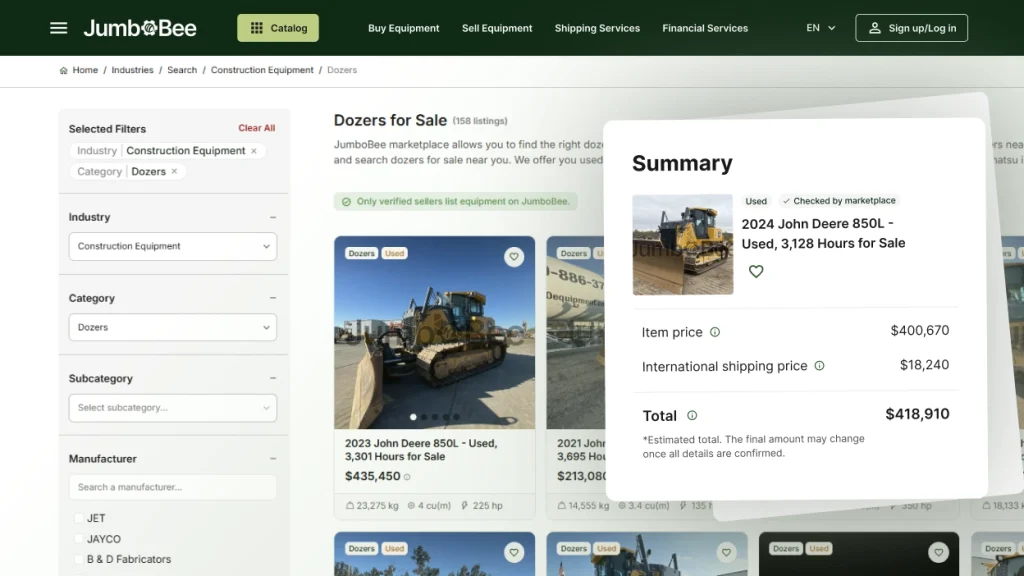
Once you understand which machine fits your task, the next step is sourcing the right model at the right price. The specs and cost figures above only turn into real savings when you can compare actual listings side by side and buy from sellers you trust, instead of getting slowed down by hidden fees, questionable dealers, or tangled international logistics.
JumboBee provides a comprehensive global heavy equipment hub designed specifically for buyers and sellers of construction machinery. You can easily compare models side by side, review detailed technical specifications, and browse listings from over 100 countries.
Whether you need a low-hour mini excavator for residential landscaping or a fleet of heavy-duty bulldozers for a mining operation, JumboBee connects you with verified sellers. The platform eliminates platform charges for buyers, meaning you only pay for the equipment and shipping. Let JumboBee handle the shipping, customs, and import compliance to keep your projects moving forward.






Be the first to leave a comment
There are no replies to this post yet. Share your thoughts and help start the conversation.