 Equipment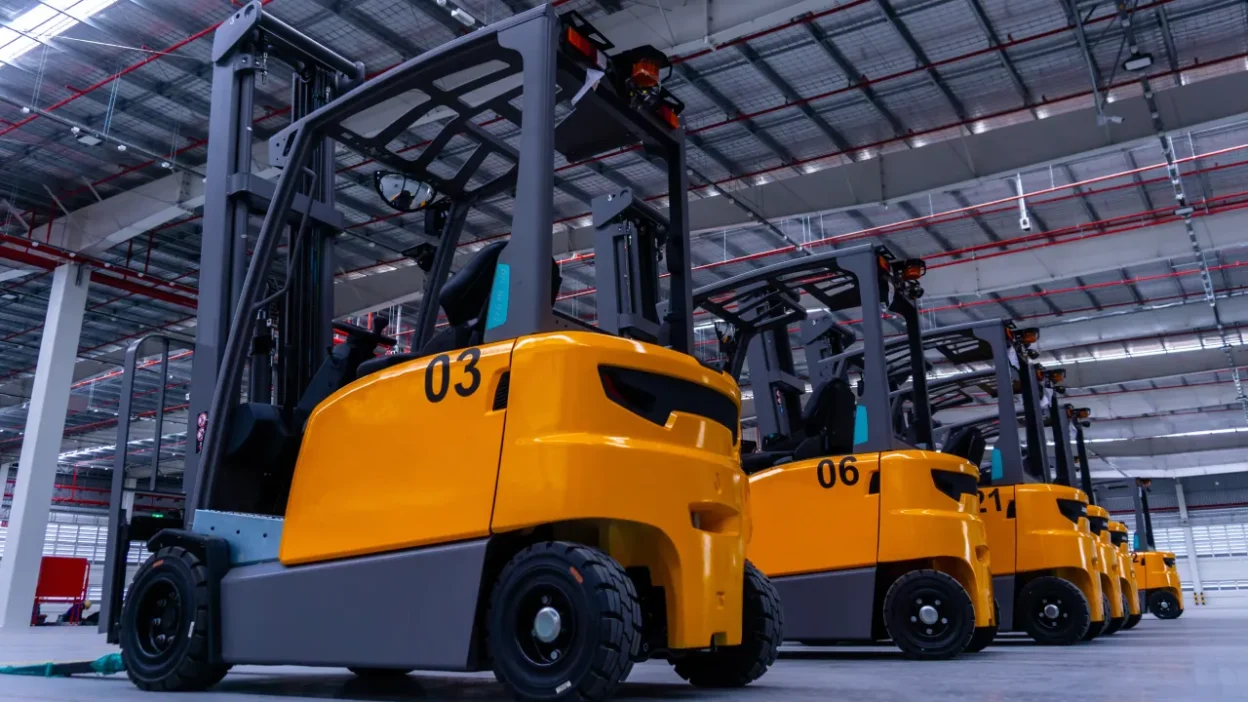
Heavy material handling demands the right machinery. Your equipment dictates your efficiency and safety, whether you manage a rugged construction site or a climate-controlled warehouse.
Understanding the types of forklifts prevents expensive disasters. Put an indoor electric lift in a muddy lumber yard, and you destroy the battery. Run a heavy-duty diesel inside a closed facility, and you violate emission laws and endanger your crew. Knowing how different types of forklifts operate is mandatory for your bottom line.
This guide gets straight to the facts. We cover official forklift classes, physical machine variations, and load capacities to help you match the equipment to your daily operations.
What Are Forklifts and Why Types Matter
Forklifts are powered industrial vehicles used to lift, move, and place materials over short to medium distances. They feature a pronged device in front that slides under cargo to lift it safely.
Multiple types of forklifts exist because no single machine can handle every industrial environment. A machine designed to stack pallets thirty feet high in a narrow aisle requires a completely different engineering profile than a machine built to carry steel pipes across uneven gravel.
Operational differences dictate machine design:
- Warehouse operations prioritize zero emissions, tight turning radiuses, and high vertical reach.
- Outdoor construction sites prioritize raw lifting power, ground clearance, and weather resistance.
- Industrial ports need massive counterweights to handle shipping containers.
Understanding these operational differences is your first step in building an efficient equipment fleet.
Forklift Types vs Classes: Difference Explained
Industrial equipment terminology often confuses buyers because professionals use two different categorization systems. You must understand how these systems overlap to make smart purchasing decisions.
OSHA classes refer strictly to safety and regulatory classifications. Occupational Safety and Health Administration guidelines group machines by fuel type, engine type, and safety features. This system tells safety managers what type of ventilation is required and what training operators need.
Machine types refer to physical design and real-world application. Terms like reach truck or telehandler describe how the machine looks and works.
Both systems matter equally. You might decide you need a counterbalance forklift based on its physical design, but you still need to choose between an electric Class I version for indoor use or an internal combustion Class V version for outdoor use.
Knowing different types of forklifts and their corresponding safety classes ensures you meet both operational goals and legal safety requirements.
Forklift Classes Explained (OSHA Classification)
Safety regulations divide powered industrial trucks into seven distinct categories. OSHA powered industrial truck standards mandate that operators receive training for each class they operate.
Class I: Electric Motor Rider Trucks
Class I machines run on electric batteries and feature seating or standing compartments for operators. Because they produce zero tailpipe emissions, they represent the industry standard for indoor applications. Lithium-ion batteries, now standard on most new Class I machines, run longer and charge faster than the lead-acid batteries they’ve largely replaced.
- Typical use: Moving pallets from loading docks to storage racks.
- Environment: Indoor climate-controlled spaces.
- Example applications: Food packaging facilities, cold storage warehouses, retail distribution centers.
Class II: Electric Narrow Aisle Trucks
Class II equipment maximizes storage space. Engineers design these machines to operate in extremely tight spaces where standard machinery cannot fit. They often feature attachments that grab pallets from the side without requiring the entire machine to turn around.
- Typical use: High-density inventory storage and retrieval.
- Environment: Indoor warehouses with narrow aisles.
- Example applications: E-commerce fulfillment centers, auto parts storage, high-rack facilities.
Class III: Electric Hand Trucks and Hand/Rider Trucks
Class III encompasses motorized pallet jacks and walk-behind stackers. Operators do not ride inside a cab; instead, they walk behind or ride on a small platform attached to the rear. These machines handle lighter loads and shorter travel distances.
- Typical use: Unloading delivery trucks and moving pallets across short flat distances.
- Environment: Indoor retail spaces and loading docks.
- Example applications: Grocery store backrooms, small manufacturing floors, local delivery operations.
Class IV: Internal Combustion Cushion Tire
Class IV trucks run on internal combustion engines powered by diesel, gasoline, or liquid petroleum gas. They feature solid rubber cushion tires designed for smooth indoor surfaces. These solid tires lower the machine profile, allowing it to clear low doorways easily.
- Typical use: Moving heavy materials between indoor bays.
- Environment: Indoor facilities with smooth concrete floors.
- Example applications: Paper mills, indoor steel manufacturing, large-scale bottling plants.
Class V: Internal Combustion Pneumatic Tire
Class V machines share engine types with Class IV but feature rugged, air-filled or solid pneumatic tires. These heavy-duty tires absorb shock and provide traction on rough surfaces, making them the ultimate outdoor workhorses.
- Typical use: Heavy material transport across unpaved or rough surfaces.
- Environment: Outdoor yards and sites.
- Example applications: Lumber yards, brick manufacturing yards, scrap metal facilities.
Class VI: Tow Tractors
Class VI vehicles do not lift loads vertically. Instead, they tow heavily loaded trailers horizontally. They feature electric or internal combustion engines and can pull multiple trailers simultaneously, much like a train.
- Typical use: Transporting massive volumes of goods across sprawling campuses.
- Environment: Indoor and outdoor flat surfaces.
- Example applications: Airport baggage handling, automotive assembly lines, heavy manufacturing plants.
Class VII: Rough Terrain Forklifts
Class VII covers massive, heavy-duty machines built with large tractor-like tires and powerful diesel engines. They feature enhanced suspension systems and four-wheel drive capabilities to navigate mud, gravel, and steep inclines safely.
- Typical use: Lifting heavy construction materials on undeveloped land.
- Environment: Outdoor rugged environments.
- Example applications: Commercial construction sites, agricultural operations, timber harvesting.
Main Types of Forklifts and Their Uses
Beyond regulatory classes, equipment is categorized by physical engineering. Exploring different types of forklifts helps you visualize how materials move through your facility.
Counterbalance Forklifts
Counterbalance machines represent the most common design worldwide. They feature lifting forks at the front and a massive cast-iron weight at the rear. This rear weight counterbalances heavy loads lifted on the front, preventing the machine from tipping forward. They do not have protruding arms, meaning you can drive them directly up to racks or trucks.
- Where used: Standard warehouses, loading docks, manufacturing floors.
- Advantages: Simple operation, versatile, available in electric and gas models.
- Limitations: Require wide turning aisles compared to indoor machines.
View available Counterbalance forklifts
Reach Trucks
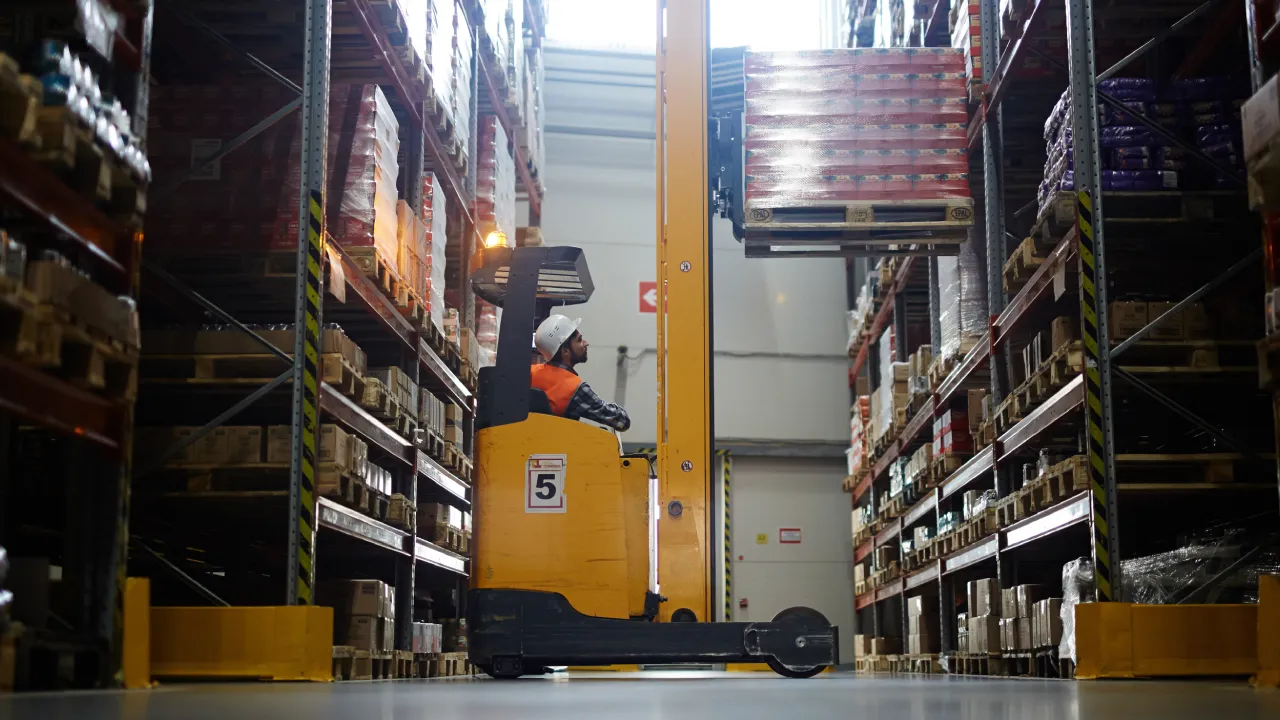
Reach trucks are indoor vehicles designed to slide their forks forward into storage racks. Operators typically stand while driving. The machine features two outer legs that distribute load weight, allowing it to lift pallets to extreme heights without needing a massive rear counterweight.
- Where used: High-density warehouses.
- Advantages: Exceptional lifting height, operates in narrow aisles.
- Limitations: Low ground clearance makes them entirely unsuitable for outdoor use.
Pallet Jacks (Manual and Electric)
Pallet jacks are the simplest material handling tools available. Manual versions require operators to pump a handle to lift pallets slightly off the ground before pulling them. Electric versions use battery power for lifting and driving.
- Where used: Retail stockrooms, tight loading docks.
- Advantages: Low cost, zero emissions, minimal training required.
- Limitations: Cannot lift loads vertically for stacking; restricted to ground-level transport.
Order Pickers
Order pickers are OSHA Class II machines (the same electric narrow-aisle category as reach trucks), but they function differently: instead of just lifting a pallet, the machine raises the operator platform alongside the forks. Instead of just lifting a pallet, the machine lifts the operator platform alongside the forks. This allows warehouse workers to manually pick individual boxes from high shelves rather than bringing an entire pallet down to ground level.
- Where used: E-commerce fulfillment, spare parts centers.
- Advantages: Drastically speeds up individual item picking processes.
- Limitations: Slower travel speeds, lower total weight capacities.
Rough Terrain Forklifts
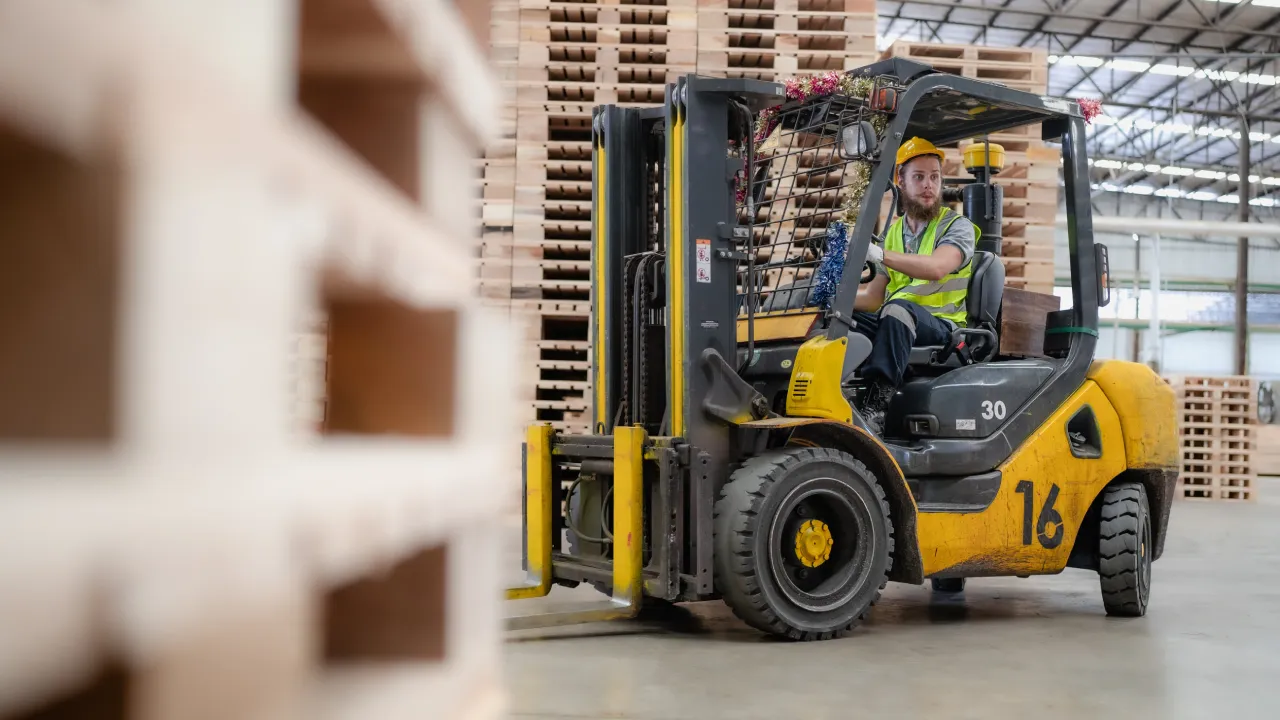
Rough terrain models feature massive, deeply treaded tires and powerful diesel engines. Engineers design these machines with high ground clearance and robust suspension systems to handle uneven, unpaved earth without getting stuck or tipping over. These are the same machines covered under OSHA Class VII above, described here by physical design rather than regulatory category.
- Where used: Construction sites, lumber yards, farms.
- Advantages: Unmatched outdoor mobility, high lifting capacities.
- Limitations: Too large for indoor use, heavy exhaust emissions.
View available Rough Terrain forklifts
Telehandlers
Telehandlers bridge the gap between a crane and a traditional forklift. OSHA classifies telehandlers under Class VII (Rough Terrain), alongside vertical-mast rough terrain forklifts – the difference is the boom arm versus a fixed mast. Instead of a vertical mast, they feature an extendable boom arm that reaches forward and upward. You can attach various tools to the boom end, including standard forks, dirt buckets, or lifting hooks.
- Where used: Agriculture, multi-story construction sites.
- Advantages: Incredible forward reach, highly versatile with attachments.
- Limitations: Complex operation requiring training, high initial purchase cost.
Side Loader Forklifts
Side loaders carry loads parallel to the direction of travel. Instead of forks pointing forward, the lifting mechanism sits on the side of the machine. This design allows operators to pick up extremely long materials and drive them down narrow aisles without needing to turn the entire load sideways.
- Where used: Steel service centers, timber yards, pipe manufacturing.
- Advantages: Best solution for safely moving long, awkward materials.
- Limitations: Inefficient for handling standard square pallets.
View available Side Loader forklifts
Industrial Forklifts (Heavy Duty)
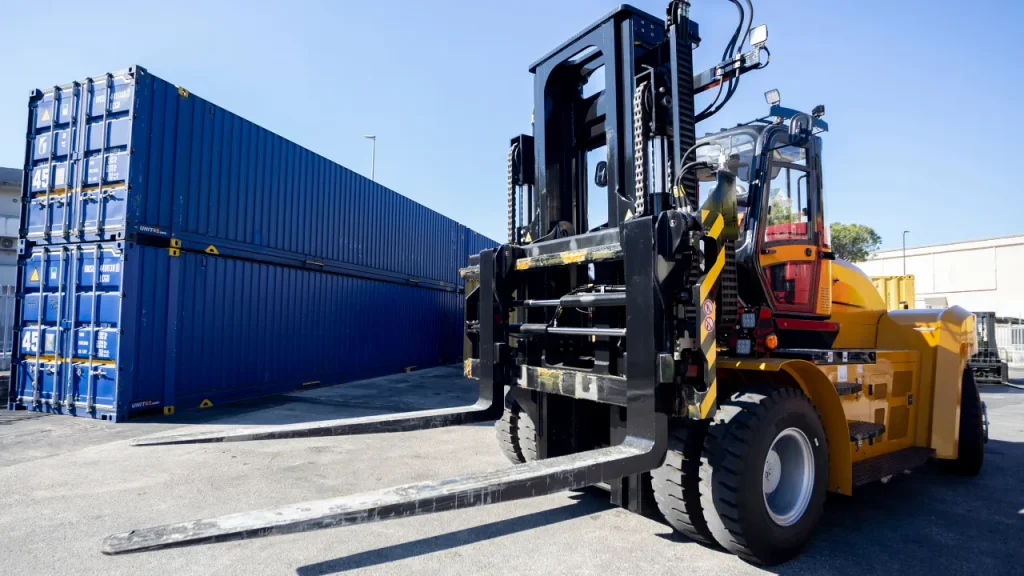
Heavy-duty industrial machines are colossal pieces of equipment designed to lift massive weights exceeding 30,000 pounds. They combine the basic design of a counterbalance machine with the raw power of heavy construction equipment.
- Where used: Shipping ports, heavy machinery manufacturing, aerospace facilities.
- Advantages: Extreme weight capacity, rugged durability.
- Limitations: Massive footprint requires vast operating space.
Forklift Types Comparison Table
Use this quick reference guide to compare core specifications across major machine categories.
| Type | Best Use | Load Capacity | Indoor/Outdoor | Power Type |
|---|---|---|---|---|
| Counterbalance | General material handling | 3,000 – 15,000 lbs | Both | Electric / IC |
| Reach Truck | High rack storage | 2,000 – 4,500 lbs | Indoor | Electric |
| Pallet Jack | Ground level transport | 2,000 – 8,000 lbs | Indoor | Manual / Electric |
| Order Picker | Individual item picking | 1,500 – 3,000 lbs | Indoor | Electric |
| Rough Terrain | Unpaved outdoor sites | 5,000 – 12,000 lbs | Outdoor | IC (Diesel) |
| Telehandler | High forward reach | 5,000 – 15,000 lbs | Outdoor | IC (Diesel) |
| Side Loader | Long timber and pipes | 4,000 – 10,000 lbs | Both | Electric / IC |
| Industrial | Shipping containers | 30,000 – 100,000+ lbs | Outdoor | IC (Diesel) |
Best Forklift Types by Use Case
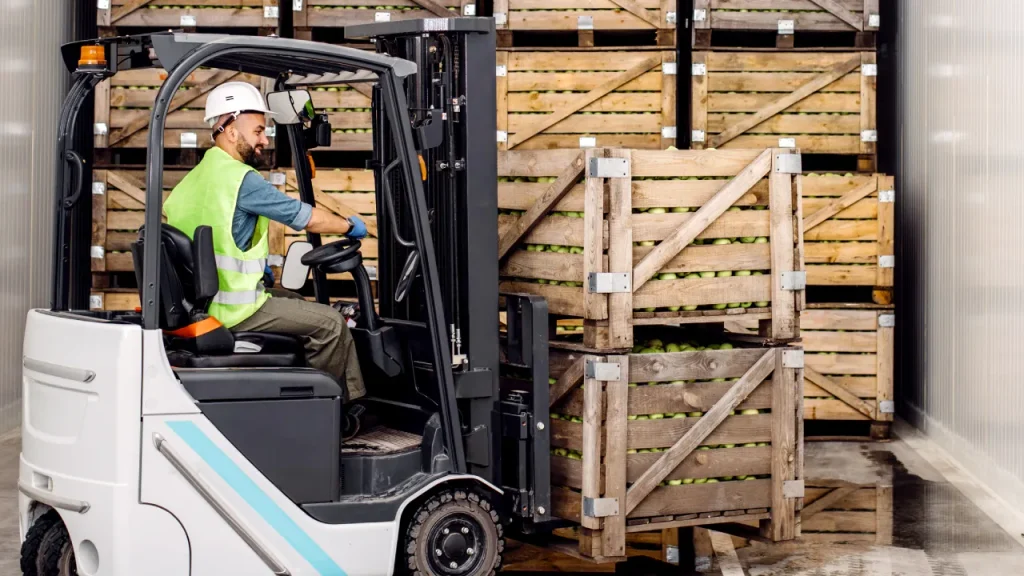
Matching equipment to daily tasks prevents excessive wear and tear while improving operator safety. Here are ideal recommendations based on common industrial scenarios.
Best Forklifts For Warehouses
Indoor distribution centers demand zero emissions, minimal noise, and tight maneuverability. Electric counterbalance machines serve as excellent all-purpose tools for unloading delivery trucks. For facilities prioritizing vertical storage space, electric reach trucks provide maximum lifting height while requiring minimal aisle width.
Best Forklifts For Construction Sites
Construction environments present severe challenges including mud, debris, and steep inclines. Rough terrain models equipped with pneumatic tires handle basic material transport efficiently. When builders need to place roofing materials or heavy beams onto second or third-story structures, telehandlers provide necessary forward and vertical reach.
Best Forklifts For Outdoor Use
Outdoor facilities like lumber yards and brick manufacturing plants — typically gravel or packed-dirt lots rather than smooth pavement — require durability without the extreme off-road capability of a Class VII rough terrain machine. Class V internal combustion machines with solid pneumatic tires offer perfect balance. They handle heavy loads easily and resist tire punctures from industrial debris while operating smoothly on asphalt or packed gravel.
Best Forklifts For Narrow Aisles
Maximizing square footage means shrinking aisle widths. Standard counterbalance machines require roughly 12 feet of aisle space to turn and safely place a pallet. Electric narrow aisle trucks, specifically reach trucks and articulated machines, can operate comfortably in aisles as narrow as 8 feet, dramatically increasing total facility storage capacity.
How to Choose Right Forklift (Step-by-Step)
Selecting heavy equipment requires careful calculation and environmental analysis. Follow this logical progression to identify what your operation needs.
Step 1: Define Working Environment
Analyze your physical space first. Measure your narrowest aisle and lowest doorway. Identify your flooring material. If you operate indoors on smooth concrete, cushion tires work perfectly. If you transition between indoor concrete and outdoor asphalt, you need solid pneumatic tires. Never purchase a machine without physically measuring your facility constraints.
Step 2: Determine Load Capacity
Never buy a machine based strictly on its maximum rated capacity without understanding load centers. Standard capacities are calculated assuming a 24-inch load center (a standard 48-inch pallet).
If you handle oversized materials, actual lifting capacity drops significantly due to leverage physics.
Calculation Example
You buy a machine rated for 5,000 lbs at a 24-inch load center. You need to move a large industrial crate that creates a 36-inch load center.
Formula: (Rated Load Center / Actual Load Center) x Rated Capacity.
Math: (24 / 36) x 5,000 = 3,333 lbs.
Your 5,000-pound machine can only safely lift 3,333 pounds of oversized material. Always calculate your load centers before purchasing.
Step 3: Consider Lifting Height
Measure the highest rack in your facility and add six inches to determine your required maximum fork height. Additionally, consider your mast type. If you must drive through standard doorways or load cargo inside semi-trailers, you need a full free-lift mast (triplex or quad).
These masts allow forks to rise several feet before the outer mast channels extend upward, preventing collisions with low ceilings.
Step 4: Choose Power Type
Evaluate your infrastructure. Electric machines require heavy initial investments in batteries and charging stations, plus dedicated space for charging. Internal combustion engines require bulk fuel storage or regular propane tank deliveries. Consider local emission regulations – indoor internal combustion use is already restricted in many jurisdictions under workplace air-quality rules (e.g., OSHA’s permissible exposure limits for carbon monoxide), so check local codes before committing to IC equipment for indoor bays.
Step 5: Match Forklift Type To Application
Combine your environmental data, capacity calculations, and power requirements to make a final selection. If you need 6,000 pounds of capacity indoors with 10-foot aisles, you immediately narrow your search to electric narrow aisle models. Using structured data prevents emotional or brand-biased purchasing mistakes.
Electric vs Internal Combustion Forklifts
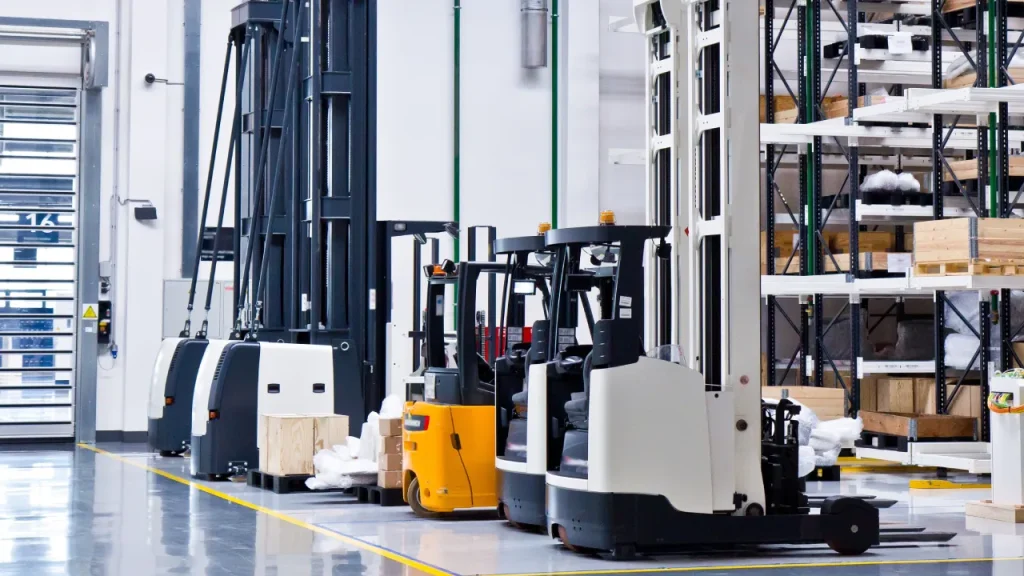
Different economic sectors rely on specific types of forklifts to maintain productivity. Understanding industry standards helps you identify proven equipment solutions.
Warehousing
Warehousing and logistics heavily depend on Class II and Class III electric machines. Speed, space optimization, and zero emissions drive this sector. Operations run 24/7, meaning facilities rely on fast-charging lithium-ion batteries to keep machinery moving across multiple shifts without swapping heavy battery packs.
Construction
Construction relies on Class VII rough terrain machines and telehandlers. Builders need equipment that can survive harsh weather, navigate deep mud, and lift heavy structural steel. Diesel power remains dominant here due to easy onsite fuel delivery and lack of charging infrastructure during early construction phases.
Farming
Agriculture utilizes telehandlers extensively. Farmers attach bale clamps to move massive hay rolls or use bucket attachments to transport feed and fertilizer. High ground clearance and four-wheel drive ensure operations continue despite heavy rain or degraded field conditions.
Shipping
Ports and shipping demand massive Class V industrial trucks. Moving 40-foot steel shipping containers requires attachments called spreaders and machines capable of lifting 80,000 pounds or more. These machines operate continuously in harsh, salty coastal environments requiring extreme rust protection and heavy-duty engineering.
Manufacturing
Manufacturing environments use a blend of equipment. Assembly lines utilize electric tow tractors to move parts between stations smoothly. Shipping departments use standard counterbalance machines to load finished goods into outgoing trucks. Diverse manufacturing demands require mixed fleets of varying forklift classes to optimize production flow.
Browse Forklifts by Type and Application
Finding machinery for your operational needs should not be complicated. JumboBee provides a seamless global marketplace to explore available heavy equipment, compare technical specifications, and evaluate options across all categories and use cases. Our platform connects you with verified sellers worldwide while handling all logistics, inspections, and shipping compliance directly.
Main physical designs include counterbalance, reach trucks, pallet jacks, order pickers, rough terrain, telehandlers, side loaders, and heavy-duty industrial trucks. Each design serves distinct environments, from smooth indoor warehouses to rugged outdoor construction sites.
OSHA categorizes industrial trucks into seven safety classes:
1. Class I (Electric Rider)
2. Class II (Electric Narrow Aisle)
3. Class III (Electric Hand Trucks)
4. Class IV (IC Cushion Tire)
5. Class V (IC Pneumatic Tire)
6. Class VI (Tow Tractors)
7. Class VII (Rough Terrain)
Electric counterbalance machines and electric reach trucks dominate warehouse environments. They produce zero emissions, operate quietly, and utilize tight turning radiuses to navigate narrow storage aisles safely.
Electric models run on batteries, produce zero emissions, require less maintenance, and cost less to operate daily, making them ideal for indoor use. Diesel models provide raw power, handle extreme weather, and allow instant refueling, making them superior for remote outdoor heavy lifting.
Class VII rough terrain machines and telehandlers handle unpaved surfaces. They feature large, deeply treaded pneumatic tires, heavy-duty suspension systems, and powerful diesel engines designed to navigate mud, gravel, and steep inclines safely.





Be the first to leave a comment
There are no replies to this post yet. Share your thoughts and help start the conversation.