 Equipment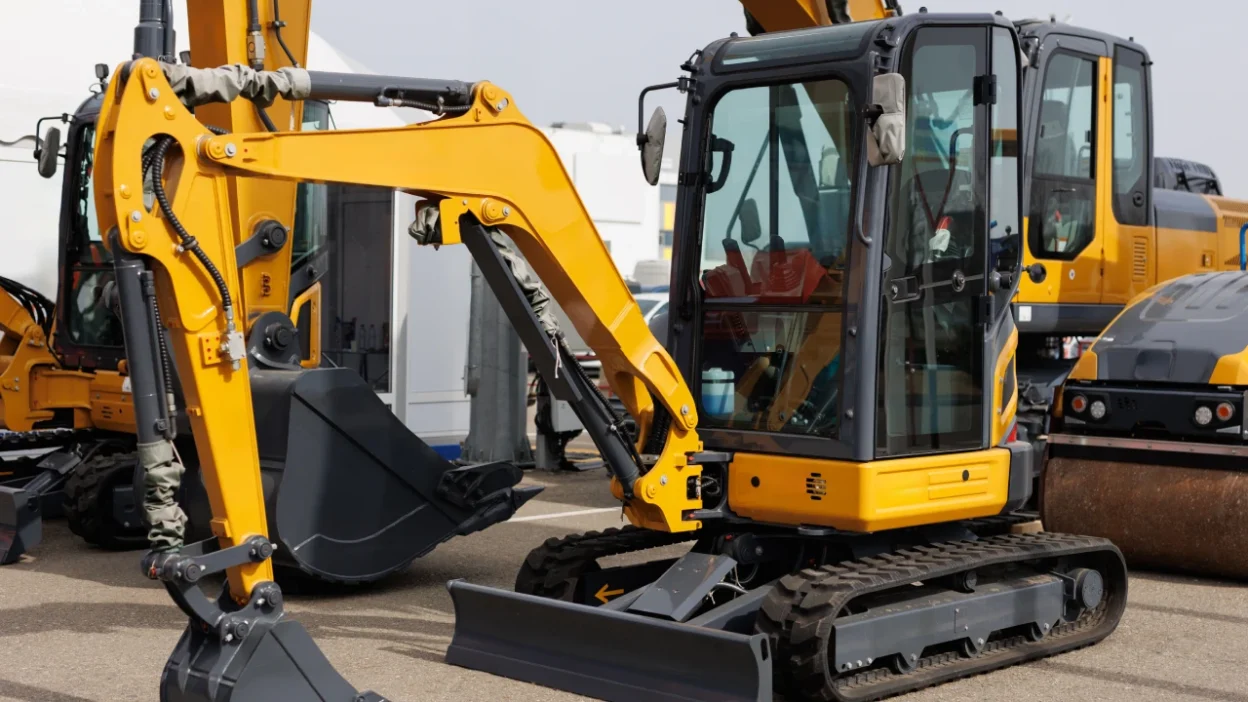
Finding the right heavy equipment for your business requires more than just picking recognizable brand names. The construction industry in 2026 demands efficiency, versatility, and strict cost management. Whether you are expanding the landscaping fleet, upgrading municipal utility vehicles, or starting an independent contracting business, selecting correct machinery dictates your profitability.
This guide breaks down everything you need to know about compact earthmoving equipment. You will learn the differences between weight classes, how to calculate total cost of ownership, and which specific models dominate the market this year. We will explore real-world scenarios, provide mathematical frameworks for your buying decision, and help you find the best mini excavator for your operational needs.
What Is Mini Excavator and When Do You Need One
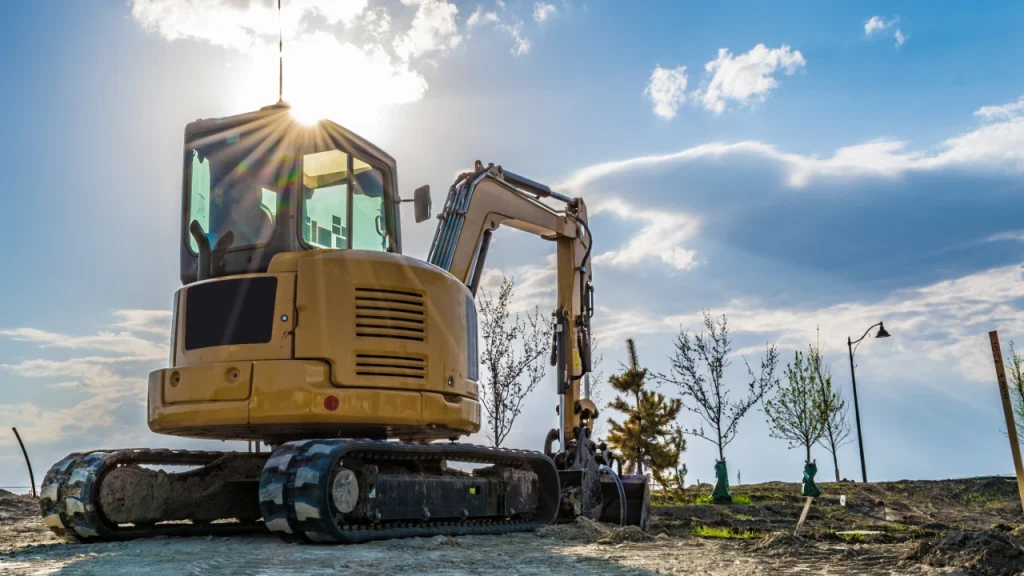
Understanding what is a mini excavator is the first step in making an informed purchase. Also known as compact excavator, this machine is a tracked or wheeled vehicle with approximate operating weight between 1 and 10 tons. It features standard backfill blade and independent boom swing, allowing operators to dig parallel to machine tracks.
Unlike standard full-sized excavators that weigh 20 tons or more, compact counterparts are designed for tight spaces, easy transportation, and minimal ground disturbance. Modern engineering in 2026 has pushed these machines to deliver hydraulic breakout forces previously reserved for much larger equipment.
Why do modern projects rely on them so heavily?
Labor shortages and rising operational costs force contractors to mechanize tasks that were once done by hand. When you ask what is a mini excavator going to do for my business, the answer lies in versatility. With auxiliary hydraulics, these machines quickly switch from digging trenches with standard buckets to breaking concrete with hydraulic hammer, or moving heavy brush with grapple attachment.
Typical Use Cases
The unmatched versatility and maneuverable footprint of these excavators allow them to be deployed across a wide variety of industries and demanding job sites.
Residential Construction
Homebuilders use compact excavators for foundation digging, basement excavation, and utility trenching. Because residential lots are becoming smaller, machines must navigate between tight property lines without damaging existing structures or neighboring fences. Zero tail swing models excel here, as their rear housing never extends beyond track width during rotation.
Landscaping
Landscapers rely on these machines to transform outdoor spaces. Tasks include grading land, building retaining walls, planting mature trees, and installing irrigation systems. Rubber tracks are crucial in this sector because they distribute machine weight evenly, preventing destruction of established turf or decorative hardscapes.
Utilities and Municipal Work
City workers and utility contractors face the challenge of repairing underground pipes or cables beneath busy streets. Compact excavators fit within a single traffic lane, minimizing road closures. Their precise hydraulic controls allow operators to dig carefully around live power lines and fragile water mains without causing catastrophic damage.
Agriculture
Farmers utilize compact excavators for land clearing, ditch maintenance, and fencing projects. Adding thumb attachment allows farmers to easily grab and remove large rocks or fallen timber. Because farm terrain varies from deep mud to hard-packed dirt, tracked undercarriages provide necessary traction to keep agricultural projects moving year-round.
Mini Excavator Sizes Explained (1 to 10 Ton Classes)
Matching machine size to your typical job site is the most critical decision you will make. Buying a machine that is too small results in wasted time and overworked engines. Buying machines that are too large leads to transportation nightmares and inability to access confined workspaces.
1–2 Ton (Micro Excavators)
Micro excavators are built for extreme accessibility. Many models in the 1-ton range feature retractable undercarriages. Operators can narrow tracks to just 28 inches, drive machines through standard interior doorway or garden gate, and then expand tracks back to 34 inches for digging stability.
Best for indoor demolition, backyard plumbing repairs, and light landscaping. These machines typically dig down to 6 or 7 feet. However, their light weight means limited breakout force. They cannot lift heavy concrete barriers or dig through heavily compacted clay with ease.
3–5 Ton (Most Popular Segment)
This weight class represents a sweet spot for most contractors seeking the best compact excavator. A 3.5-ton machine offers perfect balance between aggressive digging power and logistical simplicity. You can typically tow 3-ton to 4-ton machines behind standard heavy-duty pickup trucks without requiring a commercial driver license, depending on your local regulations.
These machines routinely offer dig depths between 10 and 12 feet. They possess enough hydraulic capability to run heavy-duty attachments like flail mowers and augers. If you are starting a general contracting business and can only afford one machine, this is the size category you should target.
6–10 Ton (Heavy Compact Class)
Machines approaching 8 to 10 tons cross territory into mid-size excavation. They boast enclosed cabs with advanced climate control, maximum dig depths reaching up to 15 feet, and massive lifting capacities.
Best for highway construction, commercial site preparation, and heavy utility installation. The trade-off is transportation. Moving a 9-ton excavator requires a dedicated heavy haul trailer, commercial driver license, and larger transport truck, significantly increasing your daily operational costs.
Size Comparison Framework
| Size Class | Average Weight (lbs) | Max Dig Depth | Transport Requirement | Primary Advantage |
|---|---|---|---|---|
| Micro (1-2 Ton) | 2,000 – 4,000 | 5 – 7 ft | Standard SUV / Light Truck | Fits through doorways |
| Standard (3-5 Ton) | 6,000 – 10,000 | 9 – 12 ft | Heavy-Duty 3/4 Ton Truck | Ultimate versatility |
| Heavy (6-10 Ton) | 12,000 – 20,000 | 13 – 15 ft | Commercial Truck & Trailer | High breakout force |
Let us look at a transport calculation example for a 3.5-ton machine.
- Excavator weight: 7,700 lbs
- Heavy-duty equipment trailer weight: 3,200 lbs
- Three steel buckets and hydraulic thumb: 800 lbs
- Total towed weight: 11,700 lbs
To tow this safely and legally, your truck must have a minimum towing capacity of 12,000 lbs, making standard 3/4-ton pickup trucks perfectly adequate.
Best Mini Excavator Brands in 2026
The equipment market in 2026 is dominated by manufacturers who have perfected electro-hydraulic controls, fuel efficiency, and operator comfort. Choosing a brand often comes down to local dealer support, parts availability, and historical resale value.
Caterpillar

Caterpillar remains an industry giant for good reason. Their Next Generation mini excavators feature industry-exclusive Stick Steer technology, allowing operators to switch from traditional foot pedals to joystick travel control at push of button. Caterpillar machines are built with heavy-duty components that withstand brutal job site conditions.
Best for buyers who prioritize long-term durability and highest possible resale value. While the initial purchase price is premium, you will recover a significant portion of that investment when selling the machine five years later.
Kubota
Kubota is arguably the undisputed leader in the compact excavator segment globally. They manufacture their own highly reliable diesel engines, which are so respected that many competing brands buy Kubota engines for their own machines. Kubota offers an incredibly wide model range, ensuring there is exact size match for any specific task.
Best for owner-operators and rental fleets. Their machines are notoriously easy to service, with wide-opening side panels providing ground-level access to all daily maintenance checkpoints.
Bobcat
Bobcat practically invented the American compact equipment market. In 2026, their R2-Series excavators feature redesigned engines that run quieter and smoother, alongside advanced cooling systems that prevent overheating during extended heavy attachment use. Bobcat parts are ubiquitous, especially in North America.
Best for contractors who rely heavily on attachments. Bobcat proprietary mounting systems and high-flow auxiliary hydraulics make it incredibly simple to swap between breakers, augers, and grapples multiple times per day.
Yanmar
Yanmar holds the prestigious title of inventing a true zero tail swing excavator. Their engineering focuses heavily on stability and fuel efficiency. ViO series machines are designed so that neither the counterweight nor front part of the upper frame exceeds track width.
Best for urban utility workers and residential contractors operating in extremely confined spaces. Yanmar engines are legendary in marine and agricultural sectors for running thousands of hours with minimal major failures.
SANY

SANY has aggressively expanded its global presence in recent years. By utilizing proven third-party components like Yanmar engines and Kawasaki hydraulics, SANY delivers professional-grade performance at a significantly lower price point than legacy brands.
Best for budget-conscious buyers, startup businesses, and farmers who need reliable equipment without a premium price tag. Their standard warranty often exceeds industry averages, providing peace of mind for new buyers.
Best Mini Excavator Models in 2026
When determining the best mini excavator for your fleet, you must look past brand name and examine specific model specifications. The following machines represent pinnacle of engineering, efficiency, and operator comfort in 2026.
Caterpillar 302.7 CR
Caterpillar 302.7 CR hits the perfect spot for residential contractors. Operating at roughly 6,000 pounds, it is light enough to tow easily but heavy enough to remain stable when lifting dense materials.
CR stands for Compact Radius, meaning it operates easily near walls and fences. The 2026 model includes a sealed and pressurized cab option, keeping dust out and air conditioning in. It features customizable operator settings, allowing different drivers to adjust hydraulic response speeds to their personal preference via digital monitor.
Kubota U35-4
If you ask veteran contractors what is best compact excavator ever built, many will point to Kubota U-series. U35-4 is a 3.5-ton class machine that works tirelessly. It features Kubota direct-injection engine that maximizes digging force while minimizing fuel consumption.
Divert valve allows operators to leave auxiliary attachments plumbed while switching hydraulic flow back to the main bucket. Its spacious cab is surprisingly large for compact machines, reducing operator fatigue during 10-hour shifts.
Bobcat E35
Bobcat E35 is a 3.3-ton zero tail swing machine that balances raw power with delicate control. E35 features a dual-flange track roller system that vastly improves ride quality and over-the-side lifting performance.
For contractors who use heavy attachments, E35 offers optional clamp-ready extendable arm, providing extra reach without needing to upgrade to heavier machine class. Integrated tie-down points make securing this machine to trailer extremely fast and safe.
Yanmar ViO35-6A
Yanmar ViO35-6A is a masterclass in confined-space engineering. As a true zero tail swing machine, operators can focus entirely on digging without constantly checking rearview mirrors to ensure they are not crushing nearby structures.
Yanmar includes standard ECO mode that reduces engine speed when hydraulics are not active, saving up to 20 percent on fuel costs over a year. Quick coupler system allows attachment changes from operator seat, boosting daily productivity.
SANY SY35U
SANY SY35U disrupts the market by offering premium features at entry-level pricing. Weighing in at 8,500 pounds, it utilizes reliable Yanmar engine and Casappa hydraulic pumps.
Unlike other brands that charge extra for every feature, SANY typically includes two-way auxiliary hydraulics, pattern change valve, and bright LED work lights as standard equipment. It is a phenomenal choice for buyers focused strictly on rapid return on investment.
How to Choose Right Mini Excavator (Real-World Scenarios)
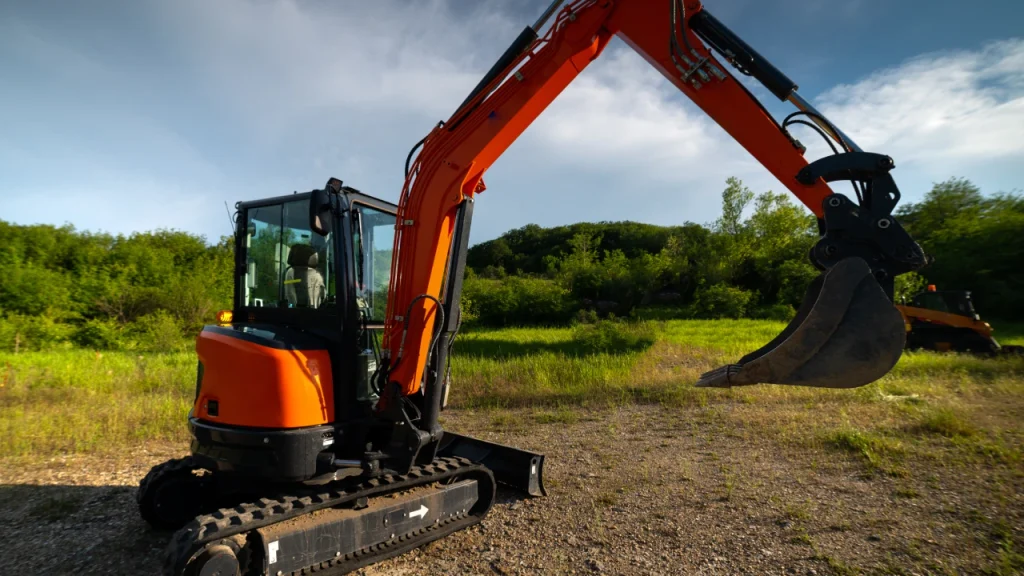
Specs on paper mean nothing if the machine does not match your daily reality. To find the best mini excavator, you must evaluate your specific operational environment. Here is a decision-making framework based on actual use cases.
For Landscaping Projects
Landscaping requires finesse. You are often working on established lawns that homeowners spent thousands of dollars perfecting.
Key Requirements
- Low ground pressure to prevent turf damage
- Retractable tracks for gate access
- Smooth hydraulics for precise grading
Decision Framework
Look closely at 1.5 to 2.5-ton machines with rubber tracks. Ensure the machine has a backfill blade with float function, which allows the blade to follow ground contour automatically for perfect final grading.
For Small Construction Businesses
General contractors never know what their next job will be. Monday might involve digging footings, while Thursday requires breaking concrete driveway.
Key Requirements
- Maximum versatility and attachment compatibility
- Easy transportability behind standard work trucks
- High breakout force for tough soils
Decision Framework
Target 3.5 to 4-ton class. This is the best compact excavator size for generalists. Prioritize models with standard quick couplers and high-flow auxiliary hydraulics to run heavy-duty breakers and augers without overheating hydraulic fluid.
For Farming and Agricultural Use
Farms are harsh environments. Equipment is often stored outside, driven through deep mud, and used for heavy lifting rather than delicate digging.
Key Requirements
- Raw lifting capacity for moving boulders and logs
- Simple maintenance and minimal complex electronics
- Durability in harsh weather
Decision Framework
Consider a 5 to 6-ton conventional tail swing machine. Conventional tail swing machines have heavy counterweight hanging off back, which provides vastly superior lifting stability compared to zero tail swing models. Since space is rarely an issue on open farms, a conventional tail is a better choice.
For Tight Urban or Residential Jobs
Urban contractors fight for every inch of space. You are dealing with parked cars, narrow alleys, and strict noise ordinances.
Key Requirements
- True zero tail swing design
- Quiet engine operation or electric alternatives
- Compact footprint
Decision Framework
Focus on 2.5 to 3.5-ton zero tail swing models. If you frequently work indoors or in strict emission-controlled urban zones, 2026 is the perfect time to consider a battery-electric compact excavator. They produce zero emissions and minimal noise, allowing for early morning work in residential neighborhoods.
Mini Excavator Price Ranges and What You Get
Understanding market pricing helps you secure financing and calculate potential return on investment. Prices vary based on operating weight, cab configuration (open canopy vs enclosed cab), and technological features.
Under $25,000
In this bracket, you are looking exclusively at used machinery or ultra-compact micro excavators.
If buying new, you might find bare-bones 1-ton machines from lesser-known overseas manufacturers. If buying from major brands, this budget limits you to older models with 3,000 to 5,000 operating hours. These machines will likely feature open ROPS (Roll-Over Protective Structure) canopies, manual attachment couplers, and significant cosmetic wear. They are suitable for part-time use or farm chores but may lack reliability needed for daily commercial contracting.
$25,000–$50,000
This is a high-volume transaction zone. Here you will find new 1.5 to 3-ton machines, or excellent condition, low-hour used 3.5 to 5-ton machines.
For $45,000, you can purchase a slightly used, premium-brand 3.5-ton excavator with enclosed cab, air conditioning, and hydraulic thumb. This price range offers the best balance of modern features, reliable performance, and manageable monthly finance payments.
$50,000+
Entering premium territory grants you access to brand new 4 to 10-ton machines fully loaded with 2026 technology.
Machines in this bracket feature advanced telematics systems tracking fuel usage and maintenance alerts via smartphone app. You get perfectly climate-controlled cabs, air-ride suspension seats, multi-function joysticks, and comprehensive factory warranties covering power trains and hydraulics for multiple years.
New vs Used Mini Excavators
Deciding between a fresh factory machine and a pre-owned unit impacts your balance sheet for years. Both paths have distinct financial advantages depending on your business maturity.
When Buying New Makes Sense
Purchasing new equipment is optimal for established businesses with steady cash flow and full project pipelines.
The first major advantage is reliability. When you turn the key at 6:00 AM, the machine starts. Zero downtime means you never pay the crew to stand around waiting for a mechanic.
The second advantage is warranty coverage. Modern emissions systems and complex electro-hydraulics are expensive to repair. Three-year comprehensive warranty protects your business from sudden $5,000 repair bills.
The third advantage is tax benefits. Many regions offer aggressive depreciation schedules for new equipment purchases, allowing you to write off the entire purchase price against your business income in the first year.
When Used Equipment Is Better Option
Startups, owner-operators, and businesses needing secondary backup machines benefit greatly from the used market.
Heavy machinery undergoes massive depreciation in the first two years. By purchasing a 3-year-old machine with 1,500 hours, you let the original owner absorb the initial depreciation hit. You get a modern machine with 80 percent of its life remaining for 60 percent of original price.
Used equipment also bypasses complex dealer wait times. In volatile supply chain environments, new machines might take six months to deliver. A used machine is available for immediate transport to your job site today.
Key Risks and How to Mitigate Them
The biggest risk in the used market is inheriting someone else’s neglected maintenance. Undercarriage replacement can cost thousands of dollars, and hydraulic pump failure can exceed $6,000.
Mitigation strategy requires strict inspection protocols. Always request fluid analysis reports for engine oil, hydraulic fluid, and coolant. These lab tests reveal microscopic metal shavings that indicate impending internal engine or pump failure. Furthermore, physically inspect track tension, check all boom pins for excessive play, and look for fresh paint that might be hiding structural cracks.
What Affects Total Cost of Ownership
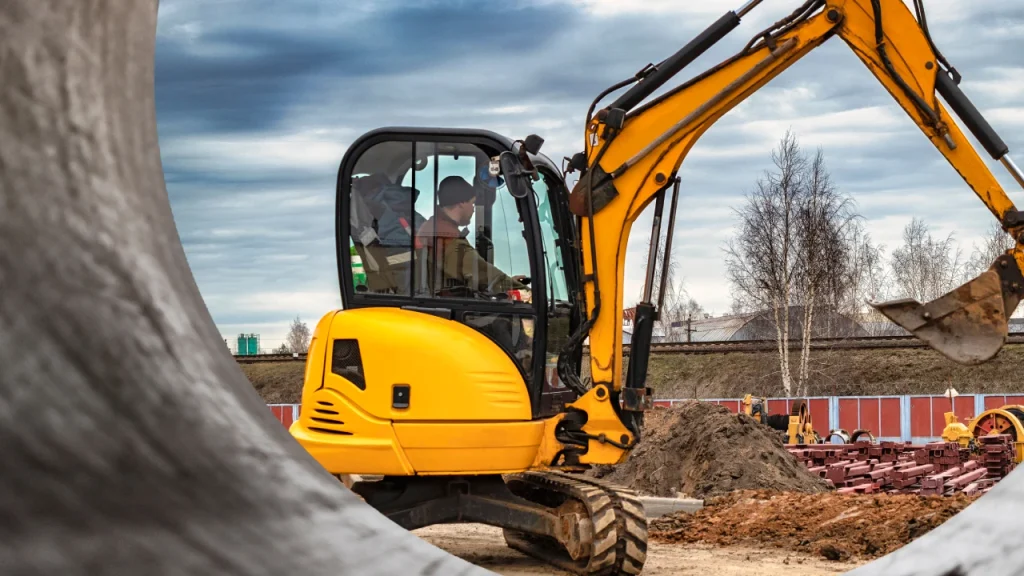
Upfront purchase price is only a fraction of what machine actually costs your business over its lifespan. To truly determine the best mini excavator, you must calculate Total Cost of Ownership (TCO).
Maintenance and Repairs
Preventative maintenance is a non-negotiable expense. You must budget for engine oil, hydraulic fluid, fuel filters, air filters, and grease.
Rubber tracks typically last between 1,000 and 1,500 hours depending on terrain. Replacing a set of tracks on a 3.5-ton machine costs approximately $1,500 to $2,500. Steel tracks last longer but cost significantly more upfront and damage paved surfaces.
Calculate roughly $2.00 to $3.00 per operating hour for standard maintenance on compact machines.
Fuel Consumption
Fuel efficiency varies wildly between brands and operating modes.
Let us calculate fuel cost for a 4-ton machine running 1,000 hours per year.
- Machine A consumes 1.2 gallons per hour.
- Machine B consumes 1.6 gallons per hour.
The difference is 0.4 gallons per hour. Over 1,000 hours, that is 400 extra gallons. At $4.00 per gallon for off-road diesel, Machine B costs $1,600 more per year just in fuel. Over a 5-year ownership period, a less efficient machine costs you extra $8,000.
Downtime and Reliability
Downtime is a silent killer of construction profits. If your machine breaks down, you still pay your operators, you miss project deadlines, and you damage your reputation with clients.
Investing in a reliable brand with strong local parts availability might cost $5,000 more upfront, but it pays for itself first time you avoid three-day work stoppage because the dealer had replacement hydraulic hose in stock locally.
Resale Value
Equipment depreciation is not linear. Premium brands like Caterpillar and Kubota hold their value exceptionally well.
If you buy a $60,000 premium machine and sell it five years later for $35,000, your actual machine cost was $25,000.
If you buy a $45,000 budget machine and sell it five years later for $15,000, your actual machine cost was $30,000.
Despite lower upfront prices, budget machines actually cost your business more money in the long run. Always factor projected residual value into your TCO calculations.
Common Mistakes When Buying Mini Excavator
Even experienced contractors make crucial errors when purchasing heavy equipment. Avoid these costly pitfalls to ensure maximum profitability.
Choosing Wrong Size
Contractors often buy the largest machine they can afford, thinking bigger is always better. This leads to immediate logistical nightmares. Large machines destroy residential driveways, cannot fit through standard property gates, and require expensive commercial hauling setups.
Conversely, buying a machine that is too small leads to engine strain and doubled project timelines. Always size machines based on your most frequent, average job, not extreme outliers. You can always rent larger machines for rare heavy-duty projects.
Ignoring Transport Requirements
Many buyers purchase a 5-ton machine only to realize their current F-250 pickup truck and landscape trailer cannot legally or safely pull it. You must calculate the total combined weight of the machine, trailer, and all heavy steel attachments. Upgrading your transport truck and trailer can easily add $40,000 to your overall equipment investment, completely destroying your initial budget.
Underestimating Operating Costs
First-time buyers often secure financing for machines but fail to budget for daily operational expenses. They do not realize hydraulic thumb attachment requires specific auxiliary flow rates, or that replacing damaged hydraulic cylinders costs thousands. Always maintain a dedicated cash reserve equal to at least 10 percent of machine purchase price specifically for unexpected repairs and routine maintenance.
Skipping Inspection or Verification
Buying used machinery based solely on internet photos is a gamble you will eventually lose. Photos do not show leaking hydraulic seals, worn track sprockets, or weak slew rings. If you cannot inspect the machine personally, you must hire an independent heavy equipment mechanic to perform a comprehensive evaluation. Paying $300 for professional inspection can save you from buying $30,000 pieces of scrap metal.
Where to Buy Mini Excavators (Local vs Global Options)
The equipment sourcing landscape has evolved by 2026. You are no longer restricted to whatever inventory your local dealership happens to have on their lot.
Dealers
Local dealerships offer convenience of physical proximity. You can sit in a cab, test hydraulic response, and build relationships with the service department. Dealerships often provide attractive factory financing rates for new equipment. However, their used inventory is limited, and their pricing includes significant overhead markups.
Private Sellers
Buying directly from another contractor via local classifieds usually yields the lowest upfront purchase price. There are no dealer fees or sales commissions. The trade-off is absolute lack of warranty or post-sale support. Once money changes hands, any mechanical failure is entirely your financial burden.
Global Marketplaces
Modern internet infrastructure has revolutionized heavy equipment trading. Global marketplaces connect buyers in one country with sellers across the world. This approach provides access to thousands of machines, allowing you to find the exact make, model, and hour count you desire.
Prices vary significantly between global markets due to currency fluctuations and regional economic conditions. Savvy buyers frequently source high-quality used machines from international markets at substantial discounts compared to local dealer prices.
JumboBee is your premier global marketplace for heavy equipment. We eliminate stress of international equipment sourcing by offering built-in logistics, customs handling, and secure payments. You see full cost instantly — equipment, shipping, and inspections — with absolutely no hidden platform fees.
Every seller on JumboBee is strictly verified, ensuring you shop with complete confidence. Whether you need a single 3-ton compact excavator for your landscaping business or fleet of heavy machines, JumboBee handles everything from purchase to door-to-door delivery. Search our global listings today and trade smarter.
Conclusion: How to Choose Best Mini Excavator
Selecting ideal compact earthmoving equipment requires a methodical approach. You must push past brand loyalty and focus strictly on the mathematical reality of your daily operations.
First, define what is a mini excavator going to do for your specific business. Map out your average job site dimensions, required digging depths, and necessary lifting capacities. Second, lock down your size class. Ensure your current transport vehicles can legally haul machines and its attachments. Third, evaluate Total Cost of Ownership. Do not just look at monthly finance payment; calculate fuel burn rates, track replacement costs, and projected five-year resale value. Finally, protect yourself by enforcing strict inspection protocols on any used equipment purchase.
When you focus on long-term value, operator comfort, and precise mechanical specifications, you transform massive capital expenses into highly profitable business assets. If you are ready to expand your fleet without dealing with hidden dealer markups or limited local inventory, the global market is waiting for you on JumboBee.






Be the first to leave a comment
There are no replies to this post yet. Share your thoughts and help start the conversation.