 Equipment
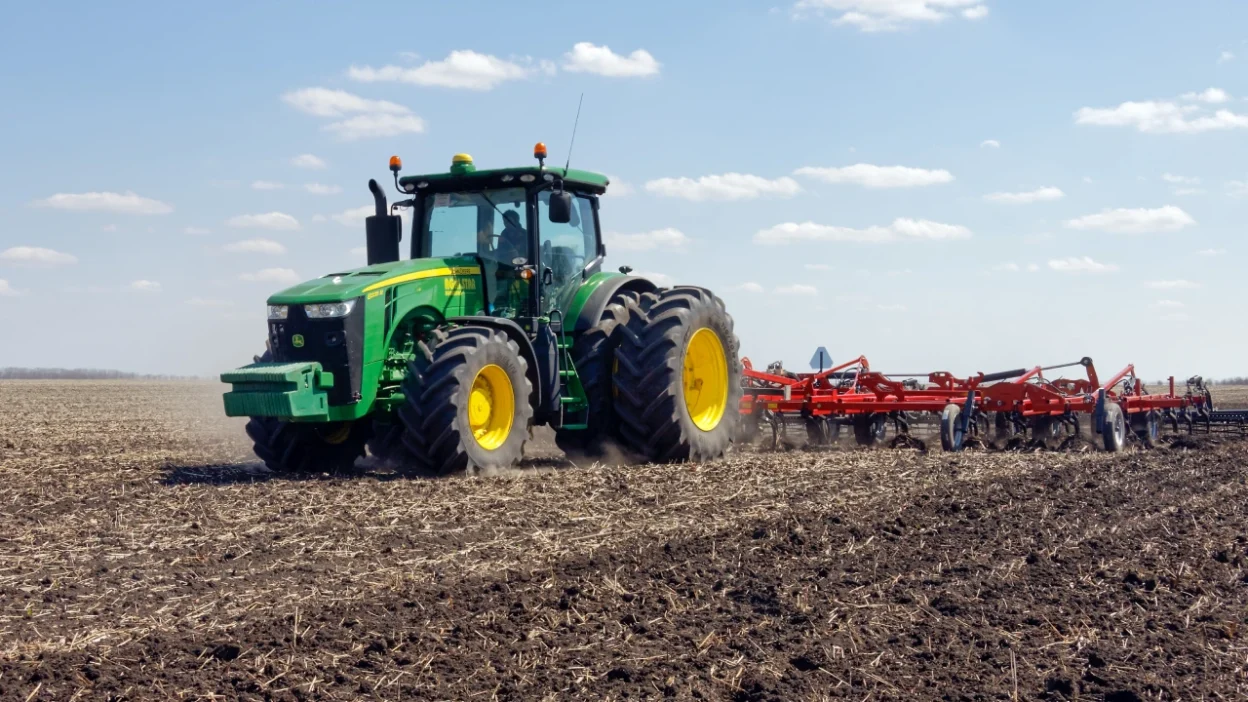
A cultivator is a tillage implement that drags tines, shanks, or discs through the top layer of soil to loosen it, break clods, and uproot weeds. It does not turn the soil over the way a plow does, and it works shallower. Farmers use one to prepare a seedbed before planting and to control weeds between crop rows once the crop is up. Which type suits you depends on your soil, crop, and tractor, and this guide ends with a used-buying checklist.
- A cultivator is a secondary tillage implement that loosens topsoil, breaks clods and cuts out weeds.
- Unlike a plow, it works shallower and does not invert the soil; a rotavator is PTO-driven and chops instead.
- The five main types are field (spring tine), rigid tine, disc, rotary, and row-crop cultivators.
- Iowa State puts a field cultivator at 3 to 5 in (8 to 13 cm) and a chisel plow at 7 to 9 in (18 to 23 cm).
- Cultivating wet soil compacts it, and extra passes cost fuel, moisture, and soil structure.
- Power follows draft: width (ft) x speed (mph) x draft (lb/ft) x soil factor / 375 gives the PTO horsepower.
- On a used machine, check the frame, tines, springs, disc bearings, folding hydraulics, and the gearbox.
- JumboBee lists tillage equipment from verified sellers worldwide, with international shipping support.
What Is a Cultivator?
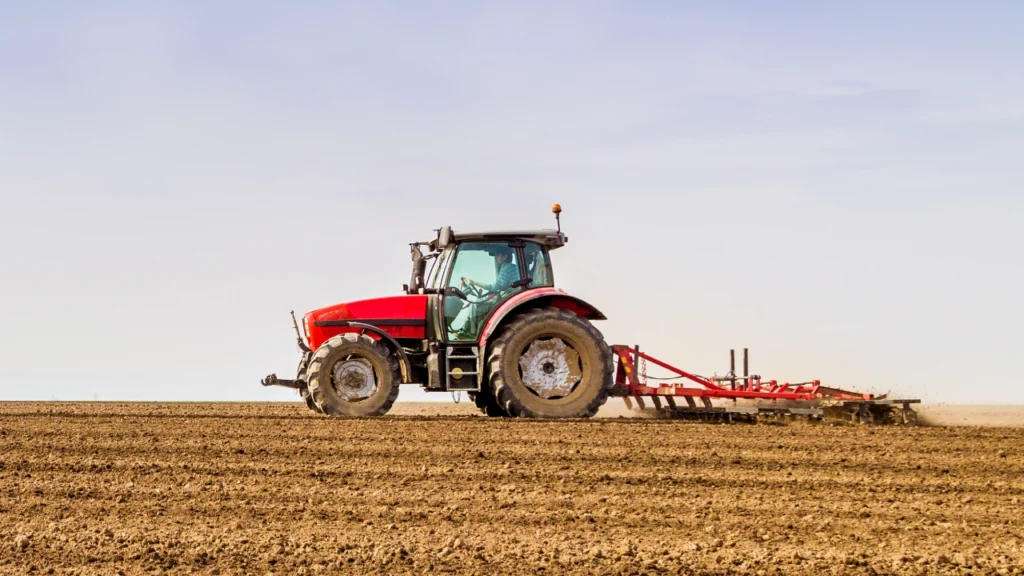
A cultivator is a secondary tillage implement that loosens and levels soil already broken by deeper tillage and kills small weeds by cutting their roots. It works the top few inches, pulled on a drawbar or carried on a three-point hitch, the three-armed linkage at the back of a tractor.
What a cultivator does on a farm:
- Prepares a seedbed, the loose, level layer a planter drops seed into
- Kills small weeds by cutting or burying them
- Breaks the crust that forms after heavy rain
- Mixes residue, manure or fertilizer into the topsoil
- Levels ridges and furrows left by deeper tillage
Primary tillage is the first and deepest pass, the one that breaks compacted or unworked ground, and a moldboard or chisel plow does it. Secondary tillage follows, and a cultivator implement belongs to that group: shallower, faster, aimed at the seedbed rather than the subsoil.
Cultivator vs Plow vs Harrow vs Rotavator
| Implement | Tillage type | Working depth | Powered by | Main job |
|---|---|---|---|---|
| Plow (moldboard) | Primary | 7 to 10 in (18 to 25 cm) | Drawbar | Breaks and turns the soil over |
| Plow (chisel) | Primary | 7 to 9 in (18 to 23 cm) | Drawbar | Loosens deep soil without inverting it |
| Cultivator | Secondary | 3 to 5 in (8 to 13 cm) | Drawbar or three-point hitch | Loosens topsoil, removes weeds, prepares the seedbed |
| Harrow (disc, tine, chain) | Secondary | About 1 to 12 cm (0.4 to 4.7 in): spring-tooth harrows 1 to 10 cm, compact disc harrows up to 12 cm | Drawbar or three-point hitch | Breaks clods, levels the surface |
| Rotary tiller (rotavator) | Primary or secondary | About 5 to 25 cm (2 to 10 in) across one manufacturer’s range | Tractor PTO (power take-off) | Mixes and pulverizes the soil |
The chisel plow and cultivator depths are the ones Iowa State University assumes in its draft table in Farm Machinery Selection, revised January 2017. Purdue puts moldboard plowing at 7 to 10 in and chiseling at 8 to 10 in in autumn against only 4 to 6 in in spring, to stay out of the wetter layers. Harrow and rotavator figures are manufacturer settings: spring-tooth harrows work about 1 to 10 cm, Lemken’s Heliodor 9 compact disc harrow up to 12 cm, and Kuhn’s EL power tillers from 5 to 15 cm on the small EL 22 to 25 cm (10 in) on the EL 402 R. Sources differ because each assumes a different job, so read them as ranges.
Garden Cultivators vs Tractor Cultivators
The word covers two different machines. A garden cultivator is a hand tool, or a small electric or gas-powered mini tiller that one person walks behind, used on beds, borders and vegetable plots measured in square meters. A tractor cultivator is an implement several meters wide, mounted or trailed, sized by working width and the power needed to pull it.
The rest of this guide covers tractor cultivators. If you farm a smallholding, our guide to compact tractor attachments covers what fits on a small tractor.
How Does a Cultivator Work?
A cultivator works by pulling soil-engaging parts through the ground at a set depth while the tractor moves forward. Each tine, shank or disc lifts and fractures a strip of soil, and the strips overlap so the whole surface is worked in one pass.
What matters:
- Frame or toolbar. The steel backbone that carries everything else and sets the working width, the strip of ground covered in one pass.
- Tines and shanks. The legs that reach into the soil. Spring tines flex and vibrate, shattering clods and shaking soil off weed roots; rigid shanks pull harder through firm ground.
- Points and sweeps. The replaceable parts bolted to each tine. Narrow points penetrate; wide sweeps cut a continuous strip just under the surface.
- Depth control. Gauge wheels, the hitch, or both, hold the frame at a constant height.
- Rear attachments. Rollers, crumblers or leveling harrows break the last clods and firm the surface.
A rotary cultivator works the other way round. Its blades are driven by the power take-off (PTO), the splined shaft that sends engine power to an implement, so they chop rather than drag. That gives a fine seedbed in one pass, at the cost of fuel and wear.
Types of Cultivators
There are five different types of cultivators in common farm use: field (spring tine), rigid tine and chisel plow, disc, rotary and row-crop. They differ in working depth, power demand and what they leave behind.
| Type | How it works | Working depth | Power needed | Best for |
|---|---|---|---|---|
| Field (spring tine) cultivator | Spring-loaded tines vibrate through the soil | 3 to 5 in (8 to 13 cm) | 250 lb draft per foot of width, range 60 to 300 | Seedbed preparation |
| Rigid tine cultivator and chisel plow | Fixed shanks break hard layers | 7 to 9 in (18 to 23 cm) | 500 lb draft per shank, range 200 to 800 | Hard, compacted soil, deeper loosening |
| Disc cultivator and disc harrow | Angled disc gangs (rows of discs on one shaft) cut and mix | Up to 12 cm (4.7 in) on one compact disc harrow | 200 lb per foot tandem, 325 lb heavy or offset | Residue, clods, stubble |
| Rotary cultivator (rotary tiller, rotavator) | PTO-driven blades rotate and chop | About 5 to 25 cm (2 to 10 in) on one manufacturer’s range | Rated by PTO power, not draft | Fine seedbed, small fields, vegetables |
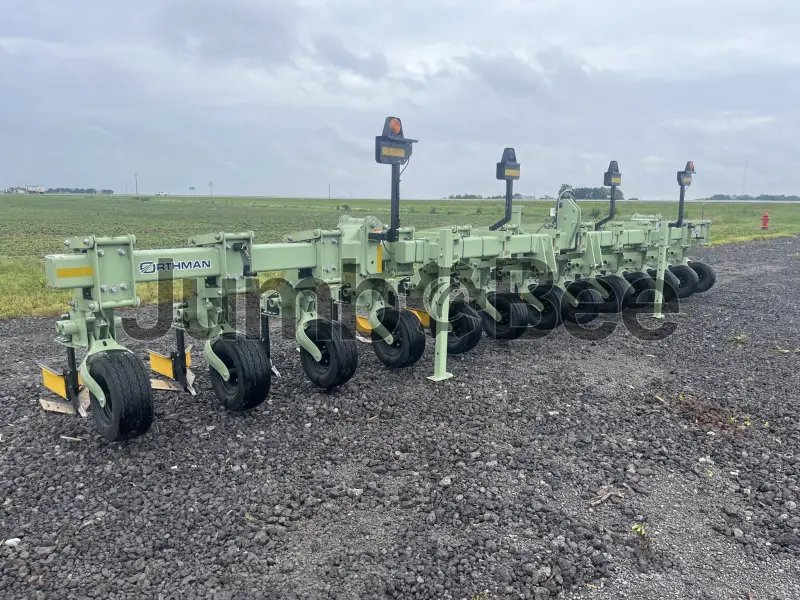
| Row-crop (inter-row) cultivator | Sweeps work between crop rows | Shallow, just below the weed roots | 80 lb per foot, range 40 to 120 | Mechanical weed control in row crops |
Rigid tine draft is given per shank, not per foot, so multiply it by the number of shanks. 100 lb per foot is about 1.46 kN per meter.
Draft is the pull an implement needs, and these figures are the default values in Iowa State’s Farm Machinery Selection, revised January 2017. The formula that turns draft into tractor power is further down this page. Requirements rise with heavier soil, greater depth and higher speed.
1. Field (Spring Tine) Cultivators
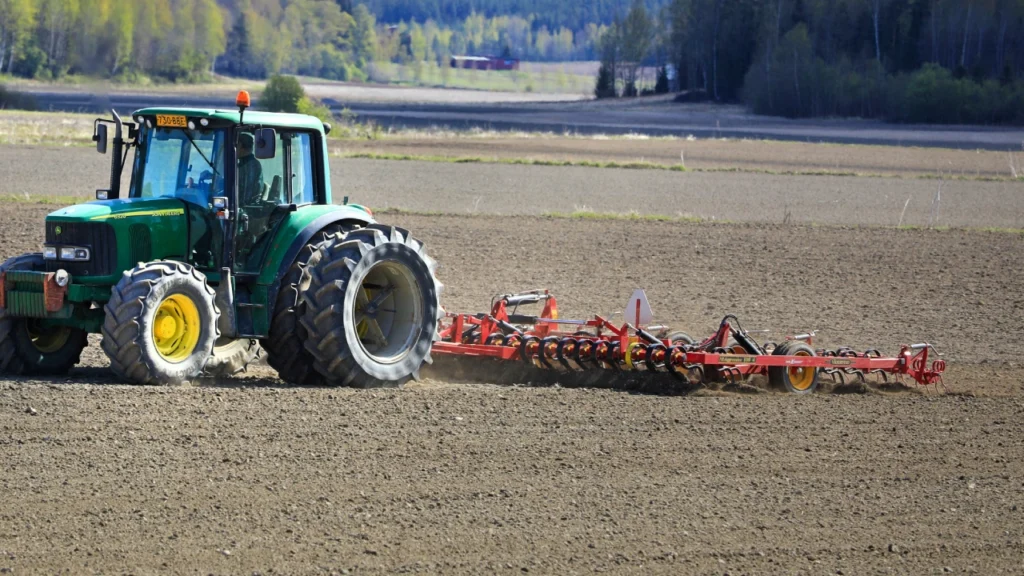
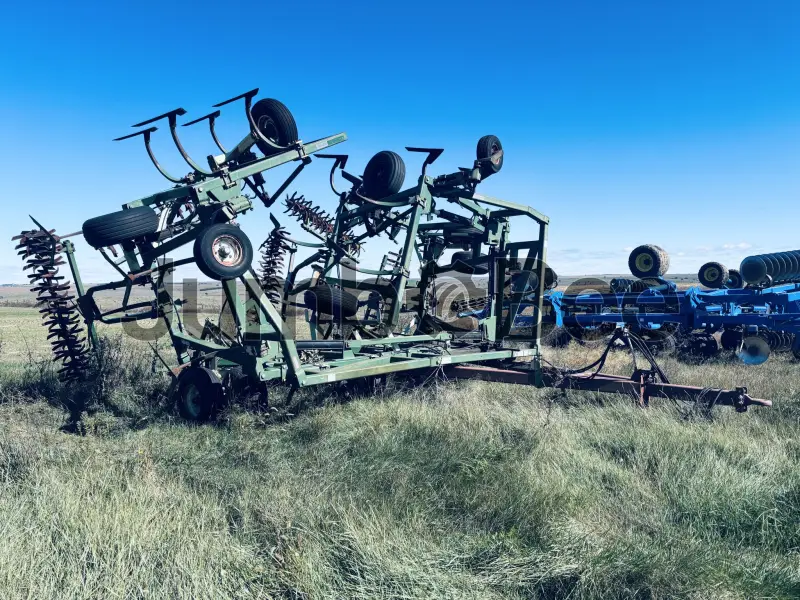
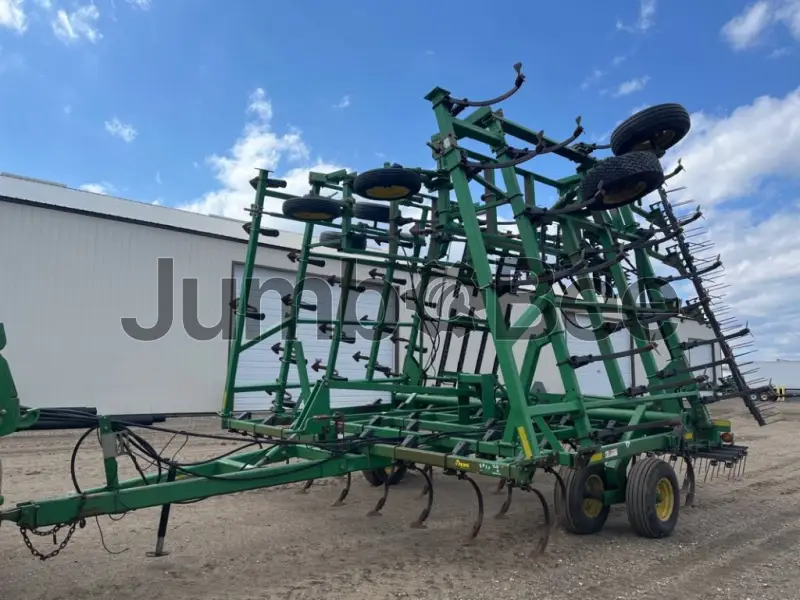
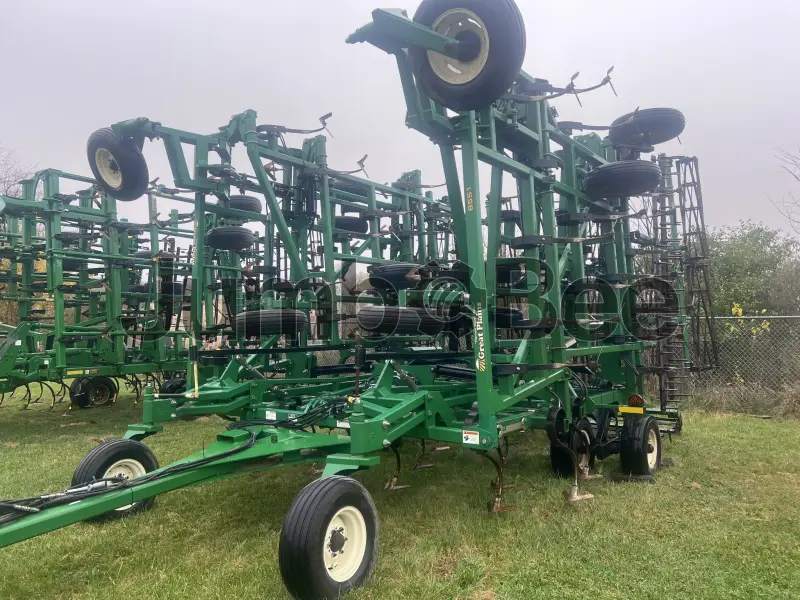
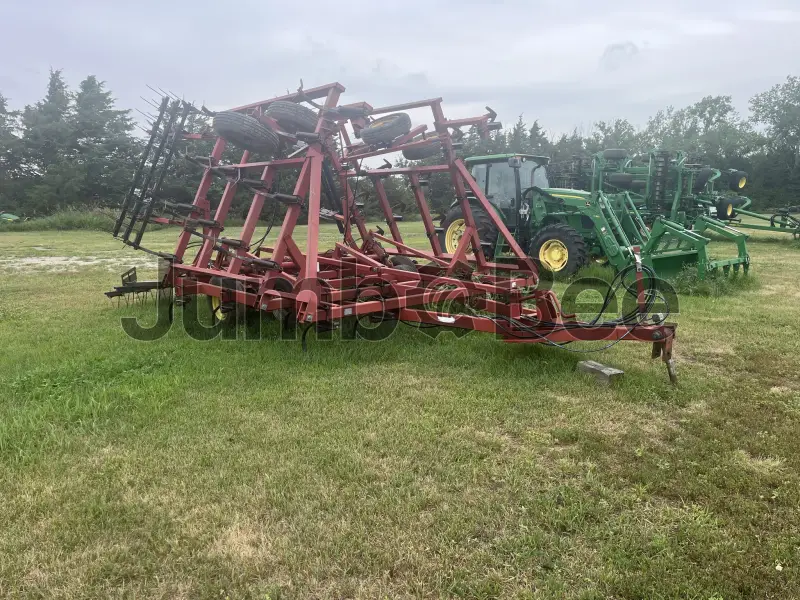
A field cultivator carries rows of spring-loaded tines on a wide frame, and it is the standard tool for finishing a seedbed. The tines flex as they move, so they vibrate through the soil, shatter clods and leave a loose, even layer for the drill.
It suits ground already worked, not hard unbroken soil. Mounted versions run a few meters wide; trailed versions fold for the road and cover far more per pass. At the large end, JumboBee lists the John Deere 2210 field cultivator at 14,173 mm (46 ft 6 in) working width and 127 mm working depth.
2. Rigid Tine Cultivators and Chisel Plows
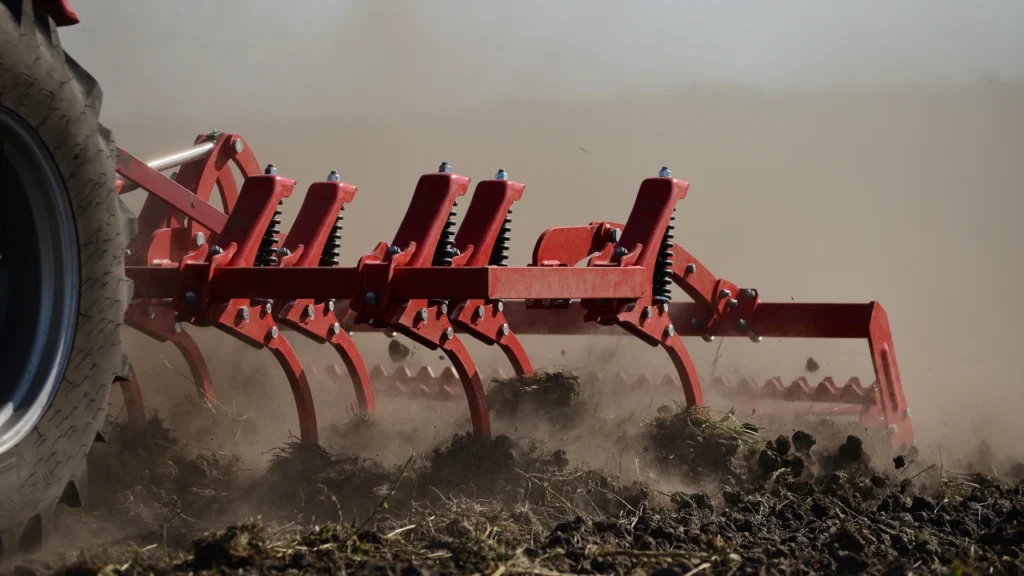
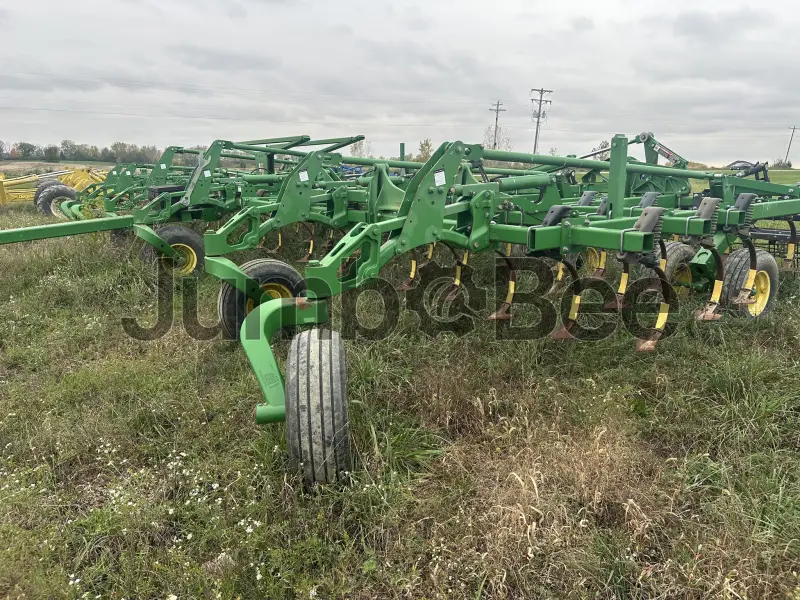
Rigid tine cultivators and chisel plows use fixed shanks that do not flex, so they can be pulled deeper and through firmer ground. They break a plow pan (a dense layer that forms at the base of repeated tillage) or compacted layer and loosen soil ahead of a seedbed pass rather than finishing one. At about 500 lb per shank, a 9-shank machine at 5 mph in firm soil needs roughly 92 PTO hp, far more per meter than a spring tine machine, and leaves a rough surface that usually needs a second pass.
3. Disc Cultivators and Disc Harrows
A disc cultivator carries gangs of concave steel discs set at an angle to the direction of travel. A disc gang is a row of discs on one shaft; each disc cuts in, lifts a slice and throws it sideways, chopping residue into the topsoil.
Discs handle heavy stubble better than tines because they cut through trash instead of dragging it, but they bring moist soil up, so they are a weak choice when the field is drying out.
4. Rotary Cultivators (Rotary Tillers and Rotavators)
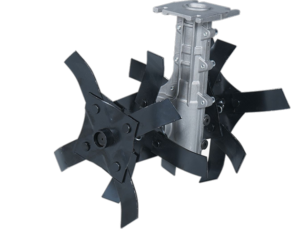
A rotary cultivator, also called a rotary tiller or rotavator, carries L-shaped or C-shaped blades on a horizontal shaft driven by the PTO. The blades chop and mix as they turn, producing a fine, uniform tilth (the crumbly texture of a good seedbed) in a single pass.
This is the tool for small fields and vegetable ground, and it appears on most lists of small farm equipment. The trade-offs are speed and structure: rotary machines work slowly, use more fuel per hectare, and working at the same depth year after year can build a tillage pan, so vary the depth. Kuhn’s EL 62 to 92 tillers are 1.20 to 2.30 m wide, and its 6 m EL 402 R needs at least 300 hp of PTO power. University of Nebraska–Lincoln Extension advises varying tillage depth to minimize a tillage pan where the implement shears the soil, and Kuhn lists the EL 62, 82, and 92 at working widths of 1.20 m to 2.30 m.
5. Row-Crop (Inter-Row) Cultivators
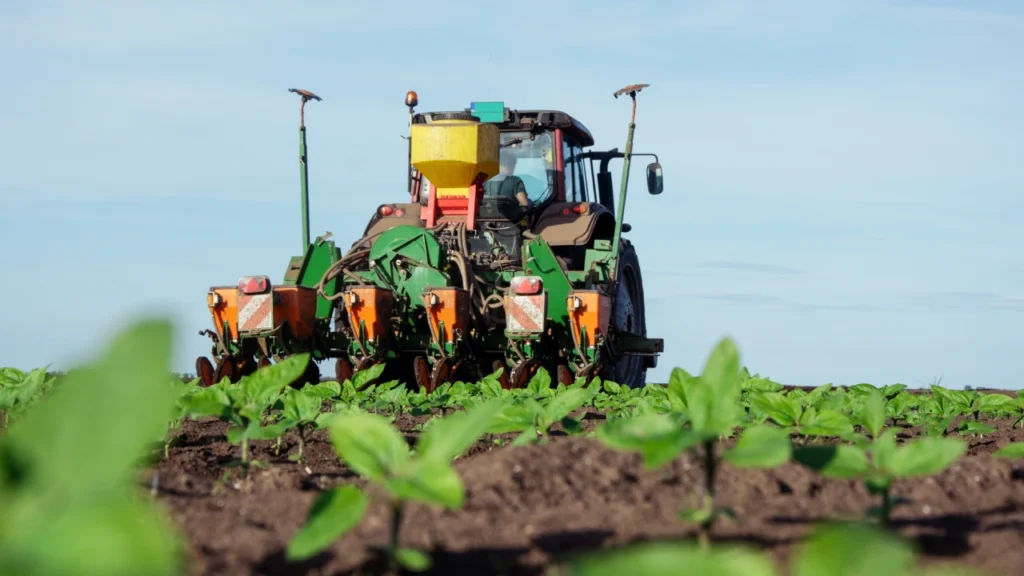
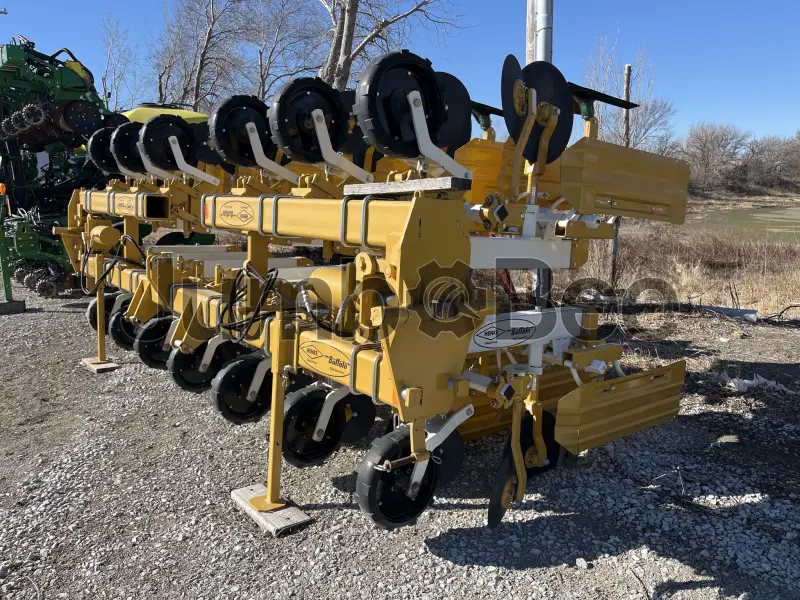
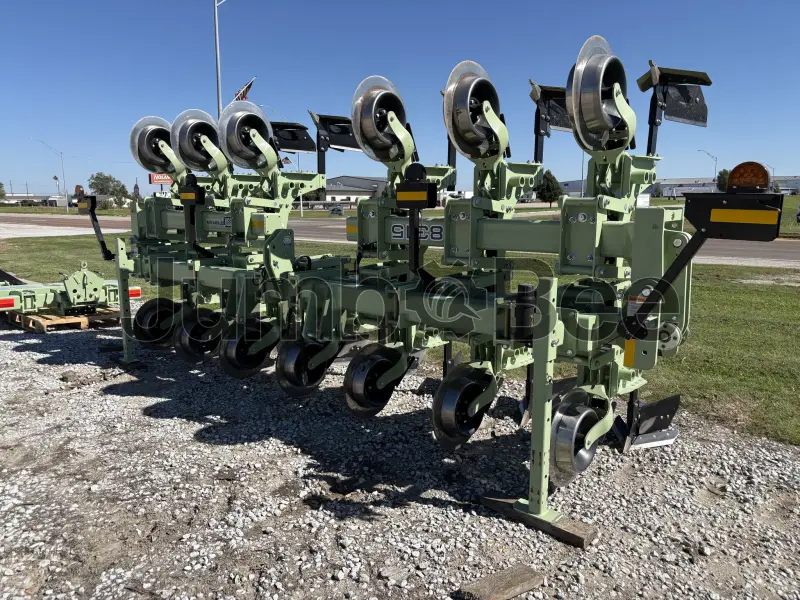
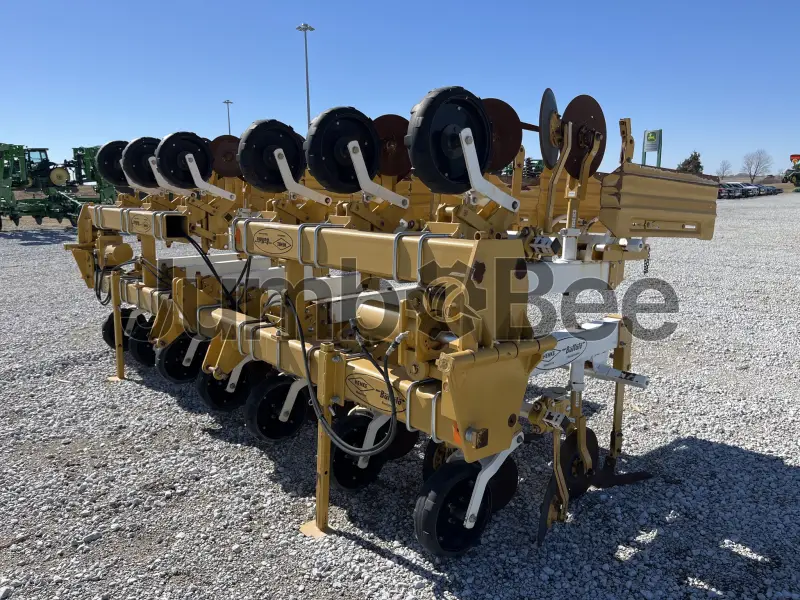
A row-crop cultivator works between the rows of a growing crop rather than across bare ground. Sweeps run in the gaps, cutting weeds off below the surface while the crop stands, with spacing set to match the planter and shields to keep thrown soil off young plants. It is the main mechanical alternative to herbicide, which is why it matters on organic farms and in corn farming equipment lineups.
Newer machines steer themselves. Lemken’s iQblue vision reads the row with a camera and steers the hoeing frame sideways, which Lemken says lets it work to within 2 cm of the crop at up to 15 km/h. Kuhn fits ROWLINK guidance to its ROWLINER cultivators, Salford builds a Precision Row Crop Cultivator, and Garford’s Robocrop InRow Weeder works between individual plants within the row.
Kuhn builds the ROWLINER in 6- and 8-row versions for 75/80 cm (30/32 in) rows and a 12-row version for 45/50 cm (18/20 in) rows, 4.5 to 6 m (15 to 20 ft) wide.
Related Implements and Mounting
Other machines get called cultivators in conversation, and our overview of types of farm equipment places each in the wider lineup. Tine and chain harrows tidy the surface rather than loosen it. Vertical tillage tools use near-vertical discs to size residue with very little soil movement: JumboBee lists the John Deere 2660VT at 4,370 mm (14 ft 4 in) wide, about 102 mm deep, at 103 kW (140 hp). All come in mounted versions, carried on the three-point hitch, and trailed versions that run on their own wheels and fold for the road.
When to Use a Cultivator: Main Uses
Cultivate when the soil is dry enough to crumble and the job is seedbed preparation, weed control, crust breaking or mixing something into the topsoil. The main cultivator uses are:
- Seedbed preparation. One or two passes after primary tillage, leaving a loose, level layer for the planter.
- Weed control. Early, while weeds are small and their roots shallow.
- Breaking surface crust. After heavy rain has sealed the surface and seedlings are struggling through.
- Incorporating residue, manure or fertilizer. Mixing it into the topsoil so it breaks down in contact with soil.
When not to cultivate:
- Wet soil. The USDA NRCS, in its technical note on soil compaction, states that soil is especially susceptible to compaction at field capacity or wetter, and that field operations should be avoided when soil is wet. Wet ground smears instead of crumbling, and the tines leave a compacted layer at working depth.
- Dry, windy conditions. Working dry soil until no residue is left on top, what the NRCS organic tillage guide calls clean tillage, leaves the surface open to wind and water erosion and to crusting.
- More passes than the job needs. Each pass costs fuel and time, and takes more moisture out of the soil.
Reduced-tillage and no-till systems cut passes or drop tillage altogether, planting straight into residue. The same NRCS note records that soils with cover crops or high-residue cover are less likely to form crusts, and that crusting restricts seedling emergence and water infiltration, so residue left on top can save a crust-breaking pass later.
How to Choose the Right Cultivator
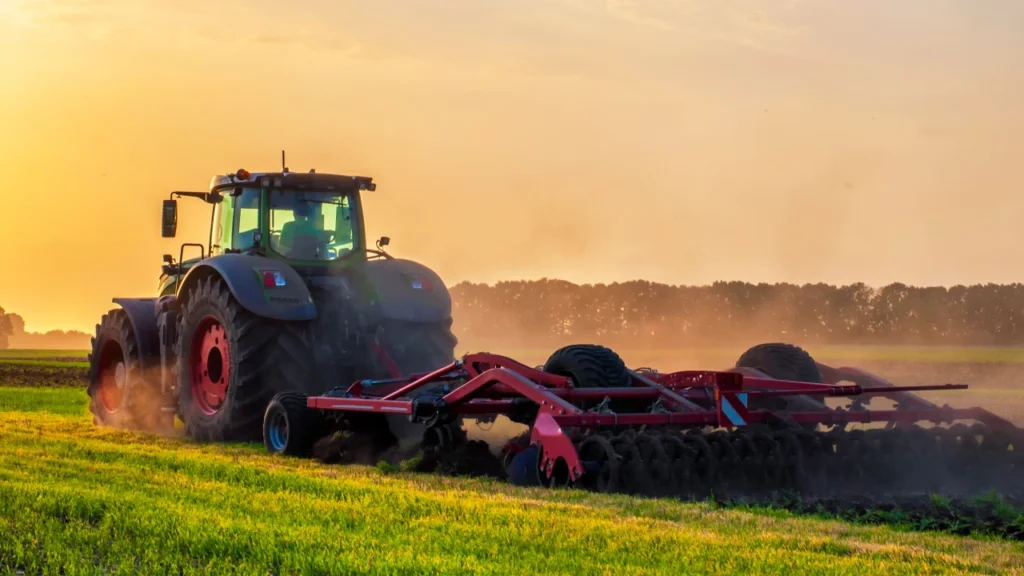
Choose by soil, crop, farm size and the tractor you own. The tractor sets the ceiling: an implement too wide or too deep for the available power will not hold its depth, and one too small wastes time. If the tractor is still an open question, our tractor buying guide covers that side first.
| Farm or situation | Recommended type | Why |
|---|---|---|
| Garden or small plot | Garden cultivator or small rotary tiller | Hand-worked or compact tractor, and fine tilth matters more than speed |
| Small farm with a compact tractor | Mounted spring tine or rotary cultivator | Fits the lift capacity and hitch category of a small tractor |
| Mid-size arable farm | Mounted or trailed field cultivator | Enough width to cover the ground without outgrowing the tractor |
| Large arable farm | Trailed folding field cultivator or disc | Width for the area, folding for the road |
| Hard, compacted soil | Rigid tine cultivator or chisel plow | Fixed shanks hold depth through firm ground |
| Row crops and organic farming | Row-crop cultivator | Works between standing rows, so weeds are cut without herbicide |
| Tractor power (hp) | Field cultivator width (250 lb/ft) | Heavy or offset disc width (325 lb/ft) | Example |
|---|---|---|---|
| Under 50 | Up to about 8 ft (2.4 m) | Up to about 6 ft (1.8 m) | Frontier PC1072 field cultivator: 6 ft (1.83 m), Category 1 hitch, 25-45 hp |
| 50 to 100 | 8 to 16 ft (2.4 to 4.9 m) | 6 to 12 ft (1.8 to 3.8 m) | Kuhn EL 62 to 92 rotary tillers, 1.20 to 2.30 m |
| 100 to 200 | 16 to 32 ft (4.9 to 9.8 m) | 12 to 25 ft (3.8 to 7.6 m) | John Deere 2660VT: 14 ft 4 in (4.37 m) at 140 PS |
| Over 200 | 32 ft (9.8 m) and wider | 25 ft (7.6 m) and wider | Lemken Rubin 10 compact disc harrow: 221 to 300 hp for 5 m (16 ft 5 in) |
Widths are calculated with Iowa State’s formula at 6 mph in firm soil (soil factor 1.54), using its default draft. Power needs rise with heavier soil, greater depth and higher speed, so size down on heavy clay or for deep work.
Work the power out from draft. Those bands are a starting point; draft settles it. Iowa State converts draft into power with one formula: PTO horsepower = width (ft) x speed (mph) x draft (lb per ft) x soil factor / 375. The soil factor depends on surface and drive type, running from 1.52 for a four-wheel drive on firm ground to 2.13 for a two-wheel drive in sandy or soft soil. Iowa State’s own example, a 24 ft tandem disc at 6.0 mph in firm soil with a soil factor of 1.54, comes to 118 PTO horsepower.
Then check how much ground it covers. Iowa State’s Estimating the Field Capacity of Farm Machines, 2026 edition (PM 696), divides width (ft) x speed (mph) by 8.25 for the theoretical rate, then multiplies by field efficiency to allow for turns, overlap and stops. Field cultivators come out at 78 to 88 percent. Its own table puts a 36 ft (11 m) machine at 7 mph (11 km/h) and 83 percent efficiency at 25.4 acres (10.3 ha) an hour, so a 400 acre (162 ha) pass is close to 16 hours in the seat.
Four more things to settle before you buy:
- Mounted or trailed. Mounted machines are lighter and simpler to maintain, but need lift capacity at the back of the tractor. Trailed machines go wider and carry their own weight, but need more headland room.
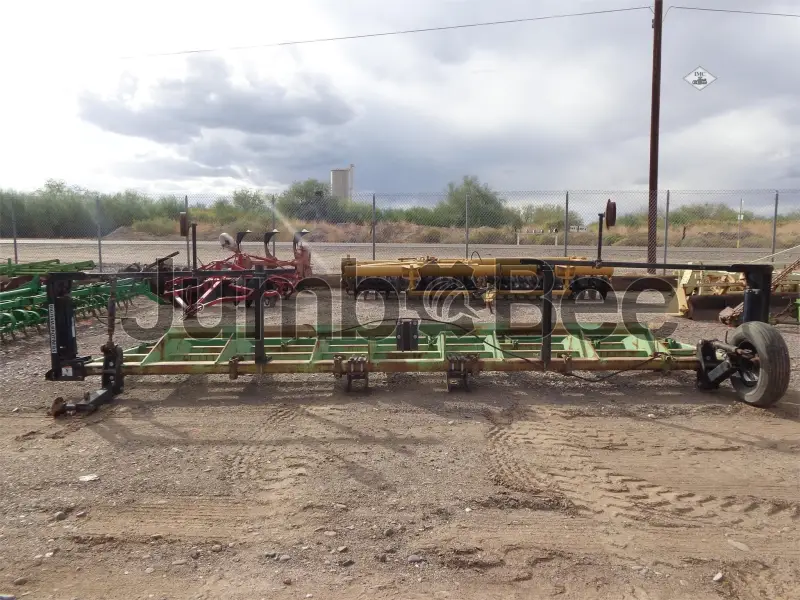
- Transport width and folding. Anything over about 3 m (10 ft) usually folds for the road, and folding wings mean hydraulics, pins and hinges to inspect.
- Rollers and leveling attachments. A rear roller or crumbler saves a separate pass, at the cost of weight and draft.
- Parts and service nearby. Points, sweeps, tines and bearings are consumables. Check local dealers stock them for that brand, and compare what is available in the tillage equipment catalog.
Buying a Used Cultivator: What to Check
A used cultivator is often a sound buy: no engine, a long working life, most of the wear in parts designed to be replaced. Check the frame first, then the wearing parts. Price follows type, width, folding system, condition, brand and region, so a wide trailed machine with hydraulic folding costs more to buy and repair than a mounted one of the same age.
| Area | What to check | Warning sign |
|---|---|---|
| Frame and toolbar | Straightness along the length, welds at the joints, previous repairs | Fresh paint over a weld, a frame that sits twisted on level ground |
| Tines, shanks and points | Remaining metal on points and sweeps, bent or missing tines | Points worn to stubs, tines replaced in only one section |
| Springs and trip mechanisms | Even tension across the machine, free movement | Broken or seized springs, tines sitting at different heights |
| Discs and bearings (disc models) | Disc diameter against a new one, play in each bearing hub | Side-to-side rock in a hub, a gang that will not spin freely |
| Gearbox, blades and PTO shaft (rotary models) | Oil level and leaks, blade wear, shaft guards | Oil on the casing, a noisy gearbox, missing guards |
| Hitch, hydraulics and folding wings | Pin and bush wear, cylinder leaks, how the wings sit folded | Weeping cylinders, elongated pin holes, wings that do not lock |
| Gauge wheels, tires and rollers | Tire condition, bearing play, roller bars straight and turning | Flat spots, seized rollers, bent bars |
| Parts availability in your country | Whether points, tines and bearings are stocked for that brand near you | No local dealer and no online parts list |
Our remote inspection checklist covers what to ask for when you cannot walk around the machine yourself.
Buying a Cultivator from Another Country
Buying abroad widens the choice, and four things decide whether it goes smoothly: transport size, cleanliness, parts and paperwork.
- Transport dimensions folded. Folded width, height and weight set the trailer and the shipping method, so get them from the seller before agreeing a price.
- Cleaning before shipping. Soil and plant material on tines, frames and wheels is what import inspections look for, and many countries require machinery to arrive free of both. Wash the parts you cannot see from standing height too.
- Wear parts in the destination country. Check dealers there stock points, sweeps and tines for that brand, or that the seller can supply a set.
- Documents and classification. Implements have their own customs codes, and the right one affects the duty you pay. Our guide to HS codes for heavy equipment explains how classification works.
Find Tillage Equipment from Trusted Sellers on JumboBee
JumboBee is a marketplace for heavy equipment, and its tillage equipment catalog lists field cultivators, disc harrows and other soil-working implements from sellers in many countries.
Every listing comes from a verified seller with specifications and photos, so you can compare working width, weight and power requirements across brands before contacting anyone. Buyers deal with sellers directly, and JumboBee supports international shipping for machines crossing a border. The tillage equipment models hub sets out widths and power needs model by model.
Frequently Asked Questions
A cultivator is used to prepare a seedbed, kill small weeds, break the surface crust after rain, and mix residue or fertilizer into the topsoil. It is a secondary tillage tool, used after deeper tillage rather than instead of it.
It loosens and lifts the top layer, fractures clods and leaves a level surface for planting, without turning the soil over. Each pass also breaks down soil aggregates, which is why it pays to keep passes to the number the job needs.
A cultivator is pulled through the soil and loosens it with tines or discs. A tiller, or rotavator, is driven by the tractor PTO and chops the soil with rotating blades, producing a finer seedbed but working more slowly and using more fuel.
Not strictly. Both are secondary tillage tools, but a harrow mainly breaks clods and levels the surface, while a cultivator reaches deeper to loosen soil and cut weed roots. Disc harrows sit in between, which is why this guide lists them as a cultivator type.
A field cultivator works 3 to 5 in (8 to 13 cm) in Iowa State’s tillage tables, while rigid tine cultivators and chisel plows reach 7 to 9 in (18 to 23 cm) and row-crop models stay just below the weed roots. Depth is set by the gauge wheels and the hitch.
Work it out from draft rather than the tractor’s badge: width (ft) x speed (mph) x draft (lb per ft) x soil factor / 375 gives the PTO horsepower needed. For mounted machines check rear lift capacity and hitch category too, since a category 1 hitch carries a different class of implement than a category 3.
Check the frame for cracks and repairs, the tines and points for wear, the springs and trip mechanisms, disc bearings on disc models, the gearbox and PTO shaft on rotary models, and the hydraulics and pins on folding wings.





Be the first to leave a comment
There are no replies to this post yet. Share your thoughts and help start the conversation.