 Equipment
Buying a tractor is one of the largest capital decisions a farmer will make. Get it right, and you cut labor costs, finish field work on schedule, and build a productive operation for years. Get it wrong, and you’re stuck with a machine that burns more fuel than needed, lacks power for your soil, or becomes an expensive garage ornament three months after delivery.
This tractor buying guide is built to help you avoid exactly that. Whether you’re running 10 acres or 2,000, whether you need a compact workhorse or a heavy-duty articulated giant, this article gives you a structured, honest framework — with real numbers, real scenarios, and zero filler.
Let’s get into it.
Quick Decision Framework: Start Here
Before we talk about different types of tractors, answer these six questions. Your answers will narrow your options faster than any spec sheet.
| Question | Why It Matters |
|---|---|
| How many acres are you farming? | Determines HP range and tractor class |
| What are your primary tasks? | Tillage, hauling, mowing, and spraying have very different demands |
| What is your total budget? | Includes purchase, shipping, maintenance, and fuel |
| What is your terrain like? | Flat and dry vs. wet, hilly, or rocky changes drivetrain needs |
| New or used? | Affects warranty, financing, and total cost of ownership |
| Are you planning to expand? | A tractor too small today becomes a bottleneck in three years |
Write down your answers before reading further. Every section in this guide maps back to these six points.
If you already have a rough idea of your requirements, you can start comparing tractors by horsepower, price, and location to see what fits your needs in real market conditions.
Different Types of Tractors for Farming
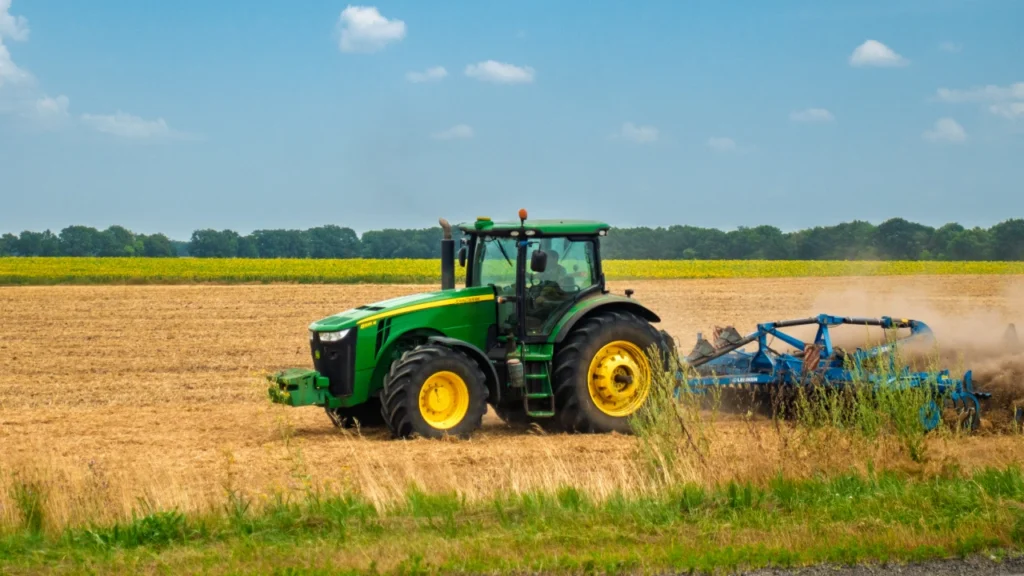
There are more farm tractor types on the market today than at any point in history — from small electric models to GPS-guided autonomous machines. Here is a breakdown of the main types of tractors for farming, with honest pros and cons for each.
Compact Tractors (15–40 HP)
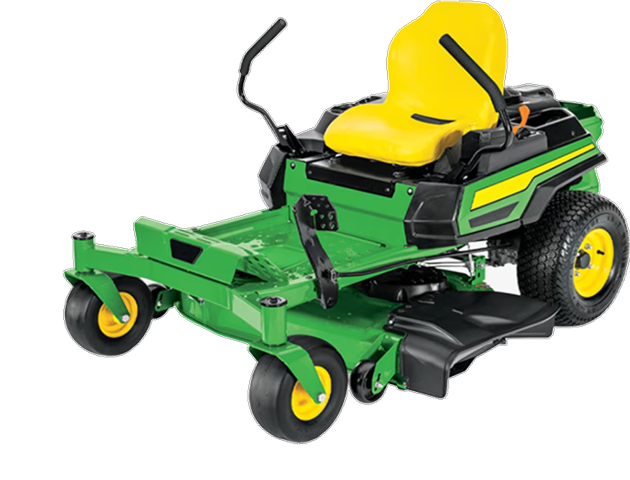
Compact tractors are built for small operations, landscaping, hobby farms, and light-duty tasks like mowing, grading driveways, and moving small loads with a front loader.
Best for: Farms under 20 acres, vineyards with tight row spacing, property maintenance.
Limitations: Not built for heavy tillage, large implements, or sustained field work across hundreds of acres.
Popular brands: John Deere 1 and 2 Series, Kubota BX and B Series, Mahindra eMax Series.
If your operation is small but growing, be careful. Many farmers buy compact tractors to save money upfront, then outgrow them within two seasons and face a second purchase.
Utility Tractors (40–100 HP)
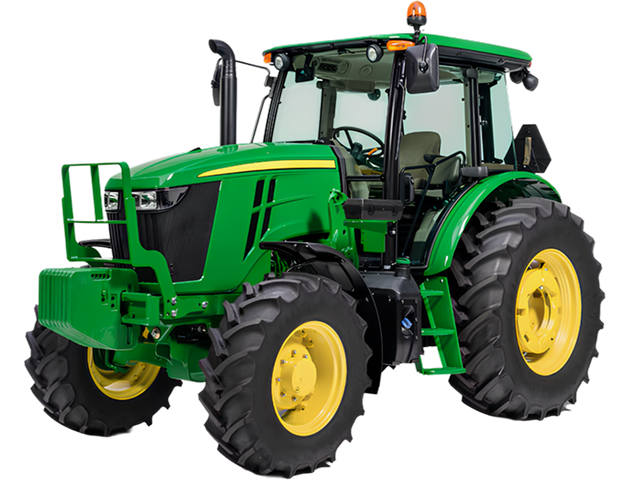
This is the most common farm tractor type worldwide. Utility tractors are versatile, handle a wide range of implements, and work across most terrain types. According to USDA Economic Research Service data, utility tractors represent the largest share of farm equipment purchases on operations between 50 and 500 acres.
Best for: Medium-sized farms, loader work, plowing, hay operations, and general-purpose fieldwork.
This is the sweet spot for most farmers running 20–150 acres. If you are unsure which tractor to buy and you farm in this range, a mid-range utility tractor is almost always the right starting point.
Popular brands: John Deere 5 and 6 Series, New Holland T5 and T6, Case IH Farmall, Fendt 200 and 300 Vario.
Row Crop Tractors (100–250 HP)
Row crop tractors are built for precision agriculture at scale. They feature high ground clearance (often 28–32 inches), narrow front axles for working between crop rows, and advanced electronics for GPS-guided planting and spraying.
Best for: Large grain farms, corn and soybean operations, farms using precision agriculture technology.
These are serious machines for serious operations. A 200 HP row crop tractor pulling a 24-row planter can cover 60–80 acres per day under good conditions. That level of throughput simply is not possible with a utility tractor.
Orchard and Vineyard Tractors (40–100 HP)
These are specialized, narrow-body machines designed to fit between trees and vine rows without damaging crops. They often have low-profile hoods and rear-mounted canopies instead of traditional enclosed cabs.
Best for: Apple, pear, olive, and grape operations with row widths as narrow as 5–6 feet.
This is one of the more overlooked different types of tractors, but if you run any tree or vine crop, a standard utility tractor simply will not fit your rows safely.
Heavy-Duty and Articulated Tractors (200–600+ HP)
This is the category that drives the most serious conversations in the heavy equipment world. Articulated 4WD tractors — machines that bend in the middle for steering — are built for large-scale tillage, deep ripping, and pulling the heaviest implements across thousands of acres.
Best for: Operations of 500 acres and above, deep tillage, land clearing, and large-scale grain production.
A John Deere 9R 490, for example, delivers 490 HP with an e18 PowerShift transmission and can pull implements 40 feet wide or more. These machines are not cheap — expect $350,000–$500,000+ new — but on a 2,000-acre operation, the cost per acre worked drops significantly compared to running multiple smaller machines.
These are the workhorses of modern commercial farming, and they represent the bulk of serious tractor investment globally.
Specialty and Next-Generation Tractors
Electric tractors are entering commercial availability in 2025–2026. Monarch Tractor is pushing fully electric machines, while John Deere has focused on autonomy – its autonomous 8R is a diesel tractor that operates without anyone in the cab. Horsepower ranges vary, but most current electric models are still in the 40–75 HP range.
For most commercial farmers today, these remain supplementary tools rather than primary workhorses. Watch this space over the next five years — EPA Tier 4 Final and EU Stage V emissions standards are already pushing manufacturers toward cleaner powertrains, and full electrification at scale is coming.
Farm Size vs. Tractor Size
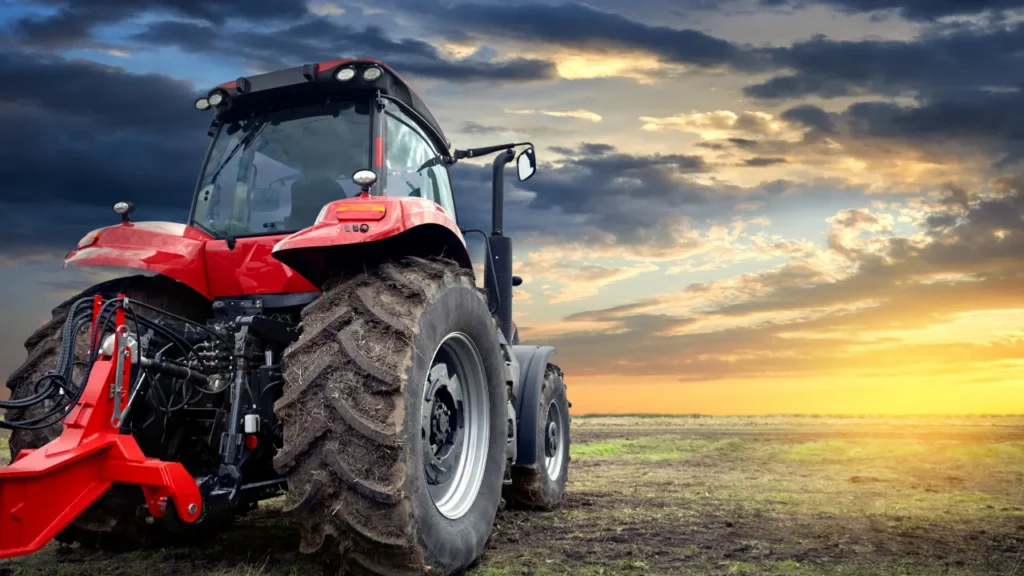
This is where many buying mistakes begin. Bigger is not always better — but undersizing is just as costly.
| Farm Size | Recommended HP Range | Tractor Class |
|---|---|---|
| 1–20 acres | 20–50 HP | Compact or small utility |
| 20–100 acres | 50–100 HP | Utility |
| 100–500 acres | 100–175 HP | Large utility or row crop |
| 500–2,000 acres | 175–300 HP | Row crop or large 4WD |
| 2,000+ acres | 300–600+ HP | Articulated 4WD |
These are starting ranges, not hard rules. Soil type, implement width, and terrain will all push you up or down within each band.
Horsepower Guide: How Much HP Do You Actually Need?
Horsepower is the number farmers fixate on most — and also the one they most often misapply. The proper way to size it works from draft force, not a single multiplier:
Drawbar HP = (Draft force in lbs × Speed in mph) ÷ 375
For a simpler rule of thumb:
These are not acreage formulas – horsepower is driven by implement size and soil, not field size. Acreage affects how many hours you’ll run, which informs new-vs-used and engine durability, not the HP rating itself. Match HP to your heaviest implement:
- Light work (mowing, loader, light tillage): implements rarely demand more than 40 HP
- General tillage/field prep: 5–7 HP per foot of implement width
- Heavy tillage / deep ripping: 10–15+ HP per foot, depending on depth and soil
Example
A farmer running a 16-foot disc harrow at 6 inches depth in medium clay soil needs approximately 90–110 drawbar HP. A 100 HP utility tractor is at the edge of its capability. A 120–130 HP machine is more appropriate for daily, sustained use.
Many institutions recommend sizing up by at least 10–15% to avoid running an engine continuously above 85% of rated load, which shortens engine life significantly.
Transmission Types Explained
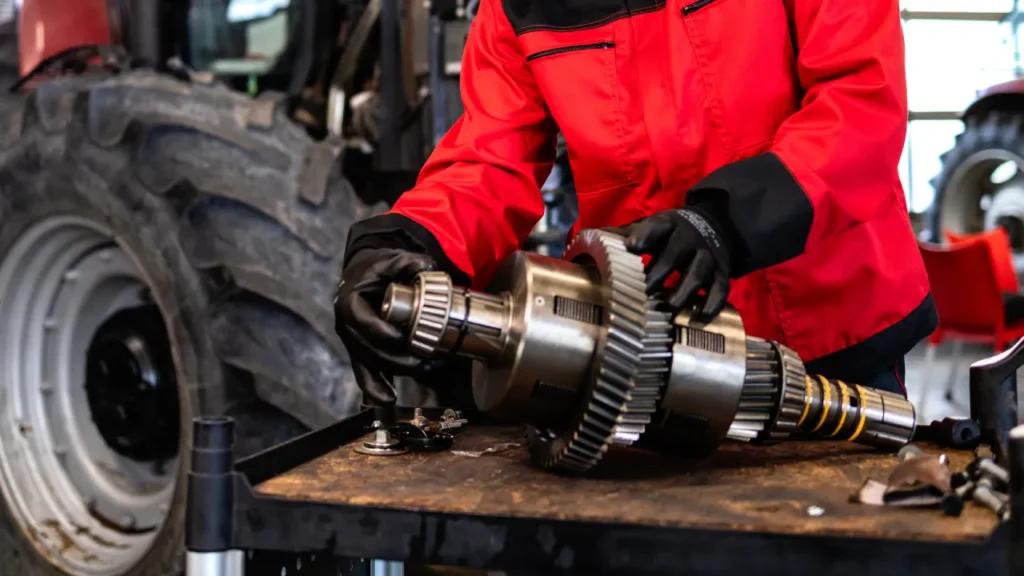
Transmission is the second-most misunderstood factor in a tractor buying guide. Here is what each type actually means for day-to-day operation.
Manual / Gear Drive
This is the simplest and most durable type of tractors. No electronics to fail. Best for operators who are comfortable shifting and do not need to make micro-speed adjustments. Low cost of maintenance. Still widely used in developing markets and on budget-conscious operations.
Synchro Shuttle
Adds a forward/reverse shuttle lever for faster direction changes — critical for loader work and any task requiring repeated back-and-forth movements. Speeds up loading, trenching, and feeding operations significantly.
Hydrostatic Transmission
A continuously variable transmission controlled by a pedal or lever. Smooth, easy to learn, and highly maneuverable. Ideal for compact tractors, loader work, and operators who are new to tractor operation. Less efficient for sustained high-load fieldwork compared to mechanical transmissions.
CVT (Continuously Variable Transmission)
The current top-end option. Found on machines like the Fendt Vario series and John Deere IVT models. CVT allows infinite speed adjustment across the full power band, maximizing fuel efficiency and reducing operator fatigue across long field days. At $300,000+ for a CVT-equipped large tractor, the efficiency gains must be weighed against premium purchase cost.
2WD vs. 4WD: Which Tractor to Buy?
For most operations above 50 acres, 4WD (MFWD or true articulated 4WD) is the practical standard in 2026. Here is why:
| Factor | 2WD | 4WD (MFWD) | Articulated 4WD |
|---|---|---|---|
| Purchase cost | Lower | 5–15% premium | Significantly higher |
| Traction in wet soil | Limited | Strong | Maximum |
| Fuel efficiency | Slightly better on hard ground | Comparable | Higher fuel use at scale |
| Best terrain | Flat, dry, consistent | Mixed terrain | Wet, heavy, large fields |
On flat, consistently dry farmland — parts of the US Great Plains, for example — a 2WD machine can perform adequately. But if you face spring mud, irrigation, hillside work, or heavy soil, 4WD is not a luxury. It is a productivity requirement.
Attachments and Implement Compatibility
A tractor without the right implements is a very expensive pickup truck. Before finalizing any purchase, confirm:
- PTO compatibility: Most utility tractors use a standard 540 RPM or 1,000 RPM PTO output. Heavy-duty tractors typically run 1,000 RPM. Verify your implements match the tractor’s PTO spec before buying.
- Three-point hitch category: Compact tractors typically use Category 1 (roughly 20–50 HP). Utility tractors typically use Category 2 (about 40–125 HP), with some overlap in the 40–50 HP range where either may apply. Large row crop and heavy-duty tractors use Category 3 or 4. Categories aren’t interchangeable – a reducer bushing lets you run a smaller-category implement on a bigger tractor, but never the reverse.
- Hydraulic flow rate: High-demand implements like large seeders, balers, and hydraulic fold planters require high hydraulic flow (often 30+ GPM). Check your tractor’s hydraulic capacity against your heaviest implement’s requirement.
- Front loader rating: If you plan to use a front loader for bales, grain, or material handling, check the rated lift capacity. A 75 HP utility tractor typically lifts 2,500–3,500 lbs at the pin. The largest tractor-mounted front loaders, fitted to machines in the 150–200 HP range, top out around 5,000–6,000 lbs – and most large row-crop and 4WD tractors aren’t run with front loaders at all.
New vs. Used: What Farmers Should Consider
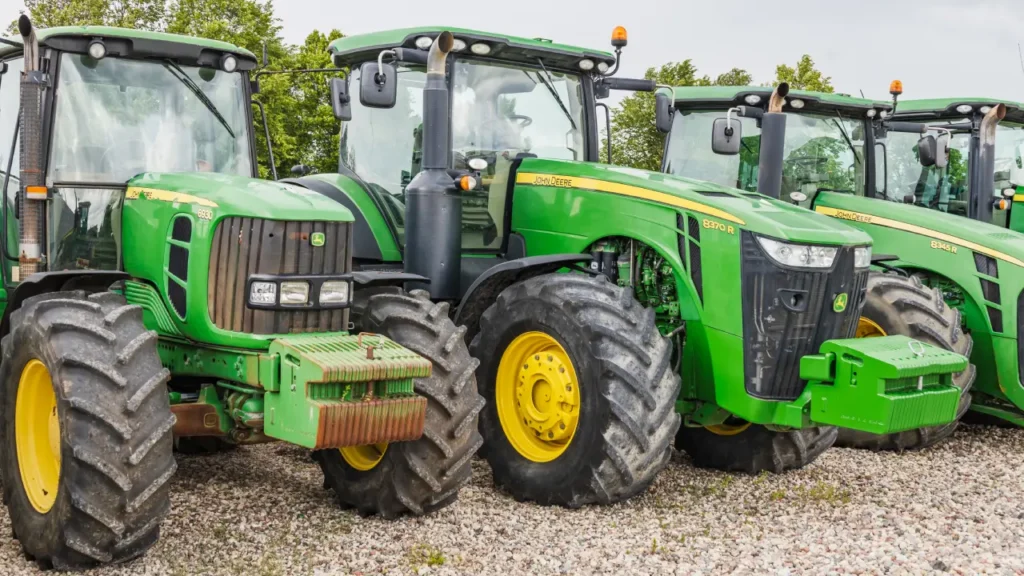
Used tractors represent strong value for the right buyer. Here is a straightforward breakdown:
Used makes sense when:
- Your budget is under $100,000
- The machine has under 3,000 hours and documented service records
- You have access to an independent mechanic or dealer service
- Your usage is seasonal (under 600 hours/year)
New makes sense when:
- You are running 1,000+ hours per year
- Government subsidies or tax depreciation offset the premium (Section 179 deduction in the US allows full expensing of qualifying equipment in the year of purchase)
- Warranty coverage is critical to your operation’s continuity
A used John Deere 9R 440 with 350 hours, like those currently listed on platforms like JumboBee, can be purchased in the $430,000–$460,000 range — roughly 15–20% below comparable new pricing. For a high-use commercial operation, those savings compound quickly.
Buying used equipment from another region often raises questions about logistics, inspections, and delivery. JumboBee helps handle these steps so you can purchase with confidence.
Operating Costs: Beyond Purchase Price
Many farmers calculate tractor cost as the sticker price divided by years of ownership. That is incomplete. True cost of ownership includes:
| Cost Item | Compact (40 HP) | Utility (100 HP) | Heavy 4WD (400 HP) |
|---|---|---|---|
| Annual fuel (500 hrs) | ~$3,500 | ~$9,000 | ~$35,000+ |
| Annual maintenance | ~$1,200 | ~$3,000 | ~$8,000–$15,000 |
| Depreciation (annual) | ~$2,000 | ~$8,000 | ~$25,000–$40,000 |
| Insurance | ~$500 | ~$1,500 | ~$4,000+ |
For a 400 HP articulated tractor running 700 hours per year on a 2,000-acre grain farm, total operating cost can easily reach $70,000–$90,000 annually, excluding the purchase price. At that scale, fuel efficiency and maintenance access are not secondary considerations — they are central to profitability.
Spare parts availability matters more than most buyers realize. Before purchasing any machine, check:
- Is there a dealer within 100 miles?
- Are parts available domestically or must they be imported?
- What is the typical lead time on major components?
Common Mistakes Farmers Make
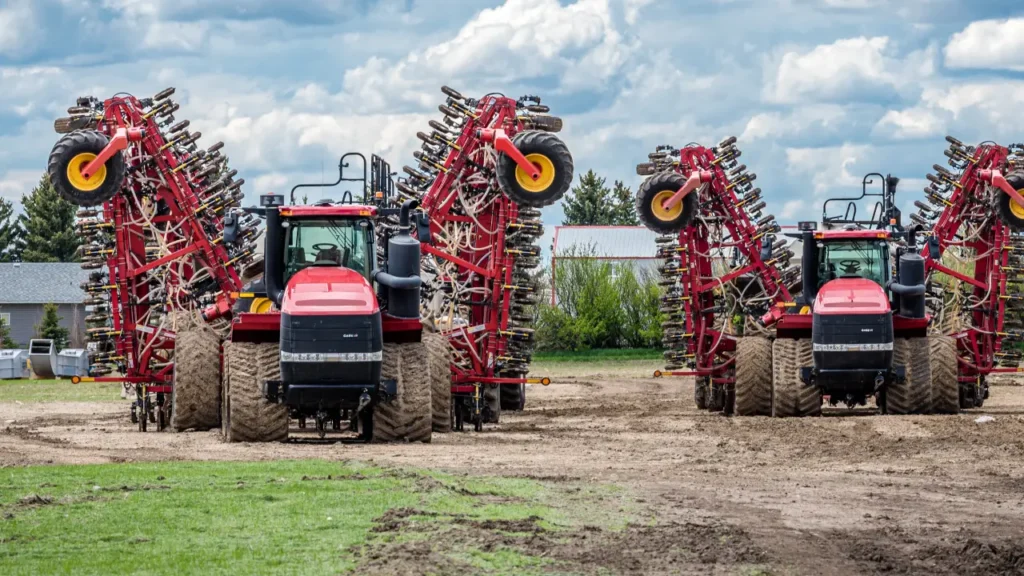
These show up constantly in the field:
Buying Too Much Horsepower
A 300 HP tractor idling through light loader work burns fuel at engine load, not at actual work output. Oversized machines also cost more to maintain and depreciate faster per hour of productive use.
Ignoring Implement Compatibility
Buying a tractor that cannot connect to your existing implements means buying new implements — or selling the tractor.
Underestimating Terrain
Flat-farm logic applied to a 15% hillside or a wet clay field is a recipe for a tractor stuck in mud, a rollover, or a drivetrain failure.
Not Thinking about Resale Value
John Deere and Case IH machines typically retain 55–70% of value after five years on well-maintained low-hour units. Less common brands can drop to 30–40%. If you plan to upgrade in five to seven years, brand resale value is a real financial variable.
Scenario-Based Recommendations: Which Tractor to Buy
Scenario 1 — Small Vegetable Farm (15 acres, mixed terrain)
Recommendation: 40–60 HP compact utility tractor, 4WD, hydrostatic transmission, Category 1/2 hitch.
Budget: $25,000–$55,000 new, or $15,000–$35,000 used.
Scenario 2 — Grain Producer (800 acres, flat land, heavy tillage)
Recommendation: 250–350 HP row crop tractor or entry-level articulated 4WD. CVT or PowerShift transmission. Consider used 8R or 9R series John Deere with under 1,000 hours for significant savings.
Budget: $200,000–$380,000 depending on configuration.
Scenario 3 — Mixed Livestock Farm (120 acres, varied terrain, loader and hay work)
Recommendation: 100–130 HP utility tractor with MFWD, synchro shuttle, front loader, and PTO for baler.
Budget: $70,000–$130,000 new, or $40,000–$80,000 used.
Scenario 4 — Orchard Operation (60 acres, narrow rows)
Recommendation: Narrow orchard tractor, 60–80 HP, MFWD, Category 2 hitch, low-profile design.
Budget: $50,000–$90,000. Verify row width before spec’ing any tractor here — standard utility tractors will not fit.
If you are ready to move forward, take a moment to understand how buying equipment works on JumboBee, including inspections, payments, and delivery.
Final Checklist Before Buying
Before you contact any seller or visit any dealership, confirm the following:
- Primary tasks defined and prioritized
- HP requirement calculated based on implements and soil type
- Terrain assessed — flat, wet, hilly, mixed
- Transmission type chosen based on daily operation style
- 2WD or 4WD decision made based on terrain and traction needs
- Implement compatibility verified — PTO speed, hitch category, hydraulic flow
- New vs. used decision made based on hours of use and budget
- Total cost of ownership calculated — not just purchase price
- Parts and dealer access confirmed for your location
- Resale value and depreciation considered if upgrading in 5–7 years
- Future expansion factored in — size up slightly if growth is planned
Find a Tractor for Farmers on JumboBee
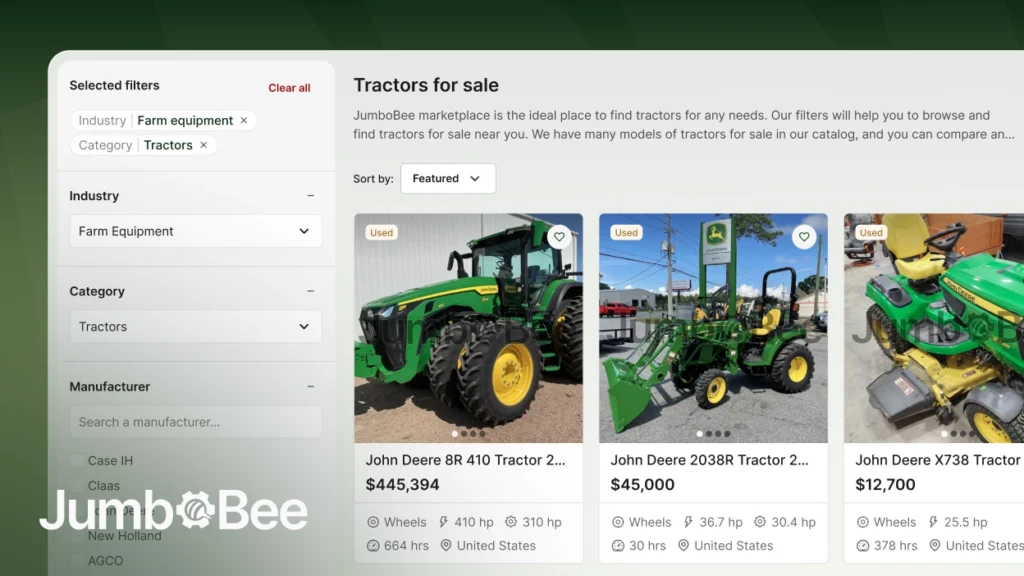
If you have worked through this guide and have a clearer picture of which tractor to buy, the next step is comparing real inventory — including different tractors across HP ranges, price points, and condition levels.
JumboBee is a global heavy equipment marketplace with over 1,200 farm equipment listings, including new and used tractors from verified sellers across the United States and beyond. Unlike local dealerships, the platform lets you filter by horsepower, price, location, and machine type — so you can compare different kinds of tractors side by side without flying across the country.
Current listings include heavy-duty machines like the John Deere 9R 440 (359 hours, $459,900), 9R 490 (1,152 hours, $429,900), and 8R 230 and 8R 370 models at various price points — all from verified sellers with full shipping, inspection, and import/export support available.
For farmers outside the US, JumboBee handles international logistics, customs compliance, and door-to-door delivery — making American iron accessible regardless of where you farm.
Browse the full tractor inventory at JumboBee and filter by what matters to your operation: horsepower, budget, condition, and location. You can make an offer directly or request a quote — no subscription fees, no listing traps, no hidden charges.
The right tractor for your farm exists. This guide helps you know what to look for. JumboBee helps you find it.





Be the first to leave a comment
There are no replies to this post yet. Share your thoughts and help start the conversation.