 Equipment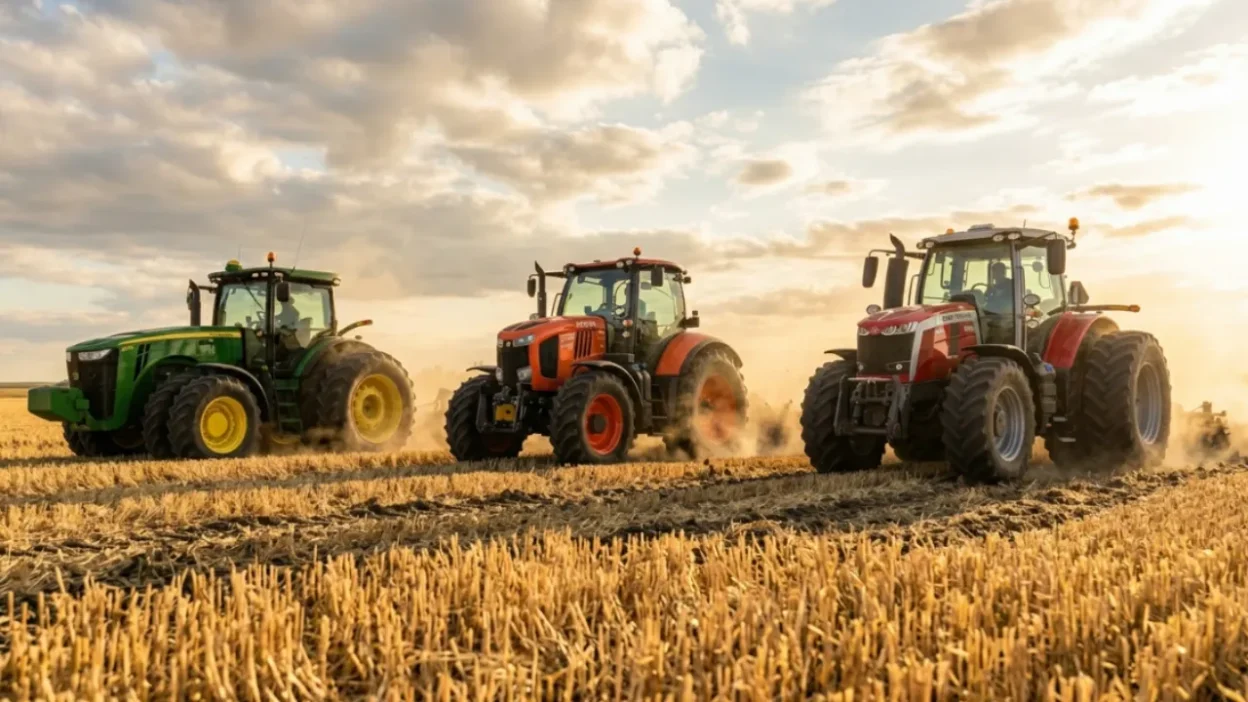
Buying a tractor in 2026 is not like buying one in 2015. Equipment prices have climbed sharply. Diesel costs are more volatile. Precision farming technology has moved from optional add-on to competitive necessity. And with used tractor demand at near-record highs globally, the stakes of choosing the wrong brand – or the wrong model – are real and measurable.
If you are actively comparing John Deere, Kubota, and Massey Ferguson right now, you are probably close to a purchase decision. This guide is built for that stage. No brand loyalties. No dealer spin. Just a clear, structured comparison across the factors that actually affect your operation: performance, technology, maintenance costs, resale value, and total cost of ownership.
By the end, you will know which brand fits your farm type, your budget, and your five-year financial plan. And when you are ready to browse real inventory, you will know exactly where to look.
If you are already comparing these brands, you can explore current listings and pricing across John Deere, Kubota, and Massey Ferguson tractors on JumboBee to see how real market offers differ.
Tractor Market in 2026: What Buyers Should Know
Before comparing brands, it helps to understand the environment those brands are operating in. The 2026 agricultural equipment market has several defining characteristics that directly affect your buying decision.
Market Trends in 2026
Precision agriculture is now mainstream, not premium. GPS-guided auto-steer, telematics, and field data systems are no longer confined to flagship models. Mid-range tractors from all three brands now ship with meaningful technology packages. According to the Association of Equipment Manufacturers, precision agriculture adoption among row crop farms in North America has exceeded 70% for GPS guidance and is climbing in the compact segment.
Electrification is real, but not yet dominant. All three manufacturers have shown prototype or limited-production electric and hybrid models. In 2026, however, the overwhelming majority of working tractors sold – especially in the 60 HP and above category – are still diesel-powered. Buyers considering electric should track announcements but plan current purchases around diesel.
EPA Tier 4 Final and Stage V compliance is non-negotiable. New tractors sold in the United States must comply with EPA Tier 4 Final emissions standards, which mandate diesel particulate filters (DPF) and selective catalytic reduction (SCR) on most engines above 75 HP. If you are comparing new vs used, this matters: pre-Tier 4 used tractors have lower upfront cost but may face restrictions in certain states or export markets.
Supply chain has largely normalized. After the disruptions of 2021–2023, parts and component availability has improved across the board. Lead times on new equipment are closer to historical norms, though dealer allocation for flagship models remains tight in high-demand regions.
Used tractor demand is strong globally. The USDA Economic Research Service reports that mid-sized farms (50–999 acres) are increasingly purchasing used equipment to manage capital costs. This drives up resale values for well-maintained machines from all three brands, but particularly John Deere and Kubota.
Brand Overview: Positioning and Global Strength
We are not ranking these brands. We are profiling them honestly so you can match brand strengths to your specific needs.
John Deere
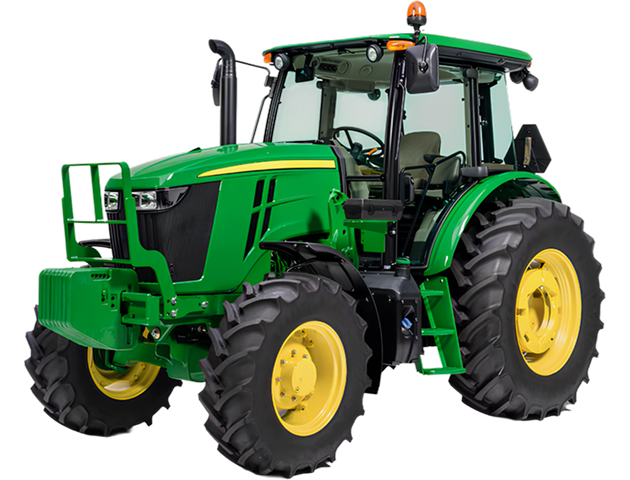
John Deere is the largest agricultural equipment manufacturer in the world by revenue. Its green-and-yellow identity is recognized globally, and in the United States, it dominates large-scale row crop farming.
What defines John Deere in 2026:
- Premium pricing across the board. A new 8R series four-wheel-drive tractor can exceed $400,000 fully equipped. Even compact utility models carry a price premium versus competitors.
- Industry-leading precision agriculture ecosystem. John Deere’s Operations Center, See & Spray technology, and StarFire GPS receivers form one of the most integrated precision farming platforms available.
- Exceptional dealer network. With over 1,500 dealer locations in North America alone, service access is rarely a problem. This density is a genuine competitive advantage, especially during harvest season when downtime is expensive.
- Strong resale value. John Deere tractors consistently hold value better than most competitors. A five-year-old 8R series tractor typically retains 55–65% of its purchase price under normal use conditions.
John Deere’s primary competitors – Kubota, Massey Ferguson, Case IH, New Holland, and AGCO brands – have all closed the technology gap in recent years. But John Deere still leads on ecosystem integration, dealer density, and resale liquidity.
You can explore available John Deere tractors on JumboBee and compare pricing across regions.
Kubota

Kubota is a Japanese manufacturer with dominant market share in compact and utility tractors worldwide. In the United States, Kubota has become the go-to brand for small farms, hobby farms, landscaping operations, and municipalities.
What defines Kubota in 2026:
- Compact tractor leadership. In the 25–60 HP range, Kubota vs John Deere is one of the most common comparisons buyers make – and Kubota competes aggressively on price, reliability, and availability.
- Fuel efficiency. Kubota’s diesel engines are known for efficient fuel consumption relative to horsepower output, which matters on operations where tractors run for many hours per season.
- Competitive pricing. A comparable-spec Kubota utility tractor typically costs 10–20% less than a John Deere equivalent. That gap matters on a $75,000 machine.
- Expanding mid-range lineup. Kubota’s M8 and M7 series push into territory traditionally owned by John Deere and Massey Ferguson, offering serious performance for commercial operators at mid-market prices.
Kubota’s dealer network has expanded significantly in North America. Parts availability has improved, though it still trails John Deere in rural dealer density. Buyers often compare Kubota tractor listings globally to find better pricing and availability.
Massey Ferguson (Part of AGCO)

Massey Ferguson is one of the oldest and most globally recognized tractor brands in the world. As part of AGCO Corporation, it benefits from shared engineering resources and global distribution.
What defines Massey Ferguson in 2026:
- Value-performance balance. MF tractors typically price between Kubota and John Deere, offering solid power and technology without the John Deere premium.
- Strong international presence. Massey Ferguson is particularly dominant in South America, South Asia, and Africa. For global farming operations or buyers who resell into international markets, this brand recognition matters.
- AGCO technology integration. The Fuse Technologies platform, shared across AGCO brands, brings meaningful precision ag capability to MF tractors – including auto-steer, telematics, and variable rate application.
- Reliable mid-range performance. MF’s 5S, 6S, and 8S series cover the utility-to-large range competently and are well-regarded for durability in demanding environments.
When comparing John Deere vs Massey Ferguson, the core tradeoff is usually premium technology and resale value (Deere) versus more accessible pricing and solid global dealer support (MF). It is worth reviewing Massey Ferguson tractors currently available across different markets before making a decision.
Engine Power and Performance Comparison
Horsepower Range
All three brands cover the full range from compact residential use to high-horsepower row crop operations. Here is how they compare across segments:
| Segment | Horsepower Range | John Deere Strength | Kubota Strength | Massey Ferguson Strength |
|---|---|---|---|---|
| Compact | 25–60 HP | Moderate (1 Series, 2 Series) | Very Strong (BX, L, M series) | Moderate (GC, 1700 series) |
| Utility | 60–120 HP | Strong (4M, 5M series) | Strong (M5, M6 series) | Strong (5S, 6S series) |
| Row Crop | 120–250 HP | Very Strong (6M, 7R, 8R series) | Moderate (M8 series up to 210 HP, M8-211) | Strong (7S, 8S series) |
| High HP | 250–600+ HP | Dominant (9R, 9RX series) | Not Present | Present (8S, limited 4WD) |
For heavy commercial operations – think 500+ acres of row crops, large-scale grain farming, or hay production at scale – John Deere’s high-horsepower lineup has no equivalent from Kubota and only partial competition from Massey Ferguson.
For compact and utility work, the comparison between Kubota and John Deere is highly competitive here, with Kubota often winning on price and John Deere winning on long-term resale.
Transmission Options
Transmission choice affects both daily operator comfort and long-term reliability.
- Hydrostatic (HST): Common in compact tractors. Smooth and easy to operate, no clutch pedal. Kubota and John Deere both offer excellent HST options in the sub-60 HP range. Best for loader work, mowing, and varied-speed tasks.
- PowerShift: Offers manual gear selection with power-assisted clutching. John Deere’s e23 PowerShift is a well-proven system used in mid-to-large row crop tractors. Massey Ferguson offers the Dyna-6 powershift, with the Dyna-VT as its CVT option.
- CVT (Continuously Variable Transmission): The technology leader in modern farming. John Deere’s IVT (Infinitely Variable Transmission) and Massey Ferguson’s Dyna-VT both deliver seamless speed transitions that optimize fuel efficiency and field productivity. Kubota’s M7 series CVT has received strong reviews for mid-range commercial use.
For heavy fieldwork above 120 HP, CVT or PowerShift is almost always the right choice. For compact utility work, HST is hard to beat for simplicity and longevity.
Technology and Precision Farming Systems
This is the section where 2026 tractor buying diverges most sharply from buying five years ago. Technology is now a major factor in ROI, not just convenience.
John Deere Precision Systems
John Deere’s precision agriculture platform is the most mature and integrated in the industry. Key components:
- StarFire 7000 GPS Receiver: Sub-inch accuracy with RTK corrections. Used for auto-steer, section control, and variable-rate application.
- Operations Center: Cloud-based farm management platform that aggregates machine data, field records, and agronomic inputs. Can be accessed remotely, including by dealers for remote diagnostics.
- See & Spray Ultimate: Machine vision technology that identifies weeds and applies herbicide precisely. John Deere reported an average of about 59% herbicide savings across customer corn, soybean, and cotton fields in 2024, and an independent Iowa State University study of See & Spray Ultimate found average product savings of 76%, with individual fields reaching the high 80s. Note that See & Spray is a sprayer technology; it is not a tractor feature, though it integrates with the broader Operations Center ecosystem.
- AutoTrac: Industry-standard auto-steer system with sub-inch accuracy. Reduces operator fatigue and improves pass-to-pass accuracy on large fields.
- Gen 4 and Gen 5 Displays: Intuitive in-cab command centers that integrate all machine functions with field data.
John Deere’s ecosystem advantage is real. If you already run John Deere equipment, adding a new tractor means your data, your display preferences, and your dealer diagnostics all connect automatically.
Kubota Smart Technology
Kubota has made significant technology investment through its Kubota Smart Agriculture initiative. Current highlights:
- K-Monitor Pro: In-cab display system for tracking field operations, fuel consumption, and machine hours.
- Kubota Telematics: Remote machine monitoring available on newer commercial models, allowing fleet managers to track location, engine hours, and fault codes.
- Auto-steer integration: Available on M7 and M8 series via compatible third-party GNSS receivers. Kubota partners with Trimble and other precision ag providers for full auto-steer capability.
- Kubota Ag Solutions: Data-driven crop management tools, though less integrated than John Deere’s platform.
Kubota’s technology is capable and improving, but it lacks the closed-loop integration of John Deere’s ecosystem. For precision farming at scale, buyers typically need to layer third-party systems onto Kubota machines.
Massey Ferguson and AGCO Tech Integration
Massey Ferguson benefits from AGCO’s Fuse Technologies platform, which is one of the more underrated precision ag systems in the industry:
- Auto-Guide 3000: High-precision auto-steer with RTK corrections, comparable in accuracy to John Deere’s AutoTrac.
- Datalink Telematics: Remote machine monitoring with engine diagnostics, location tracking, and alert notifications.
- VR application: Variable rate seeding and fertilizer application supported through Fuse platform integration.
- 3rd party compatibility: Massey Ferguson is notably open to third-party precision ag integration, making it easier to connect with existing farm management software.
For a mid-sized farm already using Trimble, Raven, or Climate FieldView, an MF tractor can integrate cleanly without switching ecosystems. This flexibility is a genuine selling point.
Reliability, Maintenance and Dealer Support
Service Network Strength
| Brand | North America Dealers | Global Dealer Presence | 24/7 Emergency Support |
|---|---|---|---|
| John Deere | 1,500+ | 5,000+ | Yes, via JD Link |
| Kubota | 1,100+ | 4,400+ | Limited |
| Massey Ferguson | 1,000+ | 4,500+ | Regional variation |
John Deere’s dealer network density in rural North America is unmatched. During planting and harvest, this matters enormously. A dealer 20 miles away versus 80 miles away can mean the difference between a one-day downtime and a three-day downtime.
Parts Availability
All three brands have improved parts availability significantly since the supply disruptions of 2021–2023. In 2026:
- John Deere: Parts availability is excellent. John Deere’s parts distribution system is one of the most efficient in the industry. Most common service parts ship same-day or next-day.
- Kubota: Parts availability has improved substantially. Major metropolitan areas have strong stock. Rural locations can occasionally face 2–5 day lead times on less common components.
- Massey Ferguson: Parts availability varies by region. In North America, AGCO’s distribution network is strong for major parts. Specialty or model-specific parts may require longer lead times.
Maintenance Costs
This is a critical factor that buyers routinely underestimate. Beyond the purchase price, annual maintenance on a commercial tractor includes engine oil and filter changes, hydraulic fluid service, DPF regeneration and cleaning (on Tier 4 machines), and transmission service.
Approximate annual maintenance cost estimates for a utility tractor running 600 hours/year:
| Brand | Annual Maintenance Cost Estimate | Notes |
|---|---|---|
| John Deere | $3,500–$6,000 | Higher dealer labor rates offset by strong parts availability |
| Kubota | $2,800–$4,500 | Competitive labor costs, good parts pricing |
| Massey Ferguson | $2,500–$4,200 | Competitive, varies significantly by dealer region |
These are estimates based on standard service intervals for Tier 4 Final diesel engines. Extended DPF service (typically every 4,500–5,000 hours) can add $1,500–$3,500 to lifecycle costs.
Total Cost of Ownership (TCO) in 2026
Understanding TCO over five years is where serious buyers separate smart decisions from brand-loyalty decisions.
Purchase Price Comparison
Using 120 HP utility tractors as a benchmark:
| Brand | Representative Model | Approx. New Price (2026) | Notes |
|---|---|---|---|
| John Deere | 6M 120 | $115,000–$135,000 | Varies with options |
| Kubota | M6-131 | $95,000–$110,000 | Competitive base price |
| Massey Ferguson | 6S.135 | $90,000–$108,000 | Strong value positioning |
Fuel Efficiency
At 120 HP operating at 75% load for 600 hours/year, approximate annual diesel consumption:
- John Deere 6M: ~5.5 gallons/hour = 3,300 gallons/year
- Kubota M6: ~5.0 gallons/hour = 3,000 gallons/year
- Massey Ferguson 6S: ~5.2 gallons/hour = 3,120 gallons/year
At $4.00/gallon, the annual fuel cost difference between the most and least efficient option is approximately $1,200. Over five years, that adds up to $6,000 in favor of Kubota.
Depreciation and Resale Value
Using the 120 HP purchase prices above and typical five-year depreciation rates:
| Brand | Year 1 Depreciation | 5-Year Residual Value % | Estimated Resale at Year 5 |
|---|---|---|---|
| John Deere | ~15% | 50–60% | $57,500–$81,000 |
| Kubota | ~17% | 45–55% | $42,750–$60,500 |
| Massey Ferguson | ~18% | 40–50% | $36,000–$54,000 |
John Deere’s higher purchase price is partially offset by its stronger resale. Over five years, the net depreciation cost may actually favor John Deere for buyers who trade regularly.
Five-Year TCO Model: 120 HP Utility Tractor (600 Hours/Year)
| Cost Category | John Deere | Kubota | Massey Ferguson |
|---|---|---|---|
| Purchase Price | $125,000 | $102,000 | $98,000 |
| Fuel (5 years) | $66,000 | $60,000 | $62,400 |
| Maintenance (5 years) | $22,500 | $17,500 | $16,250 |
| Estimated Resale Value | -$69,000 | -$51,000 | -$44,100 |
| Net 5-Year TCO | $144,500 | $128,500 | $132,550 |
This model shows that whether Kubota or John Deere wins on TCO depends heavily on your resale assumptions. Kubota holds a meaningful cost advantage if you keep the machine long-term. John Deere becomes more competitive if you trade on a 5–7 year cycle with strong dealer buyback.
Best Brand by Farm Type
Small Farms and Hobby Farms (Under 100 Acres)
Best fit: Kubota (with John Deere as a strong alternative for buyers prioritizing resale)
At this scale, you are likely working with tractors in the 25–60 HP range, doing mowing, loader work, light tillage, and property maintenance. Kubota’s BX and L-series dominate this segment for good reason: competitive pricing, excellent loader compatibility, strong reliability, and a well-established parts network.
A Kubota L3902 at approximately $28,000–$32,000 delivers genuine utility for small-scale operations. The equivalent John Deere 3 Series will cost $5,000–$10,000 more for similar specifications. If you are not concerned about eventual resale or dealer financing programs, Kubota wins this category on value.
Mid-Sized Commercial Farms (100–999 Acres)
Best fit: Massey Ferguson or Kubota M series (John Deere for buyers with precision ag priorities)
This is where the John Deere vs Massey Ferguson comparison is most relevant. A 500-acre mixed-crop operation needs reliable utility and row crop tractors in the 100–175 HP range. Massey Ferguson’s 6S and 7S series compete directly with John Deere’s 6M and 7R at meaningfully lower price points.
AGCO’s Fuse Technologies platform covers the core precision ag needs of most mid-sized operations. Unless you are deeply invested in John Deere’s Operations Center ecosystem or have complex data management requirements, a well-specified MF 7S at $20,000–$30,000 less than a comparable John Deere 7R represents real capital savings.
Large-Scale Agriculture (1,000+ Acres)
Best fit: John Deere (Massey Ferguson for cost-conscious large operators)
Above 1,000 acres, horsepower demands increase, precision agriculture delivers maximum ROI, and dealer support during critical field windows becomes essential. John Deere’s 8R, 9R, and 9RX series are purpose-built for this environment. The Operations Center’s ability to coordinate fleets of machines, track field-by-field data, and support remote diagnostics provides measurable productivity gains.
For a 3,000-acre grain farm running multiple 350+ HP tractors, the total cost difference between John Deere and competitors may be $200,000–$400,000 in equipment investment, but the downtime risk and data management advantages can justify that premium.
Orchard and Specialty Crop Operations
Best fit: Kubota or Massey Ferguson specialty models (narrower wheel spacing and lower profile requirements)
Orchard and vineyard work demands compact dimensions, high maneuverability, and reliability in intensive-use environments. Kubota’s M Narrow series and Massey Ferguson’s 3 Series Specialty (its current North American vineyard/orchard line) address these needs specifically. John Deere has some specialty configurations but is less dominant in this niche.
Here, the decision depends less on brand and more on specific model dimensions, turning radius, and attachment compatibility with your existing equipment.
New vs Used: Which Brand Holds Value Better?
With new equipment prices at historic highs, used tractors represent an increasingly rational buying option. The USDA Farm Income and Wealth Statistics indicate that capital expenditure management is a top-five concern for commercial farmers in 2026.
For used purchases:
John Deere holds the strongest resale demand. Used John Deere tractors sell faster and at higher price retention than competitors. The tradeoff: you pay more to acquire a used John Deere, and the premium over Kubota or MF used equipment remains significant.
Kubota has strong used market liquidity, particularly in the compact and utility segments. A three-year-old Kubota M series utility tractor is a highly liquid asset. The used Kubota market is active, well-priced, and well-supported by dealer certified pre-owned programs.
Massey Ferguson used values are solid but less liquid than John Deere or Kubota, particularly for older models. Buyers looking for value-per-dollar in the used market sometimes find MF machines represent the best deal, especially on 5–10 year old examples with clear service history.
One critical note on used Tier 4 equipment: always verify DPF and SCR system condition on any diesel tractor above 75 HP manufactured after 2015. Deferred DPF maintenance is one of the most common and expensive hidden costs in used tractor purchases. EPA compliance issues on imported or re-exported equipment can also affect value.
Side-by-Side Comparison Summary
| Factor | John Deere | Kubota | Massey Ferguson |
|---|---|---|---|
| Price Tier | Premium | Mid | Mid-Value |
| Compact Segment | Good | Excellent | Good |
| Utility Segment | Excellent | Strong | Strong |
| High HP Segment | Dominant | Limited | Moderate |
| Precision Ag Technology | Advanced / Integrated | Capable / Third-party | Balanced / Open |
| Dealer Network (N. America) | Strongest | Strong | Good |
| Parts Availability | Excellent | Good | Good |
| Annual Maintenance Cost | Higher | Moderate | Moderate-Low |
| 5-Year Resale Value | Strongest | Strong | Moderate |
| Best For | Large farms, precision ag, tech-driven ops | Small-to-mid farms, compact work | Mid-range commercial, value-focused |
Common Buyer Mistakes When Comparing Tractor Brands
Choosing based on brand loyalty alone. Your neighbor’s John Deere or your father’s Kubota is not a data point for your current operation. Equipment needs, pricing, and technology have all changed. Start with your use case.
Ignoring horsepower requirements. Undersized tractors work harder, wear faster, and cost more in fuel per unit of work completed. Oversized tractors represent unnecessary capital tied up in idle capacity. Calculate your actual HP needs by workload, not by what looks impressive.
Overpaying for unused technology. If you are farming 80 acres of mixed crops, you probably do not need a $15,000 precision ag package. Technology ROI only materializes at scale. A 500-acre corn farmer will recover auto-steer costs within two seasons through reduced input overlap. A 60-acre hay producer may never reach payback.
Underestimating maintenance costs. The difference in purchase price between a John Deere and a Kubota can look like savings – until you run the five-year TCO. Fuel, service intervals, dealer labor rates, and DPF maintenance costs vary significantly by brand and region. Always model the full cost before deciding.
Ignoring total ecosystem compatibility. If you run three John Deere machines and your data lives in the Operations Center, buying one Kubota creates fragmentation. Conversely, if you are building a fleet from scratch, Massey Ferguson’s open platform may offer more flexibility.
How to Choose Right Tractor in 2026
A practical decision framework that works for any buyer:
Step 1: Define your acreage and terrain. How many acres do you work? Is it flat, hilly, or irregular? What surface conditions do you deal with most – loose soil, compacted ground, wet conditions?
Step 2: Identify your primary workloads. Tillage, planting, loader work, hay production, spraying, hauling – each workload has specific power and attachment requirements. List your top three tasks and the HP demand for each.
Step 3: Match horsepower range. Add 15–20% buffer to your peak HP demand to avoid running the engine at maximum load consistently. Continuous operation above 90% load shortens engine life.
Step 4: Estimate your five-year TCO. Use the model in this article as a starting template. Adjust for your local diesel price, your expected annual hours, and your regional dealer labor rates.
Step 5: Assess technology needs honestly. Do you need integrated auto-steer? Do you run variable rate application? Do you manage a fleet or a single machine? Match technology investment to operational scale.
Step 6: Compare live inventory. Price guides are useful but not decisive. Real purchase prices depend on dealer location, current inventory, trade-in negotiation, and financing terms. The only way to know the real cost is to compare actual listings.
Final Verdict: Which Tractor Brand Is Best in 2026?
There is no universal winner in this comparison – and any source that tells you otherwise is oversimplifying to the point of uselessness.
Here is the honest summary:
John Deere leads in high-horsepower performance, precision agriculture integration, dealer network strength, and long-term resale value. It commands a real premium, but for large-scale operations where downtime is expensive and technology ROI is measurable, that premium is often justified. Among John Deere competitors, none fully matches its ecosystem depth in the 200+ HP segment.
Kubota is the dominant choice in the compact and utility segments for price, reliability, and value. The Kubota vs John Deere comparison almost always favors Kubota on upfront cost and fuel efficiency. For operations under 500 acres without complex precision ag requirements, Kubota delivers exceptional results per dollar invested.
Massey Ferguson offers the strongest value-performance balance in the mid-range. If you need a serious commercial tractor in the 100–200 HP range and you want proven technology without paying John Deere pricing, Massey Ferguson deserves serious consideration. Its global resale presence and AGCO platform integration make it a smart choice for internationally mobile operations.
For buyers still weighing Kubota against John Deere: if you are under 100 HP, Kubota wins on economics. Above roughly 210 HP – where Kubota’s lineup ends and John Deere’s 8R/9R series take over – Deere wins on ecosystem and resale. Between 100–210 HP is where the real decision lives, and that is exactly where Massey Ferguson and Kubota’s M7/M8 enter the conversation.
Ready to move from comparison to purchase? Browse verified listings of John Deere, Kubota, and Massey Ferguson tractors currently available on JumboBee.







Be the first to leave a comment
There are no replies to this post yet. Share your thoughts and help start the conversation.