 Buying
Deciding what to do with a broken machine is one of the most stressful parts of managing a fleet. You have dirt to move, crops to harvest, or materials to process. Every hour your machine sits idle costs you money.
Making the right choice between fixing your current machine or buying another one requires more than just a gut feeling. It requires hard numbers. This guide provides a mathematical approach to help you decide what to do with your aging machinery in 2026.
Why This Decision Matters More in 2026
Operating a heavy equipment fleet is significantly more expensive today than it was just a few years ago. Global economic shifts have forced business owners to rethink how they manage their assets.
According to recent data from the World Bank, industrial commodity prices and manufacturing costs remain elevated. This means parts are more expensive, labor rates are higher, and new machinery carries a premium price tag.
Supply chain challenges have stabilized compared to previous years, but local equipment availability is still unpredictable. Dealerships often have limited inventory, forcing buyers to wait months for specific models.
Because of these high costs and delays, evaluating used vs new heavy equipment has become a daily necessity for fleet managers. Making a poor choice today does not just hurt your maintenance budget. It directly impacts your overall profitability for years to come.
Three Options Explained: Repair, Rebuild, or Replace
Before diving into the math, we need to clearly define the three paths available to you. Each option serves a specific purpose in equipment lifecycle management.
Repair
Repairing means fixing or replacing specific, isolated components that have failed. This is usually a short-term fix to get the machine back to work immediately.
- Replacing blown hydraulic hoses
- Swapping out a faulty alternator
- Fixing broken tracks or tires
Rebuild
Rebuilding is a major intervention. It involves completely restoring a primary system to its original factory specifications. This extends the overall life of the machine.
- Overhauling the entire engine
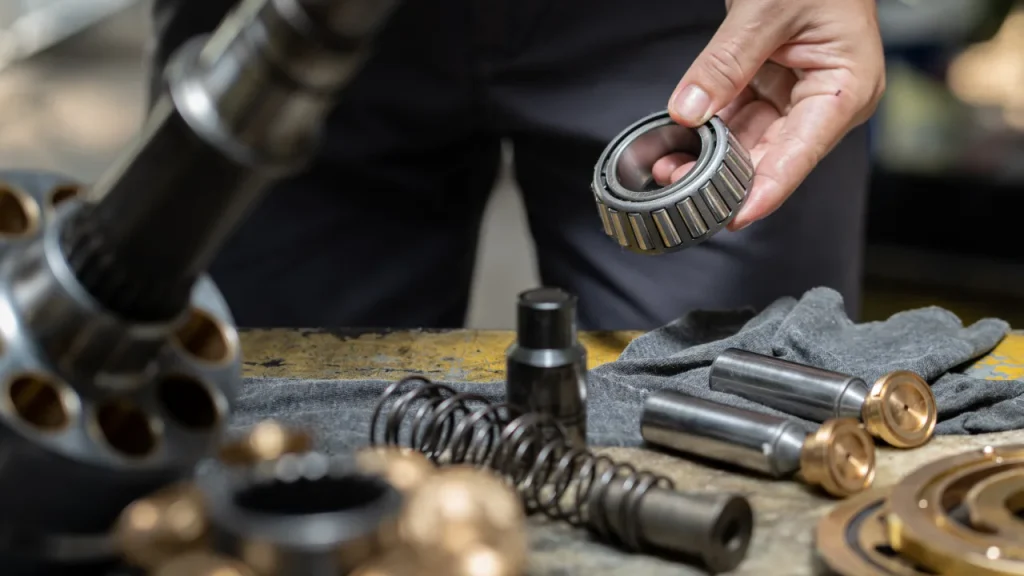
- Rebuilding the main hydraulic pump
- Replacing the entire transmission system
Replace
Replacing means retiring the broken machine and acquiring another unit to take its place. This introduces a different asset into your fleet.
- Buying a brand-new excavator from a dealer
- Purchasing a low-hour used tractor globally
- Trading in your old loader for a different model
Key Factors That Should Drive Your Decision
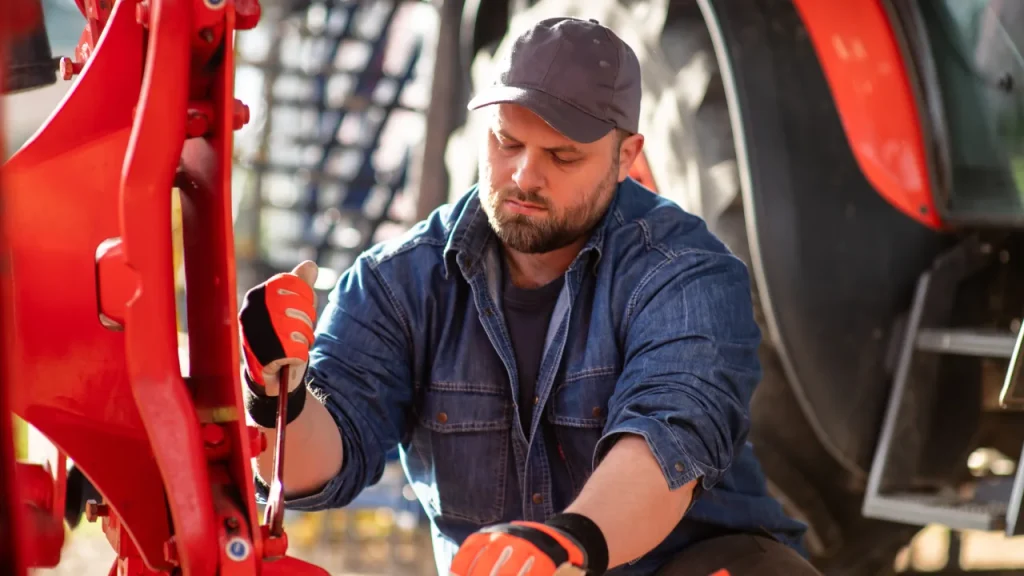
You should never make fleet management decisions based on frustration or intuition. Emotion leads to overspending. Instead, base your choices on clear, measurable criteria.
When choosing between used vs new agricultural equipment or construction machinery, evaluate these five specific factors:
- Total repair cost: Calculate the exact price of parts, labor, and taxes required to fix the machine right now.
- Equipment age and hours: Compare the current operating hours against the expected lifespan of that specific model.
- Downtime impact: Measure exactly how much revenue you lose for every day the machine sits in the shop.
- Utilization rate: Determine how many hours per week you actually use this specific machine.
- Resale value: Find out what the machine is worth right now in its broken state, compared to what it would be worth if fully operational.
Cost-Based Decision Framework
To remove guesswork from your maintenance strategy, use a percentage-based financial framework. The U.S. Small Business Administration recommends using strict cost-to-value ratios when managing business assets.
Here is a simple rule of thumb to guide your process:
25 Percent Rule for Repairs
If the total cost to repair the machine is less than 25 percent of its current market value, repairing is almost always the best financial choice. The investment is small enough that you will easily recover the cost through continued operation.
50 Percent Rule for Rebuilds
If the repair or rebuild costs between 25 and 50 percent of the machine’s value, you enter the rebuild zone. Here, you must evaluate the overall condition of the machine. If the frame, undercarriage, and cab are in excellent condition, investing 40 percent of the machine’s value into a new engine makes financial sense.
75 Percent Rule for Replacement
If the estimated cost to fix the machine exceeds 50 to 75 percent of its current market value, stop fixing it. At this point, you are throwing good money after bad. You will get a better return on investment by selling the broken machine for salvage or parts and replacing it entirely.
Total Cost of Ownership: Metric Most Businesses Ignore
Purchase price is only a tiny fraction of what a machine actually costs your business. To make an accurate new vs used manufacturing equipment comparison, you must calculate the Total Cost of Ownership.
Total Cost of Ownership represents every single dollar you spend on a machine from the day you buy it to the day you sell it.
Core Components of Total Cost of Ownership
- Acquisition cost: Purchase price, taxes, shipping, and import duties.
- Operating costs: Fuel consumption, operator wages, and daily consumables.
- Maintenance costs: Routine servicing, oil changes, wear parts, and unexpected repairs.
- Financial costs: Loan interest, insurance premiums, and depreciation.
- Residual value: Money you get back when you eventually sell the machine.
Let us look at a simple calculation comparing two options over a five-year period.
| Cost Category | Rebuilding Old Machine | Buying Used Replacement |
|---|---|---|
| Initial Investment | $45,000 | $120,000 |
| 5-Year Maintenance | $60,000 | $30,000 |
| 5-Year Fuel Cost | $85,000 | $70,000 |
| Estimated Resale Value | -$20,000 | -$65,000 |
| Total 5-Year Cost | $170,000 | $155,000 |
In this scenario, rebuilding looks cheaper on day one. However, the replacement machine is more fuel-efficient and requires less maintenance. Over five years, replacing the machine actually saves you $15,000.
Hidden Cost of Downtime
When a machine breaks down, the repair bill is only your second biggest problem. Your biggest problem is downtime.
Downtime is the silent killer of profitability. When evaluating used vs new heavy equipment, you must calculate exactly how much money evaporates every hour your machine is offline.
Calculating True Downtime Costs
- Lost production revenue: Money you cannot earn because the work is not happening.
- Idle labor wages: Paying operators and crew members who cannot work without the machine.
- Rental replacements: Money spent renting a temporary substitute machine.
- Project penalties: Fines for missing contractual deadlines.
Real-World Downtime Example
Imagine your primary wheel loader suffers a catastrophic transmission failure.
- Operator wages cost you $40 per hour.
- Support crew wages cost $100 per hour.
- Lost production value equals $300 per hour.
Total cost of downtime is $440 per hour. If the local dealer needs three weeks to get the replacement transmission from the factory, that is 120 working hours of downtime.
120 hours multiplied by $440 equals $52,800 in lost revenue and wasted wages.
In this scenario, waiting for a repair is a financial disaster. Replacing the machine immediately, even if it requires expedited shipping, is the cheaper option.
When Repairing Heavy Equipment Makes Sense
Not every breakdown requires a massive strategic overhaul. Sometimes, a simple fix is exactly what your business needs. Repairing is the best choice under specific conditions.
Low-Cost Fixes
If the broken component is cheap to buy and fast to install, fix it immediately. Hoses, belts, sensors, and minor electrical faults should always be repaired.
Relatively New Equipment
If your machine is only two years old and well within its expected lifecycle, repairing makes sense. The core asset still has thousands of hours of profitable life left.
Limited Usage Machines
If you only use a specific tractor for 100 hours a year, buying a replacement is a waste of capital. Repairing older, low-utilization machines keeps your overhead costs down.
Quick Turnaround Advantage
If your mechanic can fix the machine in two days for $5,000, but a replacement machine will take three weeks to arrive, the repair wins. Speed matters when deadlines are tight.
When Rebuilding Equipment Is Better Option
Rebuilding is the middle ground. It requires a significant capital investment, but it breathes new life into an asset you already own. Industry leaders like Caterpillar Inc. design their heavy equipment specifically to have multiple lifecycles through comprehensive rebuild programs.
Strong Base Machine
Rebuilding is only viable if the core structure of the machine is solid. If the frame is straight and free of cracks, and the cab is in good condition, dropping a rebuilt engine into the chassis is a smart move.
High Replacement Cost
When buying used vs new agricultural equipment, you might find that replacement models are absurdly expensive. If a new combine harvester costs $600,000, spending $80,000 to completely overhaul your current harvester is a highly efficient use of capital.
Predictable Workload
If you know exactly how the machine will be used for the next three years, a rebuild gives you guaranteed performance without the financial burden of a new equipment loan. You extend the lifecycle of the machine while keeping your monthly expenses stable.
When It’s Time to Replace Equipment
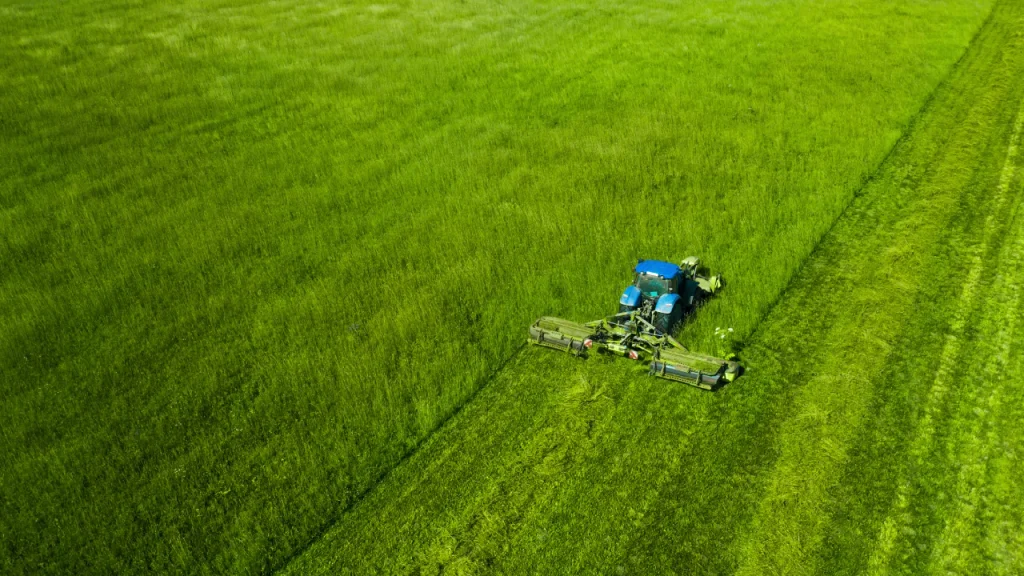
There comes a point where repairing or rebuilding is simply bad business. Recognizing this tipping point is crucial for long-term survival.
Frequent Breakdowns
If a machine breaks down every month, you are suffering from death by a thousand cuts. Even if each individual repair is cheap, the cumulative cost of downtime will destroy your profit margins.
Structural Damage
Never rebuild a machine with a compromised frame, severe rust, or bent structural supports. No matter how good the new engine is, a weak frame makes the machine unsafe and unreliable.
Outdated Efficiency
Technology moves fast. A 15-year-old machine consumes significantly more fuel and operates slower than a modern equivalent. When conducting a new vs used manufacturing equipment comparison, you will often find that the fuel savings and increased output of a newer machine easily justify the replacement cost.
Diminishing Returns
When the cost to repair the machine is higher than what the machine would sell for once fixed, you have reached the end of the road. Sell it for parts and buy a replacement.
Alternative Strategy: Replace Smarter by Buying Globally
When replacement is the only logical choice, most business owners immediately call their local dealer. This is a massive mistake that costs companies millions of dollars every year.
Limiting your search to your local region forces you to pay regional premiums. If you live in a country with high import taxes or limited dealership networks, local equipment prices will be heavily inflated.
The smartest alternative strategy in 2026 is global sourcing.
Global Price Arbitrage
Heavy machinery is priced differently across the globe. A combine harvester sitting in the American Midwest might cost 30 percent less than the exact same model sitting in Europe or Africa. By expanding your search globally, you can leverage these price differences to save tens of thousands of dollars.
Access to Massive Inventory
Your local dealer might have three used loaders on the lot. The global market has thousands. This massive inventory means you can find the exact make, model, and year you need, rather than settling for whatever happens to be parked down the street.
Upgrading Fleet Quality
When evaluating used vs new heavy equipment, you will find that machines from certain regions are better maintained. Buying used vs new agricultural equipment from regions with strict maintenance cultures often means getting a machine that runs perfectly, even with higher hours.
Buying globally used to be risky and complicated. Today, modern platforms handle the logistics, making it just as easy as buying locally.
Repair vs Replace vs Buy Globally: Real-World Scenario
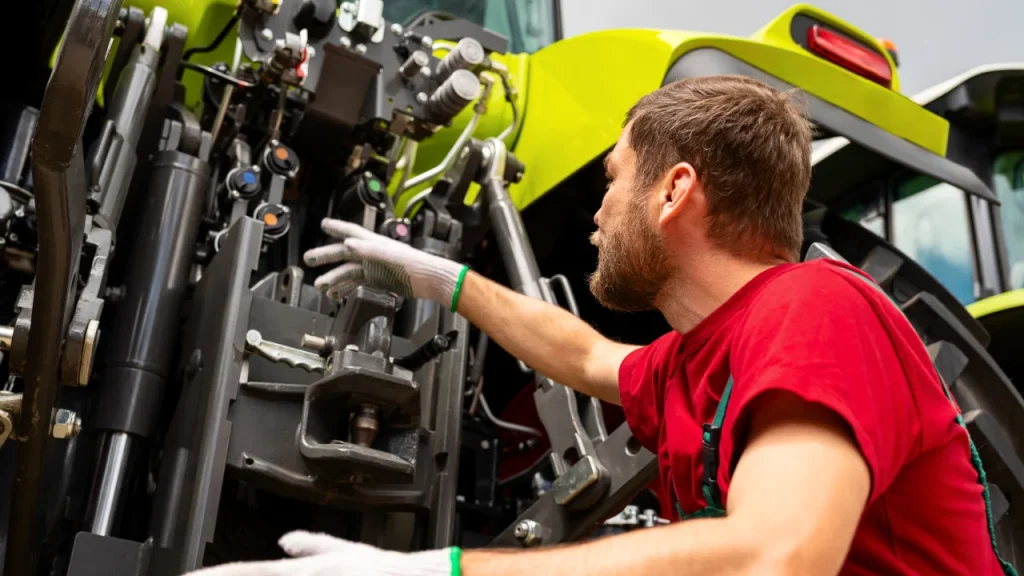
To show exactly how this framework operates, let us look at a real-world mathematical scenario.
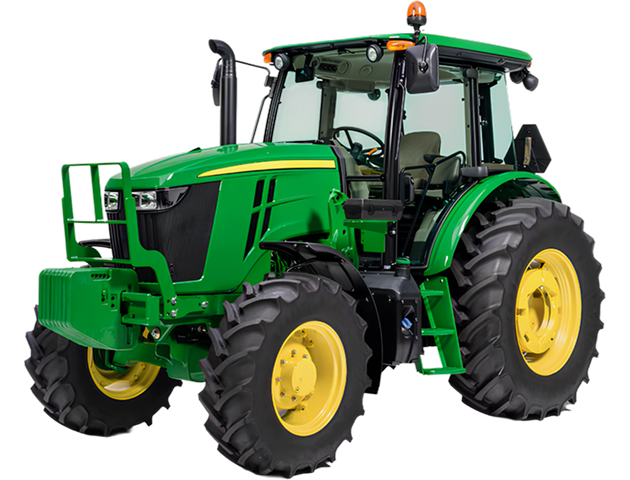
You own a 2015 John Deere tractor. The engine has suffered total failure. You need this tractor for the upcoming planting season. You have four options.
Option 1: Local Repair
Your local mechanic quotes you $45,000 to rebuild the engine. It will take four weeks to get the parts and finish the labor. The tractor is currently worth $10,000 in its broken state. Once fixed, it will be worth $60,000.
- Cost: $45,000
- Result: You have a 10-year-old tractor with a rebuilt engine but old hydraulics.
Option 2: Local Used Replacement
Your local dealer has a 2018 John Deere 8R series on the lot. It has 4,000 hours. The dealer wants $250,000 for it. You can have it delivered tomorrow.
- Cost: $250,000 minus $10,000 trade-in = $240,000.
- Result: Fast replacement, but massive capital drain.
Option 3: Local New Replacement
The dealer offers you a brand-new 2026 model. The price is $480,000.
- Cost: $480,000 minus $10,000 trade-in = $470,000.
- Result: Perfect reliability, but requires a heavy loan that damages cash flow.
Option 4: Global Used Purchase
You run a new vs used manufacturing equipment comparison online. You find a 2021 John Deere 8R 370 located in the United States with only 859 hours. The purchase price is $366,979. Shipping, customs, and delivery to your farm will cost an additional $25,000.
- Total Cost: $391,979.
- Result: You get a machine that is almost brand new, with under 1,000 hours, for nearly $100,000 less than buying new locally.
Final Decision
Option 1 is risky because the rest of the 2015 tractor is still old. Option 2 is overpriced for a machine with 4,000 hours. Option 3 is too expensive. Option 4 provides the best balance of low operating hours, modern technology, and capital efficiency.
How JumboBee Helps You Make Better Equipment Decisions
If the math shows that replacing your equipment is the smartest choice, JumboBee provides the tools to execute that strategy flawlessly. We remove the borders from heavy equipment trading, allowing you to access the best machinery at the best prices worldwide.
Instead of settling for high local prices, JumboBee lets you compare equipment globally. We offer a transparent marketplace where you see the exact cost of machinery, shipping, inspections, and import compliance before you spend a single dollar.
Every seller on our platform is strictly verified to protect your business. Whether you are moving a single tractor to Mongolia or importing a fleet of excavators to Ukraine, our built-in logistics team handles the entire process. We manage disassembly, loading, ocean freight, and customs clearance so your equipment arrives ready to work.
Conclusion
Managing heavy equipment requires ruthless financial discipline. Never let emotion dictate whether you repair or replace a machine. Always calculate your Total Cost of Ownership, factor in the severe financial penalty of downtime, and follow strict cost-to-value ratios.
When repairs become too expensive and rebuilds offer diminishing returns, replacement is your only option. By looking beyond your local dealership and embracing global sourcing, you can secure high-quality machinery at a fraction of the cost.
Stop overpaying for local inventory. Take control of your fleet costs today. Explore global listings on JumboBee and request a transparent shipping quote for your next equipment purchase.





Be the first to leave a comment
There are no replies to this post yet. Share your thoughts and help start the conversation.