 Success Stories
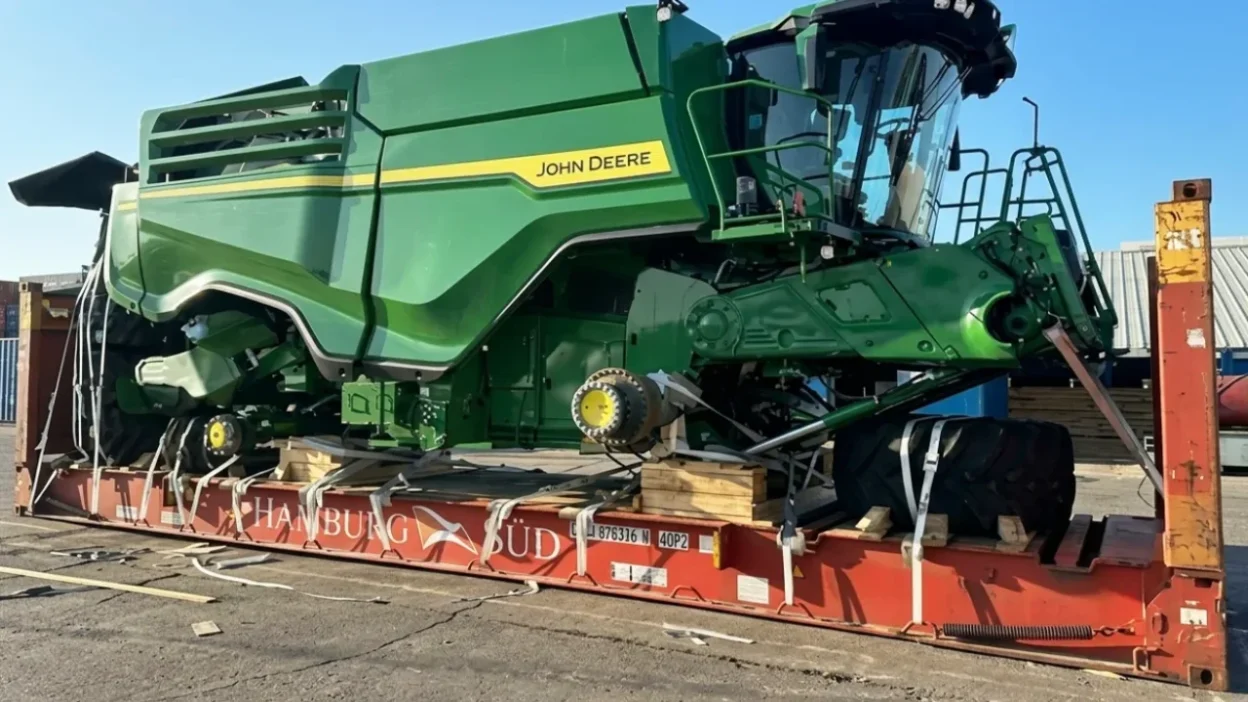
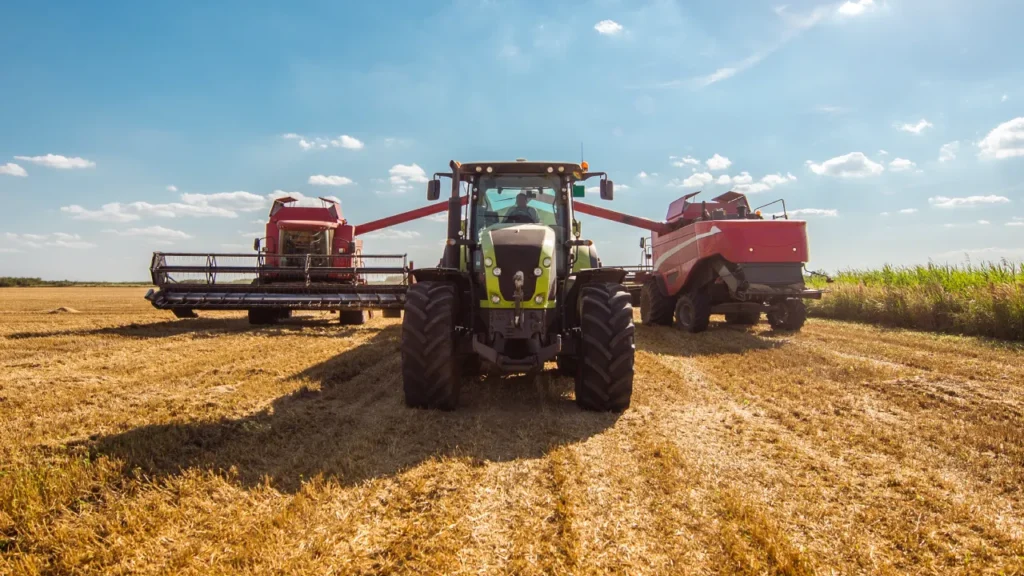
A farming operation in Canterbury, New Zealand needed a John Deere X9 1100. Rather than wait for one to come up locally, the buyer sourced the combine from the United States through JumboBee. The machine was located in Fargo, North Dakota. It was then prepared for New Zealand import and shipped to the Port of Lyttelton, with international logistics coordinated by JumboBee’s partner, Atlantic Project Cargo.
Buying a combine from another hemisphere means evaluating far more than the asking price. Before committing, this buyer had to understand the machine’s condition, the seller and its location, inland pickup, export preparation, ocean freight, New Zealand biosecurity requirements, and, ultimately, the total landed cost.
This case study follows that purchase from listing to delivery in Canterbury, and shows what any international buyer should check before buying a US combine.
What the Buyer Was Looking For
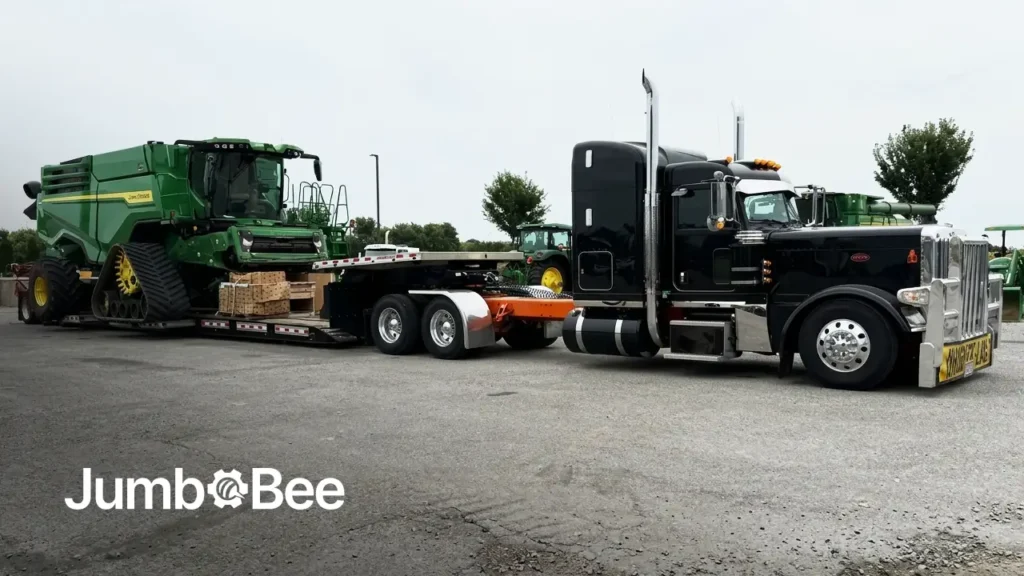
The buyer is a mixed arable and contracting operation on the Canterbury Plains near Ashburton, harvesting around 2,000 hectares of wheat, barley and ryegrass seed each season. Their existing combine, a 2014 John Deere S690 with more than 3,000 separator hours, was nearing the end of its economic life, and the business needed more capacity to cover its acreage inside a narrow weather window.
They came to JumboBee with a specific model in mind: the John Deere X9 1100. Their brief was a used machine, 2022 or newer, with under 1,000 separator hours, on tracks, with a draper header suited to their crops.
Why look in the USA? At the time of the search, no X9 1100 matching the brief was advertised for sale in New Zealand, and the few X9s in the country were held by operators with no plans to sell. The US market, by contrast, has a deep pool of late-model X9s traded in by large operations upgrading their fleets.
The buyer’s real question was not whether an X9 1100 existed in the US. It was whether buying one from 13,000 km away was practical, and what it would actually cost to get it onto their farm.
Why Buy a John Deere X9 1100 from the USA?
The US is the world’s largest market for high-capacity combines, and that scale works in an international buyer’s favour. Dealers, auctions and farm operations across the Corn Belt and Northern Plains carry late-model trade-ins, so a buyer can compare several machines of the same model across different states, hour ranges and configurations instead of taking whatever is available locally.
For a model like the X9, that matters. Smaller markets may see only a few units change hands each year. In the US, a buyer can be selective about year, hours, track or tyre setup, and header package.
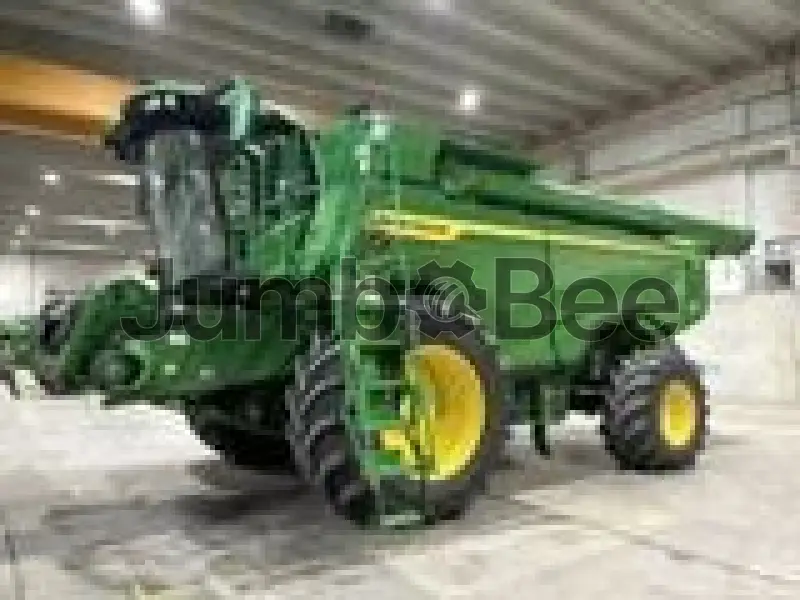

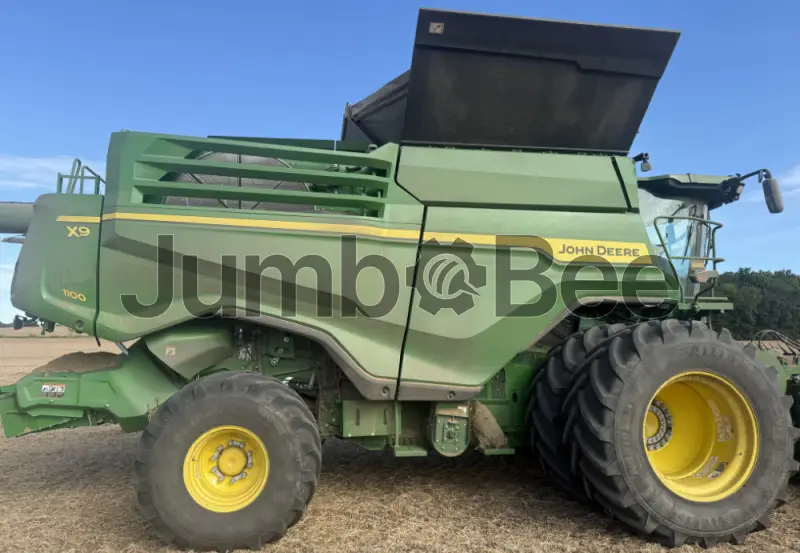
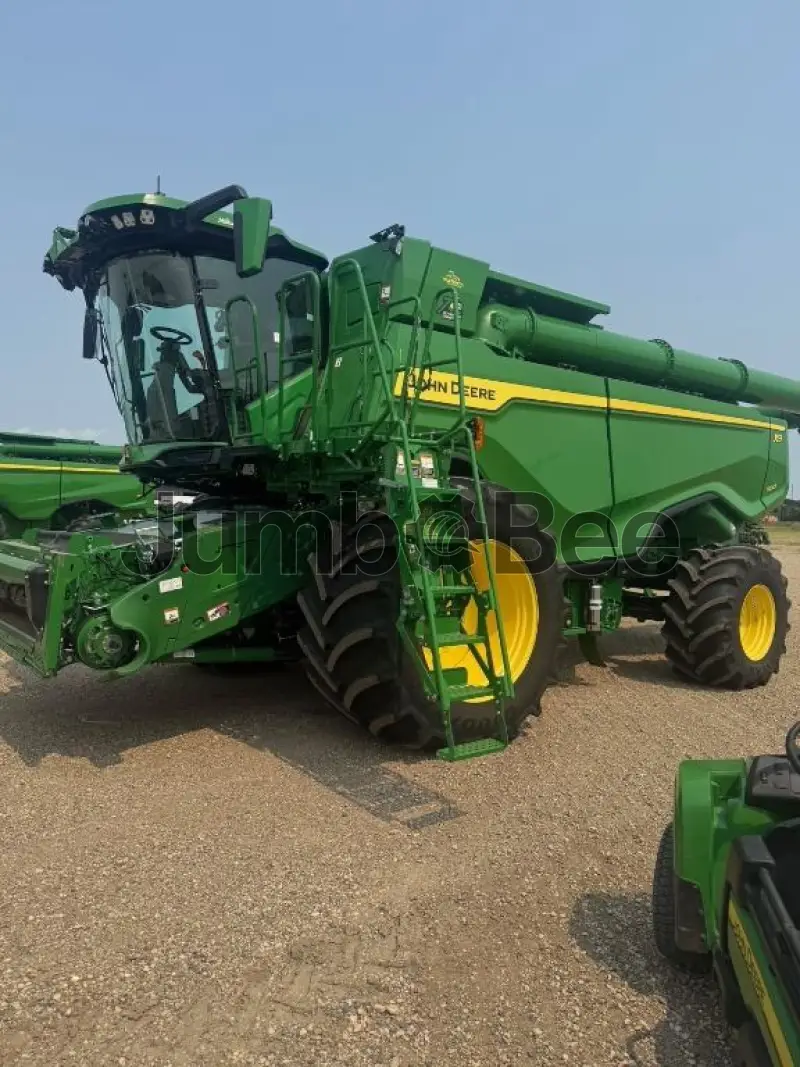
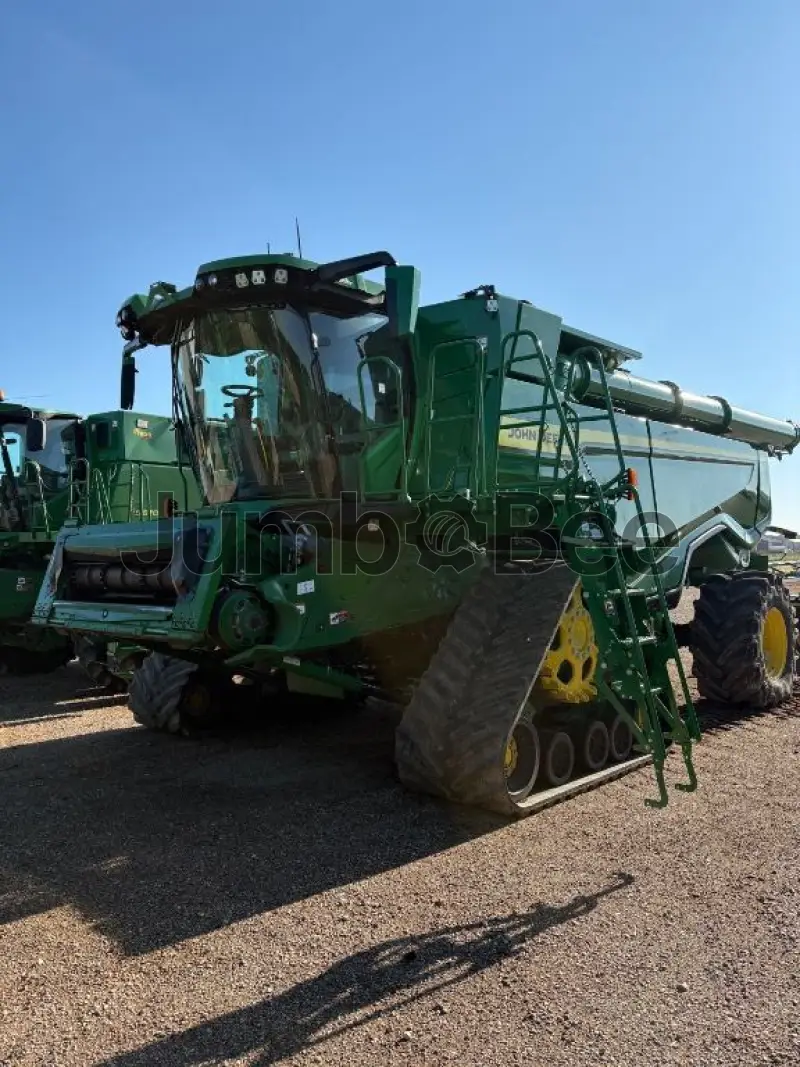
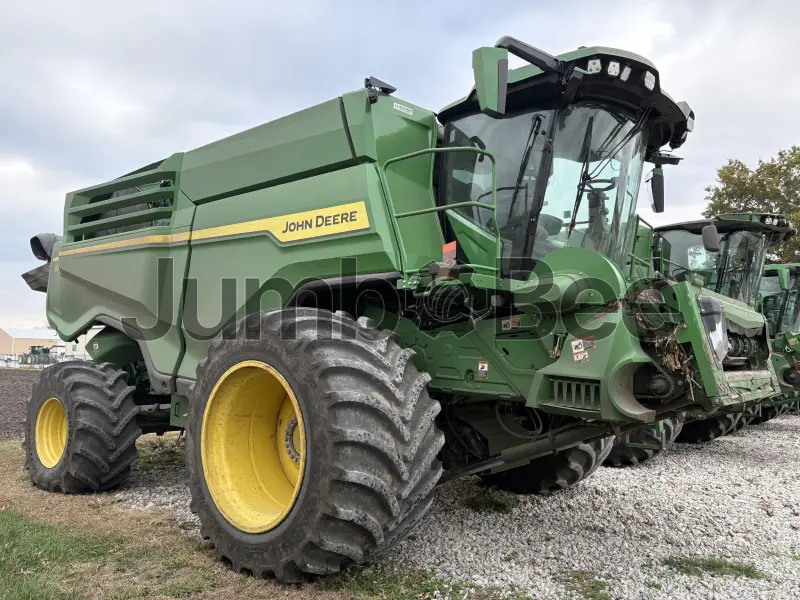
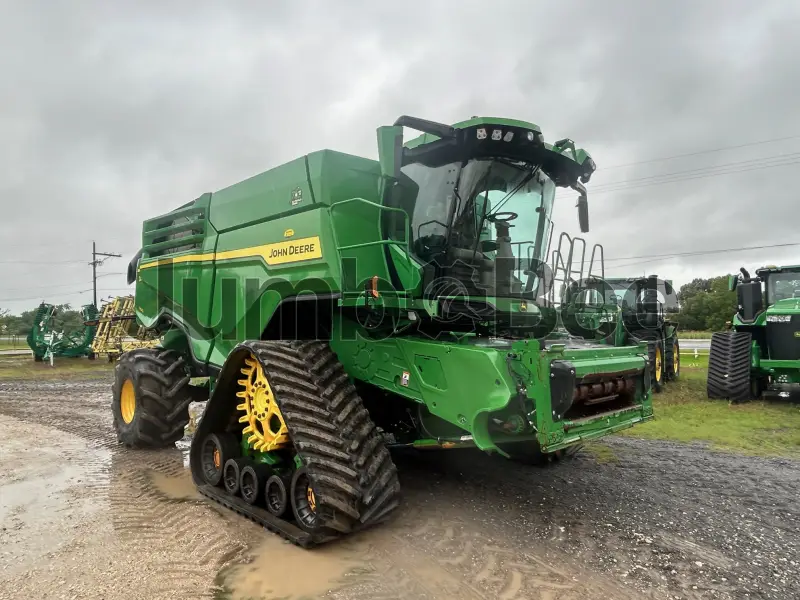
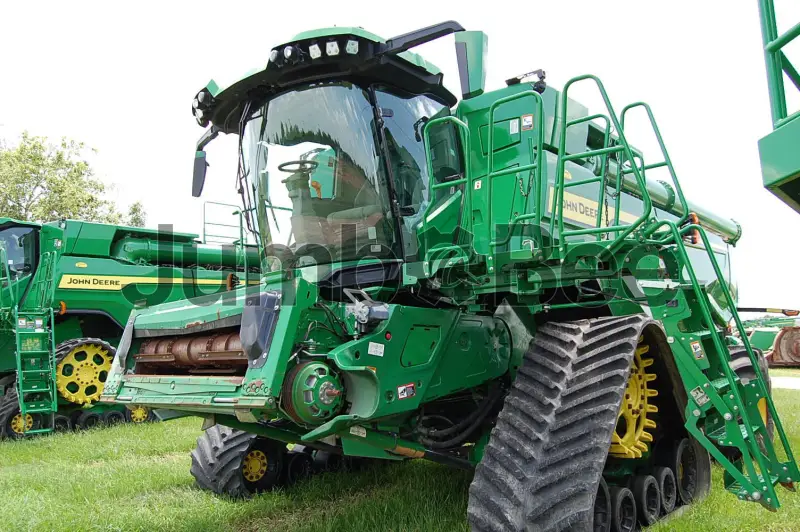
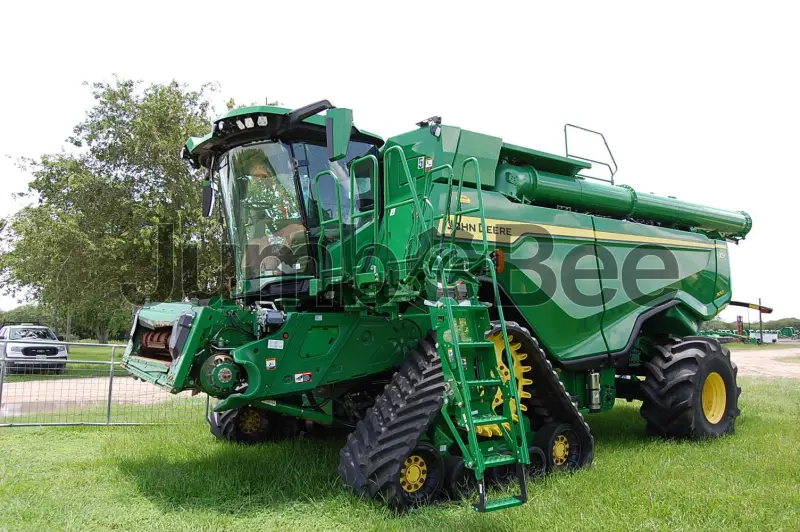
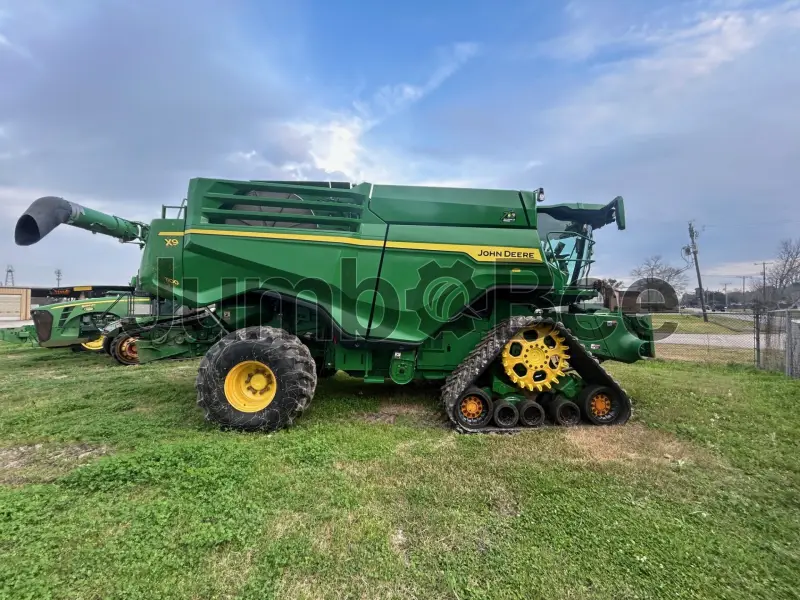
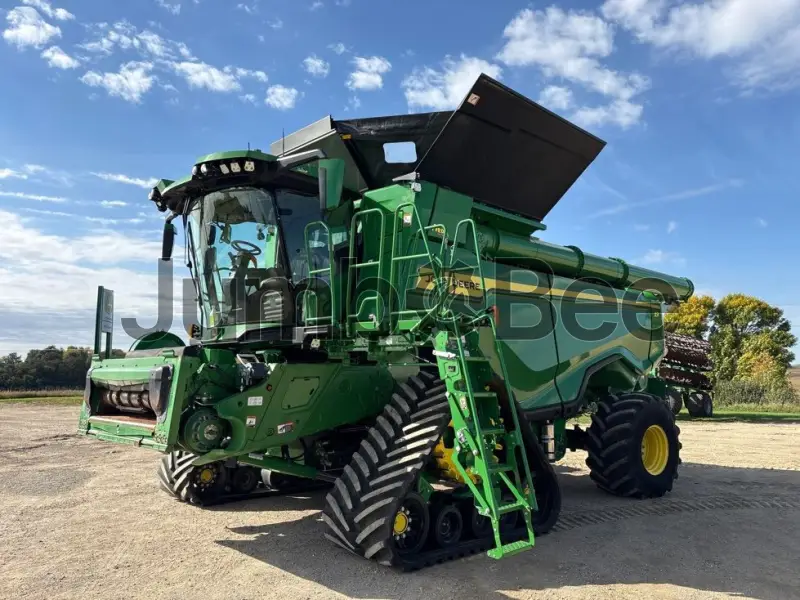
The machine in brief
The X9 1100 is the larger of John Deere’s two X9 models, built for big operations and contractors who need maximum capacity in a short harvest window. These are the John Deere X9 1100 specifications that mattered most for this purchase:
| Specification | X9 1100 |
|---|---|
| Maximum engine power | 690 hp |
| Engine | John Deere JD14 13.6 L |
| Grain tank | 16,210 L (460 bu), power folding |
| Peak unload rate | 186.7 L/s (5.3 bu/s) |
| Introduced | Announced 2020; model year 2021 onward |
| Base weight, no header | 22,000 kg (48,500 lbs) |
| Typical header | Draper, typically 40–45 ft |
Finding the John Deere X9 1100
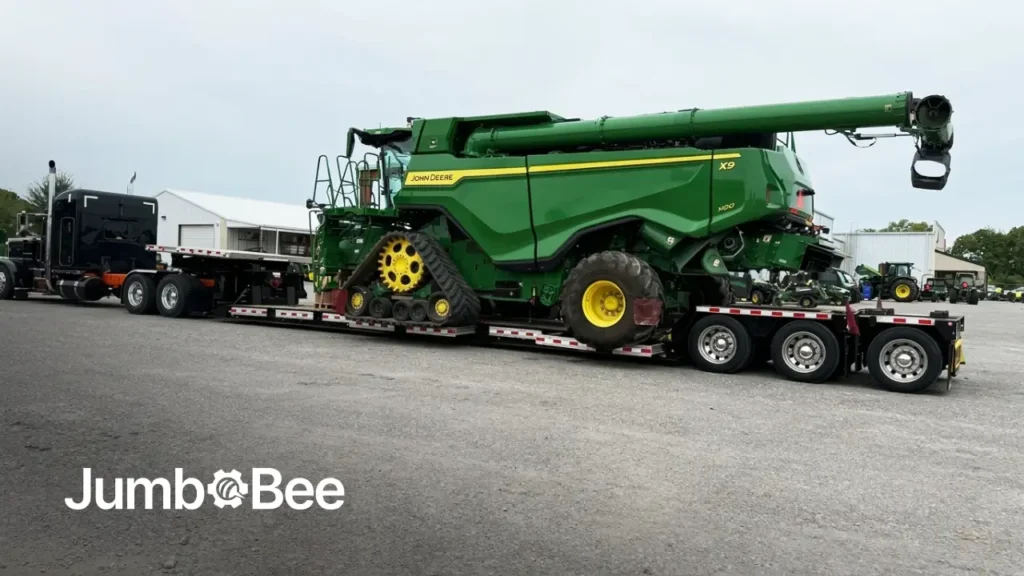
The machine the buyer chose was a 2022 John Deere X9 1100 with 780 engine hours and 540 separator hours, listed on JumboBee. It ran on 36-inch tracks and came with a 45 ft HD45F draper header, which suited the buyer’s mix of cereals and grass seed.
The listing gave the buyer what they needed to shortlist it from the other side of the world: year and hours, configuration, a full photo set, the asking price of US$625,000 including header and, critically, the machine’s location.
From there, the process ran through JumboBee:
- The buyer sent an inquiry to the seller through the listing, requesting service records, close-up photos of the rotors, concaves and tracks, and confirmation that the header was included in the sale.
- Within two days, the seller returned the dealer service history and a recent inspection report. A walkaround video confirmed the machine’s running condition.
- The buyer submitted an offer of US$585,000 using the Make an Offer option. After one counter-offer, the buyer and seller agreed on terms at US$598,000, about 4% below the original asking price.
- Payment and sale documents were completed in early May 2026, and the machine was held at the dealer’s yard for pickup.
Evaluating the Purchase Before Committing
The buyer’s shortlist included three X9 1100s in North Dakota, Minnesota, and Kansas. Asking price alone did not decide it. Each machine was weighed on what it would cost to own in Canterbury, not what it cost in the US.
| What to check | Why it matters |
|---|---|
| Purchase price | The starting point for total acquisition cost |
| Year and hours | Separator hours in particular show how hard the machine has worked |
| Machine condition | Affects repairs, loading options, and resale value |
| Header included | Changes both the deal value and the shipping configuration |
| Equipment location | Drives US inland transport cost to the export port |
| Dimensions and weight | Determine the shipping method and permits |
| Running condition | A machine that drives on and off is simpler and cheaper to move |
| Destination country | Sets import and biosecurity requirements |
| Estimated shipping | Needed to understand the real cost of the purchase |
This is where the cheapest listing stops looking cheapest. A combine with a lower asking price can cost more to land if it sits far from a suitable port, needs repair before loading, or arrives without the header the buyer wanted.
In this case, the Kansas X9 1100 was listed at US$545,000, about US$80,000 below the Fargo machine, but it came without a header and needed track undercarriage work estimated at US$12,000. Adding a comparable used draper header at around US$85,000 plus the repairs put it roughly US$17,000 above the Fargo machine’s asking price before shipping, with a longer haul to a West Coast port on top.
From Purchase to Export: What Had to Happen
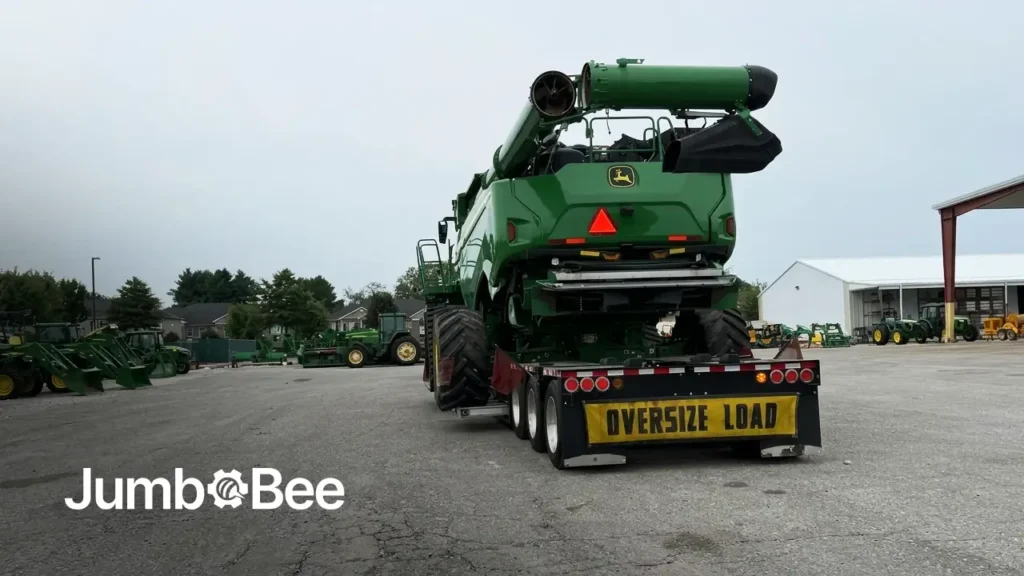
Signing the deal was the midpoint, not the finish line. A 20-tonne-plus combine in North Dakota does not move itself to a ship, and every step between the dealer’s yard and the port has a cost the buyer needs to plan for.
International transport and export preparation were coordinated by JumboBee’s logistics partner, Atlantic Project Cargo. After the sale, the sequence ran like this:
- Pickup arranged in Fargo. A collection date was agreed with the dealer.
- Dimensions confirmed. The machine was measured as configured, with tracks, cab, and grain tank folded, to confirm the transport plan.
- Header removed. The draper was detached and prepared as a separate piece of cargo.
- Machine made compact for transport. The unloading auger was folded and secured, and the grain tank extensions lowered.
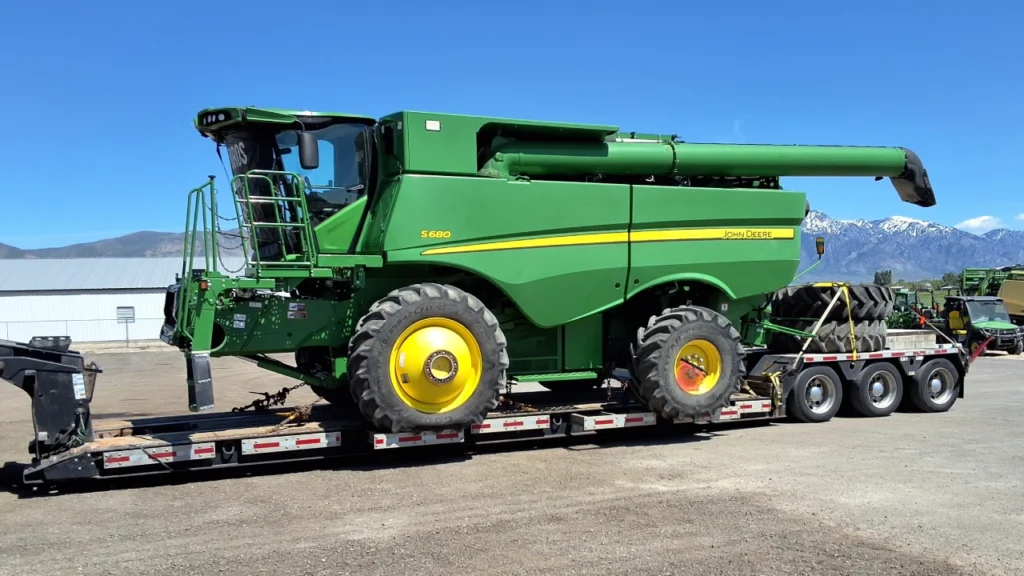
- Oversize inland haul arranged. Because of its width and weight, the combine moved on a lowboy trailer under oversize permits from North Dakota to the Port of Tacoma, Washington, roughly 2,300 km west, a five-day trip including permit routing.
These are the steps any international buyer should budget for after buying a large combine in the US. Many of them depend on the exact machine, which is why dimensions, header, and running condition belong in the evaluation stage, not afterwards.
Preparing a Used Combine for New Zealand
For a New Zealand buyer, the biggest risk in buying a used combine overseas is not the ocean crossing. It is arriving at the border with a machine that is not clean enough.
Used farm machinery can carry soil, seeds, plant residue and insects. New Zealand’s Import Health Standard: Vehicles, Machinery and Parts requires used machinery to be cleaned inside and out, and a cleaning certificate must be submitted to MPI for used outdoor machinery. MPI may then inspect the machine on arrival before giving biosecurity clearance.
A combine is one of the hardest machines to get to that standard. Rotors, concaves, sieves, elevators, the grain tank, augers, and track assemblies all trap material, and much of it cannot be reached without removing panels. Machines shipped during the brown marmorated stink bug season may also face additional treatment requirements depending on origin and timing. Because this X9 1100 shipped in June, outside the stink bug season, no seasonal treatment was needed.
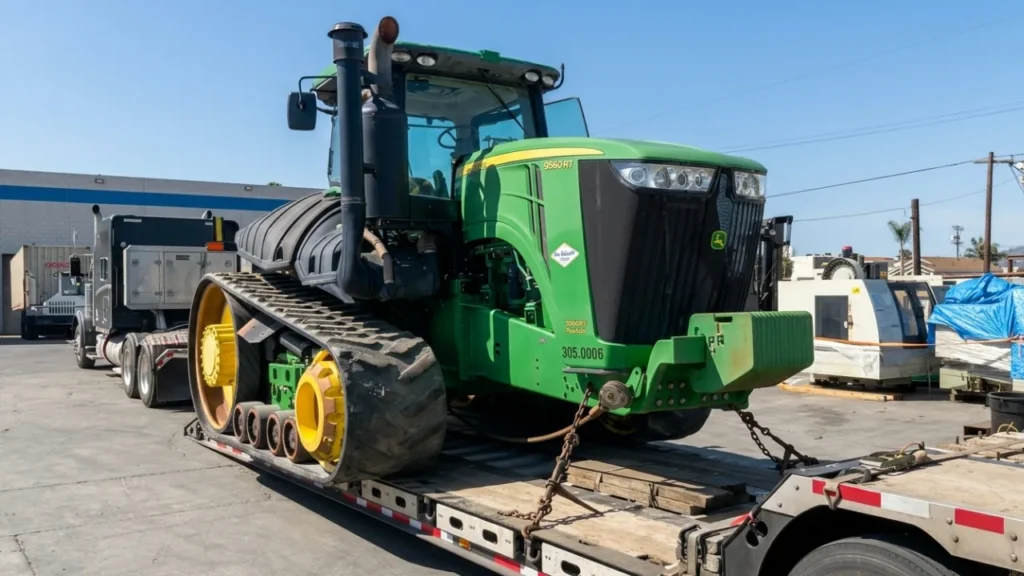
For this X9 1100, preparation included:
- Removing the header so it could be cleaned separately, including the draper belts and reel.
- Opening access panels and removing sieves, rotor covers and track guards to reach internal areas.
- High-pressure cleaning of the threshing and separating system, grain handling, and undercarriage.
- Issuing the cleaning certificate and documentation needed for MPI before arrival.
This work added six working days and about US$9,800 to the project. That is precisely why it belongs in the buying decision: a buyer who discovers these requirements after purchase has already lost control of the timeline.
Buying used farm equipment for New Zealand?
Check biosecurity requirements before placing an offer. Cleaning, treatment, disassembly, and documentation can affect both the final cost and the shipment timeline. MPI’s import requirements tool is a good starting point.
Shipping the X9 1100 to Lyttelton
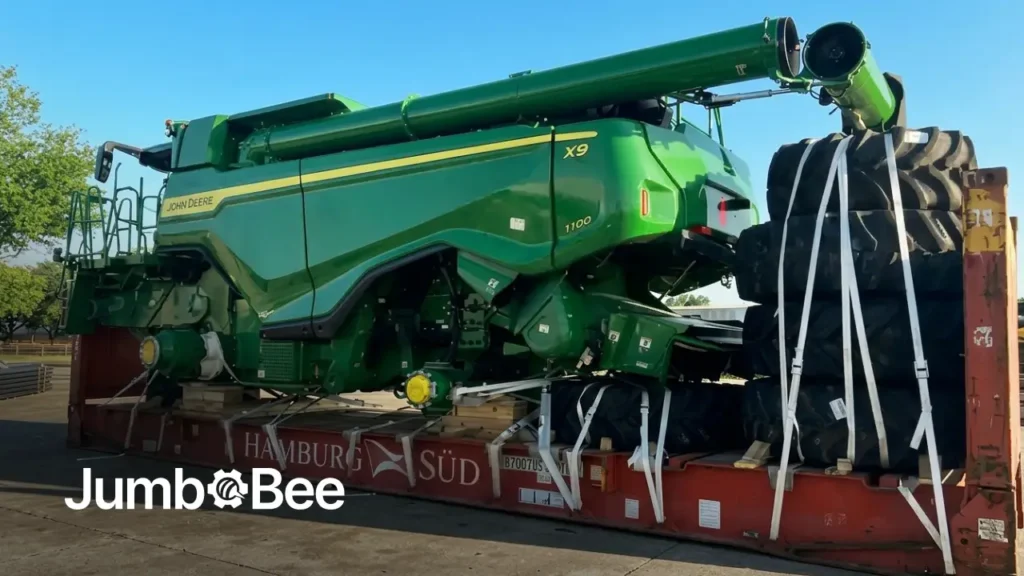
With cleaning complete, the combine and header were ready for the ocean leg. The X9 1100 is too wide and too heavy for a standard container, so it travelled on a 40 ft flat rack. The 45 ft header, longer than the rack’s deck, travelled on a second 40 ft flat rack as over-length cargo.
Both units were blocked, braced and lashed at the Port of Tacoma before loading. The cargo then sailed to the Port of Lyttelton, the main gateway for the Canterbury region, remaining on board during a port call at Auckland. Ocean transit took about 24 days.
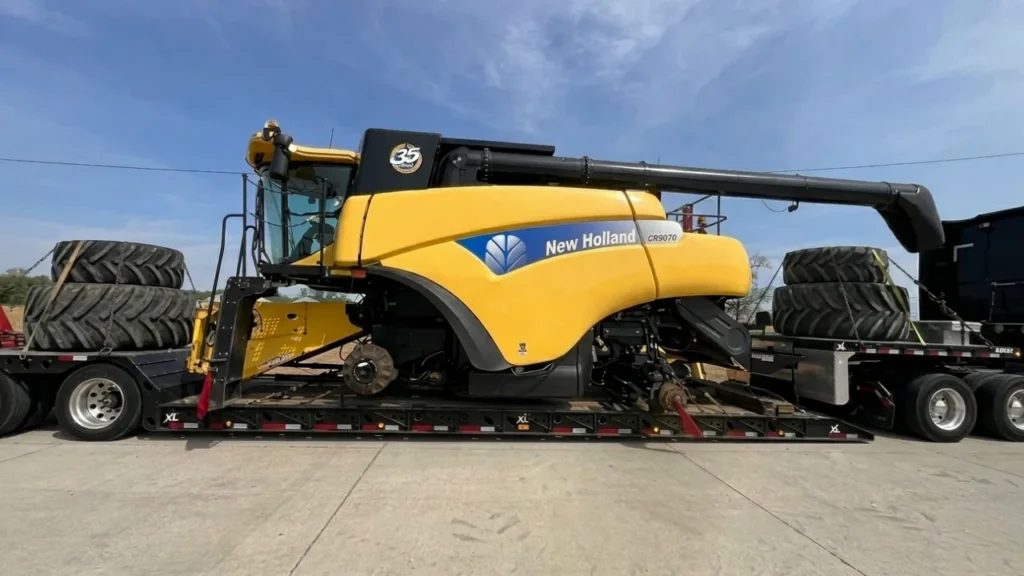
On arrival, MPI inspected the machine at the port before biosecurity clearance was given.
| Project detail | Information |
|---|---|
| Equipment | John Deere X9 1100, 2022, 540 separator hours |
| Purchase market | USA |
| Equipment location | Fargo, North Dakota |
| Buyer | Farming operation, Canterbury, New Zealand |
| US port of loading | Port of Tacoma, WA |
| Destination port | Lyttelton |
| Shipping method | Two 40 ft flat racks (header shipped over-length) |
| Header | 45 ft draper, shipped separately |
| Logistics | Atlantic Project Cargo |
| Biosecurity inspection | Cleared on first inspection |
| Total timeline, purchase to delivery | 9 weeks (early May to early July 2026) |
Shipping a combine overseas? Browse combines and check the estimated shipping on each listing.
What the Buyer Received
The buyer got the exact machine they set out to find: a late-model X9 1100 on tracks with a draper header, sourced from a market with far more choice than their own.
The combine cleared MPI inspection at Lyttelton on the first pass, with no additional cleaning or treatment required. It was then trucked about 100 km to the buyer’s property in Canterbury, nine weeks after the purchase was agreed.
The numbers that made the case:
| Cost item | Amount |
|---|---|
| Purchase price, incl. 45 ft draper header | US$598,000 |
| US inland transport, Fargo to Tacoma (combine and header) | US$18,500 |
| Cleaning and export preparation | US$9,800 |
| Ocean freight, two flat racks to Lyttelton | US$36,400 |
| Subtotal in US dollars | US$662,700 (approx. NZ$1,126,600 at 1 USD = 1.78 NZD – 09/11/2026) |
| NZ port charges, MPI inspection, customs brokerage and delivery | NZ$11,200 |
| Total landed cost, excluding GST | approx. NZ$1,137,800 |
| Purchase to delivery | 9 weeks |
Import GST is charged on arrival in New Zealand and is generally claimable by GST-registered farming businesses, so it is shown separately from the landed cost. For comparison, the buyer had priced a similar late-model X9 1100 through New Zealand channels at around NZ$1.3 million, putting the US purchase roughly 12% lower on a landed basis.
What International Buyers Can Learn from This Purchase
Search beyond your local market. US inventory widens the choice of models, years, hours and configurations, especially for high-capacity machines that rarely come up in smaller markets.
Compare total cost, not asking price. Add US inland transport, preparation, ocean freight and destination costs to every listing on your shortlist before you rank them.
Equipment location matters. A combine in North Dakota and one near a West Coast port can differ by thousands of dollars in inland freight alone.
Check destination requirements before buying. For New Zealand and other strict biosecurity markets, cleaning and treatment shape cost and timeline. Shipping month matters too: this machine avoided seasonal stink bug treatment by shipping in June.
Get shipping information before committing. The shipping method depends on dimensions, attachments, running condition and destination. An estimate up front avoids surprises after the deal is signed.
Confirm what is included. Header, tracks or tyres, attachments, service records and documentation can change a machine’s value materially. In this purchase, the included header alone was worth more than the gap in asking price between two machines.
Buying a John Deere X9 or Similar Combine through JumboBee
JumboBee is built so international buyers can evaluate a US machine fully before they commit, with shipping treated as part of the purchase rather than an afterthought.
- Discover. Browse listings, or start from Browse Models to see specifications for a model like the X9 1100.
- Compare. Line up machines by year, hours, configuration, location and price.
- Evaluate. Read owner reviews and Q&A where available, and request records from the seller.
- Estimate shipping. Check the estimated cost of moving the machine to your country.
- Contact the seller. Send an inquiry, or make an offer.
- Purchase and ship. Complete the sale, with international logistics available through JumboBee’s partner network.
FAQ
Yes. International buyers can find US-listed X9 1100s on JumboBee, review the specifications and seller details, contact the seller or make an offer, and check estimated shipping before committing. You will still need to meet your own country’s import requirements, so check those early.
US dealers, auctions, and farm operations regularly sell late-model X9s. You can see current listings, specifications or browse all combines for sale and filter by manufacturer and location.
Yes. JumboBee provides an estimated international shipping cost on each listing, based on the machine’s location, size and your destination. Treat it as a planning figure; the final quote depends on the exact configuration and route.
It depends on the machine’s location, dimensions and weight, whether the header ships separately, the export port, shipping method and destination, plus any cleaning or treatment the destination requires. In this case, inland transport, preparation and ocean freight to New Zealand came to about US$64,700. Check the estimated shipping on any listing for a figure on a specific machine.
Usually partly. The header is almost always removed and shipped separately, and parts like unloading augers may be folded or secured. Large combines often travel on flat racks. The exact configuration depends on the model’s dimensions, the route and the shipping method.
Yes, but used machinery must meet MPI’s Import Health Standard for vehicles, machinery and parts. That means thorough cleaning, a cleaning certificate before arrival, possible seasonal treatment, and inspection on arrival. Check MPI’s requirements before you make an offer.
Check year, engine and separator hours, condition and service history, configuration and header, location, dimensions and weight, running condition, estimated shipping cost and your country’s import requirements. Compare total landed cost, not just asking price.
Yes. You can send an inquiry to the seller from the listing to request records, photos or videos, or use Chat with Seller.





Be the first to leave a comment
There are no replies to this post yet. Share your thoughts and help start the conversation.