 Equipment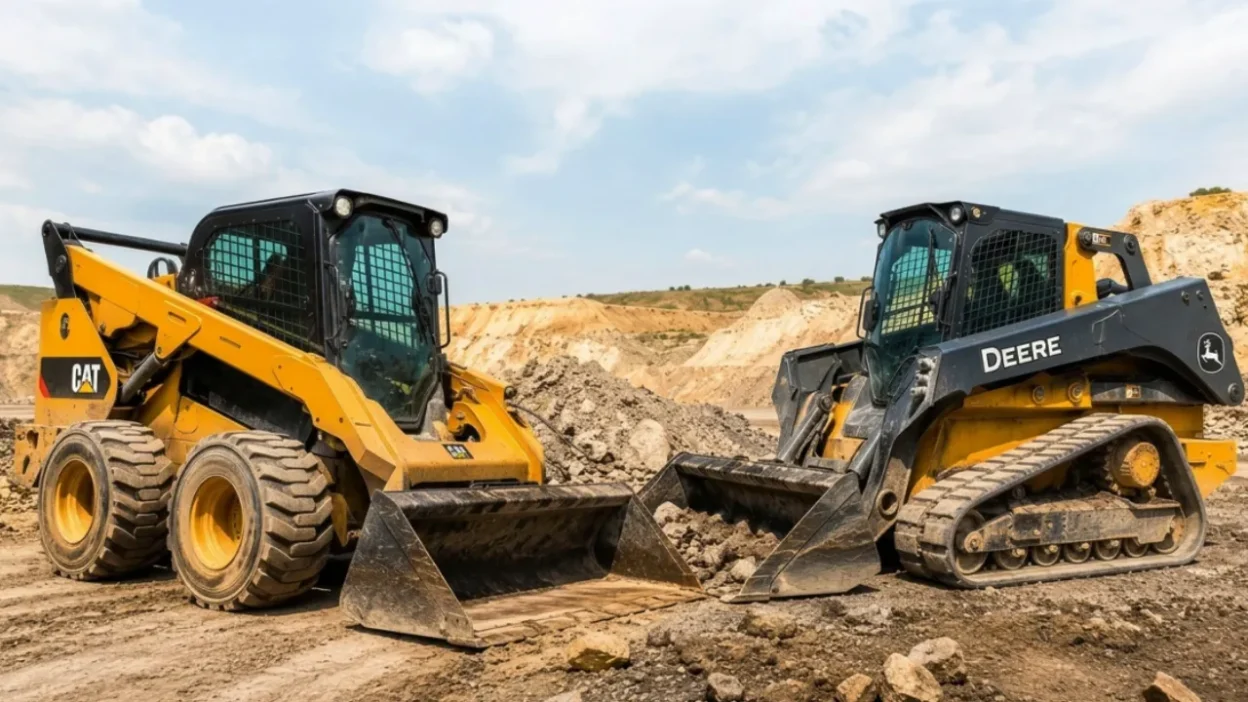
Deciding between wheeled machines and tracked machines is one of the most common dilemmas for contractors, farmers, and landscapers. As we navigate the heavy equipment market in 2026, both machine types remain essential on jobsites worldwide. However, making the wrong choice can lead to delayed projects, destroyed landscapes, and thousands of dollars in unnecessary maintenance.
Understanding the skid steer vs track loader debate requires looking beyond basic horsepower. You must evaluate terrain conditions, transport logistics, daily operating costs, and long-term business goals. Modern emission standards and advanced telematics have made both options more efficient than ever, but their physical relationship with the ground dictates where they perform best.
This comprehensive guide breaks down every aspect of the track vs wheel skid steer comparison. We will explore real-world use cases, calculate operating costs, and provide a clear framework to help you source the perfect machine for your global operations.
Quick answer: Skid Steer vs. Track Loader
- Choose a wheeled skid steer if you primarily operate on hard, abrasive surfaces like concrete or asphalt and want lower upfront and maintenance costs.
- Choose a compact track loader if you need maximum traction, pushing power, and minimal ground disturbance on soft, muddy, or uneven terrain.
What Is Wheeled Skid Steer Loader

Wheeled skid steers are compact, rigid-frame heavy equipment machines equipped with four wheels. They get their name from their unique steering mechanism. Left-side wheels operate independently from right-side wheels. When you turn, wheels on one side spin faster or in the opposite direction, causing the machine to skid across the ground.
This skidding action creates a zero-turn radius, allowing the machine to pivot entirely within its own footprint. Such extreme maneuverability makes wheeled skid steers incredibly popular in tight spaces.
Key characteristics include:
- Four heavy-duty pneumatic or solid rubber tires
- Zero-turn capability for maximum agility
- Lighter operating weight compared to tracked counterparts
- Higher top travel speeds on flat ground
Typical use cases for wheeled loaders involve hard, unyielding surfaces. You will frequently see them on asphalt, concrete, and tightly packed dirt. They excel in urban construction, road repair, warehouse material handling, and demolition projects where surfaces are stable.
What Is Compact Track Loader

Compact track loaders, simply called track loaders, share the same basic body and lifting arms as wheeled skid steers but replace wheels with a dedicated undercarriage and continuous rubber tracks.
Tracks fundamentally change how the machine interacts with the ground. Instead of resting all its weight on four small tire contact points, a track loader distributes its weight across the entire length and width of its rubber tracks. This creates massive flotation, meaning the machine floats over soft ground rather than sinking into it.
Key characteristics are:
- Continuous rubber tracks with steel embedded lugs
- Complex undercarriage featuring idlers, rollers, and drive sprockets
- Exceptional pushing power and ground grip
- Significantly lower ground pressure
Typical use cases involve challenging terrain. If your jobsite features thick mud, loose sand, wet clay, or steep inclines, a track loader is the superior choice. They dominate in forestry, residential grading, agricultural field work, and landscaping where minimizing turf damage is critical.
Key Differences: Side-by-Side Comparison
To fully grasp the track vs wheel skid steer dynamic, you must compare their specifications directly. The following table highlights core differences between machines of similar horsepower and lifting capacity.
| Feature | Wheeled Skid Steer | Compact Track Loader |
|---|---|---|
| Ground Pressure | 35 to 45 PSI | 4 to 6 PSI |
| Traction in Mud | Poor to Average | Excellent |
| Top Speed | 10 to 12 mph | 6 to 8 mph |
| Surface Damage | High on soft turf | Low on soft turf |
| Initial Purchase Cost | Lower | 20% to 30% Higher |
| Undercarriage Maintenance | Simple and Cheap | Complex and Expensive |
| Ride Comfort | Bumpy on rough terrain | Smooth on rough terrain |
Performance Comparison Breakdown
Choosing the right equipment means matching machine capabilities to your daily tasks. Let us explore how these machines perform across five critical categories.
Traction and Stability

Tracks provide unmatched grip. Because rubber tracks maintain constant, wide contact with the ground, they translate engine power into raw pushing force much more efficiently than tires. If you need to push heavy wet snow, grade thick clay, or excavate packed earth, tracks give you the leverage required without spinning out.
Track loaders also offer superior stability on slopes. Their longer track base lowers the center of gravity, reducing the risk of tipping when working on inclines. OSHA guidelines for earthmoving equipment strongly emphasize slope safety, making tracked machines preferable for hilly terrain.
Wheels, conversely, bounce and slip on uneven or wet ground. However, on dry concrete or asphalt, tires provide excellent grip and allow for aggressive, rapid turning without wearing down prematurely.
Ground Impact and Surface Damage

Ground pressure is calculated in pounds per square inch (PSI). A standard human standing on one foot exerts about 7 to 8 PSI.
A heavy track loader distributes its weight so effectively that it often exerts only 4 to 6 PSI. You can literally drive a 10,000-pound track loader over a golf course fairway with minimal turf disruption.
Wheeled skid steers concentrate their entire weight onto four small tire patches, resulting in 35 to 45 PSI. Driving a wheeled machine across a wet lawn will instantly create deep, destructive ruts. Furthermore, the skidding action required to turn will tear up grass and soft soil.
Speed and Mobility

Time is money on a jobsite. Wheeled skid steers are significantly faster, often reaching speeds of 10 to 12 mph. If your operation requires moving pallets of bricks across a massive warehouse or transporting gravel from one end of a large concrete staging area to another, wheels will complete the cycle times much faster.
Time is money on a jobsite. Wheeled skid steers are significantly faster, often reaching speeds of 10 to 12 mph. If your operation requires moving pallets of bricks across a massive warehouse or transporting gravel from one end of a large concrete staging area to another, wheels will complete the cycle times much faster.
Track loaders are geared for torque, not speed. They typically max out around 6 to 8 mph. While they are slower, their ride is much smoother over rocky or rutted terrain, reducing operator fatigue during long shifts.
Operating Cost and Fuel Efficiency
Fuel efficiency largely depends on jobsite conditions. If you force a wheeled skid steer to work in thick mud, it will burn massive amounts of fuel spinning its tires and fighting for traction. In that specific scenario, a track loader is more fuel-efficient.
However, under normal, firm conditions, wheeled machines are lighter and experience less rolling resistance, making them generally more fuel-efficient.
Maintenance and Durability
Maintenance is where the financial differences become glaringly obvious.
Wheeled skid steer maintenance is straightforward. You check tire pressure, rotate tires, and eventually replace them. A premium set of four heavy-duty skid steer tires in 2026 can cost roughly $1,200 to $2,000. Changing them takes an hour.
Track loader maintenance is complex. The undercarriage contains dozens of moving parts constantly exposed to dirt, sand, and rocks. You must clean the undercarriage daily to prevent abrasive wear. When rubber tracks wear out, a replacement set costs between $3,500 and $5,500. Additionally, you must periodically replace worn bogie wheels, front idlers, and drive sprockets.
Skid Steer with Tracks: When It Makes Sense

What if you own a wheeled machine but occasionally face muddy conditions? Buying an entirely new compact track loader might not fit your budget. This is where outfitting a skid steer with tracks becomes highly relevant.
Over-the-tire (OTT) tracks are heavy-duty steel or rubber belts that wrap directly around the tires of a wheeled skid steer.
Benefits of over-the-tire tracks:
- Instant traction upgrade for muddy or snowy conditions
- Cost-effective alternative to buying a dedicated track loader
- Removable when returning to hard surfaces
Calculations make this appealing. A quality set of steel OTT tracks costs about $2,500 to $4,000. This is a fraction of the cost of upgrading to a new machine.
However, a skid steer with tracks is still a compromise. It does not offer the same low ground pressure or extreme pushing power as a true, dedicated compact track loader. The wheelbase is shorter, and the machine was not originally engineered for the added weight and stress of tracks. Use OTT tracks as a seasonal solution, not a permanent replacement for a track loader.
When to Choose Wheeled Skid Steer
Certain environments heavily favor tires. You should invest in a wheeled machine under the following conditions:
- Jobsites consisting of asphalt, concrete, or packed gravel
- Scrap yards and demolition sites where sharp debris would shred rubber tracks
- Projects requiring fast travel speeds across large, flat areas
- Operations with strict equipment maintenance budgets
- Indoor construction or warehouse material handling
If you run a paving company or a snow removal business operating on paved parking lots, wheels are your best asset. Tires will not get chewed up by asphalt, and you can maneuver quickly between obstacles.
When to Choose Track Loader
Tracked machines are built for the wild. You should invest in a compact track loader under the following conditions:
- Landscaping projects requiring minimal turf damage
- Excavation sites with deep mud, wet clay, or loose sand
- Grading applications requiring smooth, precise blade control
- Forestry and land clearing operations
- Hilly terrain requiring low center of gravity for safety
If you are a residential home builder digging foundations in the rainy season, wheels will leave you stranded. Tracks ensure your crew keeps working regardless of the weather forecast.
Cost Comparison: Skid Steer vs Track Loader
Understanding the total cost of ownership is vital for your business. Let us run a practical calculation comparing the two machines over a 3,000-hour lifecycle.
Initial purchase price:
In 2026, a new 75-horsepower wheeled skid steer costs approximately $60,000. A new 75-horsepower compact track loader costs roughly $80,000.
Undercarriage lifecycle costs:
Assume tires last 800 hours. Over 3,000 hours, you will buy roughly four sets of tires. At $1,500 per set, tire replacement costs total $6,000.
Assume rubber tracks last 1,500 hours depending on terrain. Over 3,000 hours, you will buy two sets of tracks. At $4,500 per set, plus replacing worn undercarriage components ($3,000), track maintenance costs total $12,000.
Summary of 3000-hour cost difference:
- Purchase premium for tracks: $20,000
- Maintenance premium for tracks: $6,000
- Total extra cost for tracks: $26,000
While the track loader costs significantly more to own and operate, you must factor in productivity. If a track loader allows you to work 30 extra days a year during the rainy season, it will easily generate enough revenue to offset the higher owning and operating costs.
New vs Used Equipment Options
Heavy equipment depreciates, but it also generates immediate revenue. Deciding between new and used machinery depends on your capital and usage frequency.
New equipment provides peace of mind. You receive factory warranties, the latest telematics software, and compliance with the strictest 2026 emission regulations. If the machine runs 40 hours a week and forms the backbone of your business, buying new prevents costly downtime.
Used equipment offers faster return on investment. A well-maintained machine with 1,500 hours has already absorbed its steepest depreciation curve. For farmers or contractors who only need a machine for 10 hours a week, buying used is financially smarter.
Buyers today frequently cross borders to find the best deals. A used machine in the United States might be priced 20% lower than the exact same model in Europe or Africa, even after factoring in international shipping.
How to Choose Right Machine for Your Jobsite
Avoid making emotional purchases. Use this logical framework to determine exactly what your business requires.
Assess Terrain Primarily
Look at where you spend 80% of your time. If 80% of your work is on dirt and grass, buy tracks. If 80% is on pavement, buy wheels. Do not buy a machine based on the 20% exception.
Calculate Lifting Requirements
Determine the heaviest pallet or material you move regularly. Ensure the Rated Operating Capacity (ROC) of the machine exceeds that weight safely.
Evaluate Transport Logistics
Track loaders are heavier. A wheeled skid steer might weigh 7,000 pounds, allowing you to tow it with a standard heavy-duty pickup truck. A comparable track loader might weigh 10,000 pounds, requiring a commercial driver’s license and a heavier transport truck.
Review Attachment Needs
Both machines use universal quick-tach systems, but some attachments favor specific machines. Cold planers for milling asphalt work brilliantly on wheeled machines. Heavy-duty mulchers for clearing trees perform best on highly stable track loaders.
Where to Buy Skid Steers and Track Loaders
Finding the right heavy equipment locally can be frustrating. Local equipment availability is often limited by regional supply, brand distribution policies, and logistics constraints. As a result, buyers may not always find the exact machine configuration or price point within their local market.
To overcome these limitations, many buyers compare equipment globally to access a wider selection, better pricing, and more flexible sourcing options.
Comparing specifications, negotiating prices, and arranging international freight used to be a massive headache. Today, platforms exist to eliminate those barriers entirely.
JumboBee serves as a premier global heavy equipment hub, allowing you to browse thousands of listings worldwide. Whether you need a nimble wheeled loader for an urban project in Europe or a rugged track loader for agricultural work in Egypt, you can find it easily.
The platform protects your capital by verifying all sellers and offering professional pre-sale inspection services. You see the exact condition of the undercarriage before you transfer a single dollar. Furthermore, JumboBee handles the entire logistics chain. From dismantling and container loading to customs compliance and door-to-door cargo insurance, you get full visibility of the final price with zero hidden fees.
Common Mistakes When Choosing Between Tracks and Wheels
Even experienced operators make errors when expanding their fleet. Avoid these frequent pitfalls.
Buying Exclusively on Price
Wheeled machines are cheaper, tempting many buyers to choose them to save money. If your jobsite is a muddy swamp, a cheap wheeled machine will sink, delaying your project and costing you clients. Buy for the terrain, not the price tag.
Ignoring Undercarriage Cleaning
Buyers switching from wheels to tracks often forget to clean the undercarriage. Leaving wet clay to dry and harden inside the track system overnight will stretch the tracks and destroy the drive motors prematurely.
Overlooking Operator Comfort
Rough terrain brutally shakes operators inside wheeled machines. If your crew works 10-hour days on rocky ground, the smooth ride of a track loader will significantly boost morale and productivity.
Forgetting About Hybrid Options
If you face mixed conditions, remember that outfitting a skid steer with tracks temporarily is a viable, cost-effective middle ground.
Final Thoughts: Tracks or Wheels?
There is no universally superior machine in the track vs wheel skid steer debate. Your perfect choice depends entirely on your specific jobsite conditions, daily tasks, and financial strategy.
Wheels deliver speed, lower operating costs, and dominance on hard surfaces. Tracks deliver unstoppable traction, low ground pressure, and extreme stability in the harshest environments. Run the calculations, evaluate your terrain, and choose the machine that keeps your projects moving forward.
Ready to find the perfect machinery for your next big project? Stop overpaying locally and start trading smarter globally. Explore thousands of verified listings on JumboBee today, compare skid steers and track loaders side-by-side, and let our built-in logistics deliver your equipment straight to your jobsite.





Be the first to leave a comment
There are no replies to this post yet. Share your thoughts and help start the conversation.