 Equipment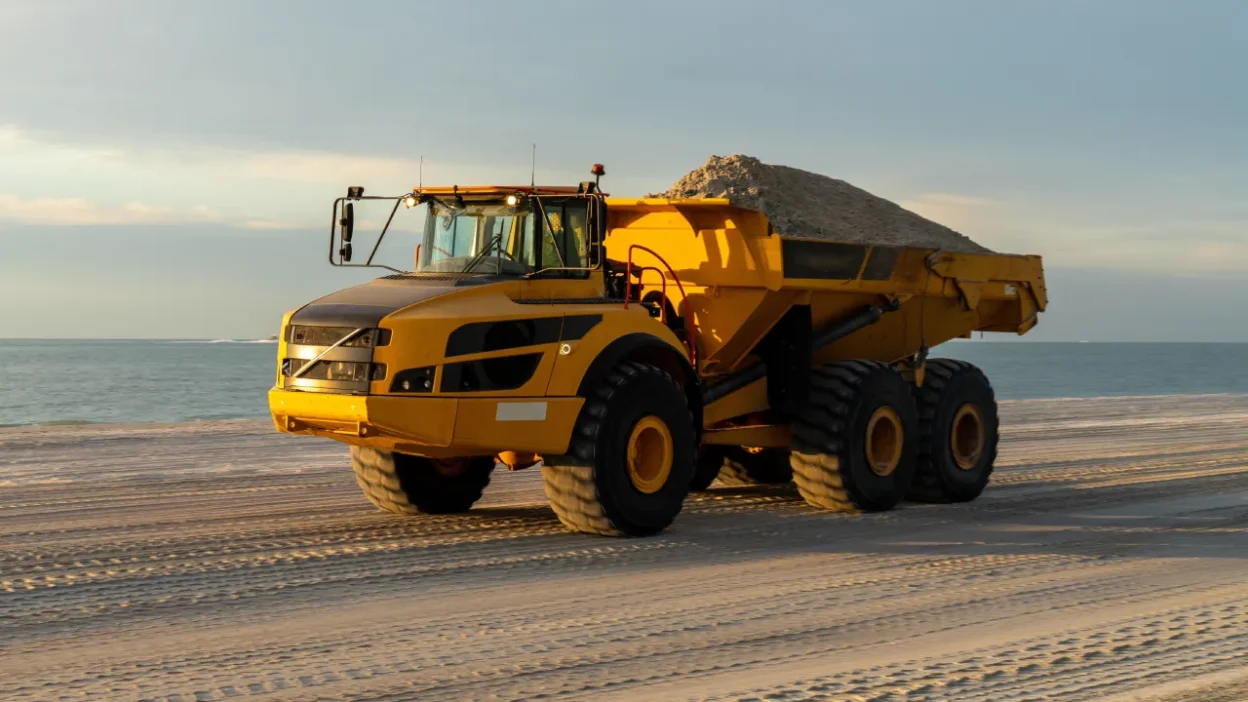
Moving massive amounts of earth, rock, and building materials is the heartbeat of any major jobsite. Without a steady, reliable flow of materials, projects grind to a halt. Hauling equipment serves as the primary artery of this operation, responsible for moving soil, debris, aggregates, and machinery across a jobsite or between distant locations.
Choosing the right hauling machine directly impacts your daily productivity, overall fuel efficiency, and strict project timelines. Selecting an undersized truck means too many trips and burned fuel. Selecting an oversized truck means wasted capacity and potential terrain damage. Hauling equipment in construction is never a one-size-fits-all solution; it requires careful matching of machinery to jobsite realities.
This guide breaks down major types of hauling equipment, real-world use cases, and how to choose the right solution for your next project. You will learn how to calculate hauling costs, avoid common workflow bottlenecks, and source top-tier machinery from global marketplaces like JumboBee.
What Is Hauling in Construction

Hauling in construction refers to the physical transportation of bulk materials, heavy components, and machinery from one location to another. While digging and grading get much of the spotlight, hauling is what actually clears the site and brings in necessary building blocks.
Hauling includes transporting materials such as:
- Soil and excavated earth
- Sand and gravel for road bases
- Construction debris destined for recycling or landfills
- Heavy components like precast concrete panels or steel beams
- Support machinery moving between different project zones
Effective hauling in construction requires more than just buying a truck. It is part of a larger, synchronized system that includes loading, transporting, and unloading materials. If your loader works faster than your trucks can haul, you waste money on idle loader time. If your trucks wait in line to be loaded, you waste money on idle truck time. Finding perfect harmony between these machines is the secret to profitable earthmoving.
How Hauling Fits into Construction Workflow
Understanding the full earthmoving cycle is critical before purchasing any hauling construction equipment. The cycle always follows a strict operational loop: loading, hauling, unloading, and returning.
Interaction between machines dictates your site speed. Hauling machines interact continuously with wheel loaders, hydraulic excavators, and processing equipment like crushers or screeners. In a well-designed workflow, an excavator operator knows exactly how many bucket passes it takes to fill a specific truck.
Inefficiencies in hauling can slow down the entire project. Consider a simple calculation. You have an excavator that loads one bucket every 30 seconds. It takes six buckets to fill your dump truck. That means loading takes exactly three minutes. If the trip to the dump area takes ten minutes, unloading takes one minute, and the return trip takes nine minutes, your total cycle time is 23 minutes.
To keep that single excavator running without pause, you need exactly eight trucks on that route. If you only have five trucks, your expensive excavator sits idle for minutes at a time waiting for the next truck to arrive. This idle time destroys profit margins. Optimizing hauling equipment in construction means matching fleet size, bucket capacity, and travel distance to eliminate wait times.
Types of Hauling Equipment in Construction

Different machines are designed for different loads, distances, and terrain conditions. Using highway trucks in deep mud will result in stuck vehicles, while using slow off-road trucks on paved highways wastes time and damages asphalt. Here are the seven major types of hauling equipment you need to know.
Dump Trucks
Standard dump trucks are the most common hauling equipment used for short to medium distances on stable ground. These vehicles feature a hydraulic hoist mechanism that lifts the front of the bed, allowing material to slide out the back via gravity.
Use cases:
- Urban construction projects with paved access
- Roadwork and highway resurfacing
- Material transport from local quarries to jobsites
Advantages:
- High speed on paved or hard-packed roads
- Easy unloading mechanisms requiring minimal operator effort
- Street-legal status allows them to flow with regular traffic
Models like the Volvo FMX or standard Mack trucks are staples in this category. They offer excellent fuel economy on highways but lack the suspension and traction required for deep mud or steep, unpaved inclines.
Articulated Dump Trucks
Articulated dump trucks, often called ADTs, are built specifically for rough terrain and large-scale projects where standard trucks would sink or break. Instead of a rigid frame, an ADT features a hinge between the cab and the dump box. This articulation joint allows the machine to twist and bend, keeping all wheels on the ground even over extreme ruts and rocks.
Use cases:
- Mining and quarry operations early in development
- Large construction sites with deep mud or soft soil
- Uneven ground where rigid frames would lose traction
Advantages:
- Better mobility in severe weather conditions
- High capacity payloads ranging from 25 to 60 tons
- Six-wheel drive systems that conquer steep grades
When hauling in construction involves crossing rivers of mud or climbing freshly cut dirt ramps, an ADT is the only correct hauling machine for the job.
Rigid Haul Trucks
Rigid haul trucks are colossal machines engineered for high-volume material movement. Unlike ADTs, they have a single, solid frame and typically rely on rear-wheel drive. Because of their immense size and lack of articulation, they require well-maintained, wide, and relatively flat haul roads.
Use cases:
- Quarries with established, graded roads
- Large earthmoving projects like dam construction
- Open-pit mining operations
Advantages:
- Massive load capacity, often exceeding 400 tons in mining variants
- Lower cost per ton when moving material over established routes
- Incredible durability for highly abrasive materials like blasted granite
Manufacturers like Caterpillar and Komatsu dominate this space. These trucks often utilize diesel-electric drivetrains, where a diesel engine powers a generator that drives electric wheel motors, providing massive torque for heavy loads.
Flatbed Trucks and Lowboy Trailers

Not all hauling involves loose dirt. Flatbed trucks and lowboy trailers are specialized hauling construction equipment used for moving machinery and oversized loads. A lowboy trailer sits extremely close to the ground, which allows tall equipment like excavators or cranes to be transported without hitting highway overpasses.
Use cases:
- Transporting heavy equipment between distant jobsites
- Long-distance hauling of oversized steel bridge beams
- Moving pre-fabricated concrete structures
As of 2026 FHWA regulations, strict axle weight limits dictate how heavy equipment must be distributed across trailer axles. Choosing the right lowboy involves calculating the exact weight of your machinery and ensuring the trailer has enough axles to disperse that weight legally across public highways.
Tractor Units (Hauling Trucks)
Tractor units, commonly known as semi-trucks, are heavy equipment used for pulling or hauling trailers. They do not carry loads directly on their frames; instead, they provide the engine power, braking systems, and fifth-wheel coupling needed to tow flatbeds, lowboys, or side-dump trailers.
Use cases:
- Logistics and supply chain management for building materials
- Cross-country transport of lumber, steel, and cement
- Pulling specialized heavy-haul configurations for massive transformers
Advantages:
- Interchangeable trailers allow one truck to perform multiple jobs
- Highway speeds enable rapid cross-state transport
- Advanced telematics track fuel usage and driver hours
When you see a massive bulldozer moving down the interstate, a heavy-duty tractor unit is the heavy equipment used for pulling or hauling that load safely to its destination.
Scrapers
Scrapers are unique because they are dual-function machines designed for both loading and hauling soil. Instead of waiting for an excavator, a scraper lowers a sharp cutting edge into the dirt as it drives forward, forcing soil up into its hopper, or bowl. Once full, it lifts the bowl and drives to the dump site.
Use cases:
- Earthmoving for new highway alignments
- Site preparation for massive warehouse foundations
- Leveling agricultural land
Advantages:
- Eliminates the need for separate loading equipment
- Extremely fast cycle times for shallow, wide-area cuts
- Can spread material evenly during the unloading phase
For massive cut-and-fill operations, scrapers are often the most cost-effective hauling machine available, provided the soil is free of massive boulders.
Conveyor Systems
While not a traditional vehicle, conveyor systems are a continuous hauling solution for bulk materials. Instead of moving discrete batches of dirt in truck beds, conveyors offer a non-stop flow of material from an excavation point to a processing plant or waste area.
Use cases:
- Industrial sites with fixed processing facilities
- High-volume operations like tunneling or aggregate crushing
- Moving material over impassable terrain like steep canyons
Advantages:
- Zero vehicle traffic reduces jobsite congestion
- Electric operation drastically cuts diesel fuel expenses
- Continuous flow heavily outpaces truck fleets in specific setups
When to Use Each Type of Hauling Equipment
Selecting the right machine requires analyzing four primary jobsite variables: distance, terrain, material type, and volume. Making the wrong choice leads to sunken trucks, broken suspensions, or wasted fuel.
Distance dictates speed requirements. If you are moving dirt two miles down a public road, a standard dump truck is ideal. If you are moving dirt 500 feet across a muddy field, an ADT is required.
Terrain dictates traction and suspension. Rigid haul trucks need smooth, hard roads. Scrapers need relatively flat, boulder-free earth.
Material type influences bed design. Hauling massive, jagged rocks requires heavy steel beds with impact liners. Hauling wet clay requires special bed ejector systems that push the sticky mud out, rather than relying on gravity.
Volume dictates capacity. You would not use a massive 100-ton rigid truck to move a small pile of driveway gravel, nor would you use a standard commercial dump truck to excavate a copper mine.
| Equipment Type | Ideal Terrain | Best For | Typical Haul Distance |
|---|---|---|---|
| Standard Dump Truck | Paved or hard-packed | Urban transport, aggregates | Medium to Long |
| Articulated Dump Truck | Mud, steep grades, ruts | Rough site development | Short to Medium |
| Rigid Haul Truck | Maintained haul roads | High-volume rock and ore | Short to Medium |
| Scraper | Flat, expansive soil | Cut-and-fill earthmoving | Short |
| Lowboy Trailer | Highway | Moving heavy machinery | Long |
| Conveyor System | Fixed routes | Continuous bulk material | Short to Long |
Cost and Efficiency of Hauling Equipment

Understanding the true cost of hauling equipment in construction goes far beyond the purchase price. Fleet managers must calculate total cost of ownership and operational efficiency to remain profitable.
Cost factors include:
- Fuel consumption per hour
- Maintenance of wear parts like tires, brakes, and bed liners
- Operator wages and benefits
- Cycle time efficiency
The ultimate metric for hauling in construction is cost per ton or cost per cubic meter.
Let us look at a practical calculation. Suppose an articulated dump truck costs $150 per hour to operate, including fuel, operator, and maintenance. It carries 30 tons per trip. If the cycle time is 15 minutes, the truck makes four trips per hour, moving 120 tons total.
Calculation: $150 / 120 tons = $1.25 per ton
If rain degrades the haul road, forcing the operator to drive slower, the cycle time might increase to 20 minutes. Now the truck only makes three trips per hour, moving 90 tons.
Calculation: $150 / 90 tons = $1.66 per ton
That slight drop in speed just increased your hauling costs by over 30%. This is why maintaining haul roads with motor graders is critical for rigid haul trucks and why ADTs are valuable when road maintenance is impossible.
Safety also impacts efficiency. Overloading a truck might seem like a good way to move more dirt, but it drastically increases tire wear, burns more fuel, and creates severe braking hazards. Following OSHA safety guidelines regarding load management is not just about compliance; it prevents catastrophic equipment failure that halts production entirely.
New vs Used Hauling Equipment
When expanding your fleet, deciding between new and used machinery is a major financial crossroad. Both paths offer distinct advantages depending on your capital and project timeline.
New equipment offers maximum reliability, comprehensive manufacturer warranties, and the latest technology. In 2026, new trucks come equipped with advanced telematics that track payload weight in real-time, predict maintenance failures before they happen, and comply with the strictest environmental emissions standards. If you are bidding on government contracts that mandate ultra-low emissions, new equipment is often mandatory.
Used equipment offers massive cost savings and much faster return on investment. A well-maintained hauling machine that is five years old can perform the exact same dirt-moving tasks as a brand-new model but at a fraction of the capital cost. Because heavy equipment depreciates quickly in its first few years, buying used allows contractors to scale their fleets rapidly without taking on crippling debt.
Availability of specific hauling construction equipment varies wildly by region. A contractor in Europe might struggle to find a specific heavy-duty scraper locally, while a buyer in North America might find a surplus. Because of this, modern buyers frequently compare options globally rather than relying solely on local dealerships.
How to Choose the Right Hauling Machine

Building a profitable fleet requires a strict decision framework. Do not buy a machine simply because it is on sale; buy it because it mathematically fits your project needs.
Jobsite conditions must be evaluated first. Walk the site. Is the ground soft clay or hard rock? Are there steep inclines? If you face deep mud, an articulated dump truck is your only choice.
Material type dictates the truck bed. If you are moving highly abrasive blasted granite, you need a rock box with thick steel plating. If you are moving light, dry topsoil, you can use a high-capacity tailgate bed to maximize volume.
Distance of transport determines whether you need a street-legal truck or an off-road beast. Off-road trucks cannot legally drive on public highways, meaning if your dump site is three miles down a county road, you must use standard commercial dump trucks.
Budget dictates whether you buy new, buy used, or lease. Always factor in shipping costs when calculating your budget for heavy machinery.
Fleet compatibility is often overlooked. If your current excavators are too small to efficiently load a massive 60-ton rigid truck, buying that truck will ruin your cycle times. Ensure your loading equipment and hauling equipment are perfectly paired. Choosing incorrectly leads to severe inefficiencies, increased fuel burn, and blown project budgets.
Where to Buy Hauling Equipment
Sourcing heavy machinery has historically been a localized, frustrating process. Buyers faced limited local availability, massive price differences across borders, and difficulty comparing models from different sellers. If you needed heavy equipment used for pulling or hauling, you were largely at the mercy of whatever your regional dealer had parked on their lot.
Today, digital global marketplaces have solved this problem. One of them is JumboBee.
JumboBee allows buyers to compare hauling equipment from global sellers in one centralized hub. Instead of driving to multiple dealerships, contractors can review detailed specifications, view high-resolution photos, and compare prices from sellers across the world.
More importantly, JumboBee eliminates the headache of international logistics. When you purchase a hauling machine through the platform, JumboBee can arrange the entire logistics chain from purchase to delivery. This includes handling pre-sale inspections, securing cargo insurance, managing complex import/export compliance, and executing door-to-door shipping. You pay exactly what you see, avoiding hidden fees and platform charges, ensuring your new asset arrives ready to work.
Common Mistakes in Hauling Operations
Even with the best machinery, human error can destroy profit margins. Fleet managers repeatedly make specific mistakes that inflate costs and damage equipment.
Using wrong machine for terrain is the most frequent error. Putting standard highway dump trucks onto soft, uncompacted soil guarantees they will get stuck. You then have to pull an excavator off its primary job to tow the truck out, halting production twice over.
Overloading equipment is a dangerous temptation. Adding an extra bucket of dirt to a truck might seem efficient, but it voids warranties, overheats transmissions, destroys expensive tires, and drastically increases braking distance. Overloaded trucks are a primary cause of jobsite accidents.
Ignoring cycle efficiency drains money invisibly. If trucks are lining up waiting for an excavator, you have too many trucks on the route. If the excavator operator is reading a book waiting for a truck to return, you have too few. Cycle times must be monitored and adjusted daily as the haul route changes.
Underestimating maintenance leads to catastrophic downtime. Hauling construction equipment endures brutal conditions. Skipping daily grease points, ignoring tire pressure, or delaying oil changes will result in blown engines and broken axles. When a primary hauling machine goes down, the loading equipment stops, and the project stalls.
Final Thoughts: Optimizing Hauling in Construction
Mastering hauling in construction is not just about moving dirt from point A to point B; it is about optimizing an intricate, continuous workflow. Every gallon of fuel saved, every minute shaved off a cycle time, and every payload perfectly matched to a truck bed translates directly into higher profit margins.
Efficient hauling depends entirely on choosing the right equipment for your specific terrain, material, and distance. It also requires having access to the best machinery options on the market, rather than settling for what is parked down the street.
Platforms like JumboBee help buyers explore global inventory, compare top-tier hauling machines, and build highly efficient fleets for any construction project. Whether you need a massive rigid truck for a quarry or heavy equipment used for pulling or hauling lowboy trailers, sourcing globally ensures you get the exact tool required to keep your jobsite moving forward. Trade smarter, avoid hidden fees, and scale your construction business with the right hauling solutions today.





Be the first to leave a comment
There are no replies to this post yet. Share your thoughts and help start the conversation.