 Equipment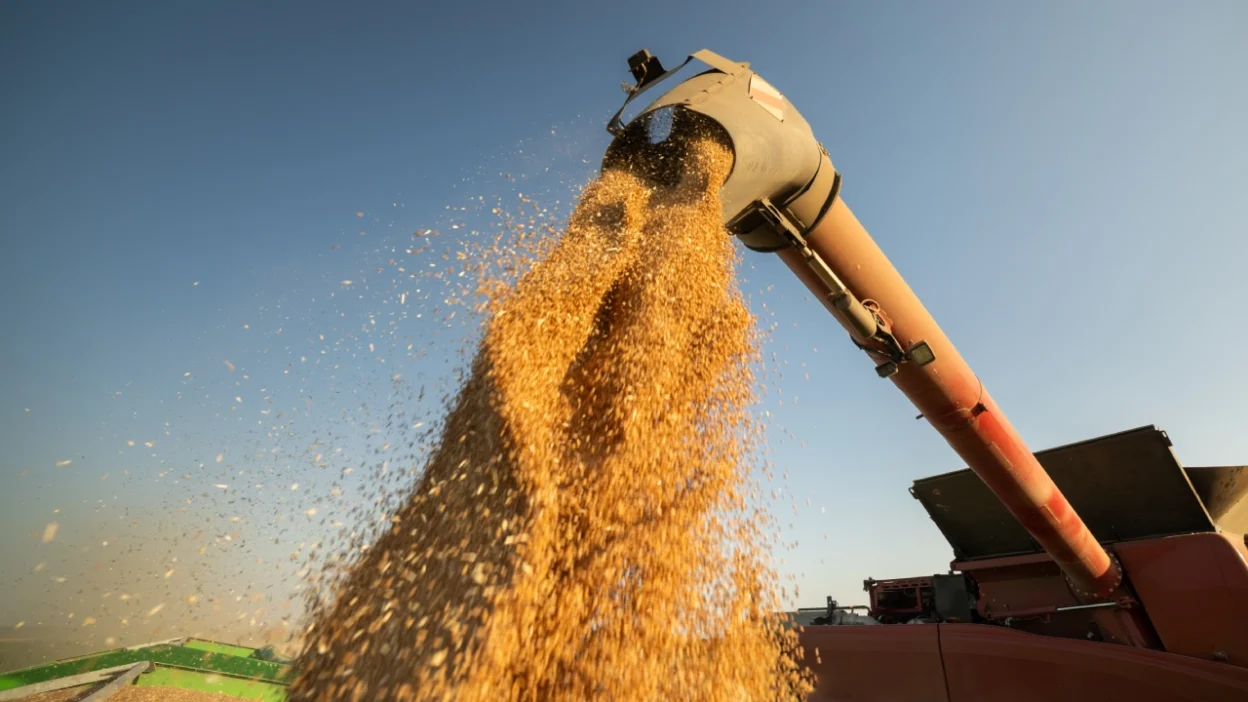
Harvesting is only one stage of successful crop production. Bringing crops out of the field is a massive achievement, but keeping those crops safe, dry, and valuable requires a completely different set of tools. Global agricultural data from organizations like the Food and Agriculture Organization consistently shows that a massive percentage of crop losses occur after crops leave the field. These losses happen due to poor handling, inadequate storage, and inefficient processing.
Preventing these losses requires reliable post harvest machinery. These machines act as a critical factor in preserving grain quality and maximizing profitability for modern farming operations. While a machine utilized for grain harvesting pulls the crop from the earth, the equipment used afterward ensures that the crop actually makes it to market in premium condition.
This guide walks through the full workflow and equipment involved in modern grain handling. By understanding how each machine contributes to the process, you can build an efficient system, reduce waste, and explore how to source the exact heavy equipment you need globally.
What Is Post Harvest Equipment in Farming
Post harvest machinery includes all heavy equipment and specialized tools used immediately after crops leave the field. Its primary role is to stabilize the biological condition of the crop, remove impurities, and prepare the grain for long-term storage or immediate market sale.
Once a machine utilized for grain harvesting finishes its job, the crop is highly vulnerable. It contains field moisture, weed seeds, dirt, and plant debris. If left untreated, grain will heat up, sprout, or develop dangerous molds. Post harvest treatment equipment directly impacts crop quality, export readiness, and final market price by addressing these vulnerabilities.
Equipment used after harvesting is designed to:
- Clean out dirt and foreign materials
- Dry crops to safe moisture levels
- Sort grains by size and physical quality
- Process raw crops into usable agricultural commodities
- Store grains safely for months or years
- Transport massive volumes of crop efficiently
Why Post Harvest Machinery Is Critical for Profitability
Proper equipment affects business outcomes immediately and over the long term. Farming is a business of margins, and losing 10 percent of a harvested crop to spoilage can completely erase a farm’s annual profit. Investing in high-quality post harvest machinery protects the investment you already made in seeds, fertilizer, fuel, and labor.
Key benefits include:
- Reduces crop losses by preventing mold and insect infestation
- Improves grain quality by removing broken kernels and foreign material
- Increases resale value by allowing farmers to hold grain until market prices peak
- Ensures compliance with strict export standards and USDA grain handling regulations
- Enables scaling operations by replacing slow manual labor with high-capacity automation
Consider a practical calculation for a mid-sized farm. If you harvest 50,000 bushels of corn and lose just 5 percent to improper drying and storage, you lose 2,500 bushels. At a market price of five dollars per bushel, that equals 12,500 dollars lost in a single season. High-quality post harvest treatment equipment pays for itself simply by recovering grain that would otherwise rot.
How Post Harvest Process Works (Step-by-Step Workflow)
Modern farms rely on integrated systems rather than isolated machines. Grain handling is a continuous flow of material from the field to the final storage bin. Understanding this workflow helps you identify bottlenecks in your current operation.
Standard step-by-step pipeline includes:
- Moisture testing to determine how much drying is required
- Cleaning to remove large debris and fine dust
- Drying to bring moisture down to safe storage levels
- Sorting to group grains by quality and size
- Storage in aerated bins to maintain condition
- Transport to load grain onto trucks or railcars
Every stage depends on the stage before it. Sending dirty grain into a dryer wastes fuel and creates fire hazards. Sending wet grain into a storage silo guarantees spoilage. Building a proper workflow ensures smooth transitions between machines.
How Farmers Source Post Harvest Equipment Today
Finding the right machinery requires balancing budget, capacity needs, and availability. As of 2026, supply chain dynamics make it essential to look beyond your immediate local area for heavy equipment.
Common sourcing options include:
- Local dealers offering brand new models with warranties
- Regional auctions where used machinery is sold to the highest bidder
- Direct manufacturers providing custom-built storage and drying setups
- Global marketplaces connecting buyers and sellers across international borders
Farmers increasingly compare equipment across regions to find better pricing, availability, and specifications. Relying only on local dealers often means waiting months for backordered machines or overpaying for limited inventory. Platforms like JumboBee allow buyers to access global inventory, compare machines, and simplify cross-border transactions. By leveraging global sourcing, agribusinesses can find high-quality used or new machinery that perfectly matches their operational scale.
10 Best Post Harvest Equipment in Farming
This list follows the real workflow of grain handling. From the moment the crop leaves the field to the moment it ships to the buyer, these ten machines form the backbone of agricultural logistics.
1. Grain Moisture Tester
Testing moisture is the absolute starting point of post harvest handling. Before grain enters any storage or processing facility, you must know its exact water content. Harvesting crops at high moisture levels is common to beat bad weather, but storing them wet is disastrous.
Moisture testers use electrical capacitance to instantly measure the water content inside crop samples. Advanced models connect to farm management software via Bluetooth, tracking moisture data across different fields.
Key benefits and functions:
- Determines moisture levels instantly in the field or at the storage site
- Prevents storage damage by identifying loads that need immediate drying
- Guides drying decisions to save fuel and prevent over-drying
Farmers often compare different models based on accuracy and portability when sourcing equipment. Desktop units offer high precision for elevator operators, while handheld units are perfect for field checks.
2. Threshing Machine
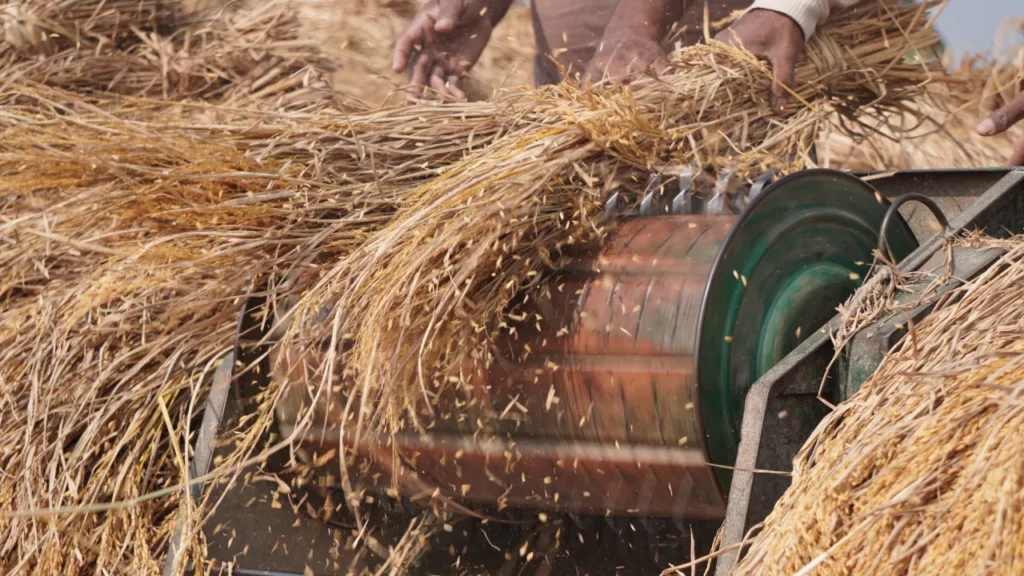
While a modern combine is the primary machine utilized for grain harvesting and threshing in large-scale operations, standalone threshing machines remain vital for specific crops, seed breeding operations, and mid-sized farms globally.
Threshing machines mechanically separate the grain seeds from the stalks and husks. They use rotating drums with pegs or rasp bars to beat the plant material, allowing the heavy grain to fall through screens while blowing the lighter straw out the back.
Primary use cases include:
- Small farms operating without massive combine harvesters
- Manual harvest support where crops are cut by hand and brought to a central location
- Specialty seed operations requiring gentle handling to preserve seed germination rates
3. Grain Cleaner
Raw grain comes with a lot of unwanted material. Field dirt, weed seeds, broken kernels, insects, and bits of stalk all end up in the grain cart. Grain cleaners use a combination of vibrating screens and targeted air currents to separate good grain from foreign material.
Running crops through a cleaner before drying or storing is a massive efficiency booster.
Operational benefits include:
- Better storage conditions because clean grain allows for proper airflow inside silos
- Higher market value by avoiding dockage penalties at the commercial elevator
- Lower drying costs since you are not wasting expensive fuel drying weed seeds and dirt
Cleaners range from simple rotary screens to massive multi-deck vibratory aspirators capable of processing thousands of bushels per hour.
4. Grain Dryer
Drying is arguably the most critical step in preserving crop value. If you skip this step, heat and moisture will trigger mold growth and insect breeding. Grain dryers force heated air through wet grain to evaporate excess moisture, bringing the crop down to safe levels like 14 or 15 percent for long-term storage.
Modern dryers are highly automated. As of 2026, ASABE standards push for higher energy efficiency, leading to modern machines that recycle exhaust heat and use precise moisture sensors to prevent over-drying.
Risks of skipping proper drying:
- Mold outbreaks that produce dangerous mycotoxins
- Spoilage that turns a valuable crop into worthless compost
- Export rejection due to strict international moisture limits
Types include batch dryers for smaller operations and continuous flow dryers for massive commercial farms.
5. Grain Sorter / Grading Machine
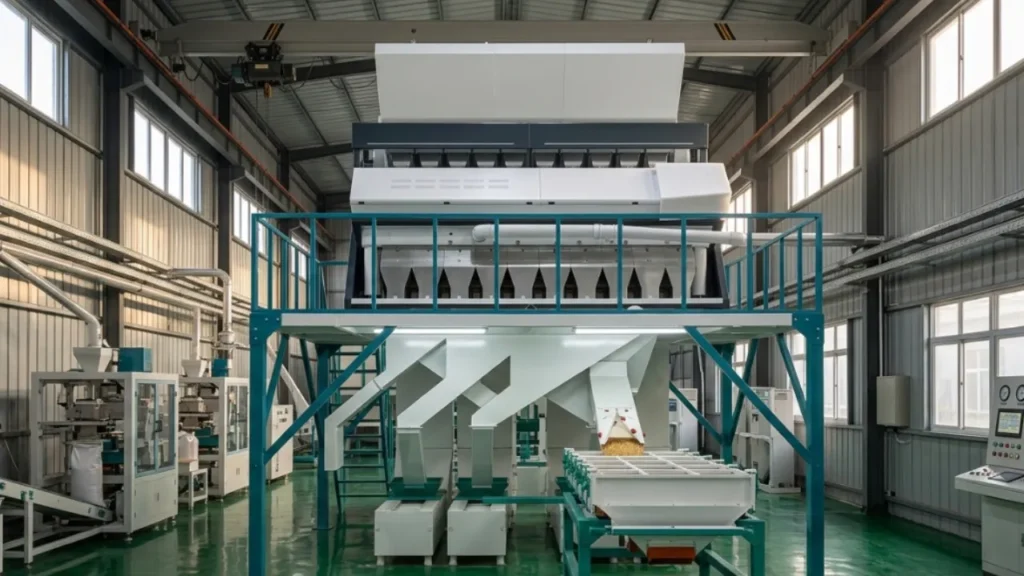
Sorting machines take clean grain and separate it based on strict quality parameters. While basic cleaners remove dirt, sorters remove defective grains. This post harvest treatment equipment is essential for farms selling to premium food-grade markets.
Modern optical sorters use high-speed cameras, infrared sensors, and precision air jets. As grain falls through the machine, cameras scan every single kernel. If a kernel is diseased, discolored, or broken, a tiny blast of air shoots it out of the good stream in milliseconds.
Common use cases include:
- Export markets demanding zero-defect shipments
- Premium buyers purchasing food-grade soybeans, coffee, or milling wheat
- Seed producers ensuring only the healthiest seeds are packaged for next season
6. Conveyor Systems and Grain Augers
Moving thousands of tons of grain requires heavy-duty transport mechanics. Conveyor systems and augers act as the veins and arteries of the post harvest system, moving crops vertically and horizontally between cleaners, dryers, and silos.
Augers use a rotating helical screw inside a steel tube to push grain upward. Drag conveyors use paddles on a chain to drag grain horizontally with less friction and damage. Bucket elevators lift grain vertically to the top of massive silo setups.
System benefits include:
- Efficiency in moving massive volumes quickly
- Reduced labor by eliminating manual shoveling and handling
- Lower losses from spillage during transfer operations
7. Grain Storage Systems (Silos and Bins)
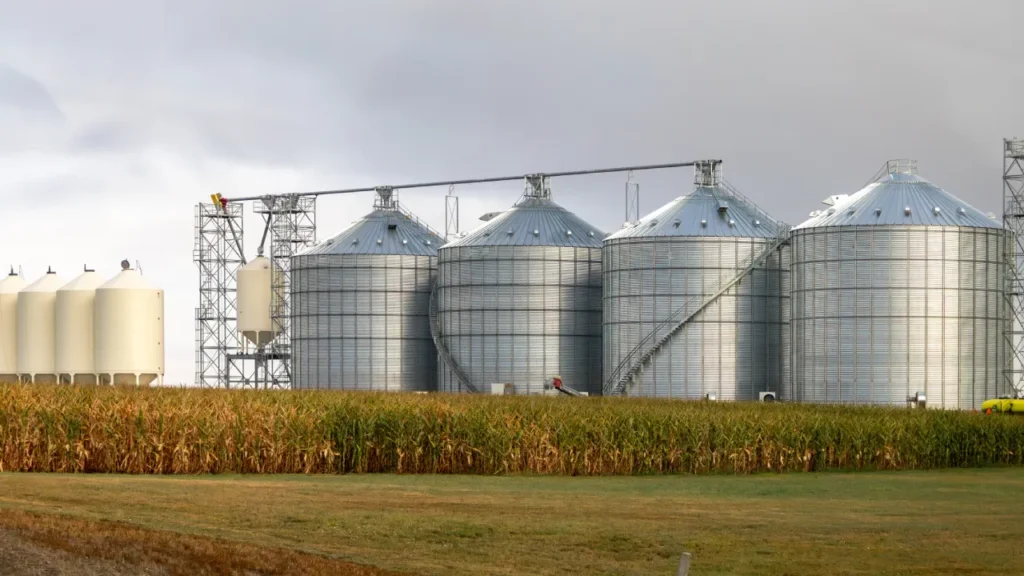
Proper storage is the ultimate goal of the post harvest workflow. Grain storage systems protect the crop from weather, rodents, birds, and insects until the farmer decides to sell.
Modern bins are highly engineered structures. They are not just empty cans. They incorporate advanced technology to keep grain alive and healthy. USDA storage resources heavily emphasize the need for proper aeration to control temperature and moisture migration during seasonal weather changes.
Vital components include:
- Metal silos constructed from corrugated galvanized steel for maximum durability
- Aeration systems featuring heavy-duty fans and perforated floors to push fresh air through the grain mass
- Temperature monitoring cables hanging inside the bin to detect hot spots before spoilage spreads
8. Grain Processing Equipment
For farms and agribusinesses looking to add value before selling, grain processing equipment transforms raw commodities into finished or semi-finished products. Instead of selling whole corn or wheat, operations can mill, crush, or polish the crop.
This machinery operates downstream from storage and requires highly controlled environments to meet food safety standards.
Examples of processing machinery:
- Milling machines to grind wheat into flour or corn into meal
- Polishing machines used extensively in rice production to remove the bran layer
- Processing machines like roller mills used to crack grains for livestock feed production
9. Packaging and Bagging Machines
Not all grain ships in massive bulk cargo ships. Many specialty crops, seed grains, and processed feeds require bagging. Packaging and bagging machines automate the final step of preparing agricultural products for retail or wholesale distribution.
These machines weigh exact amounts of grain, dump it into woven polypropylene or paper bags, and sew or heat-seal the top closed. High-end systems include robotic palletizers that automatically stack the finished bags onto wooden pallets and wrap them in stretch film for shipping.
Functions include:
- Preparation for sale in local and regional markets
- Logistics optimization by creating uniform, easily stackable pallets
- Protection against contamination during transit
10. Grain Transport Equipment
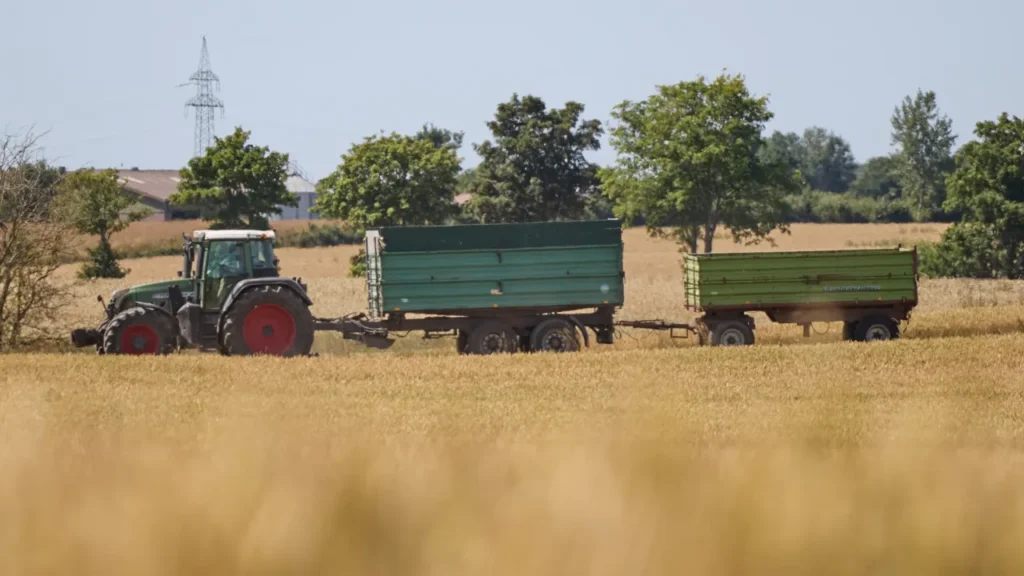
The final piece of post harvest machinery is the transport equipment required to move the crop off the farm. Whether moving grain a few miles to a local elevator or hundreds of miles to a river port, specialized heavy transport is required.
These vehicles are designed specifically for bulk agricultural commodities, featuring sloped bottoms and trap doors for rapid unloading over receiving pits.
Key examples include:
- Trailers with hopper bottoms for quick gravity-fed unloading
- Grain trucks equipped with heavy-duty suspensions to handle massive weight loads on rural dirt roads
- Chaser bins and grain carts used in the field to support the machine utilized for grain harvesting by keeping it moving without stopping to unload
Post Harvest Treatment Equipment: How It Works Together
Having great equipment is useless if the machines do not communicate physically and mechanically. A successful farm integrates these machines into one continuous system. The capacity of your grain cleaner must match the intake capacity of your grain dryer. If your dryer processes 1000 bushels per hour but your auger only moves 500 bushels per hour, you have created a massive bottleneck.
The full flow requires precise synchronization:
Testing leads to cleaning. Cleaning leads to drying. Drying leads to sorting. Sorting leads to storage. Storage leads to transport.
When post harvest treatment equipment is properly sized and integrated, efficiency gains are massive. Trucks unload faster, dryers run consistently without stopping, and grain enters the storage bins in perfect condition. This seamless integration lowers fuel costs, reduces tractor idling time, and cuts down on the labor hours required to manage the harvest season.
New vs Used Post Harvest Equipment
Upgrading a grain handling facility requires significant capital. Farm managers constantly face the decision between buying brand new machinery or sourcing used equipment. Both avenues offer distinct financial and operational advantages.
Many farmers explore both options across different regions to find the best value depending on availability and budget.
| Feature | New Equipment | Used Equipment |
|---|---|---|
| Initial Cost | Premium pricing | Significantly lower cost |
| Reliability | Factory tested and guaranteed | Depends on previous maintenance |
| Technology | Latest automation and sensors | May require aftermarket upgrades |
| Warranty | Comprehensive factory coverage | Usually sold as-is |
| ROI Speed | Slower due to high upfront cost | Faster ROI due to lower initial debt |
| Availability | Subject to factory lead times | Immediate availability |
New machinery offers peace of mind. You get the latest energy-efficient burners for your dryer and the strongest warranties. However, used machinery provides a faster path to expansion. A 10-year-old steel silo or a well-maintained grain auger performs the exact same mechanical function as a new one but at a fraction of the cost.
Typical Cost of Post Harvest Machinery
Budgeting for agricultural infrastructure requires understanding the massive range in pricing. Costs vary wildly based on capacity, automation levels, and the geographic region where the equipment is purchased.
Typical price ranges for heavy equipment:
- Dryers range from 20,000 dollars for small used batch models to over 200,000 dollars for massive new continuous flow tower dryers.
- Cleaners range from 5,000 dollars for basic rotary screens to 50,000 dollars for high-capacity aspirators.
- Storage bins cost roughly 2 to 4 dollars per bushel of capacity. A 50,000-bushel bin might cost between 100,000 and 200,000 dollars fully constructed with concrete and fans.
- Conveyors and augers range from 3,000 dollars for portable field augers to 40,000 dollars for permanent commercial drag conveyors.
Cost drivers include:
- Capacity requirements measured in bushels or tons per hour
- Automation features like touchscreen controls and remote monitoring
- Region of purchase, as shipping heavy steel across oceans or continents adds to the final landed cost
When calculating costs, remember that post harvest machinery is a long-term asset. A steel bin built today will likely hold grain for three decades. Amortizing a 150,000-dollar setup over 30 years makes the annual cost highly manageable, especially when factored against the crop loss it prevents.
How to Choose Right Post Harvest Equipment
Selecting the exact machinery for your operation requires analyzing your specific farm data. Buying oversized equipment wastes capital, while buying undersized equipment creates bottlenecks during the busiest weeks of the year.
Primary decision factors include:
- Farm size and total anticipated yield volume
- Crop type, as delicate crops like soybeans require gentler handling than hard corn
- Moisture conditions typical for your geographic climate during harvest season
- Budget constraints and financing availability
- Labor availability, pushing farms toward higher automation if local workers are scarce
Comparing multiple suppliers and specifications is often necessary to make an informed decision. You must read the spec sheets carefully. Look at the horsepower requirements for electric motors. Ensure your farm has the necessary three-phase electrical power to run massive dryer fans. Check the physical footprint to ensure the machinery fits within your existing yard layout.
Where to Buy Post Harvest Machinery
Finding the right equipment locally is becoming increasingly difficult. Local dealerships often carry limited inventory, focusing only on the brands they officially represent. This limited availability forces farmers to compromise on capacity or overpay for features they do not need. Furthermore, price differences across regions can be staggering. A used grain dryer in the American Midwest might cost 30 percent less than the exact same model located in Europe or South America.
However, buying heavy machinery from across the country or across the globe introduces delivery and logistics complexity. Moving a massive steel machine requires flatbed trucks, oversize load permits, customs clearance, and heavy lifting equipment.
JumboBee helps farmers access global equipment listings, compare prices, and manage logistics from purchase to delivery. By using a global marketplace, you break free from local inventory limitations. You can search for the exact post harvest machinery your operation needs, view detailed inspection reports, and let JumboBee handle the complex export and freight logistics safely and transparently.
Common Mistakes in Post Harvest Handling
Even with the best machinery, human error can ruin a harvest. Understanding common operational failures helps prevent disastrous financial losses.
Critical mistakes to avoid:
- Skipping drying to save fuel money, resulting in massive mold outbreaks inside the silo
- Poor storage management, such as failing to run aeration fans during temperature drops, which causes condensation to rain down inside the bin
- Wrong sizing of equipment, where high-speed augers damage grain by moving it faster than the receiving equipment can handle
- No maintenance on moving parts, leading to bearing failures and auger jams during the most critical days of harvest
Regular maintenance is non-negotiable. Belts must be tightened, grease fittings must be lubricated, and gas burners must be inspected before the first truckload of grain ever leaves the field.
Final Thoughts: Building Efficient Post Harvest System
Securing the harvest is the most important financial event of the farming year. Everything you do from planting to spraying culminates in the grain you put in the bin. Post harvest machinery is the ultimate insurance policy for your crop. By investing in reliable moisture testers, high-capacity dryers, effective cleaners, and durable storage, you guarantee that your hard work translates into maximum market value.
Efficient post harvest handling is not just about having the right machines, but also about accessing the right equipment at the right time. With global sourcing platforms like JumboBee, farmers can compare options, find suitable machinery, and build scalable post harvest systems without geographic limitations. Explore global listings today to upgrade your infrastructure and protect your next harvest.





Be the first to leave a comment
There are no replies to this post yet. Share your thoughts and help start the conversation.