 Financing
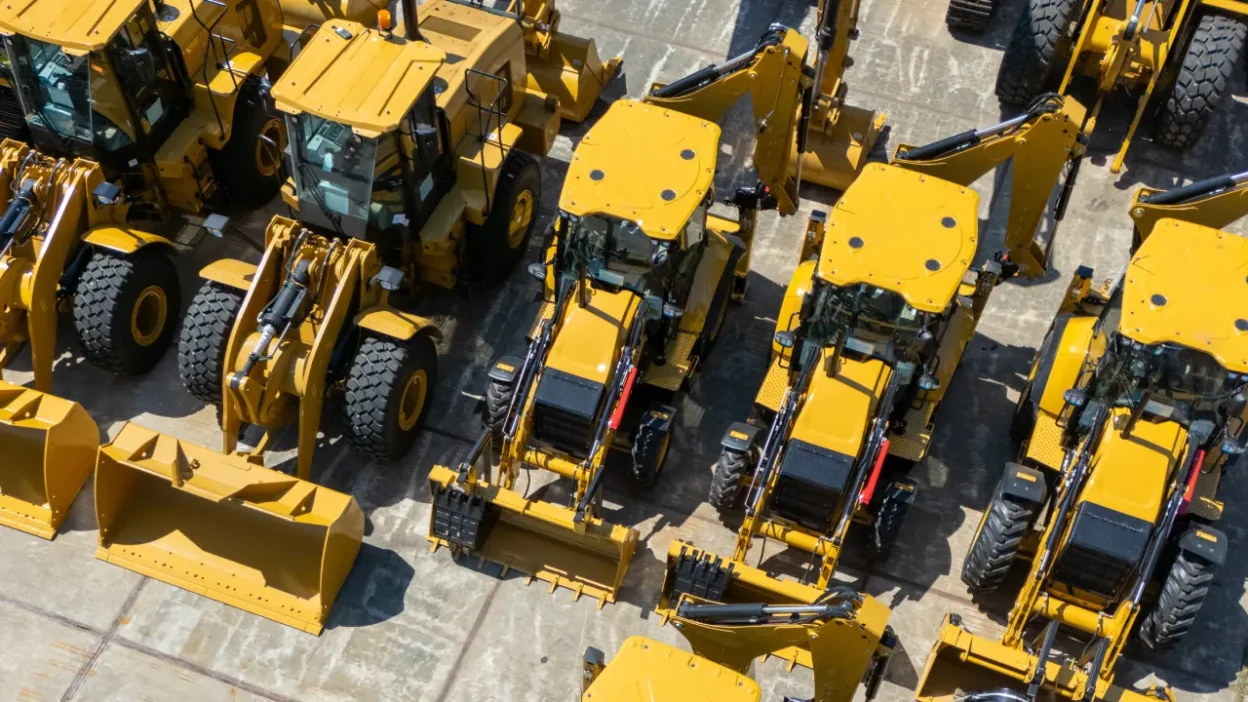
Every heavy equipment buyer faces the same crossroads. You find the perfect excavator, tractor, or combine on the marketplace. The specs align, the inspection report looks clean, and the price is fair. Now comes the critical question: Do you wire the full amount, or do you leverage a bank’s money?
Decision between a cash purchase of equipment and financing is rarely just about having the money in the bank. It is a strategic move that impacts your balance sheet, tax liabilities, and ability to handle unexpected operational costs.
In February 2026, the economic landscape is shifting. Interest rates have adjusted from previous highs, yet cash reserves remain the ultimate safety net for businesses navigating volatile markets. When equipment is purchased for cash, the financial picture looks very different compared to structured financing. You gain immediate title but lose liquidity. Conversely, financing preserves cash but introduces long-term liability.
Goal of this guide is to help you choose the right strategy based on cash flow, tax planning, and long-term growth. We will strip away the jargon and look at the math, the risks, and the rewards of both paths.
Understanding Cash Purchase of Equipment
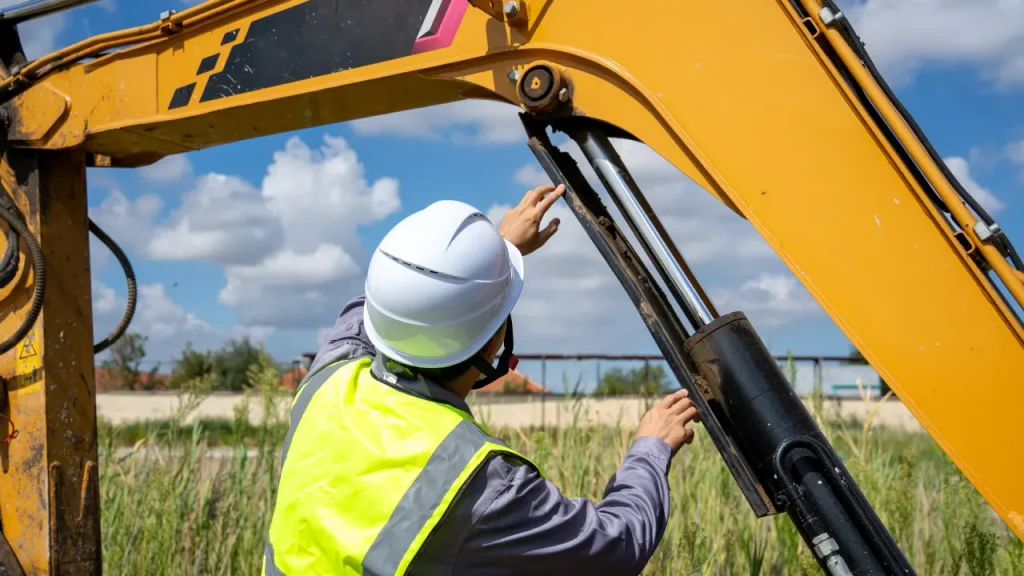
Paying upfront is the oldest method of trade. It is simple, final, and leaves you with zero debt. However, in modern heavy industry — whether agriculture or construction — spending hundreds of thousands of dollars in a single transaction requires deep analysis of your working capital.
What Does It Mean When Equipment Is Purchased for Cash?
The concept is straightforward, but the accounting implications are significant. When equipment is purchased for cash, you are performing an asset swap. You are trading a liquid asset (cash) for a fixed, illiquid asset (machinery).
From a transactional standpoint, this means:
- No loan agreement: You are not beholden to a lender. There are no covenants, no liens (after purchase), and no monthly obligations.
- Immediate ownership: Title transfers to you instantly. If you need to sell that machine next month to cover payroll, you can do so without asking a bank for permission.
- No interest payments: You pay the sticker price and shipping, nothing more. The total cost of ownership is exactly what is on the invoice.
For international buyers on platforms like JumboBee, this often simplifies the export process. With no lienholder on the title, clearing US Customs for export to countries like Egypt or Mongolia becomes streamlined.
Advantages of Cash Purchase of Equipment
Why do many seasoned business owners prefer to write a check?
- Total cost savings: This is the most obvious benefit. By avoiding interest rates — even competitive ones — you save significant capital over the life of the machine. On a $250,000 tractor with a 7% interest rate over 5 years, financing could cost you an additional $45,000+ in interest alone. A cash purchase of equipment eliminates this rent on money.
- Stronger negotiating power: Sellers prefer cash. It removes the risk of financing falling through. When you can promise an immediate wire transfer, you often have leverage to negotiate a lower sale price.
- Simplified closing: There is no underwriting process. You do not need to provide three years of tax returns or wait for credit committee approval. You inspect, you pay, you ship.
- Asset equity: You have 100% equity in the machine from day one. This adds strength to your balance sheet, increasing your net book value immediately.
Potential Downsides of Purchasing Equipment for Cash
The strategy of cash is king has a flaw: it depletes your war chest.
- Reduced liquidity: This is the biggest risk. Once you spend $300,000 on a dozer, that money is gone. You cannot use that same $300,000 to pay for materials, fuel, or emergency repairs. If a project gets delayed and receivables slow down, you might find yourself asset-rich but cash-poor.
- Opportunity cost: This is an economic concept you must understand. If you use your cash for equipment, you cannot invest it elsewhere. Could that $300,000 have earned a higher return if invested in marketing, hiring more crews, or buying bulk materials at a discount?
- Risk concentration: Purchase of equipment for cash ties a large amount of capital into a single physical asset. If that machine breaks down significantly or the market value for that specific equipment type crashes, a large portion of your company’s wealth takes a hit.
- Slower scaling: If you only buy what you can afford in cash, your growth is limited by your savings rate. Competitors using leverage might be able to acquire three machines for the same upfront cash outlay, allowing them to bid on larger contracts.
Understanding Equipment Financing
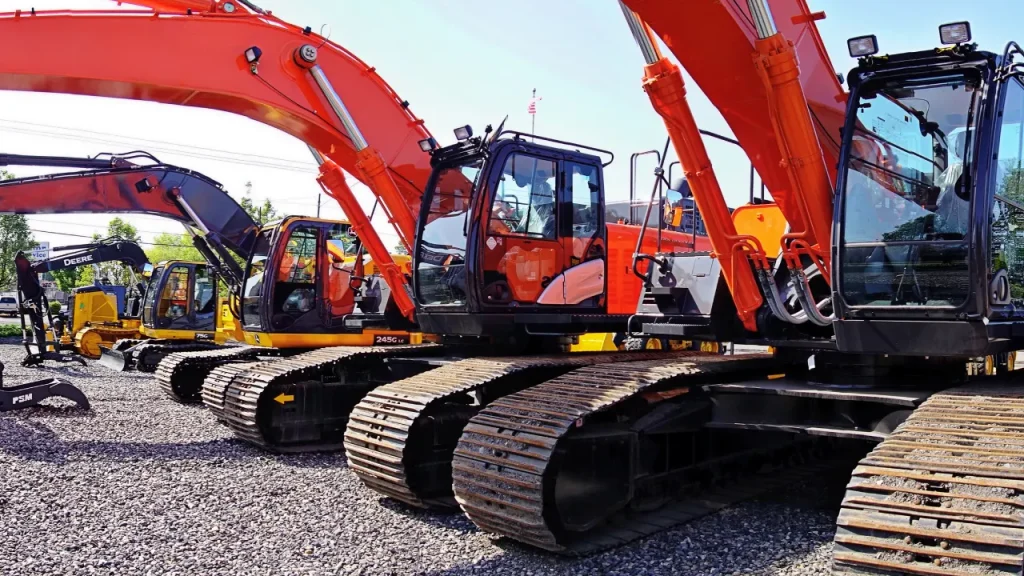
Financing is not just for businesses that lack cash. Many multi-million dollar corporations with healthy reserves still choose to finance. Why? Because they view financing as a tool to leverage their capital for higher returns.
How Equipment Financing Works
Equipment financing typically uses the machinery itself as collateral. This keeps your other assets (like your home or other business property) safe.
Common structures include:
- Equipment loans: You pay a down payment (usually 10-20%), and the lender covers the rest. You own the equipment once the loan is paid off.
- Capital leases ($1 buyout): Similar to a loan, but structured as a lease for tax purposes. At the end of the term, you buy the machine for $1.
- Fair market value leases: Lower monthly payments, but you do not own the machine at the end unless you pay its market value. This is rare for used heavy equipment but common for new technology.
Benefits of Financing Heavy Equipment
- Preservation of working capital: By putting only 10% or 20% down, you keep the majority of your cash in the bank. This buffer allows you to weather economic downturns or handle operational expenses without stress.
- Inflation hedge: In an inflationary environment, debt can be an asset. You are locking in a price today and paying it off over 3 to 5 years with future dollars that may be worth less due to inflation.
- Predictable budgeting: Fixed monthly payments make cash flow forecasting easier. You know exactly what your expense will be, regardless of market fluctuations.
- Credit building: Consistent payments on a commercial equipment loan strengthen your business credit profile (Paydex score), making it easier to get larger lines of credit in the future.
Risks and Considerations in Financing
- Interest expenses: You will pay more than the sticker price. Depending on your creditworthiness and current Federal Reserve rates, interest can add 15% to 30% to the total cost over the loan term.
- Lien restrictions: Until the loan is paid, the lender holds a lien. You cannot sell the equipment without paying off the loan. This can complicate trade-ins or fleet restructuring.
- Obligation regardless of revenue: If your project gets cancelled or the machine sits idle, the payment is still due. Bank loans do not pause for rainy days.
Cash vs Financing: Side-by-Side Comparison
Here is a breakdown of how the two methods stack up against each other.
| Factor | Cash Purchase of Equipment | Financing |
|---|---|---|
| Upfront Cost | 100% of Purchase Price | 10% – 20% Down Payment |
| Total Cost | Lowest (List Price only) | Higher (List Price + Interest + Fees) |
| Ownership | Immediate 100% Equity | Equity builds over time |
| Liquidity Impact | High (Cash reserves drop) | Low (Cash reserves preserved) |
| Closing Speed | Very Fast (Days) | Slower (Weeks for approval/funding) |
| Risk | Liquidity risk (running out of cash) | Solvency risk (defaulting on loan) |
| Process | Simple Inspection & Wire | Application, Credit Check, Documentation |
When Is Cash Purchase of Equipment the Right Choice?
There are specific business lifecycles where paying cash is the superior strategy.
- You are in maintenance mode, not growth mode: If your business is mature, stable, and you are not looking to double your revenue next year, cash is safe. You avoid debt stress and simply replace machines as they wear out. Purchased equipment for cash provides peace of mind for owners nearing retirement who want to simplify their balance sheet.
- Interest rates are prohibitively high: If market rates spike and lenders are asking for 10% or 12% interest, the cost of borrowing becomes destructive to your margins. In this environment, using your own capital yields a guaranteed return equal to the interest rate you avoided.
- The asset is highly specialized or older: Banks love financing 3-year-old John Deere tractors. They are less enthusiastic about financing a 15-year-old specialized trenching machine. For older or niche assets, lenders may demand high down payments or reject the loan entirely. A cash purchase of equipment is often the only option here.
- You have excess cash reserves: If your business is sitting on significant cash earning low interest in a savings account, deploying that cash into productive assets makes sense.
When Financing May Be a Smarter Option

Conversely, leverage is the fuel for expansion.
- You are bidding on large contracts: If you win a major highway contract, you might need three excavators and two dozers immediately. Paying cash for all five would bankrupt your operating account. Financing allows you to acquire the entire fleet needed to do the job, using the revenue from the job to pay the notes.
- Your business is seasonal: Agriculture is the prime example. Farmers often have massive cash inflows once a year (harvest) and outflows the rest of the year. Many lenders offer seasonal repayment structures (annual or semi-annual payments) that align with this reality, which you cannot replicate with a one-time cash hit.
- You need to build business credit: If you are a relatively new company (2-5 years old), you need to demonstrate creditworthiness. Successfully paying off a $100,000 equipment loan proves to lenders that you are a safe bet for future, larger investments.
Tax and Accounting Considerations
This is where the math gets interesting. Both strategies have tax benefits, but they apply differently.
Depreciation and Section 179
In the United States, the IRS Section 179 deduction allows businesses to deduct the full purchase price of qualifying equipment financed or purchased during the tax year.
Here is the kicker: You can deduct the full price even if you finance it.
Example:
- You buy a $200,000 combine in 2026.
- You finance it with $0 down (hypothetically).
- You can still take a $200,000 tax deduction for that year (subject to income limitations), significantly lowering your tax bill.
- Essentially, the government allows you to write off money you haven’t even spent yet.
If you choose to purchase equipment for cash, you also get this deduction. However, the opportunity to leverage the deduction while retaining cash is unique to financing.
Balance Sheet Impact
When equipment is purchased for cash, your Current Assets (Cash) decrease, and Fixed Assets (Equipment) increase. Your total assets remain the same, but your liquidity ratio drops. This can make your business look riskier to banks if you need an operating line of credit later.
When you finance, you keep your Current Assets high. You add a Fixed Asset and a corresponding Liability (the loan). While you have more debt, maintaining cash often improves your creditworthiness for short-term borrowing needs.
Strategic Decision: Growth vs Liquidity
Ultimately, the debate between a cash purchase of equipment and financing comes down to your philosophy on Growth vs Stability.
Cash = Stability.
It allows you to sleep well at night. You own your iron. If the economy crashes and you have no work for six months, you can park the machine in the yard and it costs you nothing. There is no banker calling. However, you move more slowly. You can only buy what you have already earned.
Financing = Growth.
It allows you to move fast. You can acquire the equipment needed to earn future revenue. You are betting that the machine will generate more profit than the cost of the interest. If the economy crashes, you are vulnerable because the payments continue. But in a booming market, you capture market share much faster than the cash buyer.
How to Decide: Practical Framework
Stuck in the middle? Use this checklist to evaluate your next purchase of equipment for cash versus financing.
1. Analyze Liquidity Ratio
Look at your cash on hand. If you pay cash for this machine, will you have enough remaining capital to cover 3 to 6 months of operating expenses (payroll, rent, fuel)? Yes: Cash is a viable option. No: Financing is safer.
2. Calculate Cost of Capital
What is the interest rate offered? Compare this to your internal Rate of Return. If the loan is 8%, but you can earn a 15% return by investing your cash in more staff or marketing, finance the machine. If your cash is sitting in a bank account earning 2%, pay cash (saving 8% interest is better than earning 2%).
3. Check Equipment Lifespan
Are you buying a machine for a specific 6-month project, or a core fleet addition for the next 10 years? Short-term use often favors leasing or renting. Long-term core assets are good candidates for a cash purchase of equipment if funds allow.
4. Evaluate Seller Constraints
Are you buying internationally? Sellers on global marketplaces often require full payment before shipping. While financing is possible, it adds a layer of complexity to cross-border logistics. A buyer who has purchased equipment for cash often enjoys a smoother export process.
Final Thoughts: There Is No One-Size-Fits-All Answer
There is no best way to buy heavy machinery. There is only one best way for your business at this moment.
A startup contractor might need financing to get their first excavator. A multi-generational farm might prefer a purchase of equipment for cash to keep the farm debt-free. A construction firm scaling up for government infrastructure projects might use a mix of both strategies to optimize their balance sheet.
What matters most is that you do not make the decision on impulse. Run the numbers. Consult your accountant regarding tax implications for the 2026 fiscal year. Understand that when equipment is purchased for cash, you are buying freedom from debt, but when you finance, you are buying the freedom to scale.
Ready to Find Your Next Machine?
Whether you decide to leverage your capital or pay upfront, JumboBee connects you with trusted sellers worldwide. We support buyers regardless of their funding strategy.
- Transparent pricing: See the full cost, including shipping to your door, so you can calculate your ROI accurately.
- Verified sellers: We vet our listings so you can wire funds with confidence or present a legitimate invoice to your lender.
- Global logistics: Whether it is going to Texas or Tanzania, we handle the inspections, customs, and heavy haul transport.
Explore thousands of heavy equipment listings today at JumboBee.com and make your next investment count.





Be the first to leave a comment
There are no replies to this post yet. Share your thoughts and help start the conversation.