 Financing
Business owners face a difficult landscape in 2026. Machinery prices remain high, local dealership inventories are tightly controlled, and companies constantly search for ways to acquire machinery without draining their operating capital. For many, heavy equipment leasing seems like an easy escape route.
Sales representatives often present leasing as a flawless strategy to preserve cash and upgrade machinery frequently. However, behind glossy brochures and persuasive pitches lie rigid contracts, hidden liabilities, and long-term expenses that can cripple profitability. Making the right choice requires looking past initial monthly payments and analyzing total financial impact.
This guide breaks down exactly how leasing works, debunks persistent financing myths, and provides real-world math to help you make profitable decisions. We will also explore how global sourcing has emerged as a powerful, cost-effective alternative to restrictive local lease agreements.
What Is Heavy Equipment Leasing and How It Works
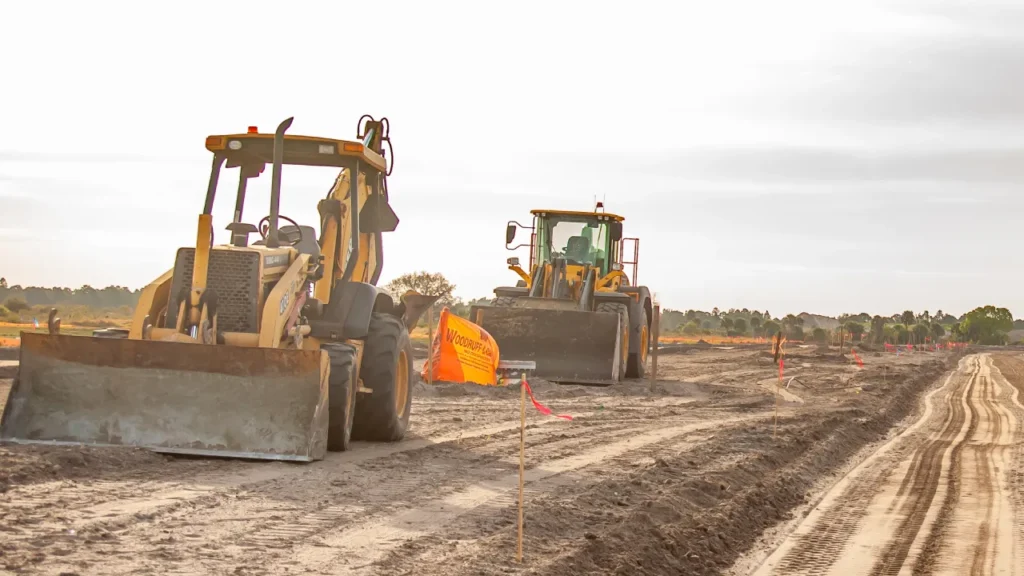
Heavy equipment leasing is a contractual agreement where a business pays for the right to use machinery for a specified period without actually owning it. You make fixed monthly payments to a lessor, who retains legal ownership of the asset. Once the contract expires, you typically return the machine, renew the agreement, or purchase it for its remaining actual value.
Understanding the mechanics requires looking at three main components:
- Monthly payments: Fixed amounts paid over the contract term, usually lasting between three and five years.
- Contract terms: Strict rules dictating how many hours you can use the machine, maintenance standards, and insurance requirements.
- Residual value: Estimated worth of the machine at the end of the term, which heavily influences your monthly rate.
Two primary types of leases dominate the market:
- Operating lease: Acts like a traditional rental. You use the machine for a few years and return it. These are popular for short-term needs and keep the liability off your main balance sheet in some accounting frameworks.
- Finance lease: Functions closer to a loan. You bear the risks and rewards of ownership, and you usually buy the equipment for a nominal fee at the end of the term.
The International Finance Corporation’s guidelines on leasing in emerging markets note that a lease grants usage rights while legal ownership stays with the lessor — which is exactly why your business builds zero equity during an operating lease, no matter how many payments you make.
Leasing vs Buying Equipment: What Matters in 2026
When evaluating leasing vs buying equipment, business owners often focus entirely on the initial down payment. This narrow view leads to expensive long-term mistakes. In 2026, making a smart financial decision requires analyzing several critical factors.
- Upfront cost vs total cost: Initial savings might look attractive, but total cash outlays over five years tell a different story.
- Ownership vs flexibility: Owning provides an asset you can sell or borrow against. Leasing allows you to walk away after the term, assuming you meet return conditions.
- Usage intensity: Machines running constantly hit lease hour limits quickly, triggering massive penalty fees.
- Resale value: High-demand machinery retains incredible value, making ownership highly profitable when it comes time to sell.
Total cost of ownership is frequently overlooked. This metric includes purchase price, interest, maintenance, insurance, fuel, and eventual resale value. When you calculate total cost of ownership, buying often emerges as the clear winner for businesses planning to use the machinery extensively.
Myth 1: Leasing Is Always Cheaper Than Buying
Dealerships love to compare a $5,000 monthly lease payment against a $7,000 loan payment to prove leasing is cheaper. This logic is fundamentally flawed because a lower upfront cost does not mean a lower total cost. Long-term lease payments frequently exceed the actual depreciation value of the machine.
Let us look at a real-world scenario using a high-horsepower tractor over a five-year period.
Buying Scenario:
- Purchase price: $360,000
- Down payment: $60,000
- Monthly loan payment: $6,000
- Total cash paid over 60 months: $420,000
- Resale value after 5 years: $200,000
- Net cost of using the machine: $220,000
Leasing Scenario:
- Monthly lease payment: $5,000
- Total cash paid over 60 months: $300,000
- Equity at the end of term: $0
- Net cost of using the machine: $300,000
In this standard scenario, leasing costs the business $80,000 more in actual wealth lost over five years. You paid less month-to-month, but you surrendered a massive asset at the end of the term.
Notice: These resale figures assume a well-maintained, in-demand model — actual residual values vary significantly by brand, hours, and market conditions, so run your own numbers before deciding.
Myth 2: Leasing Requires Less Financial Commitment
Many business owners believe leasing keeps them financially nimble. They assume that because they do not own the asset, they carry less financial burden. This is a dangerous misconception.
Leasing creates strict, long-term contractual obligations. You are legally bound to make fixed monthly payments for the entire duration of the term, regardless of your business performance. If your construction company loses a major contract or your farm suffers a poor harvest, you cannot simply return the machine without severe consequences.
Penalties for early termination are notoriously harsh. Leasing companies often require you to pay the remaining balance of the contract plus a penalty fee if you want out early. Furthermore, modern accounting standards require most leases to be recorded as liabilities on your balance sheet, meaning lenders and investors still see this financial commitment when evaluating your business.
Myth 3: Leasing Is Always Better for Cash Flow
Preserving cash flow is the most common argument for leasing. While avoiding a large down payment does keep cash in your bank account initially, the long-term cash flow impact depends entirely on utilization, seasonality, and your specific business model.
High-utilization equipment often justifies ownership. If you run an excavator eight hours a day, year-round, the machine generates constant revenue that easily covers a loan payment and builds equity simultaneously.
Conversely, consider a seasonal business. A farmer might only use a combine harvester for three months of the year. During the nine idle months, a lease demands the exact same monthly payment. If you own the machine, you have the option to pay it off during profitable years, eventually eliminating the monthly payment entirely while still using the machine every harvest. Leasing ensures your cash flow is permanently drained every single month, forever.
Myth 4: Leasing Means You Always Get New Equipment
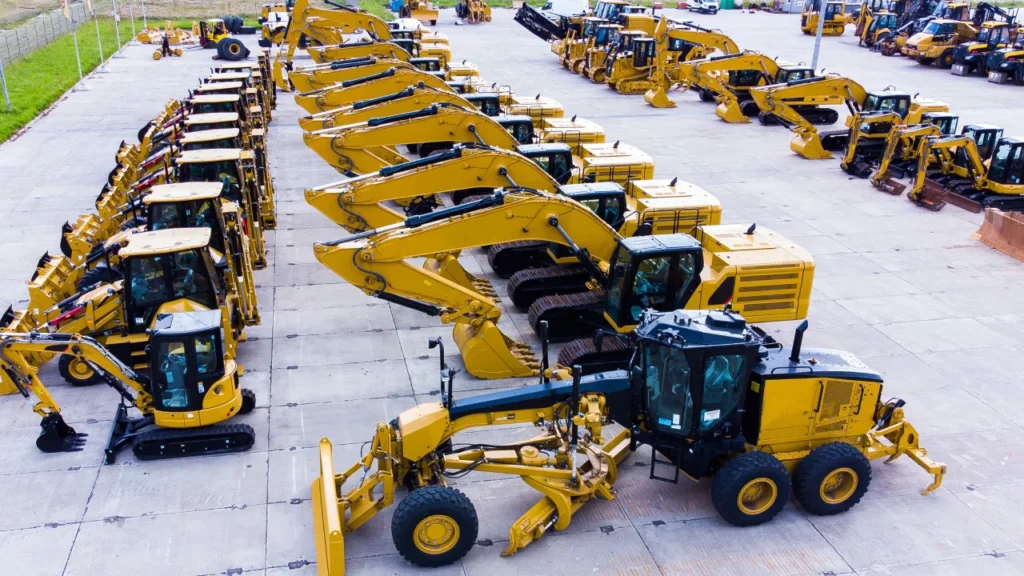
Marketing materials frequently show operators sitting in brand-new, latest-model cabs. The pitch implies that leasing guarantees you will always work with factory-fresh machinery. In reality, this is rarely guaranteed.
Many leases include used or refurbished equipment. Leasing companies frequently cycle machines through multiple short-term leases. You might sign a contract expecting a 2026 model and receive a 2023 model that has already seen two years of hard labor.
Availability heavily depends on region and supplier. If global supply chains experience hiccups or local dealers lack inventory, leasing companies will fulfill contracts with whatever machinery they have available. You still pay premium rates, but you operate older technology.
Myth 5: Leasing Is Only Option Without Large Capital
Small contractors and growing farms often feel trapped. They lack the $80,000 required for a down payment on a new machine locally, so they assume their only choice is a lease agreement. This narrow view ignores massive opportunities in the modern heavy machinery market.
Global sourcing can reduce purchase cost significantly, completely changing the math on construction equipment financing. Machinery prices vary wildly across different continents due to currency fluctuations, regional demand, and local economic conditions. A used wheel loader sitting in the United States might cost 30% less than the exact same model sitting at a dealership in Europe or Africa.
Used equipment markets provide an affordable entry point for businesses looking to build equity without massive capital. Buying internationally can sometimes cost less than leasing locally, even when factoring in ocean freight and import duties. By expanding your search globally, you can find machinery priced low enough to purchase outright or finance easily, bypassing the leasing trap entirely.
Myth 6: Leasing Eliminates Risk
Sales pitches suggest that because you do not own the machine, you do not carry the risk of ownership. This is entirely false. Leasing simply shifts different types of risk onto your shoulders.
Maintenance responsibilities still apply. Read any standard heavy equipment lease carefully. The lessee is almost always responsible for all routine maintenance, repairs, and parts replacements. If a hydraulic pump fails in year two, your company pays the repair bill.
Downtime risk remains entirely your problem. If the leased machine breaks down and takes three weeks to repair, you still owe the leasing company their monthly payment for those three weeks of zero productivity. Contractual obligations remain rigid, and leasing companies do not pause payments just because the machine is in the shop.
Myth 7: Leasing Is More Flexible Than Buying
Flexibility is a buzzword heavily abused in the finance industry. Leasing is frequently sold as a flexible arrangement where you can upgrade or downgrade machinery as your business needs change. The reality found in the contract paperwork tells a different story.
Lease contracts are often rigid and unforgiving. You have limited ability to exit early without paying devastating penalty fees. If you outgrow a leased skid steer after one year of a four-year contract, you cannot simply swap it out. You must either pay off the remaining lease or lease a second machine while continuing to pay for the first.
Restrictions on usage are another major hurdle. Most leases come with strict annual hour limits. If your business booms and you run the machine double shifts, you will face exorbitant per-hour penalty charges at the end of the term, instantly wiping out any perceived financial benefit.
Myth 8: Leasing and Financing Are Same
Many buyers use the terms leasing and financing interchangeably, leading to severe strategic errors. Understanding the legal and financial distinction is critical for long-term business health.
In standard financial terminology, equipment financing refers to a loan used to purchase machinery, where the borrower builds equity with every payment — as distinct from a lease, which is simply a rental agreement for a fixed term with no ownership stake. Financing leads to ownership. When you finance a machine through a bank or lender, your name goes on the title. Every payment you make increases your equity in that asset. Once the loan is paid off, you own a valuable piece of machinery free and clear.
Leasing provides usage rights only. You are paying a fee to borrow someone else’s property. When the term ends, you have nothing to show for years of payments. Confusing construction equipment financing with leasing often leads businesses to accidentally sign away their ability to build foundational wealth.
Real Cost Comparison: Leasing vs Buying Equipment
To truly understand the impact of your decision, you must evaluate numbers side by side. The U.S. Small Business Administration’s guidance on buying business assets and equipment recommends weighing financing options against your long-term cash flow needs and the asset’s expected useful life — not just the size of the monthly payment.
Let us look at a comprehensive comparison for a medium-sized construction excavator valued at $150,000 over a four-year period, assuming 1,200 hours of use per year.
| Cost Category | Leasing Scenario | Buying Scenario |
|---|---|---|
| Upfront cash required | $4,000 | $30,000 |
| Monthly payment | $3,800 | $2,800 |
| Total payments over 4 years | $182,400 | $134,400 |
| Maintenance and insurance | $25,000 | $25,000 |
| Total cash spent | $211,400 | $189,400 |
| Resale value after 4 years | $0 | $85,000 |
| Net cost to business | $211,400 | $104,400 |
| Cost per hour of use | $44.04 | $21.75 |
Notice that in this scenario the lease payment is actually higher than the loan payment each month — proof that leasing doesn’t even reliably win on the one metric it’s usually marketed on. When the lease payment is lower month-to-month, as in the tractor example above, the total-cost gap simply widens further once the missing resale value is factored in.
This table clearly shows that total cost varies depending on usage patterns and ownership structure. While buying required more cash upfront, the monthly payments were lower, and the retained equity radically reduced the net cost to the business. In this scenario, evaluating leasing vs buying equipment proves that ownership cuts the actual hourly operating cost in half.
When Leasing Makes Sense
Despite the long-term financial drawbacks, leasing is not universally terrible. It serves a specific purpose for certain business models. Leasing is a viable tool when used strategically rather than as a default acquisition method.
Consider leasing under these specific conditions:
- Short-term projects requiring specialized machinery you will never need again
- Uncertain demand where you cannot predict your workload beyond twelve months
- Rapidly changing equipment needs where technology becomes obsolete incredibly fast
- Corporate structures where operating expenses provide better tax advantages than capital depreciation
When Buying Is Better Strategy
For the vast majority of stable, growing businesses, ownership remains the most reliable path to profitability. Buying machinery builds a fleet of hard assets that strengthen your balance sheet and increase your borrowing power.
You should aggressively pursue buying strategies under these conditions:
- Long-term use is guaranteed by stable contracts or steady market demand
- High utilization rates will easily exceed standard lease hour limitations
- Strong resale value markets exist for the specific brand and model you need
- You want complete control over maintenance schedules and operational modifications
- You intend to operate the machine long after the initial financing is paid off
Alternative Strategy: Buy Globally Instead of Leasing Locally
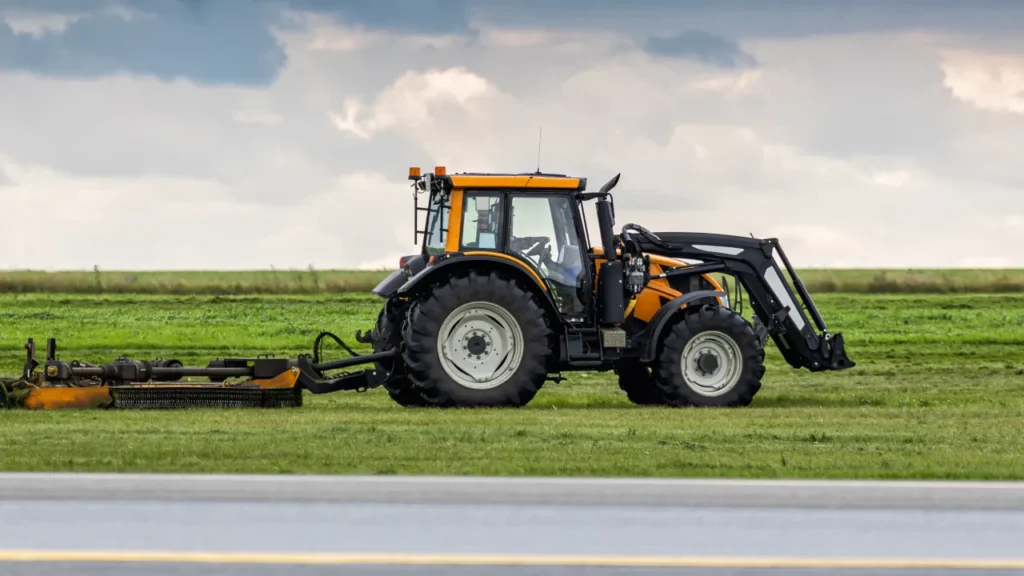
If local dealerships demand exorbitant prices that force you toward leasing, you need to change where you shop. The global heavy machinery market offers incredible arbitrage opportunities for savvy buyers.
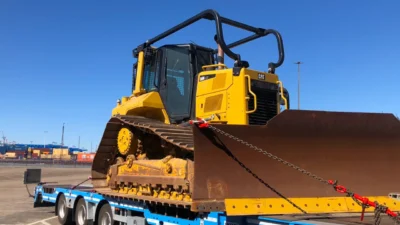
Price differences between regions are staggering. A high-quality used John Deere tractor or Caterpillar dozer in the American Midwest might sell for tens of thousands of dollars less than the exact same unit in South America, Eastern Europe, or Africa. By tapping into global markets, you access a wider availability of equipment that local dealers simply cannot match.
In many cases, the price gap between regions is large enough to absorb international shipping, customs duties, and insurance and still land well below the local price — for example, a $30,000 regional price gap on a used wheel loader can often absorb $8,000–$12,000 in freight, duties, and insurance and still save the buyer $18,000–$22,000 landed. Savings vary by route and equipment type, so the math should be run on the specific machine before you commit. However, this approach isn’t without friction, and it needs to be planned carefully. Regional supply limitations and logistics accessibility can create hurdles if you attempt to manage international freight alone. Manufacturer distribution constraints sometimes complicate cross-border parts availability.
The key to successfully buying globally is partnering with a platform that handles the logistics of international trade — shipping, customs, and compliance — turning a daunting freight challenge into a straightforward purchase. (Parts and warranty support still typically run through the manufacturer’s own regional network, so it’s worth confirming parts availability for your specific model before you buy.)
How JumboBee Helps You Reduce Equipment Costs Without Leasing
Escaping the leasing trap requires access to affordable machinery and reliable logistics. This is exactly where JumboBee changes it for you. JumboBee is a global marketplace designed specifically to help businesses trade smarter, bypass hidden fees, and acquire heavy machinery efficiently.
Instead of locking yourself into a rigid five-year lease because local prices are too high, JumboBee provides access to global listings. You gain the ability to compare prices across regions instantly. If a combine harvester is cheaper in Texas than in your home country, you can see the exact price difference in real time.
JumboBee removes the fear of international purchasing through fully integrated logistics support. The platform handles shipping, customs, import compliance, and even complex tasks like disassembly and consolidation. You always know the full cost instantly, with zero hidden platform charges.
Furthermore, you are protected by a network of verified sellers and optional pre-sale inspection services. You get the confidence of buying locally with the massive financial benefits of buying globally.
Stop renting your future and start building equity in your business.
- Browse equipment inventory today
- Compare prices globally to find the best deals
- Request shipping quote directly on the platform
Conclusion
Heavy equipment leasing is heavily marketed as a risk-free, cash-saving miracle, but the math tells a different story. As we navigate the economic realities of 2026, it is clear that leasing is not always the most cost-effective option. Long-term contracts, strict hour limits, and zero equity retention often make leasing far more expensive than purchasing outright.
Smart financial decisions should be based on total cost and usage intensity over the life of the machine, not just the initial monthly payment. By looking beyond local dealerships, global sourcing provides additional opportunities to acquire high-quality machinery at prices that make ownership highly profitable. Evaluate your real needs, run the long-term calculations, and choose the acquisition strategy that builds lasting wealth for your business.





Be the first to leave a comment
There are no replies to this post yet. Share your thoughts and help start the conversation.