


 Equipment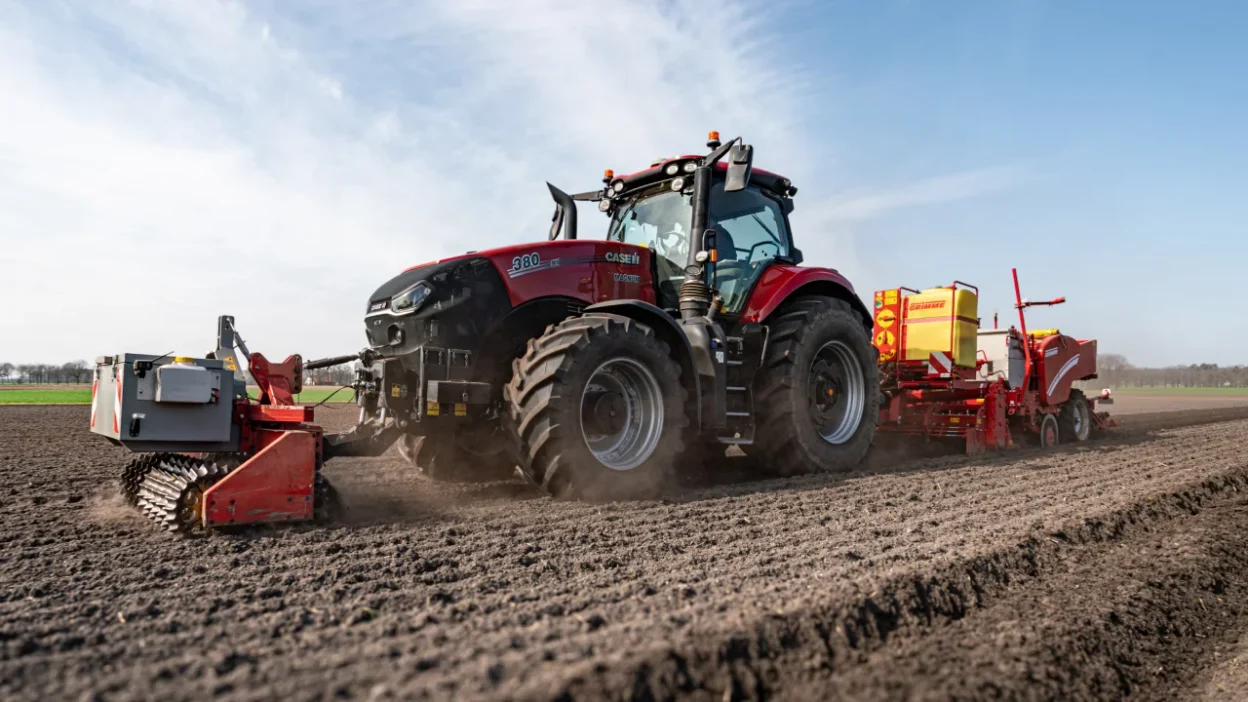
Buying a tractor is rarely an impulse purchase. It is a capital investment that defines the operational capability of a farm, construction site, or landscaping business for decades. When buyers search for manufacturers, they are often looking for reliability, parts availability, and resale value. For many, this search leads directly to the concept of American Made.
However, the landscape of tractor manufacturers in the USA is complex. Globalization has blurred the lines between domestic and imported machinery. A brand with a headquarters in Illinois might manufacture its compact tractors in India, while a Japanese brand might assemble its utility tractors in Georgia. Understanding these nuances is critical for buyers who want to know exactly what they are paying for.
This guide cuts through the marketing noise. We analyze the largest tractor manufacturers in the USA, dissecting their manufacturing footprint to show you what is actually built on American soil. Whether you are sourcing equipment for a family farm or looking to export heavy machinery via platforms like JumboBee, knowing the origin of your equipment is the first step toward a smart purchase.
What Does Made in USA Mean
Made in the USA is a powerful label. In the heavy equipment industry, it suggests robust steel, high-quality control standards, and — most importantly — a supply chain that won’t leave you waiting six months for a replacement hydraulic pump. But when we talk about tractor companies, we have to distinguish between heritage and hardware.
Many buyers assume that legacy American tractor companies build every bolt and gear within the United States. The reality is a mix of global sourcing and domestic assembly. High-horsepower row-crop tractors are almost exclusively made in America due to shipping logistics. Shipping a 30,000-pound machine across the ocean is expensive. Conversely, under-40 horsepower compact tractors are frequently manufactured in Asia and shipped to the US in crates for final assembly.
In this analysis, we define top manufacturers not only by sales volume but by their physical manufacturing presence. We look at factory locations, employment of American workers, and the density of their dealer networks. This matters because a tractor is only as good as the service behind it.
What Does an American Tractor Manufacturer Really Mean?
Before ranking the brands, we must clarify the terminology. Misunderstanding these terms leads to poor purchasing decisions.
Headquarters vs. Manufacturing Plants
A brand’s home does not always dictate where its iron is cast. Tractor brands like Kubota have headquarters in Japan but possess massive manufacturing footprints in the United States. Conversely, some historic American brands now license their names to foreign manufacturers for their smaller equipment lines.
Assembled vs. Manufactured
This is the most critical distinction for buyers looking for American-made tractors.
- Manufactured in the USA: The chassis is cast, welded, and painted in a US factory. The engine and transmission are likely built here or integrated here at a fundamental level.
- Assembled in the USA: The tractor arrives in a crate (often called a “crate tractor”) from South Korea, India, or Japan. US workers install the wheels, roll bar (ROPS), and loader, and perform final quality checks.
- Both methods result in high-quality machines, but they mean different things for the supply chain. Tractor manufacturers that pour their own castings in the US generally have better long-term parts stability for structural components.
FTC Guidelines
The Federal Trade Commission (FTC) has strict rules for the Made in USA label. For a product to claim this unconditionally, all or virtually all significant parts and processing must be of US origin. Very few modern tractors meet this 100% standard due to global electronics and rubber sourcing. Most are assembled in the USA with global materials.
Overview of the US Tractor Market
The United States represents one of the largest agricultural machinery markets in the world. The market is segmented by horsepower and application, which heavily influences manufacturing locations.
Market Structure
- Compact utility (Under 40 HP) is dominated by hobby farmers and landscapers. High volume, lower margin. Mostly imported or assembled domestically.
- Utility (40–100 HP): The workhorses for dairy and livestock farms. Mixed manufacturing origin.
- Row Crop & 4WD (100–600+ HP): The giants are used for corn, soy, and wheat. These are the core of tractors made in the USA.
Dealer Network Importance
For tractor manufacturers in the USA, the dealer network is the lifeline. A manufacturer might build the best machine in the world, but if the nearest technician is four hours away, that tractor is a liability. The largest tractor manufacturers maintain networks of over 1,500 dealers to ensure parts are never more than a day away. This infrastructure is a key component of what makes a manufacturer a leader in the US market.
Top 10 Tractor Manufacturers in the United States
Here is an in-depth look at the leading manufacturers operating on US soil. We focus on their domestic capabilities and market role.
1. John Deere

John Deere is synonymous with American agriculture. Headquartered in Moline, Illinois, it is the undisputed leader among American tractor companies. However, their manufacturing is segmented.
- US presence: Deere operates the legendary Waterloo Works in Iowa. This facility includes a foundry, engine works, and tractor assembly. It is the birthplace of the 7R, 8R, and 9R series tractors — the massive machines that feed the world.
- Manufacturing footprint: While the big iron is made in Iowa, smaller tractors (1 Series through 5 Series), are often assembled in Augusta (Grovetown), Georgia, using engines and drivetrains that may originate from Yanmar (Japan) or Deere’s own global network.
- Buyer profile: Deere buyers value resale value above all else. A twenty-year-old John Deere often commands a higher price percentage than any competitor.
- Key takeaway: If you want a 100% American-built machine, look at the 7R series and larger.
2. CNH Industrial (Case IH / New Holland)

CNH Industrial is a global giant formed by the merger of Case and New Holland. They are one of the largest tractor manufacturers in the USA by volume and footprint.
- US presence: The company has deep roots in Racine, Wisconsin (Case IH home) and New Holland, Pennsylvania.
- Manufacturing footprint:
- Racine, Wisconsin: The global headquarters for Case IH and the full assembly site for the Magnum series tractors, ranging from 180–400 HP. The plant also produces transmissions used across CNH’s tractor lines and components for other Case IH products assembled in sister plants worldwide.
- Fargo, North Dakota: This plant manufactures the massive 4WD Steiger and Quadtrac tractors. It is a true heavy manufacturing hub.
- Market position: Case IH dominates the row-crop market alongside Deere, known for their track technology. New Holland’s US manufacturing footprint is broader than Case IH’s: the T8 series is built in Racine, Wisconsin; the T9 articulated tractors come from Fargo, North Dakota; hay and forage equipment is produced in New Holland, Pennsylvania; and self-propelled sprayers are built in St. Nazianz, Wisconsin.
- Buyer profile: Farmers who prefer red (Case) or blue (New Holland) often cite cabin comfort and engine performance (FPT engines) as deciding factors.
3. AGCO (Massey Ferguson, Fendt, Valtra, Challenger)
AGCO, headquartered in Duluth, Georgia, is a unique American powerhouse. Unlike Deere, AGCO is a conglomerate of multiple historic brands.
- US presence: AGCO’s crown jewel in the US is the manufacturing facility in Jackson, Minnesota.
- Manufacturing footprint: The Jackson plant is where AGCO manufactures high-horsepower track tractors and, increasingly, Fendt tractors for the North American market. They have brought production of the sophisticated Fendt Rogator and track tractors to US soil to reduce lead times.
- Market position: AGCO offers a diverse lineup. Massey Ferguson is a global volume leader, while Fendt is positioned as the premium, high-tech option for precision farming.
- Buyer profile: AGCO attracts tech-forward farmers. The Fendt Vario transmission is considered the gold standard in efficiency, and buying one built in Minnesota appeals to US buyers.
4. Kubota Manufacturing of America

Kubota is a Japanese company, but excluding it from a list of tractor manufacturers in the USA would be inaccurate. They have aggressively localized production.
- US presence: Kubota established Kubota Manufacturing of America (KMA) in Gainesville, Georgia, in 1988.
- Manufacturing footprint: They don’t merely assemble; they fabricate. KMA produces approximately half of all Kubota equipment sold in the US. They weld chassis, assemble loaders, and build utility vehicles locally. They recently expanded with a massive new facility for compact tractors.
- Market position: Kubota is the market leader in the compact and sub-compact segment (under 50HP).
- Buyer profile: Small property owners, hobby farmers, and municipalities. Buyers choose Kubota for reliability and the massive dealer network that rivals John Deere.
5. Mahindra North America

Mahindra is the world’s largest tractor manufacturer by volume (number of units), but its approach to the US market is different.
- US presence: Mahindra operates five major assembly and distribution centers across the US (Texas, California, Tennessee, Pennsylvania, Kansas).
- Manufacturing footprint: Mahindra utilizes a CKD (Completely Knocked Down) model. Parts are manufactured in India or South Korea (via partnerships with TYM) and shipped to US centers. American workers assemble, test, and finish the tractors.
- Market position: They market themselves as the Value choice, often offering higher lift capacities and heavier chassis weights than competitors for a lower price.
- Buyer profile: Value-conscious landowners. The “Official Tractor of Tough” slogan appeals to buyers who want a heavy, mechanical tractor without complex emissions computers (on older or sub-25HP models).
6. Yanmar America

Yanmar is legendary for its diesel engines. For years, they built the engines for John Deere compact tractors. Now, they aggressively market their own tractor brands.
- US presence: Based in Adairsville, Georgia.
- Manufacturing footprint: Yanmar has a significant assembly operation in Georgia. Like Kubota, they are deepening their US roots. Their tractors are known for having the best powertrain integration because they build the tractor and the engine.
- Market position: Premium compact tractors.
- Buyer profile: Buyers who understand diesel mechanics. Yanmar engines are the industry standard for longevity, making them popular for fleet operations.
7. TYM (Tong Yang Moolsan)

TYM is a South Korean manufacturer that is a hidden giant among tractor companies. TYM (formerly Tong Yang Moolsan, rebranded as TYM Corporation in 2021.
- US presence: TYM-USA has headquarters and assembly facilities in Rome, Georgia, and a distribution center in North Carolina.
- Manufacturing footprint: Similar to Mahindra, they operate on an assembly model. However, TYM is significant because they manufacture tractors for other brands. If you buy a tractor from Rural King or some Mahindra models, you are often buying a TYM.
- Market position: High features for the price. Cabins with AC, Bluetooth, and ergonomic controls are standard on lower-priced models compared to Deere or Kubota.
- Buyer profile: Research-heavy buyers who realize they can get a Tier-1 quality machine for a Tier-2 price by buying the OEM brand directly.
8. Kioti (Daedong)

Kioti is the trade name for Daedong Industrial of South Korea, but they are a staple of the American rural landscape.
- US presence: Headquartered in Wendell, North Carolina.
- Manufacturing footprint: Kioti has invested heavily in their North Carolina assembly plant. They keep a massive inventory of parts in the US, solving the foreign tractor parts delay issue.
- Market position: The primary rival to Kubota in the compact segment.
- Buyer profile: Landowners who test drive a Kubota and then test drive a Kioti. Often, the Kioti offers similar specs for 15% less cost, swaying the pragmatic buyer.
9. Ventrac / Steiner (The Toro Company)
For a truly unique entry in what tractors are made in the USA, look at Ventrac.
- US presence: Orrville, Ohio.
- Manufacturing footprint: Ventrac tractors are slope-specialist machines built right in Ohio. They are not standard ag tractors; they articulate in the middle and are designed for mowing 30-degree slopes.
- Market position: Niche turf and estate management.
- Buyer profile: Golf courses, municipalities, and owners of hilly estates. These are arguably some of the best American-made tractors for specialized turf work.
10. Bobcat

Bobcat is famous for skid steers, but they have re-entered the tractor market aggressively.
- US presence: Headquartered in West Fargo, North Dakota, with primary manufacturing in Gwinner, North Dakota.
- Manufacturing footprint: Bobcat is an American icon, originally acquired by Doosan Group of South Korea in 2007. Ownership has since been restructured under Doosan Robotics, which has moved to consolidate full control of the business. While their skid steers are North Dakota-born and bred, their compact tractors are largely a collaboration with Daedong (Kioti), assembled and finished to Bobcat specs.
- Market position: Leveraging their construction equipment dominance. If you already own a Bobcat skid steer, the tractor uses the same dealer and financing.
- Buyer profile: Construction companies and landscapers who need a tractor that integrates with their existing fleet.
Tractor Brands vs Tractor Manufacturers in the USA
It is vital to distinguish between a brand and a manufacturer. There are hundreds of tractor brands in history, but only a few dozen actual factories.
This is called OEM (Original Equipment Manufacturer) rebranding.
- Example: For years, New Holland’s Boomer compact tractors were manufactured by LS Tractor (South Korea).
- Example: John Deere’s smaller engines are often Yanmar.
- Example: TYM manufactures tractors for RK Tractors (Rural King) and previously for Mahindra.
Why does this matter? If you are looking for American-made tractors, buying a brand that sounds American (like McCormick or Branson) requires checking the VIN plate. Branson, for instance, is owned by TYM. McCormick is Italian-owned (Argo Tractors). The brand on the hood is marketing; the plate on the frame is reality.
What Tractors Are Actually Made in the USA?
If your priority is supporting domestic manufacturing jobs, you need to look at specific horsepower categories.
High Horsepower (100 HP+)
This segment is the stronghold of tractors made in the USA.
- John Deere 7R, 8R, 9R: Waterloo, Iowa.
- Case IH Magnum / Steiger: Racine, WI / Fargo, ND.
- New Holland T8 / T9: Racine, WI / Fargo, ND.
- AGCO Challenger / Fendt: Jackson, MN.
Compact Tractors (Under 40 HP)
Very few of these are 100% manufactured in the US. The margins are too thin to support domestic casting and engine production for small units.
- Kubota: Welded and assembled in Georgia (high domestic content).
- John Deere: Assembled in Georgia (mixed content).
- Others: Mostly assembled in the US from Asian kits.
When asking what tractors are made in the USA, the answer is almost always: “The big ones are made here; the small ones are assembled here.”

American-Made Tractors and Resale Value
Does origin affect price? Absolutely.
American tractors — those manufactured by the Big Three (Deere, Case IH, AGCO) — hold their value better than any other machinery.
- Parts availability: A tractor made in Iowa has parts stocked in Iowa. A tractor made in China might have parts on a container ship.
- Legacy: Farmers trust what their grandfathers drove.
- Export potential: This is a crucial factor. There is a massive global demand for used US-built machinery. Buyers in South America, Eastern Europe, and Africa prize American-built John Deere and Case IH tractors for their durability.
If you buy one of the best American-made tractors, you are not only buying a tool; you are buying a liquid asset. When it comes time to sell, you have a global market waiting for that machine.
Comparison Table: Leading Tractor Manufacturers in the USA
| Manufacturer | US Manufacturing Presence | Core Segments | Dealer Network Strength | Market Position |
|---|---|---|---|---|
| John Deere | High (Iowa, Georgia, Wisconsin) | Ag, Commercial, Residential | Very High | Market Leader |
| Case IH | High (Wisconsin, North Dakota) | Ag (Row Crop & 4WD) | High | Ag Performance Leader |
| Kubota | High (Georgia) | Compact, Utility | Very High | Compact Leader |
| New Holland | Medium-High (Wisconsin, North Dakota, Pennsylvania) | Ag, Livestock | High | Hay/Forage Specialist |
| AGCO | Medium (Minnesota) | High-Tech Ag | Medium | Premium Technology |
| Mahindra | Assembly Only (5 US Plants) | Utility, Compact | High | Value Leader |
| Kioti | Assembly Only (North Carolina) | Compact | Medium | Kubota Challenger |
| Yanmar | Assembly Only (Georgia) | Compact | Medium | Powertrain Expert |
| Bobcat | Assembly/Mfg (North Dakota) | Compact, Construction | High | Construction Crossover |
| Ventrac | High (Ohio) | Specialized Turf | Low (Niche) | Slope Specialist |
Common Misconceptions About American Tractor Brands
Myth 1: “Foreign Brands are Low Quality”
This is outdated thinking. Japanese and South Korean tractor manufacturers (Kubota, Yanmar, Kioti) have revolutionized the industry. Their quality control often rivals or exceeds that of American legacy brands in the compact segment.
Myth 2: “American Brand means American Made.”
As discussed, a John Deere 3025E is a fantastic machine, but it is not built in the same factory as an 8R. It is a global product. Do not assume the green paint signifies domestic forging.
Myth 3: “You Can’t Get Parts for Foreign Tractors”
This was true in the 1980s. Today, companies like Kioti and Mahindra have massive US distribution centers. However, for “grey market” tractors (tractors imported used from Japan that were never intended for the US market), parts are indeed a nightmare. Always buy models intended for the US market.
What This Means for Buyers and Dealers
For buyers, the takeaway is transparency. You should demand to know the origin of the machine.
- Check the data plate: Every tractor has a plate on the chassis listing the country of origin.
- Evaluate support: Buying one of the largest tractor manufacturers ensures you aren’t left with an orphan tractor if the company leaves the US market.
For dealers, stocking American tractor companies (or those with deep US manufacturing roots) is a selling point. It assures the customer that the supply chain is short and resilient.
Conclusion
The list of tractor manufacturers in the USA is a testament to the strength of the American agricultural economy. While the definition of American Made has shifted from 100% domestic to globally sourced, locally assembled, the quality standards remain the highest in the world.
Whether you choose the heritage of John Deere and Case IH, or the localized efficiency of Kubota and Mahindra, the US market offers the best machinery on the planet. The key is aligning your needs with the manufacturer’s strengths. If you need a 400HP row-crop warrior, buy American-built. If you need a 25HP yard tractor, focus on the dealer support network rather than the country of origin.
For those looking to buy or sell these machines, the global market is hungry for US-sourced equipment. This is where JumboBee bridges the gap. As a global heavy equipment marketplace, JumboBee connects buyers and sellers of top tractor brands in the USA, handling the complexities of inspections, payments, and international shipping. Whether you are upgrading your fleet or looking for a specific American-made model to export, JumboBee provides the verified listings and logistics support to make the trade seamless.
High-horsepower row-crop and 4WD tractors from John Deere (7R, 8R, 9R), Case IH (Magnum, Steiger), and AGCO (Challenger) are manufactured in the USA. Most compact tractors are assembled in the USA from foreign components.
By market share and revenue, John Deere, CNH Industrial (Case IH/New Holland), and Kubota are the largest manufacturers operating in the US.
Yes, but mostly for larger equipment. Brands like John Deere and Case IH manufacture their large agricultural tractors in the Midwest. Their smaller utility tractors are often assembled in the US using global components.
Best depends on the application. John Deere holds the highest resale value. Case IH is renowned for heavy tillage and track systems. Ventrac is the best for slope mowing.
Generally, yes. Tractors fully manufactured in the USA (like large ag tractors) involve higher labor and material costs. However, they also command higher resale values and offer better parts availability.






Be the first to leave a comment
There are no replies to this post yet. Share your thoughts and help start the conversation.