 Equipment
Buying heavy equipment is an investment strategy, not just a purchase. When you buy a machine, you are parking capital in steel and hydraulics. Smart contractors and fleet owners know that the best backhoe isn’t the one that digs the deepest hole today. It is the one that returns the most money to your pocket when you sell it five years from now.
This guide analyzes which machines retain high resale value. We look at brand reputation, machine size, market demand, and secondary market liquidity. We rank by more than horsepower. We rank by economics.
What Does Best Value Mean?
Resale value is the silent profit killer or the hidden bonus in construction. Many buyers focus entirely on the purchase price. They hunt for the cheapest deal. This is often a mistake. A cheap machine that no one wants to buy later is actually very expensive. A premium machine that sells in 24 hours for top dollar is cheap to own.
Liquidity vs. Features
Liquidity is how fast you can turn a machine back into cash. Backhoe manufacturers often market fancy features like heated seats, advanced telematics, or custom joystick configurations. While nice for the operator, these features rarely add dollar-for-dollar value on the used market.
What makes a machine liquid?
- Simplicity: Can it be fixed by a mechanic in a remote village?
- Parts: Can you get a filter or a pump in 24 hours anywhere in the world?
- Standardization: Is it a standard size that fits on a standard trailer?
Why Depreciation Matters
Depreciation is the drop in value over time. All machinery depreciates. However, according to data from Equipment Watch Residual Value Reports, some backhoe brands – particularly off-brand imports or discontinued models – can lose 35–40% of value in year one. Premium brands like Caterpillar and Case typically lose 20–30% in year one, with the slowest-depreciating units losing as little as 15% under favorable market conditions.
If you buy the best backhoe loader for $100,000 and sell it for $70,000 after 3,000 hours, your cost of ownership is $10 per hour (plus fuel/maintenance). If you buy a lesser brand for $80,000 and sell it for $30,000, your cost is $16.66 per hour. The cheaper machine cost you more.
How Backhoe Resale Value Is Determined
To find the best used backhoe to buy, you must understand the mechanics of value. It is not random. It is driven by market forces.
Brand Reputation and Dealer Network
The logo on the side of the machine matters. Major backhoe companies like Caterpillar, John Deere, and Case have spent decades building trust. Buyers know that a 10-year-old Case 580 will still run. This trust translates to cash. A massive dealer network means the second or third owner knows they can get support. If a brand has no dealers in a region, the resale value in that region drops to zero.
Global vs. Local Demand
This is critical for JumboBee. The best backhoe for resale is one that has demand in multiple continents.
- North America: Prefers center-mount stabilizers and heavy horsepower.
- Africa, Asia, and urban European markets: Often favor side-shift stabilizers for tight access and simple mechanical engines for ease of maintenance in areas with limited dealer infrastructure.
- Global winner: Machines that bridge this gap or are popular in high-import regions hold value best.
Machine Size and Application Range
Backhoe sizes dictate the buyer pool. A standard 14-foot dig depth machine fits 80% of job sites. A massive 17-foot machine is too big for residential work. A tiny compact tractor is too weak for utility work. The middle of the road size usually holds the most value because the pool of potential buyers is largest.
Parts Availability and Serviceability
Complex emissions systems (like those required by the US EPA Tier 4 standards) can hurt resale value in developing nations where high-quality fuel is scarce. Older, simpler engines often command a premium in the export market. Backhoe manufacturers that design for serviceability help their machines retain value.
Backhoe Sizes and Their Impact on Value
Understanding backhoe sizes is the first step to predicting value. If you buy a size that no one needs, you will struggle to sell it.
14-Foot Class (Sweet Spot)
This is the standard size (e.g., Case 580, Cat 420). It balances power with transportability. It fits on a standard tag trailer. It is powerful enough for sewer mains but small enough for a backyard. This class always has the highest liquidity.
Compact Backhoes
These are popular with hobby farmers and landscapers. They hold value well but have a lower price ceiling. The market is flooded with various backhoe brands, mainly Kubota and John Deere.
15-Foot+ Class (Heavy Duty)
Machines like the John Deere 410 or 710 are beasts. They hold value for specific heavy contractors but take longer to sell. The buyer pool is smaller. Moving them typically requires a larger trailer and, depending on combined truck and trailer weight, may require a CDL – check your state’s regulations.
| Backhoe Size Class | Typical Dig Depth | Buyer Demand | Resale Liquidity |
|---|---|---|---|
| Compact / Utility | 6-10 ft | High (Homeowners/ Landscapers) | High |
| Standard (14 ft) | 14-15 ft | Very High (General Contractors) | Very High |
| Heavy Duty (15 ft+) | 15-18 ft | Medium (Utility/Road Work) | Medium |
| Integrated Tool Carrier | Various | Low (Niche) | Low |
Top 10 Backhoe Loaders That Hold Their Value Best
We have analyzed market data, auction results, and export demand to rank the best backhoe loader models for value retention.
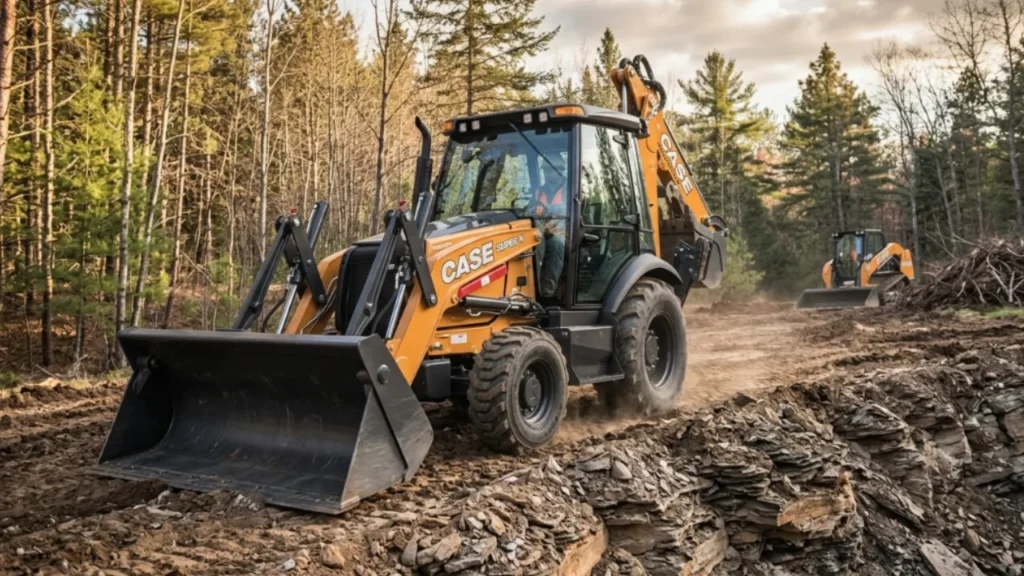
1. Case 580 Super N
- Size class: 14-15 ft Standard
- Why it holds value: The Case 580 is legendary. For many, Case is synonymous with backhoe. The 580 Super N offers a perfect balance of power and speed. It features the PowerLift function which increases lifting capacity.
- Buyer Profile: Owner-operators, utility companies, municipalities.
- Market Strength: There is always a buyer for a Case 580. Even with high hours (5,000+), these machines command strong prices. Parts are available at third-party stores, not just dealers, which keeps older machines running cheaply.
- Depreciation: Very slow. It is often considered the best backhoe for pure ROI.
2. Caterpillar 420 (E, F, and XE Series)
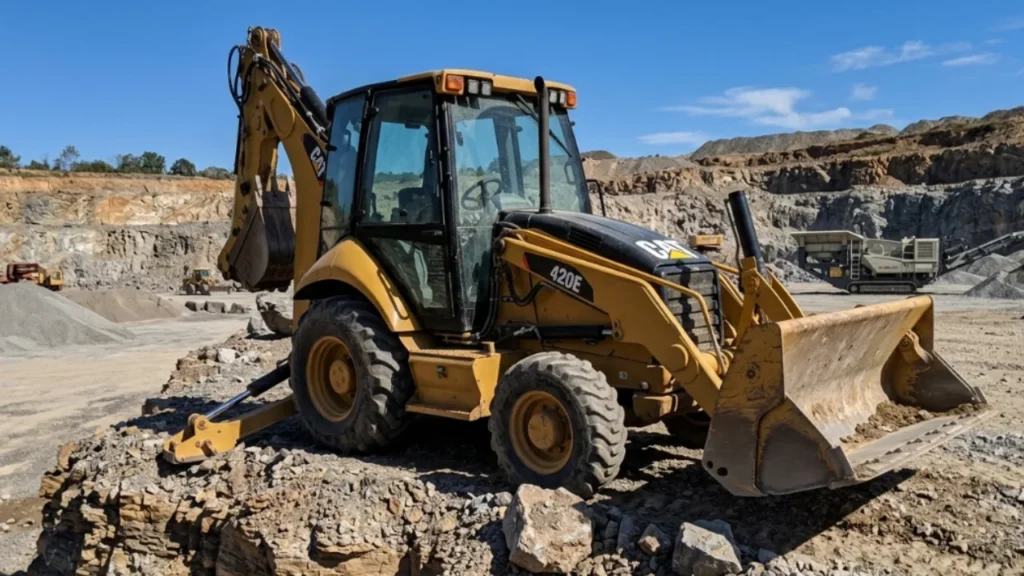
- Size Class: 14-15 ft Standard
- Why it holds value: Caterpillar is the global leader in construction equipment. The 420 is their flagship backhoe. It is known for a powerful hydraulic system and a very comfortable cab.
- Buyer profile: Heavy construction firms, rental fleets.
- Market strength: The Cat badge carries a premium. International buyers trust Cat implicitly. If you list a Cat 420 on JumboBee, you will likely get inquiries from South America, Africa, and the Middle East. The global parts network supports this high value.
- Depreciation: High initial purchase price, but it flatlines quickly. You get a lot of your money back.
3. John Deere 310SL
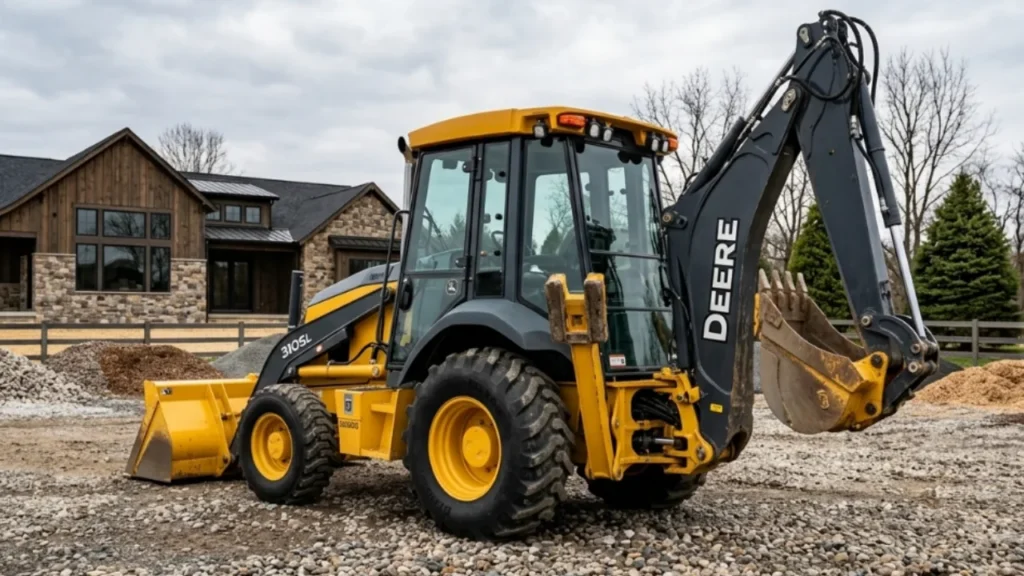
- Size class: 14 ft Standard
- Why it holds value: The 310SL is the workhorse of North America. It is slightly more affordable than the Cat 420 but offers incredible reliability. The L series introduced significant comfort and efficiency upgrades.
- Buyer profile: Road crews, residential builders, rental yards.
- Market strength: John Deere dominates the US domestic market. Parts distribution in North America is unmatched. While export demand is slightly lower than Cat, domestic demand is so high that prices stay firm.
- Depreciation: Steady and predictable. A safe bet for any fleet.
4. JCB 3CX
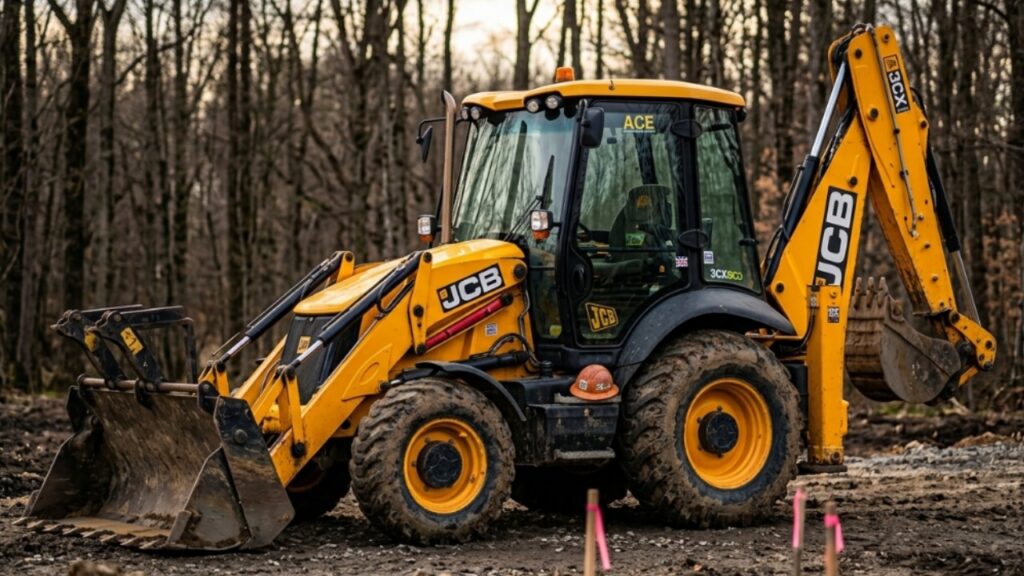
- Size class: 14 ft Standard
- Why it holds value: JCB was among the earliest pioneers of the backhoe loader, with Joseph Bamford building one of the first backhoe attachments in 1953. Today the 3CX is the most popular backhoe in the world by volume. It uses a highly efficient EcoMAX engine that requires no DPF (Diesel Particulate Filter) in some older configurations, making it ideal for export.
- Buyer profile: Global contractors, farmers, exporters.
- Market strength: Among backhoe manufacturers, JCB is the export king. A used 3CX is incredibly liquid on the international market. If you are selling to regions with less strict emissions, the 3CX is the best backhoe to have.
- Depreciation: Excellent value retention due to global demand.
5. Caterpillar 416
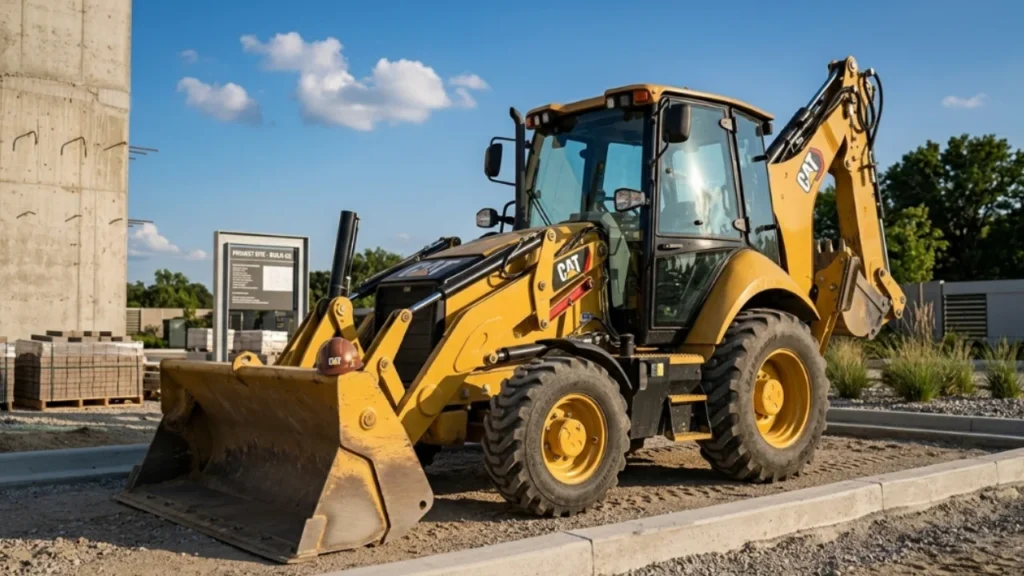
- Size class: 14 ft Standard
- Why it holds value: The 416 sits below the 420 in Cat’s lineup – lighter duty, fewer options, but the same proven Cat frame and hydraulic architecture. It has fewer bells and whistles but the same robust frame and engine.
- Buyer profile: Rental companies, entry-level contractors.
- Market strength: Because it is simpler, fewer things go wrong. Rental companies love the 416. When they dump them on the used market, smaller contractors snap them up. It is the best used backhoe to buy for someone starting a business.
- Depreciation: It starts cheaper than the 420 and depreciates slowly.
6. John Deere 410L
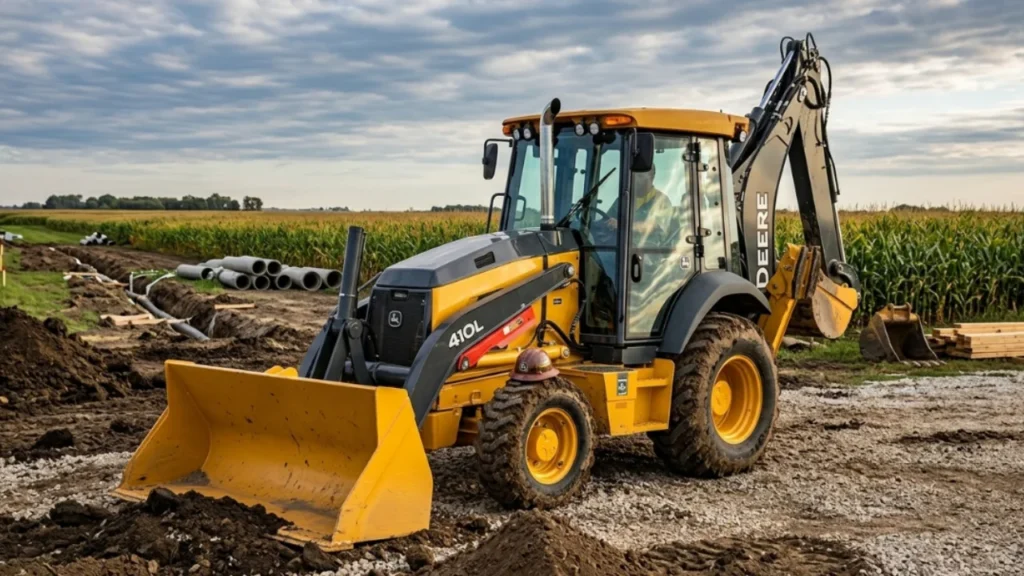
- Size class: 15 ft Heavy Duty
- Why it holds value: This is for buyers who need near-excavator performance but need to drive down the road. It has deeper dig depth and higher lift capacity than the 310.
- Buyer profile: Pipeline contractors, heavy utility work.
- Market strength: There are fewer 410s than 310s, creating scarcity. Contractors who need this specific size will pay a premium for a clean used unit. It is one of the best backhoe loader options for heavy lifting.
- Depreciation: Holds value well, especially low-hour units.
7. Kubota L47 / M62
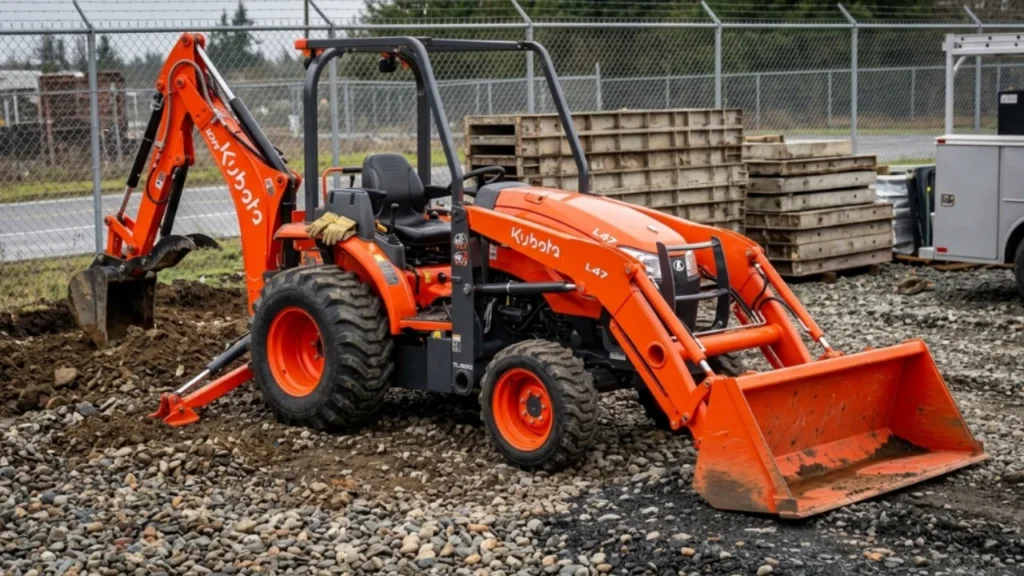
- Size class: Compact / Utility
- Why it holds value: Kubota dominates the compact market. These machines are hybrids between a tractor and a construction backhoe. They are incredibly durable and fit in tight backyards.
- Buyer profile: Landscapers, pool installers, wealthy homeowners.
- Market strength: These machines lead a double life. They can mow grass and dig septic tanks. This versatility keeps demand high. Backhoe brands like Kubota have cult-like followings.
- Depreciation: Extremely low. A 5-year-old Kubota commonly retains 60–75% of its original purchase price, among the highest retention rates in the compact utility class.
8. Case 580N (Standard)
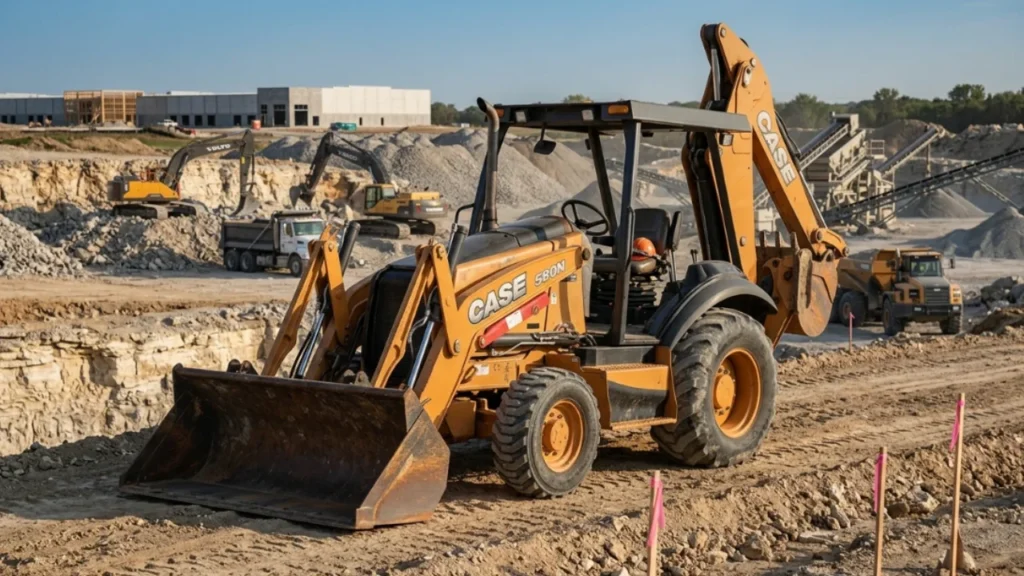
- Size class: 14 ft Standard
- Why it holds value: The non-Super version of the 580. It has slightly less horsepower but the same DNA.
- Buyer profile: Budget-conscious contractors.
- Market strength: It offers the Case reliability at a lower price point. It is highly liquid because it is accessible to more buyers.
- Depreciation: Very stable.
9. New Holland B95C
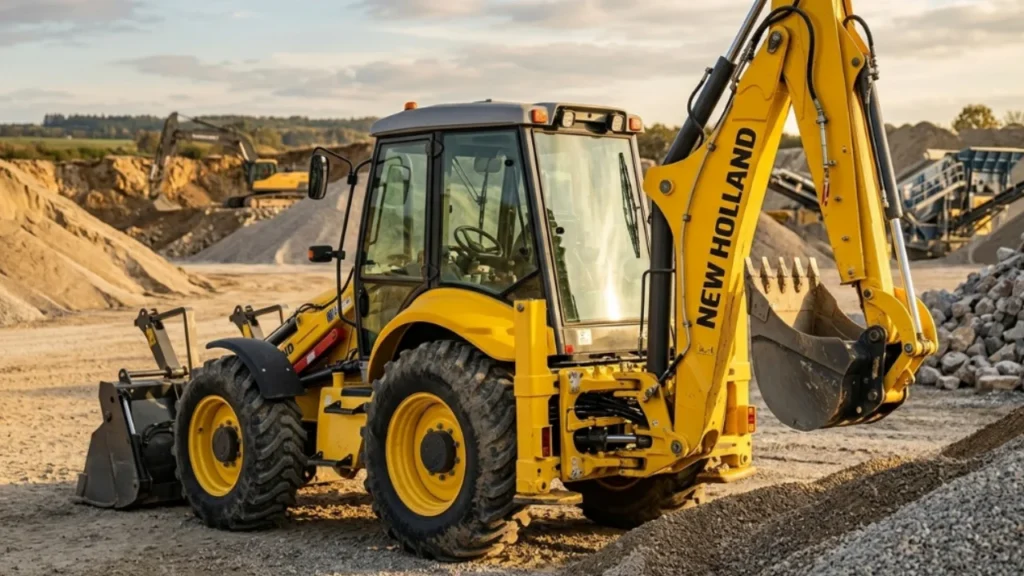
- Size class: 14 ft Standard
- Why it holds value: New Holland shares DNA with Case (both owned by CNH Industrial). The B95C offers similar performance to the Case 580 but often at a lower entry price.
- Buyer profile: Agriculture, general construction.
- Market strength: While not as famous as Cat or Deere, New Holland has a massive agricultural following. Farmers trust the engines and hydraulics.
- Depreciation: You buy it cheaper, and it holds steady. Good value for money.
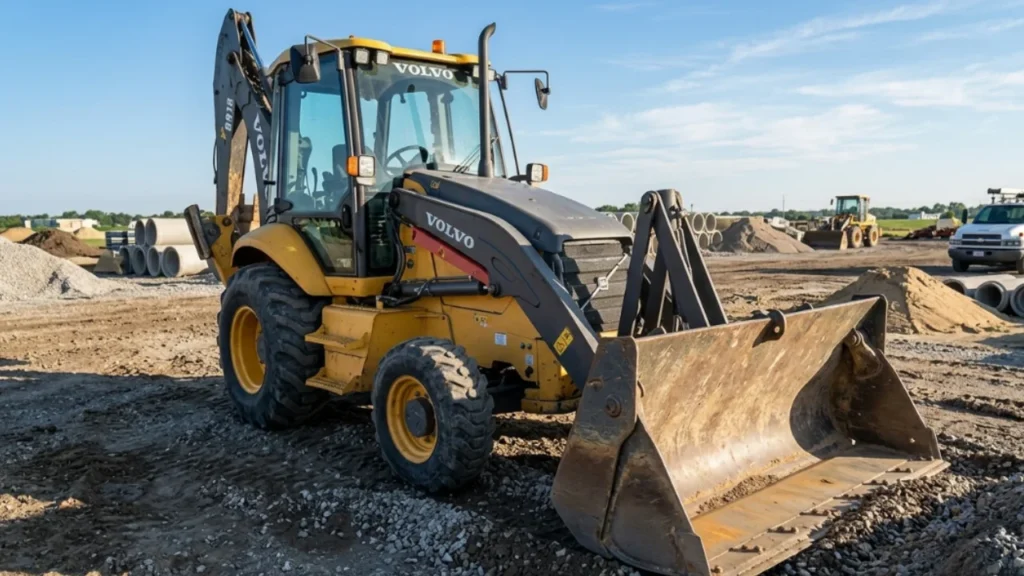
10. Volvo BL60 / BL70 (Legacy)
- Size class: 14-15 ft
- Why it holds value: A Legacy Pick – Not for Everyone. Volvo exited the US backhoe market, making the BL60/BL70 a collector’s play rather than a standard recommendation. These machines are fully depreciated and built to last – heavy, simple, and powerful.
- Buyer profile: Volvo loyalists, heavy-duty users.
- Market strength: Scarcity drives value here. People who love the Volvo cab and hydraulic feel hold onto them.
- Depreciation: Fully depreciated. If you buy one now, you will likely sell it for the same price in two years.
Brand Comparison: Who Makes the Best Backhoe?
Asking who makes the best backhoe is like asking who makes the best truck. It depends on the job. However, when looking at resale economics, distinct tiers emerge among backhoe companies.
Premium Tier: Cat and Case
These two brands fight for the top spot. Case invented the integrated backhoe loader; Cat perfected the global support network.
- Case: Often preferred by owner-operators for speed and feel.
- Cat: Preferred by fleets for reliability and parts availability.
- Resale: Both command the highest prices.
Workhorse Tier: John Deere and JCB
- John Deere: The king of the American Midwest and construction sites. Very strong hydraulics.
- JCB: The world leader. Innovative features like the side-shift chassis make them the best backhoe for tight urban environments and international sales.
- Resale: Deere rules North America; JCB rules the rest of the world.
Value Tier: New Holland and Komatsu
These backhoe manufacturers make excellent machines. They may lack the marketing budget of Cat, but they dig just as well.
Resale: Slightly lower initial price, slightly steeper depreciation curve, but excellent functionality.
| Brand | Market Position | Resale Strength | Global Demand | Typical Buyer |
|---|---|---|---|---|
| Caterpillar | Premium / Global Leader | Excellent | Very High | Fleets / Rental |
| Case | Premium / Operator Favorite | Excellent | High | Owner-Operators |
| John Deere | Premium / Domestic Leader | Very Good | Medium (High in US) | Utility / Road |
| JCB | Innovation / Global Volume | Very Good | Very High | General / Export |
| Kubota | Compact Leader | Excellent | Medium | Landscapers |
| New Holland | Value / Ag Crossover | Good | Medium | Farmers / Gen Con |
Best Used Backhoe to Buy in 2026
If you are looking to buy a machine in 2026, you need to look at the market trends. The supply chain issues of the early 2020s have stabilized. This means the used market is normalizing.
Pre-Emission Sweet Spot
Older machines (Tier 3 engines, built before approximately 2013) are becoming increasingly sought after. The US EPA required Tier 4 Final compliance for backhoe-range engines (75–174 hp) from 2013 onward. Why? No DEF fluid. No DPF filters. No regeneration downtime.
Many buyers consider a 2010 Case 580 Super M to be the best used backhoe to buy. It is simple, powerful, and easy to export. If you find a clean one, buy it. It will not lose value.
2,000 – 4,000 Hour Range
This is the sweet spot for modern machines.
- Under 2,000 hours: Still priced like new.
- Over 6,000 hours: Major component overhauls (transmission, engine) are looming.
- 2,000-4,000 hours: The machine has depreciated significantly from new, but has thousands of hours of life left before major repairs.
Configuration Matters
Stick to the standards.
- 4WD: Mandatory. 2WD machines are dead weight on the resale market.
- Extendahoe: Highly desirable.
- Cab with A/C: Mandatory for resale in hot climates (US South, Middle East).
- Pilot controls: Younger operators prefer pilot controls (joysticks) over wobble sticks (levers). Machines with pilots sell faster.
Common Mistakes That Kill Backhoe Resale Value
You can buy the best backhoe loader from the best brand and still lose money if you make these mistakes.
Over-Customization
Do not paint the machine your company’s colors unless you plan to repaint it yellow before selling. A hot pink backhoe is hard to sell.
Avoid permanent welding of niche attachments. If you weld a specialized compactor to the arm, you have limited your buyer pool to people who need that exact compactor.
Poor Documentation
Service records are cash. A binder full of receipts proves the machine was maintained. It can add 5-10% to the final sale price. It builds trust. Without records, buyers assume the worst about the engine and transmission.
Ignoring Export Demand
Many sellers in the US or Europe only list locally. They forget that the best backhoe market might be in Nigeria, Vietnam, or Peru.
Backhoe sizes like the 14ft standard are globally desired. If you limit your sale to your local county, you are leaving money on the table. Platforms like JumboBee solve this by exposing your machine to global buyers.
Niche Attachments
Buying a machine with a Thumb is great. Buying a machine with a specialized forestry mulcher head and pricing it into the package is risky. Most buyers want a bucket. Sell specialized attachments separately.
What This Means for Sellers and Buyers
For Sellers
- Spec for resale: When buying new, choose popular options (4WD, Cab, Extendahoe). Avoid weird configurations.
- Cleanliness: Wash the machine. Detail the cab. A clean seat and clear glass make the machine feel tighter.
- Global reach: List on platforms that handle international logistics. A buyer in another country might pay more for your backhoe brands than a local dealer.
For Buyers
- Avoid value traps: Do not be tempted by an obscure brand because it is $5,000 cheaper. You will lose that $5,000 when you try to find parts or sell it.
- Check the undercarriage/tires: Tires are expensive. A machine with bald tires is a bargaining chip.
- Think exit strategy: Before you buy, ask yourself: “Who will I sell this to in 5 years?” If the answer is “I don’t know,” buy a different machine.
Conclusion
The best backhoe is the one that works hard and sells fast. While backhoe manufacturers will always compete on breakout force and hydraulic flow, the real competition happens on the used market.
Brands like Case, Caterpillar, and John Deere have proven they can hold value over decades. Backhoe sizes in the 14-foot class remain the liquidity kings. Whether you are a small contractor or a large fleet manager, viewing your equipment through the lens of resale economics is the key to long-term profitability.
Don’t buy iron. Buy liquidity.
Ready to buy or sell?
JumboBee connects you with the global market. We handle the inspections, the payments, and the heavy logistics. Whether you are looking for the best used backhoe to buy or selling a fleet of backhoe loaders, we make the world your marketplace.
The Case 580 Super N and Caterpillar 420 generally hold the highest resale value due to brand reputation, reliability, and high demand in both domestic and export markets.
Best is subjective, but Caterpillar and Case are widely considered the top tier for performance and longevity. JCB is the leader for global innovation and exportability. John Deere is a top contender in North America.
The standard 14-foot dig depth class (like the Case 580 or Cat 420) holds value best because it fits the widest range of applications, from construction to utility work.
Financially, a used backhoe in the 2,000-hour range is often better. You avoid the initial steep depreciation of a new machine while still getting a unit with a long service life.
Caterpillar, Case, and Kubota (for compacts) typically have the slowest depreciation curves. Lesser-known or off-brand imports depreciate much faster due to lack of parts support.






Be the first to leave a comment
There are no replies to this post yet. Share your thoughts and help start the conversation.