Komatsu WA500-8 Wheel Loaders
Komatsu WA500-8




5+
sold in last yearGeneral overview
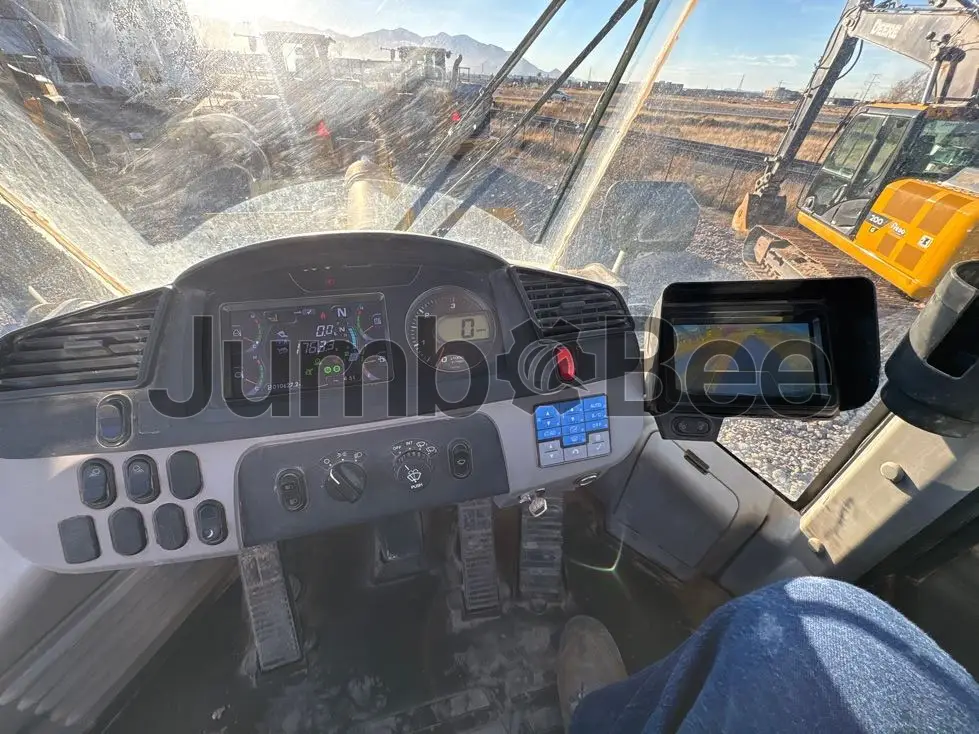
Komatsu WA500-8 is a wheel loader for construction equipment applications, designed for loading and material-handling work on job sites. It combines a 35,504 kg (78,270 lb) operating weight with a heaped bucket capacity of 4 m³ (5.2 cu yd).
The model uses a Komatsu SAA6D140E-7 engine rated at 259 kW (353 hp) and meets Tier 4 Final emissions requirements. Additional specifications include 15 L displacement, a forward travel speed of 35 km/h (21.7 mph), hydraulic system pressure of 343 bar (4,970 psi), and a steering angle of 36°. These specifications support repetitive loading and short-distance material transfer across active sites.
Year
2021
Country of manufacturing
Japan
General specifications
Engine Power
353 hp
Operating Weight
35,504 kg
Bucket Capacity
5.4 cu(m)
Bucket Capacity - Heaped
4 cu(m)
Additional specifications
Emission standard level
Tier 4 Final
Displacement
15 cu(m)
Fuel tank
473 L
Cooling system
110 L
Number of Cylinders
6
Battery Voltage
12
System Relief Pressure
34,300 kPa
Travel Speed Forward
35 km/h
Engine Model
Komatsu SAA6D,140E-7
Engine Oil
37 L
Power - Net
353 hp
Net Power (ISO 9249)
353 hp
Hydraulic Cycle Time - Lower, Float
4 s
Hydraulic Cycle Time - Lift
7 s
Hydraulic Cycle Time - Dump
1 s
Steering Angle
36 deg
Hydraulic System
337 L
Rated Operating Capacity
37,000 kg
Komatsu WA500-8 Wheel Loaders Listings
Looking for Komatsu WA500-8 Wheel Loaders?
See similar listingsCompare Komatsu WA500-8 Wheel Loader to other wheel loaders
Not sure which equipment to choose? Use our comparison tool to easily compare equipment side by side based on key features.
Add model
Add model
5.0
Rating
Based on ratings and reviews from verified buyers.
Overall rating
1 reviews
5
4
3
2
1
Performance & Productivity
5.0
Reliability & Durability
4.0
Comfort & Ergonomics
5.0
Safety
5.0
Technology & Features
5.0
Owen Peterson

It moves gravel for us about 3,000 hours a year. Breakout force is strong for the size class in grain. The one knock is that the hydraulic hoses want watching.
No questions yet
Be the first to ask a question about this model and help other buyers learn more.
Heavy equipment insights from JumboBee
Got Questions?
Our FAQ section covers everything from shipping and listing to buying with confidence.
Can't find what you're looking for?
Sign up and talk to an expert.
Most popular
What is the average price of a Komatsu WA500-8?
No confirmed market price is supplied for the Komatsu WA500-8. Check current listings and compare machine condition, location, configuration, maintenance history, and included attachments.
What are the key advantages of the Komatsu WA500-8?
Listed strengths include 263.2 kW (353 hp) net power, a 4 m³ (5.23 cu yd) heaped bucket capacity, 35 km/h (21.7 mph) forward travel speed, and a 36° steering angle. Its hydraulic lift, dump, and lower/float times are 7 s, 1 s, and 4 s.
What type of engine does the WA500-8 use?
The WA500-8 uses a Komatsu SAA6D140E-7 engine. The supplied specifications list 6 cylinders, Tier 4 Final emissions level, and 15 m³ (19.62 cu yd) displacement.
How much horsepower does the WA500-8 have?
The WA500-8 has 263.2 kW (353 hp) of net power, including Net Power (ISO 9249).
What fuel does the Komatsu WA500-8 use?
The supplied specifications do not confirm the fuel type for the Komatsu WA500-8. They list a 473 L (125 US gal) fuel tank but do not identify the fuel.
What jobs is this Wheel Loaders best suited for?
The supplied data does not specify intended job applications. Its listed 4 m³ (5.23 cu yd) heaped bucket capacity, 35,504 kg (78,273 lb) operating weight, and 263.2 kW (353 hp) net power can help a buyer assess fit for planned loading and material-handling work.
What is the expected lifespan of the WA500-8?
The supplied data does not provide an expected service life for the WA500-8. For a used machine, review maintenance records, operating hours, component condition, fluid condition, and evidence of repairs.
What should a buyer check when purchasing a used Wheel Loaders?
Check maintenance and repair records, operating hours, engine starting and operation, hydraulic functions, bucket and linkage wear, tires, steering, brakes, frame condition, leaks, fluid condition, and warning indicators. Test the machine through its lift, dump, lower/float, and travel functions where possible.