John Deere 3650 Row Crop Tractors
John Deere 3650




5+
sold in last yearGeneral overview
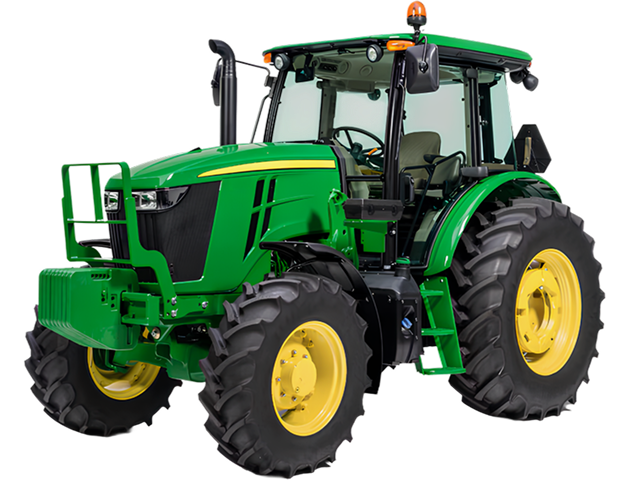
John Deere 3650 is a wheeled farm tractor built in the United States and produced from 1986 to 1993. It is powered by a diesel engine rated at 84 kW (114.4 hp), giving the model the output needed for agricultural field work and implement operation.
The tractor uses a power synchronized transmission and a closed-center constant pressure hydraulic system with position and draft control. Its PTO is configured at 540/1000 rpm and delivers 77 kW (104.7 hp), while the rear hitch is Category III/II and provides a maximum lift capacity behind lift points of 5,270 kg (11,620 lb). It also has 3 rear selective control valves and available flow at a single rear SCV of 44 L/min (11.6 gpm).
Year
1986, 1987, 1988, 1989, 1990, 1991, 1992, 1993
Country of manufacturing
United States
General specifications
Dimensions
Width
Height
Length
Weight
2,260 mm
~89 in
2,880 mm
~113.4 in
4,890 mm
~192.5 in
6,128 kg
~13,509.9 lb
Tire or Track Type
Wheels
Engine Power
114.4 hp
Additional specifications
Engine type
Diesel
Displacement
359 cu(in)
Tires front
16.9-24
Maximum PTO power
104.72 hp
Rated PTO power
104.72 hp
Speeds
540/1,000 rpm
Transmission type
Power synchronized
Rear hitch category (SAE designation)
Category III/II
Base machine weight
6,128 kg
Maximum lift capacity behind lift points
5,270 kg
Fuel tank
170.3 L
Hydraulic system type
Closed-center constant pressure
Pump rated output
44 L/min
Available flow at a single rear SCV
44 L/min
Number of rear selective control valves
3
SCV control
Position and draft control
Tires rear
520/70-38
John Deere 3650 Row Crop Tractors Listings
Looking for John Deere 3650 Row Crop Tractors?
See similar listingsCompare John Deere 3650 Row Crop Tractor to other row crop tractors
Not sure which equipment to choose? Use our comparison tool to easily compare equipment side by side based on key features.
John Deere 3650 Row Crop Tractor
114.4 hp
6128 kg
4890 mm × 2260 mm × 2880 mm
Add model
Add model
No reviews yet
Be the first to review this model.
Leave a review. Get a promo code
Leave a review and receive a promo code for your next purchase.
No questions yet
Be the first to ask a question about this model and help other buyers learn more.
Heavy equipment insights from JumboBee
Got Questions?
Our FAQ section covers everything from shipping and listing to buying with confidence.
Can't find what you're looking for?
Sign up and talk to an expert.
Most popular
What is the average price of a John Deere 3650?
No confirmed market price is supplied for the John Deere 3650. Check current listings and compare machine condition, location, and configuration.
What are the key advantages of the John Deere 3650?
Listed features include 85.3 kW (114.4 hp) engine power, a closed-center constant-pressure hydraulic system, 44 L/min (11.6 gpm) pump output, three rear selective control valves, and a maximum lift capacity of 5,270 kg (11,618 lb).
What type of engine does the 3650 use?
The 3650 uses a Diesel engine with a displacement of 359 cu in.
How much horsepower does the 3650 have?
The John Deere 3650 has engine power of 85.3 kW (114.4 hp). Rated and maximum PTO power are 78.1 kW (104.7 hp).
What fuel does the John Deere 3650 use?
The John Deere 3650 uses Diesel fuel. Its fuel tank capacity is 170.3 L (45 US gal).
What jobs is this Tractors best suited for?
The supplied specifications do not confirm particular jobs. Its listed capabilities include a Category III/II rear hitch, 5,270 kg (11,618 lb) maximum lift capacity, three rear selective control valves, and 540/1000 rpm speeds.
What is the expected lifespan of the 3650?
The supplied data does not provide an expected service life for the 3650. For a used tractor, assess maintenance records, engine condition, hydraulic operation, transmission performance, PTO function, hitch operation, and tire condition.
What should a buyer check when purchasing a used Tractors?
Check service records, Diesel engine operation, transmission shifting, hydraulic function, rear selective control valves, PTO operation, rear hitch lift, tire condition, fluid leaks, and overall machine condition. Verify that the configuration matches the intended implement and hydraulic requirements.