John Deere 30P Compact & Mini (Tracked) Excavators
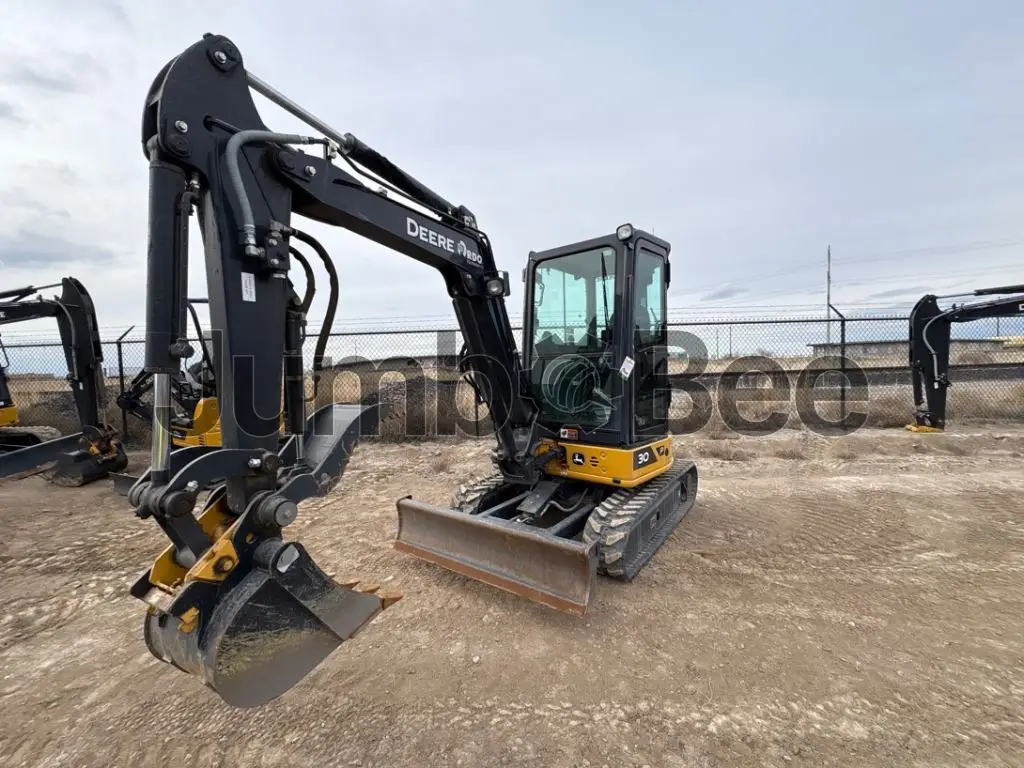
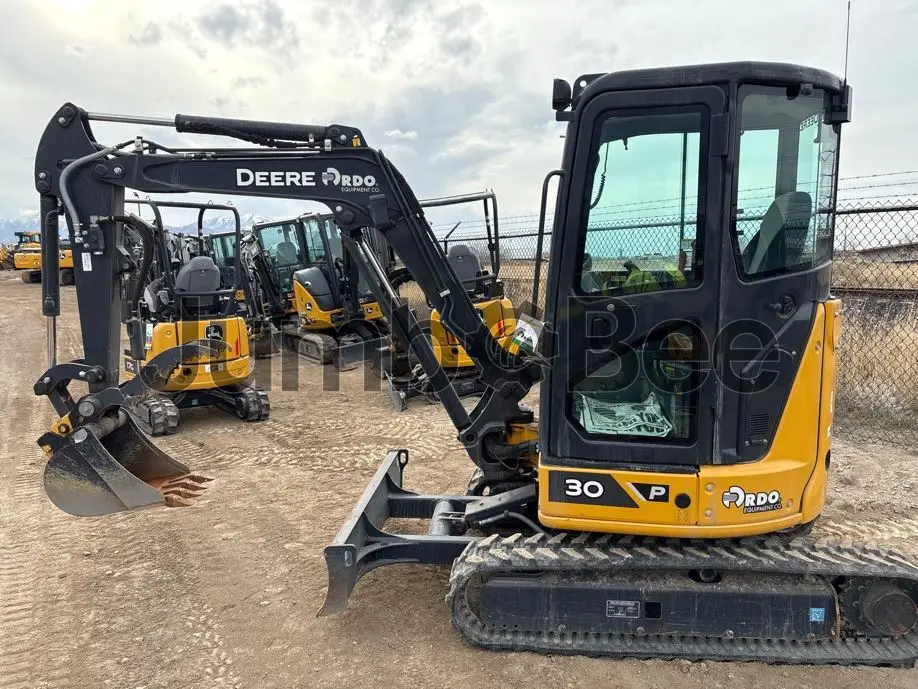
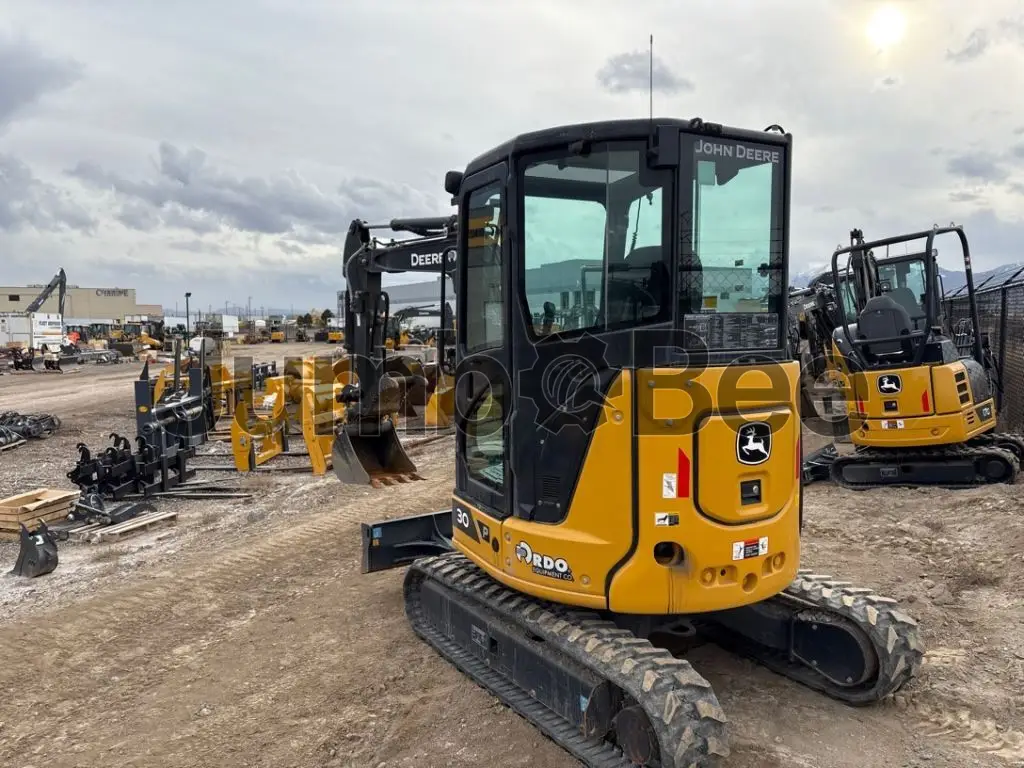
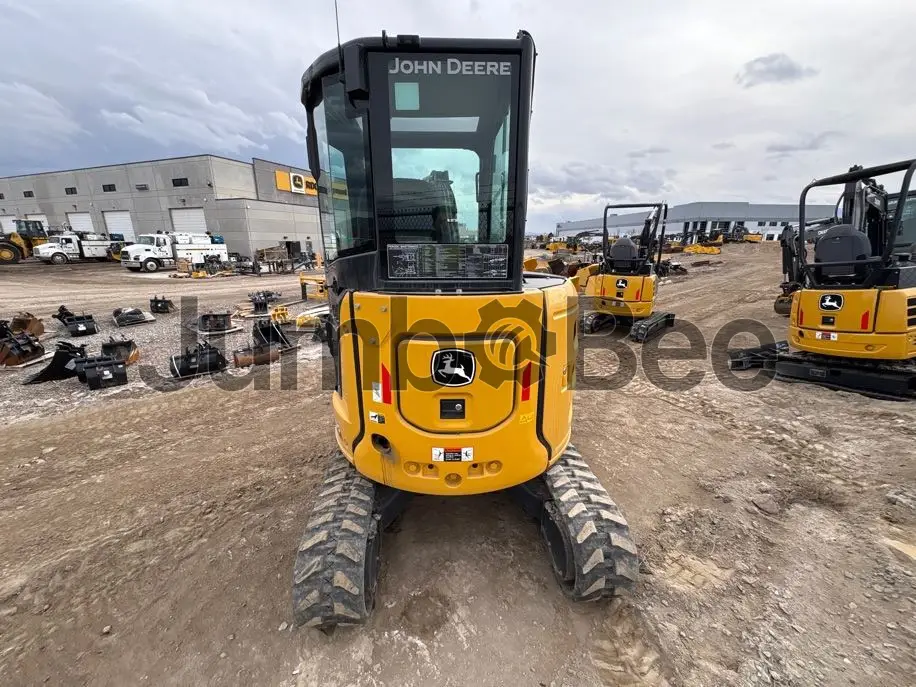
John Deere 30P




5+
sold in last yearGeneral overview
John Deere 30P is an excavator designed for general digging and site work on construction projects. It is powered by a 17 kW (23 hp) engine and has an operating weight of 3,275 kg (7,220 lb), giving it a manageable size for controlled work in confined areas.
The machine combines a 1,550 mm (5 ft 1 in) width with a tail swing radius of 775 mm (31 in), which helps define its footprint around structures and narrow work areas. Its working range includes a maximum digging depth of 2,790 mm (9 ft 2 in), a maximum reach at ground level of 4,890 mm (16 ft 1 in), a maximum cutting height of 4,420 mm (14 ft 6 in), and a maximum loading height of 3,030 mm (9 ft 11 in). Maximum rated flow is 76 L/min (20.1 gpm), and ground pressure is 30 kPa (4.35 psi).
Year
2024
Country of manufacturing
United States
General specifications
Dimensions
Length
Height
Width
4,450 mm
~175.2 in
2,480 mm
~97.6 in
1,550 mm
~61 in
Engine Power
23 hp
Fuel tank
42 L
Width
1,550 mm
Operating Weight
3,275 kg
Maximum Rated Flow
76 L/min
Hydraulic Capacity
43 L
Maximum Travel Speed - High
4 km/h
Hydraulic System - Including Tank
43 L
Tail Swing Radius
775 mm
Maximum Digging Depth
2,790 mm
Maximum Reach at Ground Level
4,890 mm
Maximum Cutting Height
4,420 mm
Maximum Loading Height
3,030 mm
Additional specifications
Rated power
10.8 kW
Reference Bucket Capacity
0.04 cu(m)
Ground Pressure
30 kPa
John Deere 30P Compact & Mini (Tracked) Excavators Listings
Looking for John Deere 30P Compact & Mini (Tracked) Excavators?
See similar listingsCompare John Deere 30P Compact & Mini (Tracked) Excavator to other compact & mini (tracked) excavators
Not sure which equipment to choose? Use our comparison tool to easily compare equipment side by side based on key features.
John Deere 30P Compact & Mini (Tracked) Excavator
23 hp
4450 mm × 1550 mm × 2480 mm
Add model
Add model
No reviews yet
Be the first to review this model.
Leave a review. Get a promo code
Leave a review and receive a promo code for your next purchase.
No questions yet
Be the first to ask a question about this model and help other buyers learn more.
Heavy equipment insights from JumboBee
Got Questions?
Our FAQ section covers everything from shipping and listing to buying with confidence.
Can't find what you're looking for?
Sign up and talk to an expert.
Most popular
What is the average price of a John Deere 30P?
No confirmed market price is supplied for the John Deere 30P. Check current listings and compare machine condition, location, and configuration.
What are the key advantages of the John Deere 30P?
The supplied specifications show a compact 1,550 mm width, 775 mm tail swing radius, and 3,275 kg operating weight. It also has a maximum digging depth of 2,790 mm, ground-level reach of 4,890 mm, and hydraulic flow of 76 L/min.
What type of engine does the 30P use?
The supplied data confirms engine output but does not identify the engine type or model.
How much horsepower does the 30P have?
The John Deere 30P has 17.2 kW (23 hp) of engine power.
What fuel does the John Deere 30P use?
The supplied data does not confirm the fuel type for the John Deere 30P.
What jobs is this Excavators best suited for?
The supplied specifications indicate suitability for excavation and loading work where a compact machine is useful. Its listed digging depth, reach, cutting height, and loading height can help buyers assess fit for site-specific trenching, digging, and material-handling tasks.
What is the expected lifespan of the 30P?
The supplied data does not provide an expected service life for the John Deere 30P. Inspect maintenance records, hydraulic-system condition, engine operation, undercarriage wear, and structural damage when assessing a machine.
What should a buyer check when purchasing a used Excavators?
Check maintenance records, engine starting and operation, hydraulic leaks and response, hose condition, attachment function, undercarriage wear, boom and arm play, structural cracks, controls, and signs of repairs or damage. Confirm the machine’s configuration matches the intended work.