


 Shipping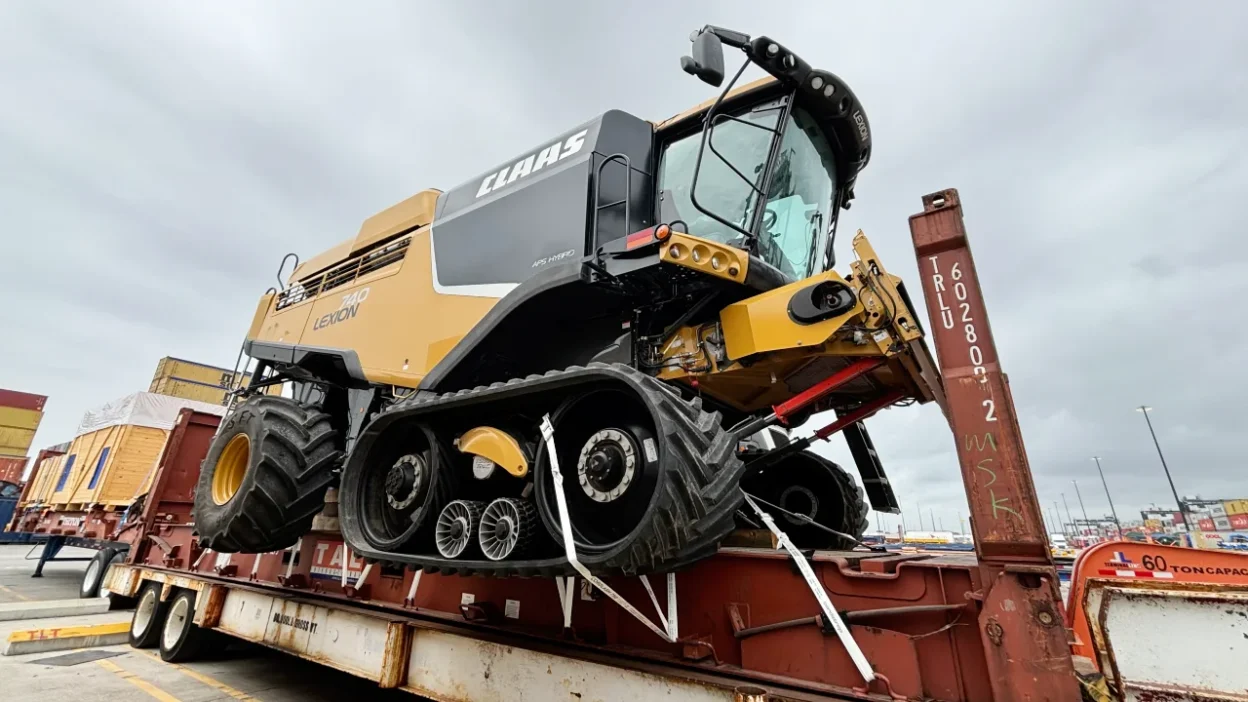
Buying a 20-ton excavator or a high-capacity combine harvester is a massive financial commitment. You spend weeks negotiating the price, verifying the condition, and arranging financing. Finally, the deal is done. The machine is on a vessel headed for your port. You are ready to put that asset to work.
Then, everything stops.
The machine arrives, but it doesn’t clear the gate. It sits in a holding area. Days turn into weeks. Storage fees (demurrage) start accumulating at hundreds of dollars per day. The customs authority is demanding documents you didn’t know existed, or worse, they found a clump of dried soil in the wheel well and are threatening to send the entire shipment back to the origin country.
This is where customs clearance for heavy equipment fails. It rarely fails because a form was filled out with blue ink instead of black. It fails because the buyer and seller treated customs as a last-minute formality rather than a core part of the business transaction.
This guide explains the business reality of moving heavy machinery across borders. We will not bore you with lists of form numbers or HS codes. Instead, we will explore the financial risks, the common deal-breakers, and how to structure your purchase or sale to ensure the equipment moves as smoothly as the money did.
Why Customs Clearance Is a Critical Risk in Heavy Equipment Trade
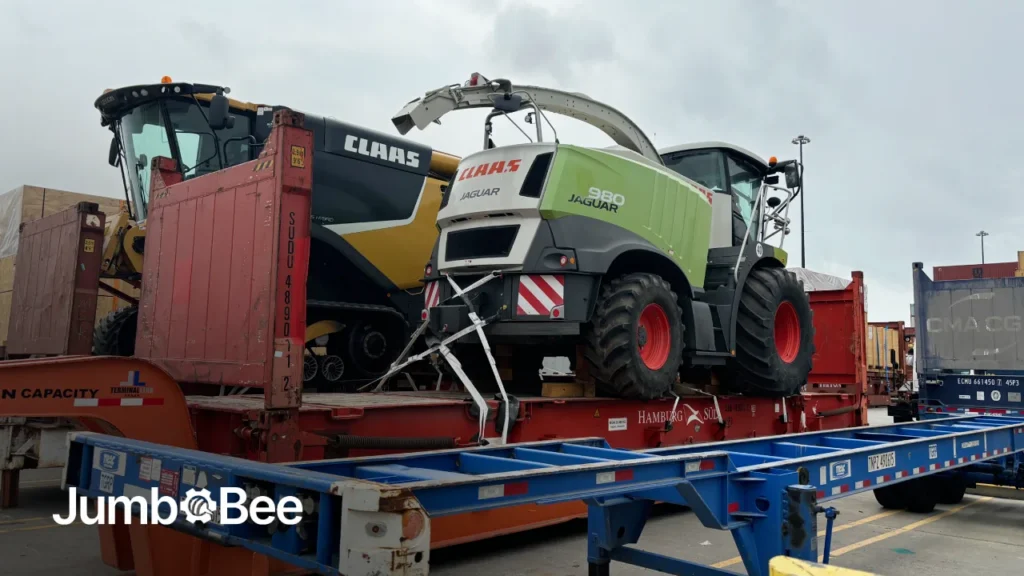
Many first-time importers treat heavy machinery like general cargo. They assume that if they can ship a container of electronics or auto parts, they can ship a used tractor just as easily. This is a dangerous assumption.
Heavy equipment is treated differently by customs authorities worldwide for three specific reasons:
- Biosecurity risks: Used agricultural and construction equipment works in the dirt. Soil, seeds, and insects can hide in the tracks, tires, and engine compartments. Countries protect their own agriculture aggressively. If you are importing machinery to the USA, Australia, or New Zealand, a single ounce of foreign soil can cause the cargo to be rejected.
- High value and taxation: Heavy equipment represents significant tax revenue. Customs officers scrutinize the declared value to ensure you aren’t under-invoicing to save on duties. A discrepancy in value doesn’t just mean a fine; it means an audit and a hold on your asset.
- Safety and emissions standards: A tractor built for the Brazilian market may not meet EPA emissions standards in the United States or CE safety standards in Europe. If the equipment is non-compliant, it cannot clear customs, regardless of how perfect your paperwork is.
When general cargo gets delayed, you lose inventory time. When heavy equipment gets delayed, the financial damage is exponential. You face:
- Project stoppage: A construction site waiting for a dozer cannot proceed.
- Contract penalties: If you are a dealer who promised delivery by a certain date, you are now in breach of contract.
- Cash flow freeze: You have paid for the machine, but you cannot refinance it or put it to work to generate revenue.
Importing vs Exporting Heavy Equipment: Different Risks, Different Mistakes
To understand where things go wrong, you must look at the transaction from your specific side of the table. Buyers and sellers face different exposures.
Importing Machinery
If you are the buyer, you generally carry the burden of compliance. In most standard international trade terms (Incoterms), once the equipment arrives at the destination port, the seller’s job is done. The headache is now yours.
Common buyer blind spots:
- Assuming door-to-door includes everything: You might hire a logistics company for a door-to-door service. However, logistics providers cannot legally act as the Importer of Record for you. You are still legally responsible for the declarations made to customs.
- Ignoring destination rules: A buyer in Texas might find a great deal on a harvester in France. They buy it, ship it, and then realize upon arrival that the engine lacks the required EPA sticker. The machine is seized. The buyer loses the purchase price and pays for the destruction or re-export of the machine.
- Underestimating cash requirements: Duties and taxes must often be paid before the goods are released. If you are importing machinery worth $300,000 and the VAT/Duty bill is $60,000, you need that cash liquid immediately. Customs will not offer you a payment plan.
Exporting Heavy Equipment
Sellers often believe their risk ends when the machine leaves their yard. This is incorrect. Exporting heavy equipment requires precise documentation that travels with the machine. If the documents provided by the seller are inaccurate, the buyer cannot clear the goods.
Common seller risks:
- Liability for return: If you ship a dirty machine to a country with strict biosecurity laws, the destination country may order the equipment to be shipped back to the origin. Who pays for that return freight? The buyer will legally pursue the seller for negligence.
- Export controls: In the United States, some types of heavy machinery classified as dual-use technology under the Export Administration Regulations (EAR) require an export license before they can be shipped to certain countries. Sellers should check the Commerce Control List (CCL) before exporting any specialized equipment. Exporting machinery without checking these lists can result in federal investigations and massive fines for the seller.
- Payment disputes: If the equipment gets stuck at customs because the seller provided a vague Commercial Invoice, the buyer may stop payment or trigger a chargeback if the deal was done via letter of credit.
Most Common Customs Clearance Problems in Heavy Equipment Deals
Let’s look at the specific reasons why equipment sits at the port accumulating fees. These are not theoretical; they happen every day in global trade.
1. Cleanliness and Contamination
This is the number one killer of deals involving used agricultural and construction equipment.
- Scenario: You buy a used excavator from a region with known invasive weed species or soil-borne pests. The seller pressure-washes the exterior but forgets to clean behind the counterweight or inside the air filter housing.
- Result: The customs inspector at the destination finds dry mud. The entire shipment is flagged. In strict jurisdictions like Australia, lightly contaminated machinery may be treated or cleaned at an approved facility at the importer’s expense. However, heavily contaminated shipments can be ordered for re-export – also at the importer’s cost.
- Cost: You pay freight to the destination, freight back to the origin, and lose the time.
2. Inconsistent Documentation
Customs clearance is a matching game. The information on the Commercial Invoice must match the Packing List, which must match the Bill of Lading, which must match the physical plate on the machine.
- Scenario: The seller lists the machine as a 2018 Model on the invoice because that’s when they bought it. The serial plate on the machine indicates a 2017 Manufacture Date.
- Result: Customs flags the discrepancy. They suspect fraud or misrepresentation. The cargo is held for physical inspection.
- Cost: Inspection fees (hundreds of dollars), delay fees, and potential fines for misdeclaration.
3. Valuation Disputes
Customs duties are a percentage of the value of the goods. Authorities have databases of historical prices for heavy equipment.
- Scenario: A buyer purchases a wheel loader for $50,000. It is a fixer-upper and usually sells for $100,000. The invoice says $50,000.
- Result: Customs officers reject the transaction value because it looks too low compared to their data. They reassess the value at $100,000 and demand double the duties.
- Fix: This could have been avoided if the buyer had photos and a condition report proving why the machine was cheap (e.g., blown engine, missing bucket) ready to present to customs.
4. Regulatory Compliance (EPA/DOT/CE)
This is common when importing machinery to USA or the European Union.
- Scenario: A US buyer imports a crane from Japan. The crane is in great condition. However, the engine does not have an EPA certification label because it was built for the domestic Japanese market.
- Result: The equipment is inadmissible. It cannot enter the commerce of the United States. It must be exported or destroyed. There is no fix for this at the port.
Who Is Actually Responsible?
In the heat of a negotiation, buyers and sellers often gloss over who handles what. We’ll work it out is not a strategy.
Buyer Responsibilities
Unless you are buying under DDP (Delivered Duty Paid) terms—which is rare in heavy equipment—the buyer is the Importer of Record.
- Verify admissibility: You must check if the machine is allowed into your country before you bid or buy.
- Pay duties and taxes: You are liable for all government fees.
- Provide information: You must provide your tax ID, power of attorney to the customs broker, and details about the intended use of the machinery.
Seller Responsibilities
The seller must enable the export and provide the proof the buyer needs.
- Clean the machine: The seller is responsible for ensuring the machine meets the cleanliness standards of the destination before it gets loaded into a container or onto a RoRo vessel.
- Accurate descriptions: The seller must provide a Commercial Invoice that details the year, make, model, serial number, and accurate value.
- Export filing: In many countries, the seller must file an export declaration with their local customs authority to legally allow the goods to leave.
Role of Logistics and Customs Partners
Freight forwarders and customs brokers are executors, not magicians.
- What they do: They submit the information you give them to the government.
- What they don’t do: They do not verify if the serial number on the invoice matches the metal plate on the tractor. They do not wash the tractor for you.
- Risk: If you give your broker bad data, they will file a bad entry. You, not the broker, are liable for the penalties.
How Customs Clearance Fails at the Deal Stage (Not at the Border)
Most people think customs clearance happens when the ship arrives. In reality, the success or failure of clearance is determined when the buyer and seller sign the contract.
If your purchase agreement is vague, your clearance will be difficult.
Example of a deal-stage failure:
A buyer and seller agree on a price for a bulldozer. They shake hands. The seller ships it.
- Problem: The buyer didn’t ask if the seller had the original certificate of origin.
- Clearance issue: The destination country has a trade agreement that allows 0% duty for equipment made in the USA. Without the certificate, the buyer cannot claim the benefit.
- Financial hit: The buyer pays 25% duty instead of 0%. That is a $50,000 loss on a $200,000 machine, purely because the document wasn’t requested during the negotiation.
How to fix this:
Discussions about customs clearance for heavy equipment must happen alongside discussions about price. Questions like Do you have the EPA sticker? or Will you guarantee the cleaning meets Australian standards? are just as important as Does the engine run?
How to Simplify Customs Clearance Before the Equipment Ships
You want a boring customs clearance experience. Boring is good. Boring means no phone calls, no surprise fees, and on-time delivery. Here is how to achieve that.
1. Build a Clearance Pack Before Payment
Do not ship the machine until you have digital copies of these documents in hand:
- Commercial invoice: Must list buyer, seller, full equipment description, serial numbers, and value.
- Packing list: Dimensions and weights (crucial for heavy machinery).
- Bill of sale: Proof of transfer of ownership.
- Photos of the machine: specifically of the serial plate (VIN) and the engine emission label.
2. Verify the HS Code Early
Every product has a Harmonized System (HS) code. This code determines the duty rate.
- Mistake: Letting the broker guess the code when the ship arrives.
- Strategy: Buyer and Seller should agree on the description of the goods. Is it a Tractor for agricultural use or a Tractor for semi-trailers? These have different codes and different duty rates. Clarify the function of the machine so the correct code is applied.
3. The White Glove Cleaning Clause
If you are exporting heavy equipment, include a cleaning clause in your deal. The seller should guarantee the equipment is washed and free of soil. The buyer should demand photos of the cleaned undercarriage before authorizing shipment. This simple step prevents the most common reason for rejection.
How Marketplaces Change the Customs Clearance Dynamic
In the old world of heavy equipment trading, you were on your own. You found a seller on a classified site, sent money, and hoped for the best. Modern marketplaces like JumboBee have shifted this dynamic by integrating logistics and compliance visibility into the platform.
Transparency at the Listing Level
On a specialized marketplace, listings are structured to provide the data customs brokers need. Fields for Year, Make, Model, and Serial Number are standard. This reduces the risk of mystery machines arriving at the border with no identity.
Cross-Border Readiness
Platforms that serve a global audience understand that importing machinery is complex. They often provide indicators or verification steps to ensure sellers are legitimate. When a seller is verified, the commercial documents they produce are more likely to be accepted by customs authorities without suspicion of fraud.
Reducing Friction Between Buyer, Seller, and Logistics
The biggest cause of delay is communication lag. The broker asks the buyer for a document; the buyer emails the seller; the seller takes three days to reply.
By using a platform where communication is centralized, or where logistics services are integrated, this triangle of communication tightens. Information flows faster, allowing entries to be filed before the vessel even docks.
Customs Clearance Is Not the Same for Every Market
A common mistake is assuming that because you successfully imported a tractor to Nigeria, the same process applies to importing machinery to USA.
United States (Strict on Security and Emissions)
The US Customs and Border Protection (CBP) coordinates with numerous partner agencies at the border. For machinery, the EPA (emissions) and DOT (road safety) are the heavy hitters. You must file specific forms (EPA Form 3520-21 for heavy engines) declaring compliance.
European Union (Strict on Safety and VAT)
The EU focuses heavily on the CE Mark (Conformity Européenne). If you import a machine and place it on the EU market for resale or commercial operation, it must meet CE marking requirements. Note that used machinery imported strictly for your own continued use may face different obligations, but you should verify this with a compliance specialist before assuming any exemption applies. VAT is collected at the border, which is a significant upfront cash outlay – typically ranging from 17% to 27% depending on the EU member state, with most major markets sitting around 20–25%.
Emerging Markets (Strict on Valuation and Age)
Many countries in Africa, Asia, and South America have restrictions on the age of equipment. For example, a country might ban the import of machinery older than 10 years. They also scrutinize valuation heavily to prevent capital flight or tax evasion.
When Customs Issues Become Financial Problems
Let’s calculate the true cost of a customs delay.
Imagine you bought a used excavator for $100,000.
You budgeted $5,000 for shipping and $2,000 for customs fees.
Scenario: The machine arrives, but the invoice is missing the serial number. Customs puts a hold on the container.
- Day 1-5: The shipping line gives you 5 free days to pick up the cargo. You are safe.
- Day 6: You are still chasing the seller for a corrected invoice. Demurrage (storage) charges begin. For a flat rack or open-top container (common for heavy equipment), demurrage can reach $300 or more per day, depending on the carrier and port.
- Day 15: You finally get the document. The machine has been sitting for 10 chargeable days.
- Cost: 10 days x $300 = $3,000.
- Inspection fee: Because the documentation was bad, customs ordered an X-ray or physical check.
- Cost: $600.
Total hidden cost: $3,600.
You just increased your acquisition cost by 3.6% because of a piece of paper. This eats directly into your resale margin or your project budget.
If the machine is rejected for soil contamination, the costs can skyrocket to $20,000+ for return shipping.
Conclusion
Customs clearance for heavy equipment is not just a bureaucratic hurdle; it is a financial gatekeeper. The difference between a profitable deal and a logistical nightmare often comes down to preparation.
Buyers who treat customs as an afterthought pay the price in delays and demurrage. Sellers who ignore export compliance risk their reputation and future sales.
The secret to success is not memorizing the rulebook. It is treating the logistics and compliance data with the same importance as the machine itself.
- Verify the specs before you buy.
- Clarify the cleaning standards.
- Ensure the paperwork matches the metal.
By shifting your focus from clearing the box to structuring the deal, you remove the friction from global trade.
Ready to explore a marketplace that understands global equipment trade?
Browse thousands of verified listings on JumboBee. Whether you are looking for farm tractors or construction excavators, our platform is designed to connect buyers and sellers globally, offering transparency that helps you trade with confidence.


Be the first to leave a comment
There are no replies to this post yet. Share your thoughts and help start the conversation.