


 Selling
Pricing machinery is the most critical decision in the resale process. Set the price too high, and your capital sits rusting in the yard while the market fluctuates. Set it too low, and you leave thousands of dollars on the table — money that should be going back into your business.
For fleet managers, independent contractors, and dealers, accurate pricing is not a guessing game. It is a calculated strategy. It requires understanding depreciation curves, current market demand, and the physical condition of the iron.
This guide explains how to appraise and price used heavy equipment to achieve the highest return on investment (ROI). You will learn how to find the balance between a fast sale and a high margin, how to build trust with transparency, and how to use professional appraisal methods to sell smarter — whether you are selling to a neighbor or an international buyer on JumboBee.
Why Accurate Heavy Equipment Appraisal Matters
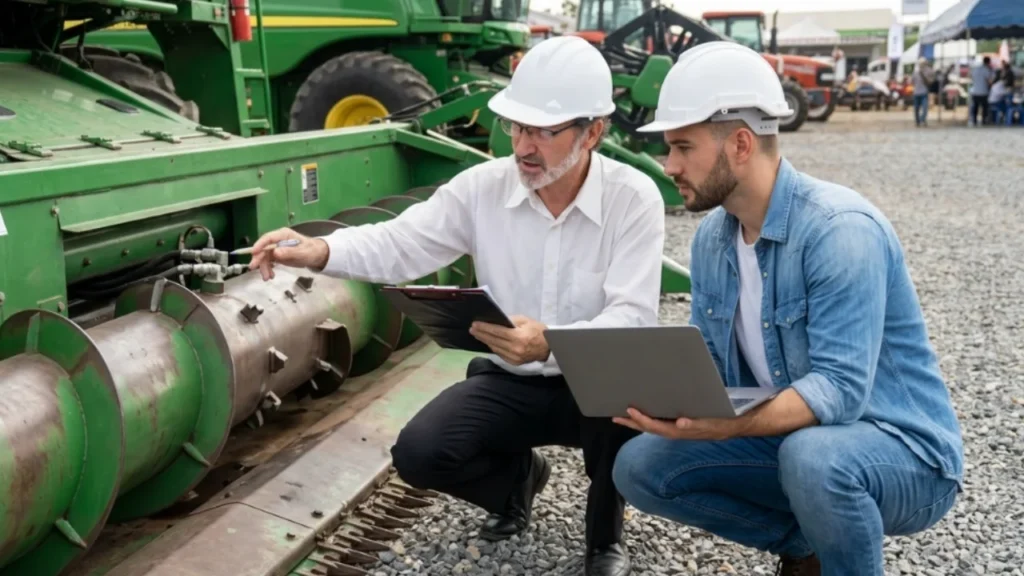
Most sellers look at a listing website, see a similar machine, and copy the price. This is a mistake. Listing prices are often wishful thinking, not the actual selling price.
Accurate heavy equipment appraisal connects your asset to reality. It protects your bottom line in three ways:
- Speed of capital recovery: Every day a machine sits unsold, it costs you money in insurance, storage, and opportunity cost. Correct pricing moves inventory.
- Buyer trust: Sophisticated buyers and reliable platforms like JumboBee verify value. If your price is inflated without justification, buyers assume you are unreasonable or hiding something.
- Negotiation power: When you know exactly why your machine is worth $150,000, you can defend that number with data. If you guessed the number, you will crumble when a buyer offers $120,000.
Common Pricing Mistakes to Avoid
- Emotional pricing: Valuing the machine based on what you paid for it five years ago, rather than what the market pays today.
- Ignoring depreciation: Failing to account for high hours or severe working conditions.
- Local tunnel vision: Only looking at local prices when the real demand might be in another country where values are higher.
What Is Heavy Equipment Appraisal?
It is the process of determining the Fair Market Value of machinery based on data, not intuition. It considers physical condition, operating hours, maintenance history, brand reputation, and current market supply.
There are three main tiers of heavy equipment appraisal:
| Type | Description | Best For |
|---|---|---|
| In-house appraisal | You estimate value using market data, inspection checklists, and depreciation calculators. | Routine fleet management and selling on marketplaces. |
| Dealer appraisal | A dealership evaluates the machine, usually for a trade-in. Prices may be lower (wholesale). | Quick disposal or trading up for new models. |
| Certified third-party appraisal | A licensed appraiser provides a legal document stating the value. | Bank loans, insurance claims, or business liquidation. |
Step 1 – Evaluate Core Value of Your Machine
Before you look at the market, you must look at the machine. Objectivity is key. You cannot price a machine based on its best day; you must price it based on its current state.
How to Value Used Equipment Objectively
Start by gathering the hard data. Create a spec sheet for your machine that includes:
- Make, Model, and Year: A 2018 CAT 320 GC has a different value baseline than a 2018 CAT 320.
- Operating Hours: This is the odometer of heavy iron. Low hours command a premium.
- Configuration: Boom length, bucket capacity, enclosed cab vs. open canopy, auxiliary hydraulics.
- Serial Number: Use this to verify the exact year of manufacture and origin.
Rate Physical Condition
Be honest. Buyers will send inspectors (services available on JumboBee) to verify this anyway.
- Engine & powertrain: Does it start cold? Is there blow-by? Any smoke?
- Hydraulics: Are cycle times fast? Are cylinders leaking?
- Undercarriage: This is critical for tracked machines. An excavator with 80% undercarriage life remaining is worth significantly more than one with 20%. Replacing an undercarriage can cost $15,000 to $30,000. Deduct this cost if yours is worn out.
- Tires: For wheel loaders and graders, tires are a major expense. Note the tread percentage and cuts.
Verify Documentation
Paperwork equals profit. A machine with a full service history log proves it was maintained. This reduces risk for the buyer, allowing you to ask for a higher price.
- Service logs (oil changes, filter replacements).
- Major repair invoices (engine rebuilds, pump replacements).
- Proof of ownership (no liens).
Consider Brand and Model Liquidity
Not all yellow iron is created equal. Brand perception drives resale value. Tier 1 brands (Caterpillar, Komatsu, John Deere, Volvo) generally hold value better and sell faster because parts and service are available globally.
Liquidity factor:
- High liquidity: A 20-ton excavator or a standard backhoe loader. High demand, sells quickly.
- Low liquidity: Specialized forestry equipment or a massive mining dump truck. Fewer buyers, longer sales cycle.
If you are selling a niche brand or specialized machine, you may need to price it more aggressively or wait longer for the right buyer.
Step 2 – Calculate Depreciation and Market Adjustment
Once you understand the machine’s condition, you apply math. Heavy equipment does not depreciate in a straight line. It drops sharply initially and then levels off.
Depreciation Formulas for Used Heavy Equipment
A standard rule of thumb for construction equipment is that it loses 20% to 40% of its value in the first year, and then 5% to 10% annually after that. However, usage (hours) impacts this more than age.
Simple valuation calculation example:
Let’s say you bought a brand new excavator for $200,000.
- Year 1 drop (20%): Value becomes $160,000.
- Year 2 drop (10%): Value becomes $144,000.
- Year 3 drop (10%): Value becomes $129,600.
Hour Adjustment
Standard usage is often considered 1,000 to 1,200 hours per year.
- If your 3-year-old machine has 5,000 hours (heavy use), reduce the value by an additional 10–15%.
- If it has only 1,500 hours (light use), you can add a premium of 10–15%.
Environmental Factors
Did the machine work in a corrosive environment (fertilizer plant, salt mine) or a rocky quarry? Accelerate depreciation for harsh environments due to structural stress.
Analyze Market Data and Current Trends
Your calculation gives you a baseline. The market tells you the reality.
Check Comparable Listings
Look at JumboBee, Machinery Trader, and auction results (Ritchie Bros). Find 5 machines that match your Make, Model, Year, and Hours.
- Asking price: What sellers want.
- Sold price: What buyers paid (auction results are great for this).
- Location: A dozer might be worth more in a developing region with infrastructure projects than in a saturated US market.
Global vs. Local Demand
This is where platforms like JumboBee help. Domestic demand in North America might be low for Tier 3 engine equipment because of emissions regulations. However, buyers in Africa, Southeast Asia, or South America often prefer non-DEF (Diesel Exhaust Fluid) engines because they are reliable and easier to maintain.
Scenario: You have a 2010 excavator. In the US, it is old technology. For an international buyer, it is gold standard reliable. You can price higher for the export market than the local market.
Step 3 – Set Right Price Range
You have your data. Now, pick the number.
Find Sweet Spot Between Speed and Profit
Pricing is a spectrum. Identify your goal before listing.
- Retail price (high ROI, slow sale):
- Strategy: Top of the market.
- Condition: Machine must be flawless, detailed, fully serviced, and ready to work.
- Target buyer: End-users who need a machine immediately and trust the quality.
- Range: 100% to 110% of Market Average.
- Fair market price (balanced):
- Strategy: Competitive.
- Condition: Good working order, normal wear and tear.
- Target buyer: Fleet managers and smart contractors.
- Range: 95% to 100% of Market Average.
- Liquidation/wholesale price (fast cash):
- Strategy: Undercut the competition.
- Condition: As-is, potential repairs needed.
- Target buyer: Dealers, flippers, bargain hunters.
- Range: 70% to 85% of Market Average.
List your equipment at 5% to 10% above your absolute minimum walk-away price. This gives you room to negotiate. If a buyer feels they talked you down, they are more likely to close the deal.
Adjust for Add-Ons and Reconditioning
Does spending money to fix the machine increase ROI?
- Cosmetics: Cleaning, degreasing, and painting rusty panels almost always pays off. It creates curb appeal.
- Glass and seats: Replacing cracked glass or a torn seat is cheap but makes a huge difference in first impressions.
- Major repairs: Be careful. Spending $15,000 on an engine rebuild might only add $10,000 to the final sale price. In that case, sell it as-is with a disclosed engine issue.
- Attachments: Buckets, breakers, and thumbs add significant value. List them as a package or offer them as negotiation sweeteners.
Step 4 – Present Your Equipment Like a Pro
The best price in the world does not matter if the listing looks terrible. High-quality presentation justifies a high price.
Optimize Listing Content for Buyers and Search Engines
When you list on JumboBee, you are competing for attention.
- Photos: Take 25–50 photos. Do not just photograph the outside. Photograph the engine bay, the VIN plate, the hour meter, the undercarriage, the hydraulic pumps, and the inside of the cab. Clear, bright photos build trust.
- Video: A video of the machine starting, running, and operating (moving the boom, driving forward/reverse) is the most powerful sales tool you have. It proves the machine works.
- Keywords: Write a clear description. Use terms buyers search for: “Used heavy equipment for sale,” “CAT 320 excavator,” “low hours,” “ready to work.”
Highlight ROI Factors in Your Description
Don’t just list specs. Explain the value. Buyers are looking for reasons to say yes, but they are terrified of buying a lemon. Your description needs to bridge the gap between “it runs” and “it will make you money immediately.”
Here are three examples of how to rewrite standard listings into high-ROI sales pitches:
Excavator
Lazy description: “2016 Komatsu PC210. 6,000 hours. Runs strong. Good undercarriage. Bucket included. $85,000.”
High-ROI description: “2016 Komatsu PC210LC-11. 6,000 verified hours. Undercarriage recently inspected at 80% remaining life (saves you $15k in immediate replacement costs). Plumbed for auxiliary hydraulics — ready for a hammer or thumb immediately. Includes a 42-inch heavy-duty digging bucket with new teeth. No leaks, tight pins, and bushings. This machine is turn-key and ready to dig tomorrow.”
Why this sells: It puts a dollar figure on the wear items (undercarriage) and confirms the machine’s versatility (auxiliary plumbing), justifying the price point.
Wheel Loader
Lazy description: “Cat 966M. 2017 model. A/C works. Tires okay. Call for info.”
High-ROI description: “2017 Caterpillar 966M. Premium L3 Michelin tires at 75% tread (no cuts/chunks). Cab is fully enclosed with functioning Climate Control and Air Ride heated seat — critical for operator retention during long shifts. The Loadrite scale system installed and calibrated, allowing you to bill accurately from day one. Full dealer service history available upon request.”
Why this sells: Tires on a loader are a massive expense; specifying the brand and condition removes buyer anxiety. Mentioning the scale system adds immediate business value (accurate billing).
Skid Steer / Compact Track Loader
Lazy description: “Bobcat T770. High flow. Good shape. Used on a farm.”
High-ROI description: “Bobcat T770 High Flow. One-owner machine, stored indoors (no sun-fading or cracked hoses). 2-Speed travel option for faster cycle times. Engine bay is clean with no blow-by; cold start video available. Comes with a smooth bucket, but the High Flow hydraulics make this unit capable of running a mulcher or planer immediately. Perfect for expanding your contracting services.”
Why this sells: “Stored indoors” implies the electrical system is healthy. Mentioning “High Flow” potential paints a picture of future revenue growth for the buyer.
When writing your description, use this translation guide to turn features into benefits:
| Instead of saying… | Say this to highlight ROI… |
|---|---|
| “New paint.” | “Professional respray and decal kit; ready to represent your company image on site.” |
| “Good maintenance.” | “100% Service intervals met; oil samples available to prove engine health.” |
| “Thumb included.” | “Hydraulic thumb installed; increases job site efficiency for debris handling by 40%.” |
| “Low hours.” | “Only 1,500 hours; thousands of revenue-generating hours remaining before major overhaul.” |
Always end your description with a call to verify. “We encourage third-party inspections. We have nothing to hide because this machine is priced right.” This confidence is the ultimate trust signal.
Step 5 – Negotiate and Close for Maximum Return
The listing brings the buyer; the negotiation brings the profit.
How to Defend Your Appraisal Value
When a buyer asks, “What’s your best price?” or offers a lowball number, do not get emotional. Refer back to your appraisal data.
- Buyer: “I’ll give you $80,000.” (Your price is $95,000).
- You: “I appreciate the offer. However, based on the low hours (3,000) and the fact that we just replaced the undercarriage ($12,000 value), the market value is firmly at $95,000. Comparable machines with worn tracks are selling for $85,000. This machine saves you immediate maintenance costs.”
Shift the conversation from Price to Value.
Timing Your Sale for Better ROI
Seasonality affects heavy equipment resale value.
- Construction equipment: Prices peak in spring and early summer when contractors are gearing up for the building season. Prices may drop in late winter.
- Agricultural equipment: Sell combine harvesters before the harvest season, not after.
- End of year: In the US, many buyers look to purchase equipment in December to take advantage of Section 179 tax deductions. This is a great time to hold firm on pricing.
Leverage Global Export Demand
If your local market is slow, look globally. A saturated market in the Midwest doesn’t mean there isn’t a shortage in Europe or Asia.
Using a global marketplace like JumboBee allows you to expose your inventory to buyers in over 100 countries. JumboBee handles the complexity of logistics, customs, and payment verification. This means you can sell to a buyer in Vietnam as easily as a buyer in Virginia, often at a better price point because you are tapping into higher demand.
Tools and Resources for Accurate Equipment Valuation
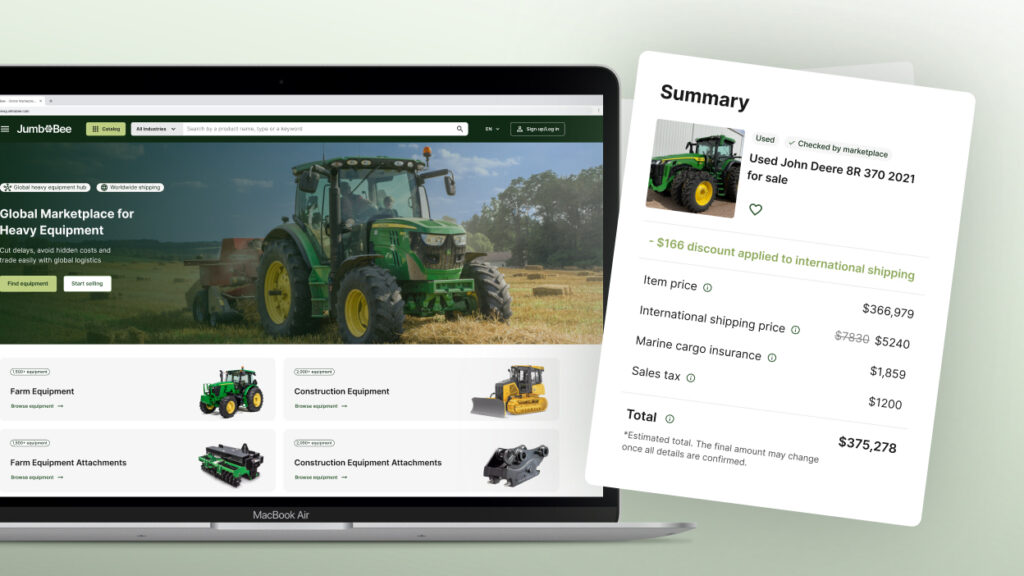
You do not have to do this alone. Use these resources to refine your numbers.
- Auction results: Check past auction data to see liquidation prices. Remember, these are wholesale numbers.
- Online marketplaces: Browse JumboBee to see active retail listings and gauge competition.
- OEM resources: CAT Used and other dealer sites show “Certified Used” pricing, which acts as the price ceiling (the highest possible price).
Final Thoughts – Turn Appraisal into Opportunity
Maximizing ROI on used heavy equipment is a formula:
Right Data + Market Insight + Smart Timing = Maximum Profit
Don’t guess. appraise. Clean up your machine, document its history, and list it where the buyers are. By moving beyond your local market and presenting your equipment with transparency, you turn a depreciating asset into a strong capital return.
Ready to see what your equipment is really worth on the global market?


Be the first to leave a comment
There are no replies to this post yet. Share your thoughts and help start the conversation.