


 Trends
Modern agriculture is no longer just about seeds and soil. Today’s largest farming operations run like global corporations — combining millions of acres of land, industrial-scale machinery fleets, international commodity trading, and data-driven production systems. The farmers at the top of this industry are not small-town growers who got lucky. They are calculated entrepreneurs who built systems, not just farms.
These individuals are among the most famous farmers and influential people in agriculture on the planet. Their decisions affect global food prices, supply chains, and the future of how the world eats. And almost universally, their success traces back to one critical factor: efficient, large-scale mechanization.
Without the right heavy equipment — tractors, combine harvesters, planters, grain handling systems — none of these operations could exist at the scale they do. Understanding what tools power the world’s biggest farms is just as important as understanding who owns them.
Who Is the Richest Farmer in the World in 2026
The richest farmer in the world in 2026 is Qin Yinglin, the founder and chairman of Muyuan Foods, with an estimated net worth of $19–22 billion. His fortune is built almost entirely on industrial-scale pork production, and his business dominates China’s agricultural sector — the largest pork market on Earth.
Muyuan operates automated, climate-controlled pig farms across China with an annual slaughter capacity exceeding 70 million hogs. The operation combines automated feeding systems, large-scale waste management infrastructure, and vertically integrated processing, making it one of the most capital-intensive farming businesses anywhere in the world. No other individual farming enterprise on this ranking matches its scale or its concentration in a single commodity.
What Makes a Farmer One of Richest in World
Wealth in agriculture does not happen by accident. It is built through very specific, repeatable strategies.
Land Ownership and Farm Scale
Controlling large land areas gives farmers a production base that is almost impossible to replicate quickly. Some of the operations on this list span hundreds of thousands of acres. At that scale, even a modest crop yield per acre generates enormous revenue.
For example, producing 150 bushels of corn per acre across 500,000 acres — at roughly $4.50 per bushel — generates over $337 million in a single harvest season.
Agribusiness Expansion
Most of the wealthiest farmers do not just grow crops. They process, package, and distribute them. Vertical integration — owning the supply chain from field to shelf — dramatically increases margins. Instead of selling raw grain, they sell flour, feed, packaged nuts, or processed pork products.
Technology and Farm Mechanization
This is where most people underestimate modern agriculture. The best farmers in the world operate machinery fleets worth tens of millions of dollars. A single John Deere 9R 490 tractor costs approximately $430,000–$460,000. A modern combine harvester like the John Deere S770 runs over $460,000. Large farms may operate dozens of these machines simultaneously during planting and harvest seasons.
Precision agriculture systems — GPS auto-steering, variable rate application, yield mapping — are now standard on competitive large-scale farms. These systems reduce input waste and increase output per acre.
Global Agricultural Markets
Farmers who export participate in international commodity markets where price premiums are often higher than domestic markets. Soybeans, pistachios, almonds, pork products, and livestock feed are all traded globally. Export access multiplies revenue potential significantly.
Top 10 Richest Farmers in World (2026 Ranking)
Net worth estimates below are based on publicly available business valuations, agricultural holdings, company financials, and reporting from sources including Forbes, Bloomberg, and public filings. Agricultural wealth often fluctuates with commodity prices and company performance.
| Rank | Farmer | Country | Primary Business | Estimated Net Worth |
|---|---|---|---|---|
| 1 | Qin Yinglin | China | Muyuan Foods — pork production | $19–22 billion |
| 2 | Stewart & Lynda Resnick | United States | The Wonderful Company — pistachios, almonds | $7–8 billion (combined) |
| 3 | Harry Stine | United States | Stine Seed Company — seed genetics | $5–6 billion |
| 4 | Liu Yonghao | China | New Hope Group — animal feed, livestock | $6–7 billion |
| 5 | Tony Perich | Australia | Leppington Pastoral Company — dairy | $3–4 billion |
| 6 | Ernesto Bertarelli | Switzerland/Global | Aquaculture & sustainable agriculture | $9–10 billion (ag component lower) |
| 7 | Colin & Dale Ramsey | United States | Large-scale grain farming | $2–3 billion |
| 8 | Glenn Tanner | Australia | S. Kidman & Co — beef cattle | $2–3 billion |
| 9 | Seán Quinn | Ireland | Agricultural land & livestock | $1–1.5 billion (ag assets) |
| 10 | Yuri Kosyuk | Ukraine | MHP — poultry production | $1.5–2 billion |
1. Qin Yinglin — China
Estimated net worth: $19–22 billion
Qin Yinglin is the founder and chairman of Muyuan Foods, one of the world’s largest pork production companies. Muyuan operates industrial-scale pig farming across China, with annual slaughter capacity reaching over 70 million hogs. China produces and consumes more pork than any other country on Earth, and Muyuan sits at the center of that supply chain. Qin’s operation uses automated feeding systems, climate-controlled housing, and large-scale waste management infrastructure. His is arguably the most capital-intensive farming business in the world.
2. Stewart and Lynda Resnick — United States
Estimated net worth: $7–8 billion (combined)
The Resnicks own The Wonderful Company, which controls over 180,000 acres of farmland in California. They are the world’s largest producers of pistachios and almonds, and also operate citrus groves, pomegranate orchards, and a wine operation. Their farms depend on large-scale irrigation infrastructure, mechanical harvesters, and orchard management equipment.
The pistachio and almond industries alone require specialized harvesting machines — shakers, sweepers, and pick-up units — that cost $150,000–$400,000 each. The Resnicks are among the most famous farmers in American agricultural history.
3. Harry Stine — United States
Estimated net worth: $5–6 billion
Harry Stine built his fortune not by growing crops but by developing them. His company, Stine Seed Company based in Iowa, is one of the most prolific developers of high-yield soybean and corn genetics in the world. Stine licenses seed technology to major corporations and operates large-scale seed production farms. He is one of the influential people in agriculture who changed what farmers plant before they even start their tractors. His operation remains privately held, which keeps most financial details out of public view.
4. Liu Yonghao — China
Estimated net worth: $6–7 billion
Liu Yonghao is the founder of New Hope Group, a Chinese agribusiness giant focused on animal feed production, livestock farming, and food processing. New Hope operates across Southeast Asia, with feed mills, poultry farms, and processing facilities spanning multiple countries. Liu started with a small livestock operation in Sichuan province in the 1980s and grew it into one of the largest agricultural conglomerates in Asia. He is widely recognized as one of the most influential people in agriculture in the Asia-Pacific region.
5. Tony Perich — Australia
Estimated net worth: $3–4 billion
Tony Perich and his family run Leppington Pastoral Company, one of Australia’s largest private farming enterprises. The Perich family controls over 10,000 acres of dairy farmland in New South Wales and has expanded into residential and commercial development on agricultural land. Their dairy operation is among the most productive in Australia, using automated milking systems and large feed management equipment. Australian agriculture is highly mechanized, and the Perich operation reflects that reality.
6. Ernesto Bertarelli — Switzerland/Global
Estimated net worth: $9–10 billion (agricultural holdings component estimated lower)
While Bertarelli’s wealth is primarily tied to biotechnology, a significant portion is invested in large-scale aquaculture and sustainable agriculture projects globally. His investments in modern food production systems make him one of the more forward-looking famous farmers in the European context, even if his public profile focuses more on ocean conservation and technology.
7. Colin and Dale Ramsey — United States
Estimated net worth: $2–3 billion
The Ramsey family operates one of the largest private grain farming operations in the United States, centered in the Midwest. Their farms span hundreds of thousands of acres, relying on fleets of high-horsepower tractors, air seeders, and combine harvesters to manage planting and harvest cycles. Grain farming at this scale requires precise logistics — coordinating machinery movement, grain cart operations, and elevator delivery schedules across multiple county-spanning properties.
8. Glenn Tanner — Australia
Estimated net worth: $2–3 billion
Glenn Tanner’s family controls S. Kidman & Co., once the largest private landholding in Australian history — covering an area slightly smaller than the United Kingdom. The operation focuses on beef cattle production across vast outback stations. Livestock management at this scale involves helicopters, motorbikes, and heavy-duty livestock handling equipment, plus large feedlot infrastructure. Cattle mustering across millions of acres is a logistical challenge that requires mechanized support at every level.
9. Seán Quinn — Ireland
Estimated net worth: Partial recovery ongoing; agricultural assets estimated at $1–1.5 billion
Quinn, once Ireland’s richest man, retains significant agricultural land and related business interests in Ireland and the UK. His farming operations focus on land management, livestock, and agricultural real estate. While his overall wealth profile has changed significantly due to past business collapses, his agricultural holdings remain substantial and represent a real farming business with active operations.
10. Yuri Kosyuk — Ukraine
Estimated net worth: $1.5–2 billion (pre-war valuations were higher)
Kosyuk is the founder of MHP (Myronivsky Hliboproduct), Ukraine’s largest poultry producer. MHP produces chicken on an industrial scale, operating massive poultry farms, grain cultivation (to feed the chickens), and food processing plants. Ukraine is one of the world’s top grain exporters, and MHP participates in that supply chain from field to freezer. Even amid the ongoing conflict that began in 2022, MHP has continued operations, reflecting how deeply embedded these agricultural systems are.
Famous Farmers Who Changed Agriculture
Not all of the most important names in farming are on a wealth ranking. Some of the most famous farmers in history built their influence through ideas rather than income.
Norman Borlaug developed high-yield, disease-resistant wheat varieties in the 1960s that are credited with saving over a billion lives during the Green Revolution. His work, documented extensively by the Food and Agriculture Organization of the United Nations, fundamentally changed global food production.
Joel Salatin of Polyface Farm in Virginia became one of the most vocal advocates for regenerative and pasture-based farming in the United States. His approach to rotational grazing and integrated livestock management has influenced thousands of small and mid-scale farms worldwide.
Gabe Brown of North Dakota built a diverse, regenerative farming system that eliminated synthetic inputs and dramatically improved soil health on his 5,000-acre operation. His results — documented in university research and USDA case studies — are now used to teach large-scale farmers how to rebuild degraded land.
Sepp Holzer of Austria turned steep mountain terrain into a productive permaculture farm that defied conventional farming logic. His methods, combining water management, companion planting, and animal integration, are studied in agricultural schools across Europe.
These figures are not the wealthiest, but they are among the most influential people in agriculture of the past century.
Influential People in Agriculture Today
The generation of agricultural leaders shaping 2026 and beyond operates at the intersection of farming and technology. Figures like John Deere’s precision agriculture development teams, startup founders building AI-powered crop monitoring platforms, and large-scale agricultural investors are redefining what it means to farm competitively.
Organizations like the USDA Economic Research Service track how farm consolidation, technology adoption, and global trade flows are reshaping the industry. Their data consistently shows that the best farmers in the world are those who invest in mechanization earliest and most strategically.
Modern agriculture is also increasingly shaped by climate adaptation. Drought-resistant crop genetics, water-efficient irrigation systems, and variable-rate fertilizer application are now standard considerations in any serious large-scale operation.
Role of Agricultural Equipment in Large-Scale Farming
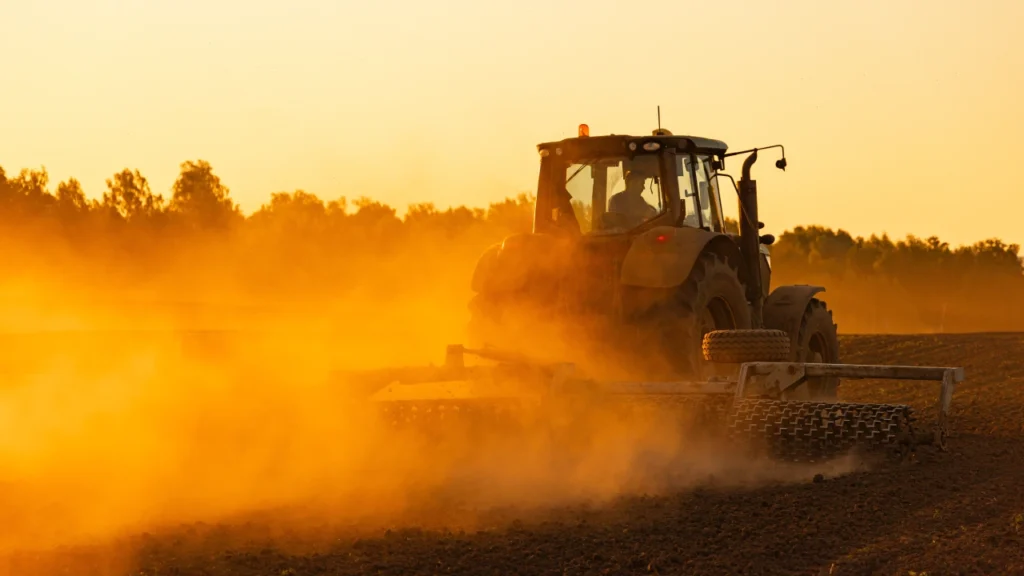
Here is where things get concrete. The most important capital asset on a large farm is not the land — it is the machinery fleet. Land produces nothing without the machines to prepare, plant, manage, and harvest it.
| Equipment Type | Primary Function | Typical Price Range (New) |
|---|---|---|
| High-horsepower tractor (300–500 hp) | Tillage, planting, grain cart | $300,000–$500,000+ |
| Combine harvester | Grain and oilseed harvesting | $450,000–$650,000+ |
| Air seeder / planter | Large-area seeding | $150,000–$400,000 |
| Self-propelled sprayer | Chemical and fertilizer application | $300,000–$500,000 |
| Grain cart | Harvest logistics | $80,000–$150,000 |
| Header / cutting platform | Crop intake for combine | $60,000–$200,000 |
A farm operating 50,000 acres of grain crops realistically needs 6–10 large tractors, 4–6 combines, multiple planters, and sprayers. Total machinery investment: easily $5–10 million, and that is for a mid-large operation. The farms run by people on this ranking often operate at 10–20 times that scale.
Used equipment markets are increasingly important for both expanding farms and cost-conscious operations. Platforms like JumboBee allow buyers to compare used heavy farm equipment from verified sellers across multiple countries — including machines like the John Deere 9R 440 or S770 combine at significantly reduced prices versus new.
How Modern Farmers Build Agricultural Wealth
Farm Mechanization and Equipment Investment
Every farm on this list operates at a scale impossible without heavy mechanization. Investing in the right equipment — and maintaining it properly — directly determines cost per acre and profitability per bushel.
Vertical Integration
The most profitable farms do not sell raw commodities. They process and sell finished products. Muyuan sells packaged pork. The Wonderful Company sells branded pistachios in retail stores. Vertical integration turns $4/bushel soybeans into $15/bottle soy sauce — same inputs, vastly different margins.
Global Trade and Export
Farmers who access international markets often receive better prices than domestic-only sellers. Brazilian soybean farmers, Australian beef producers, and Ukrainian grain exporters all participate in global commodity flows tracked by the World Bank.
Technology and Data-Driven Farming
GPS auto-steering reduces overlap waste in planting and spraying by 5–10%. Variable rate fertilizer application can cut input costs by $15–30 per acre. Yield mapping reveals which zones of a field are underperforming and why. Across 100,000 acres, these efficiencies add up to millions of dollars annually.
Future of Wealth in Agriculture
Several forces are reshaping who becomes wealthy in agriculture over the next decade.
Agricultural automation is moving fast. Autonomous tractors that operate without a driver are already in early commercial deployment. John Deere’s fully autonomous 8R tractor, announced in 2022 and now available in expanded markets, is one example of where the industry is heading.
Precision farming technology continues to reduce input waste. Drones that identify plant stress before it is visible to the human eye, satellite-based soil moisture mapping, and AI-powered yield prediction models are all tools that large farms are adopting in 2025–2026.
Sustainable agriculture is no longer optional for farms that export to European Union markets. EU regulations on pesticide use, carbon reporting, and deforestation supply chain tracing are directly affecting how large agricultural exporters operate globally.
Global food demand continues to grow. The FAO projects that global food production will need to increase by approximately 50% by 2050 to feed a growing population. Farmers who scale efficiently now are positioned to capture that growth.
Large-scale mechanization is the backbone of all of this. Bigger farms need more machines, better machines, and faster access to replacement equipment when something breaks down in the middle of harvest season.
Final Thoughts: World’s Most Successful Farmers
Ranking the richest farmers in the world reveals something consistent across every name on this list: none of them built their wealth by farming the way their grandparents farmed. Every one of them scaled, mechanized, integrated, and traded globally.
The best farmers in the world in 2026 are equal parts agronomist, logistics manager, equipment operator, and commodity trader. Their land is their foundation. Their machinery is their engine. Their access to global markets is their multiplier.
Famous farmers like Qin Yinglin, the Resnicks, and Harry Stine did not get rich by accident — they built systems that compound over time. And at the center of those systems, always, is reliable, efficient, well-maintained heavy equipment.
For farmers and agricultural businesses looking to scale their operations, one of the most practical steps is getting access to the right machinery at the right price. Whether you are buying your second tractor or your twentieth combine, being able to compare machines from verified sellers worldwide makes a real difference in cost and confidence.
JumboBee is a global marketplace for heavy farm and construction equipment, connecting buyers and sellers across 100+ countries. You can browse listings from verified sellers, compare machines by specs and price, and get full shipping support — including customs clearance and door-to-door delivery. If you are building or scaling a farming operation and need equipment that matches your budget and requirements, it is worth exploring what is available on the platform.
As of 2026, the richest farmer in the world is Qin Yinglin, founder of Muyuan Foods, with an estimated net worth of $19–22 billion. His large-scale pork production business dominates China’s agricultural sector.
The world’s richest farmers build wealth through large-scale land ownership, vertical integration, and global commodity markets. Most also invest heavily in mechanization, technology, and processing rather than relying only on raw crop production.
China and the United States dominate the list of the richest farmers due to their massive domestic markets, industrial-scale farming operations, and access to global trade.
The wealthiest farmers typically have net worths ranging from $1 billion to over $20 billion, depending on the scale of their operations, agribusiness ownership, and market conditions.
No. Most of the richest farmers operate complex agribusiness systems that include processing, logistics, and global distribution. They function more like corporate operators than traditional farmers.
Heavy equipment is critical. Large farms depend on fleets of tractors, combines, and precision agriculture systems to operate efficiently and scale production across thousands of acres.
It is possible, but significantly more difficult without scaling operations or moving into niche, high-margin products. Most large agricultural wealth today comes from industrial-scale farming or integrated agribusiness models.
Rising global food demand, increasing export opportunities, and advancements in technology are driving growth. Farmers who adopt data-driven practices and access global markets are positioned to grow faster.


Be the first to leave a comment
There are no replies to this post yet. Share your thoughts and help start the conversation.