Selling
The heavy equipment industry is one of the driving forces behind global infrastructure and agricultural growth. According to market research, the global construction equipment market is projected to surpass $200 billion in value by 2030, with demand spread across North America, Europe, the Middle East, Africa, Asia, and Latin America. On the other hand, the farm equipment market is projected to see substantial growth through 2030, with various reports estimating the market size to reach between $199 billion and $255 billion.
This demand doesn’t only apply to brand-new machines. Used heavy equipment, such as bulldozers, excavators, tractors, and cranes, continues to dominate international sales because of affordability and availability. Popular used farm equipment includes tractors, sprayers, balers, seed drills, planters, harrows, plows, and harvesters.
If you own heavy machinery, you no longer have to rely only on your local network of contractors or dealerships to find a buyer. The rise of digital marketplaces gives sellers an opportunity to connect with verified buyers across borders within days. For example, on JumboBee, you can sell a used Caterpillar bulldozer in Texas to a buyer in Ghana, while a tractor in Ohio can be sold to Eastern Europe for agricultural use.
Why International Selling Matters
There are three main reasons sellers increasingly look overseas:
- Higher Prices Abroad: In regions where new machinery is expensive due to import duties, buyers are often willing to pay premium rates for quality used equipment.
- Faster Sales: While a piece of machinery may sit idle on the local market, it could be in high demand internationally.
- Larger Buyer Pool: Instead of competing for the attention of a handful of local contractors, sellers gain access to a worldwide network.
Challenges of Selling Heavy Machinery Internationally
Of course, cross-border sales are not without challenges. Sellers must navigate:
- Customs paperwork and legal requirements vary from country to country
- High shipping costs can reduce margins if not planned carefully
- Risk of fraud when dealing with unknown international buyers
- Language barriers and market differences make communication and negotiation more complex
What This Guide Covers
This complete guide is designed to help you overcome those challenges and succeed in international sales. You’ll learn:
- Where to sell heavy equipment –from online marketplaces like JumboBee to auctions and direct sales channels.
- How to create optimized listings that attract international buyers.
- Preparation checklists to make your equipment sale-ready and trustworthy.
- How to handle international regulations and customs.
- Shipping strategies for large equipment, including cost-saving tips.
- Profit-maximization techniques and mistakes to avoid.
- A detailed FAQ section covering the most common questions sellers ask.
By the end, you’ll have a step-by-step roadmap to sell heavy equipment online and internationally with confidence, whether you’re a small contractor selling one machine or a fleet manager moving multiple units.
Where to Sell Heavy Equipment
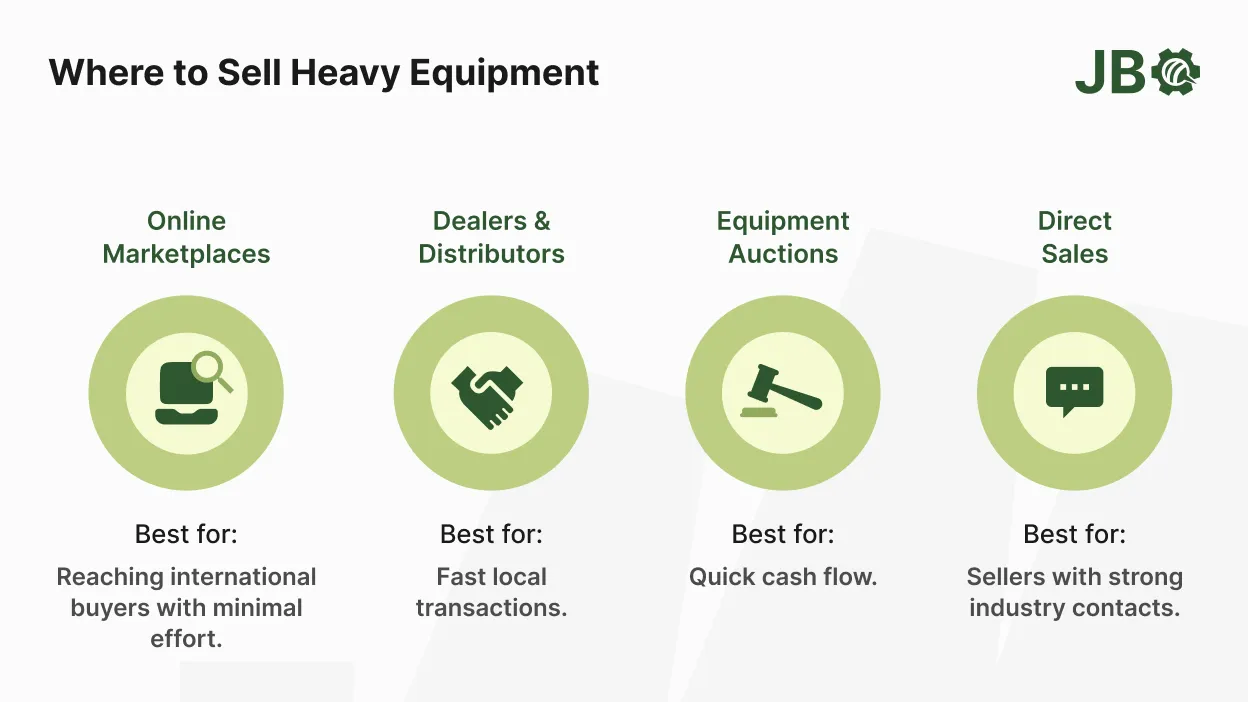
Choosing the right sales channel is the foundation of a successful heavy equipment sale. The wrong choice can lead to slow sales, reduced profits, or even failed transactions. The right choice, however, puts your machine in front of qualified buyers and accelerates the closing process. Let’s explore the most common options.
1. Online Marketplaces
Online marketplaces have become the go-to solution for sellers who want to reach beyond their local markets. These platforms allow you to list your equipment, connect with verified buyers, and often offer tools to simplify transactions.
Pros
When selling equipment online, choosing the right platform can make all the difference—your listing gains global exposure, reaching buyers across multiple continents, while buyer verification ensures safer transactions by filtering out scams. Many marketplaces also provide powerful marketing tools like premium listings, SEO optimization, and promotional features to maximize visibility. To further support sellers and buyers, some platforms offer escrow and financing options, securing payments and enabling international financing to simplify cross-border deals.
Cons
You’ll need to create detailed listings, respond to inquiries, and negotiate.
Pro Tip: For sellers who want both speed and security, marketplaces like JumboBee offer the best balance.
2. Dealers and Distributors
Dealers are established businesses that buy and resell equipment. They can be local, regional, or global distributors.
Pros
Selling your equipment directly to a dealer comes with several advantages. One of the biggest pros is the potential for quick sales, as dealers often purchase machinery outright without the long wait associated with finding an individual buyer. Additionally, their professional handling makes the process smoother since dealers are experienced in inspecting, pricing, and reselling machinery efficiently. Another key benefit is that you need no marketing effort, dealers handle the resale, so you can avoid spending time and resources on listings, promotions, and negotiations.
Cons
The most significant downside is lower profit margins, since dealers need to buy below market value in order to resell at a profit. This means you may not get the maximum return on your equipment compared to selling directly to an end-user. Another limitation is restricted control and reach. Once the machine is sold to a dealer, you have no say in where or how it’s resold, which can matter if you’re concerned about market presence, reputation, or maximizing value.
Best For: Sellers who need quick cash flow and are willing to sacrifice top-dollar pricing.
3. Equipment Auctions
Auctions can be either physical events or online auctions. They are especially effective for selling older machinery or when you need to liquidate multiple assets quickly.
Pros
Selling equipment through an auction has several advantages. One of the biggest pros is the fast transaction process, as sales are typically finalized within just a few days after the auction closes. Auctions also give you access to a global audience, with many online platforms attracting international buyers who may be willing to pay a premium for hard-to-find machinery. Another benefit is that there are no negotiation hassles, buyers compete against each other, and the highest bid determines the sale, making the process straightforward and transparent.
Cons
A major risk is uncertain pricing, since the final sale price depends entirely on bidder demand and can sometimes fall below expectations. Sellers must also account for fees, as auction houses typically charge commissions that reduce overall profit. Finally, there is no control over the outcome. When your equipment is listed, you’re obligated to accept the winning bid, even if it doesn’t meet your desired price.
Best For: Sellers looking to clear out inventory quickly.
4. Direct Sales (Networking & Relationships)
Direct sales involve selling machinery through your personal or business network, often without intermediaries. This can include local contractors, LinkedIn connections, or referrals from past clients.
Pros
Selling equipment directly to buyers has several clear advantages. One major benefit is that there are no fees, allowing you to keep 100% of the sale price without deductions from auction houses or dealer markups. Direct sales also support relationship building, giving you the chance to connect personally with buyers and potentially establish long-term business partnerships. In addition, you gain flexibility, since all terms, from price to shipping and payment, are negotiated directly, giving you full control over the transaction.
Cons
The most significant limitation is a restricted audience, as your reach is confined to the buyers you already know or can contact. There’s also an increased risk of fraud, since without a trusted intermediary it can be harder to verify the credibility of buyers and secure payments. The process can be time-consuming, requiring significant effort to find prospects, communicate details, and negotiate deals compared to faster, more structured sales methods.
Best For: Experienced sellers with established industry contacts.
5. Comparison Framework – Which Option Should You Choose?
| Channel | Speed of Sale | Profit Potential | Best For |
|---|---|---|---|
| Online Marketplaces | Medium–Fast | High | Sellers seeking international exposure and verified buyers |
| Dealers/ Distributors | Fast | Low–Medium | Sellers needing quick cash with minimal effort |
| Auctions | Very Fast | Low | Liquidation of older equipment or bulk sales |
| Direct Sales | Slow | Medium | Sellers with strong networks and trust-based relationships |
6. Regional Considerations in Selling
United States & Canada
- Strong market for construction and forestry equipment.
- Online marketplaces dominate sales, but local dealer networks remain powerful.
Europe
- Buyers prioritize compliance with CE standards.
- Auctions and regional distributors are highly active.
Middle East & Africa
- High demand for construction cranes, excavators, and road machinery.
- Direct sales and specialized marketplaces work well due to fewer restrictions.
Latin America
- Agricultural machinery (tractors, harvesters) is in high demand.
- Sellers should work with platforms that offer Spanish/Portuguese support.
Asia-Pacific
- Exploding demand for compact excavators and loaders.
- Buyers value affordable used equipment shipped from the U.S. or Europe.
Final Thoughts on Choosing a Sales Channel
Your choice depends on your priorities:
- If you want maximum profit, use online marketplaces or direct sales.
- If you want speed, choose dealers or auctions.
- If you want global reach with safety, go with a trusted marketplace like JumboBee that provides verification, financing, and marketing tools.
How to Sell Heavy Equipment Online
Selling heavy machinery online isn’t just about uploading a few photos and waiting for a buyer to call. The process requires strategy, preparation, and smart marketing. When done right, you can sell faster, attract serious buyers, and secure higher prices. Here’s a step-by-step guide to succeed.
Step 1: Research the Market
Before creating a listing, understand what your machine is worth and who might buy it. To set a fair price, start by checking comparable listings on platforms like JumboBee. Look at details such as year, brand, condition, and hours to match your equipment with market standards and attract serious buyers.
Next, consider regional demand, since certain equipment sells better in specific markets. Excavators may move quickly in Africa due to construction growth, while tractors often perform well in Latin America’s agricultural sector.
Lastly, factor in shipping costs, as logistics can influence buyer decisions. A European buyer may pay more if shipping from your port is affordable, while high costs could lower the final offer.
Pro Tip: Use industry reports and trade publications to spot seasonal trends.
Step 2: Create a High-Quality Listing
Your listing is your digital showroom. Buyers decide within seconds if they’ll contact you.
What to Include in Your Listing
- Start with detailed specifications, including make, model, year, hours, condition, and attachments. Clear info builds buyer confidence and reduces questions.
- Provide maintenance records to show proper care. A documented service history reassures buyers about reliability and value.
- Add high-resolution images from all angles—front, back, sides, cab, and undercarriage. Quality photos make listings stand out.
- Include a video demonstration of the machine running. Short clips can boost buyer inquiries by up to 40%.
Step 3: Optimize for Search Engines (SEO)
Most buyers search online using keywords. If your listing isn’t optimized, it may not appear in results.
SEO Checklist for Listings
- Title: Include key details + target keywords.
Example: “Used 2018 Caterpillar D6T Bulldozer”
JumboBee creates an SEO-optimized title for your equipment automatically. - Categories: Assign correct categories (excavator, tractor, crane) for better discovery.
Step 4: Promote Your Listing
Don’t rely only on marketplace traffic –promote your listing actively.
Marketing Tactics
Promoting your equipment starts with social media. Sharing listings on LinkedIn, Facebook construction groups, and industry forums helps you reach a targeted audience of professionals already interested in machinery.
Email campaigns are another effective tool. Sending offers to past buyers or local contractors keeps your equipment in front of people who already trust your business.
Consider using paid ads to boost visibility. Platforms like JumboBee offer promoted listings that appear higher in search results, attracting more serious buyers.
Don’t overlook networking. Informing business partners, suppliers, or industry contacts about your sale can lead to referrals and connect you with buyers you may not reach otherwise.
Pro Tip: Use video ads on LinkedIn showcasing your machine in action. Videos often outperform static listings.
Step 5: Communicate Professionally with Buyers
Once inquiries start coming in, your response speed and professionalism can make or break a deal.
Respond quickly to inquiries, as buyers often reach out to multiple sellers. Fast replies give you an edge and show professionalism.
Answer questions clearly, providing all requested details even if they seem repetitive. Clear communication builds trust and keeps buyers engaged.
Offer virtual inspections using tools like Zoom or WhatsApp. This allows international buyers to verify the equipment’s condition without traveling, making them more likely to commit.
Stay transparent about wear, repairs, or issues. Being upfront prevents surprises that could lead to canceled deals and helps maintain your reputation.
Pro Tip: Always use platform messaging systems for record-keeping and dispute protection.
Step 6: Secure Payment
Handling payments is the riskiest part of selling heavy equipment online.
Safe Payment Methods
- Escrow Services: JumboBee holds funds until both parties confirm satisfaction.
- Platform Protection: JumboBee provides secure payment solutions to reduce fraud risk.
Avoid checks, money orders, or “overpayment” scams.
Step 7: Finalize the Deal and Prepare for Shipping
Once payment is secured, the first step is to arrange shipping. Proper planning ensures the equipment is transported safely and reaches the buyer on time.
Next, make sure to provide all necessary documents, including the bill of sale, customs forms, and ownership transfer papers. Accurate paperwork helps prevent delays and legal complications.
Maintain communication with the buyer until delivery is confirmed. Regular updates build trust and allow you to address any issues that may arise during transit.
Case Study: Selling an Excavator on JumboBee
A U.S.-based contractor had a 2017 Komatsu PC210 excavator sitting idle after a project ended.
Steps Taken:
- The seller listed it on JumboBee Marketplace, including detailed specs, 15 high-quality photos, and a short video.
- The listing was optimized with keywords like sell heavy equipment online and shipping heavy equipment internationally.
- Within 10 days, a buyer from the US expressed interest.
- After the pres-sale inspection service provided by JumboBee, the buyer used JumboBee’s escrow service to secure payment.
- The machine was transported to the buyer’s location.
Result:
- The seller achieved the price that he wanted.
- The entire transaction, from listing to delivery, took 20 days.
Preparing Your Equipment for Sale
When you decide to sell heavy machinery, first impressions matter. Buyers –especially international ones –cannot always inspect equipment in person, so the way your machine looks on paper and online directly influences its value. Proper preparation ensures faster sales and higher offers.
Step 1: Perform Maintenance and Repairs
Even minor issues can deter buyers. A machine that looks neglected often raises red flags about hidden problems.
Pre-Sale Maintenance Checklist
- Fluids: Change engine oil, hydraulic oil, transmission fluid, and coolant.
- Filters: Replace fuel, air, and hydraulic filters.
- Undercarriage & Tires: Inspect for wear; replace worn tracks or tires if cost-effective.
- Electrical Systems: Test lights, switches, and controls.
- Hydraulics: Check hoses for leaks or cracks
- Cabin: Clean seats, dashboards, and windows. A tidy operator cabin increases buyer confidence.
- Paint & Decals: Touch up scratches or repaint if affordable –it makes a strong visual impact.
Pro Tip: Keep invoices for all pre-sale repairs and include them in your listing. Buyers trust documented maintenance.
Step 2: Gather All Documentation
Paperwork often makes or breaks a deal, especially across borders. Buyers want reassurance that the machine is legally owned, well-maintained, and export-ready.
Must-Have Documents
- Proof of Ownership / Title – Verifies you have the legal right to sell.
- Bill of Sale (Template Ready) – A written contract between seller and buyer.
- Maintenance Records – Service logs, repair invoices, and inspection reports.
- Operating & Safety Manuals – Adds credibility and helps new buyers operate the machine properly.
- Export Documents – If shipping abroad: commercial invoice, packing list, certificate of origin, and, for some countries, an export license.
Pro Tip: Create a digital folder with PDFs of all documents. Share them instantly with buyers upon request –it speeds up negotiations.
Step 3: Professional Photography and Video
Your photos and videos sell your machine before words do. High-quality visuals can increase listing views by up to 60%.
Photography Checklist
- Angles: Front, back, both sides, cabin interior, undercarriage, engine bay, attachments.
- Lighting: Shoot outdoors in daylight to avoid shadows.
- Cleanliness: Wash the machine thoroughly before shooting.
- Scale Shots: Include a person or standard object to show size.
- Close-Ups: Capture wear areas (tracks, tires, controls) honestly –transparency builds trust.
Video Tips
- Start by recording a walkaround tour of the equipment, ideally 1–3 minutes long. Show all angles so buyers can clearly see the machine’s condition.
- Next, demonstrate startup and basic movements, highlighting key functions. This gives buyers confidence that the equipment is fully operational.
- Narrate specifications and recent maintenance during the video. Sharing details about service history and features adds credibility and reassures potential buyers.
Pro Tip: Upload your video to YouTube or Vimeo and link it in your listing –it increases credibility.
Step 4: Build Buyer Trust
International buyers face risks: shipping costs, customs delays, and fraud. Sellers who proactively build trust close deals faster.
How to Build Trust
- Transparency: Show any flaws upfront –buyers appreciate honesty.
- Inspections: Allow inspectors to verify the condition.
Pro Tip: Highlight in your listing that you accept independent inspection before purchase –it sets you apart from less professional sellers.
How to Sell Heavy Equipment Internationally
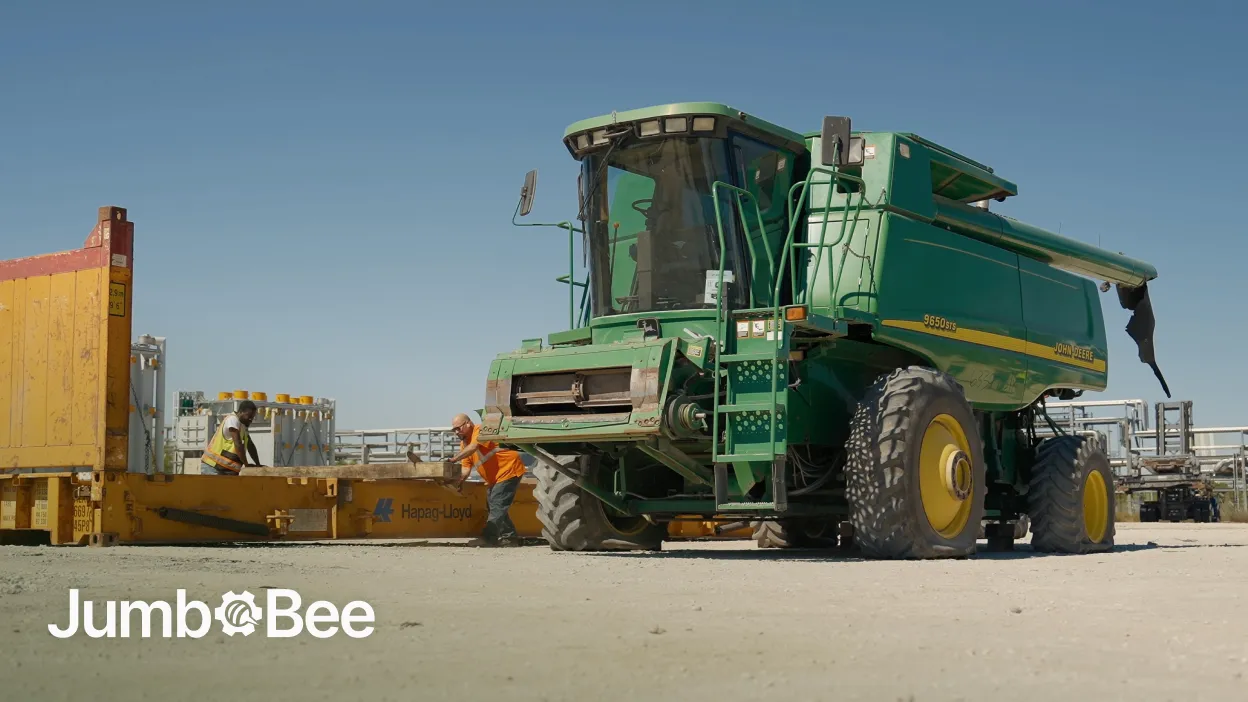
Selling heavy equipment across borders opens the door to a global buyer base, often leading to faster sales and higher profits. However, international deals involve more steps than local sales. From export documents to customs clearance, success depends on preparation and trusted platforms.
Step 1: Understand Customs and Export Regulations
Every country has different import rules. Knowing them up front prevents costly delays.
Key Customs Requirements
Before exporting equipment, it’s essential to check whether you need an export license. Some countries require formal authorization for specific types of machinery, and securing the license early ensures compliance and avoids shipment delays.
Proper HS code classification is also critical. The Harmonized System code determines applicable tariffs and duties, and different machinery—like excavators versus bulldozers—may fall under separate categories, affecting costs and paperwork.
A certificate of origin is often required to prove where the equipment was manufactured. This document can influence tariffs, customs clearance, and even eligibility for trade agreements.
You’ll also need a commercial invoice and packing list. These documents detail the equipment’s value, weight, and contents, helping customs officials verify the shipment and calculate duties accurately.
Some countries, including Nigeria and Egypt, require inspection certificates. These pre-shipment inspections confirm the equipment meets local standards and regulations, reducing the risk of customs delays or rejections.
Pro Tip: Always work with a licensed freight forwarder who knows the destination country’s rules.
Step 2: Identify Strong Export Markets
Not all markets are equal. Focus on regions with strong construction growth and limited local supply.
High-Demand Markets
In Africa, there is strong demand for heavy machinery like excavators, graders, and bulldozers, driven by roadbuilding and mining projects across the continent.
The Middle East sees high demand for cranes and concrete machinery, fueled by large-scale infrastructure and megaprojects in urban centers.
In Latin America, tractors and loaders are popular due to the region’s focus on agriculture and construction, making these machines essential for local industries.
Southeast Asia favors compact machinery that can navigate urban development projects, including small-scale construction and city infrastructure improvements.
Pro Tip: Use World Bank infrastructure reports to identify regions investing heavily in construction.
Step 3: Legal and Financial Considerations
International deals carry higher risks than domestic sales. Protect yourself with clear contracts and secure payment methods.
Best Practices
Start with written agreements by issuing a formal proforma invoice and sales contract. Clear documentation protects both parties and sets expectations for the transaction.
Set clear payment terms, using secure methods like escrow services or bank wire transfers. These methods are available on JumboBee and reduce the risk of non-payment and provide a reliable record of the transaction.
Always verify export compliance to ensure your equipment isn’t restricted under sanctions or export bans. This prevents legal issues and avoids shipment delays.
Obtain insurance to cover both the equipment and the payment. Proper coverage protects against fraud, theft, or damage during transit, giving both buyer and seller peace of mind.
Pro Tip: If you’re unsure about regulations, consult a trade attorney or your country’s export authority.
Step 4: Use Trusted Platforms Like JumboBee
Selling directly overseas can be risky if you rely on random inquiries. That’s where marketplaces like JumboBee add value.
How JumboBee Helps
- Verified Buyers: All international buyers are pre-vetted.
- Integrated Shipping Support: Works with logistics partners to handle customs and delivery.
- Escrow Payments: Protects both buyer and seller from fraud.
- Global Exposure: Listings are automatically translated into multiple languages to reach wider audiences.
Step 5: Seller’s International Checklist
Here’s a simplified checklist to guide you through selling heavy equipment internationally:
- Research market demand in target regions
- Prepare export documents (invoice, title, certificate of origin, HS code)
- Verify customs regulations in the destination country
- Optimize your online listing with international buyers in mind
- Offer transparent photos/videos and allow virtual inspections
- Choose safe payment methods (escrow, bank transfer)
- Partner with a trusted logistics provider or JumboBee shipping partner
- Insure the equipment before shipping
Shipping Heavy Equipment Internationally
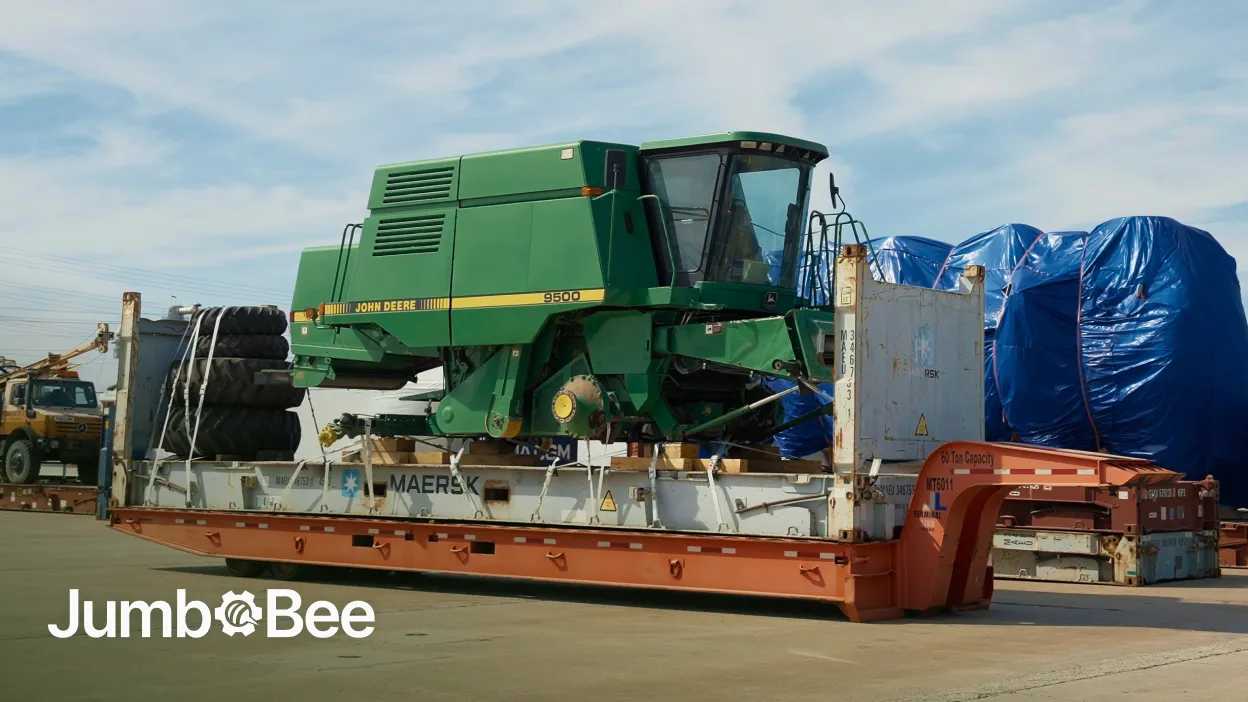
Once you’ve secured a buyer, the biggest challenge begins –getting your heavy equipment safely overseas. Unlike shipping small goods, heavy machinery requires specialized handling, documentation, and logistics expertise. Mistakes can lead to delays, damage, or unexpected costs. Here’s how to ship heavy equipment internationally with confidence.
Step 1: Choose the Right Shipping Method
The shipping method depends on the type, size, and weight of your machine. Each option has unique advantages.
Common Shipping Methods for Heavy Equipment
Roll-on/Roll-off (Ro-Ro)
Machines are driven directly onto the ship’s deck, making loading quick and straightforward. This method is best for wheeled and tracked equipment that is in working condition, such as bulldozers, loaders, and tractors. Its main advantage is being cost-effective and simple to execute, reducing handling time and labor costs.
Flat Rack Container
Equipment is secured to a flat platform container, allowing transport of oversized machinery that cannot fit inside standard containers. This method is ideal for odd-shaped loads or large pieces of equipment. The key advantage is its flexibility, accommodating dimensions and weights that standard containers cannot handle.
Standard Container Shipping
Smaller equipment is disassembled and packed into 20ft or 40ft containers, providing a secure shipping solution. This method works well for compact machinery like mini excavators, forklifts, and attachments. Its main advantage is protection from weather, theft, and damage during transit, ensuring equipment arrives in good condition.
Breakbulk Shipping
Extremely large or heavy items are placed directly on the ship without containers. This method is suited for oversized machinery such as cranes, mining trucks, and other equipment too big for container transport. The advantage of breakbulk shipping is its ability to handle loads that are otherwise impossible to ship using standard container methods.
Pro Tip: Always compare at least two methods –sometimes dismantling equipment for container shipping saves thousands in freight costs.
Step 2: Understand Shipping Costs
Shipping costs vary widely based on destination, machine type, and service provider.
Factors That Affect Cost
Shipping costs depend on several factors. Size and weight directly affect the price, as larger machines require more space and handling. Distance and route also play a role—popular routes, like the U.S. to Europe, are generally cheaper than shipping to remote destinations. Port fees and customs duties vary by location, impacting the total cost. Additionally, insurance typically adds 1–3% of the equipment’s value but provides essential protection and peace of mind. Finally, consider pre-carriage and on-carriage, which cover transport from your yard to the port and from the destination port to the buyer’s location.
Pro Tip: Request a “door-to-door” quote instead of “port-to-port” to avoid hidden charges at either end.
Step 3: Arrange Logistics and Documentation
International shipping requires precise coordination between multiple parties.
Shipping Process Overview
- Pickup & Transport: Equipment is hauled from your location to the port.
- Customs Export Clearance: Submit export declarations, invoices, and HS codes.
- Port Handling & Loading: Machinery is loaded onto the ship using cranes or ramps.
- Transit & Tracking: Shipping times range from 2–12 weeks, depending on the route.
- Customs Import Clearance: Buyer provides the import license, pays duties, and clears inspection.
- Final Delivery: The machine is transported to the buyer’s site.
Pro Tip: Hire a freight forwarder who specializes in heavy equipment –they handle customs, documentation, and carrier negotiation.
Step 4: Don’t Skip Insurance
Heavy machinery is valuable, and accidents happen. Marine insurance protects both seller and buyer.
Coverage Options
All Risk Insurance: This type of coverage protects against most potential losses, including theft, damage, and accidents. It offers the broadest protection, giving sellers and buyers confidence that the equipment is safeguarded during transit.
Total Loss Insurance: This policy only provides coverage if the entire machine is lost, such as in the event of a ship sinking. While it is less comprehensive, it is often more affordable than all-risk coverage.
Named Perils Insurance: This insurance covers only specific risks, such as fire or sinking. It is suitable for sellers who want targeted protection for particular hazards rather than full coverage.
Pro Tip: Always insure for full replacement value, not just sale price.
Step 5: How JumboBee Simplifies Shipping
Many sellers struggle with shipping arrangements, especially across unfamiliar ports.
Benefits of Using JumboBee
- Integrated Solutions: From listing to shipping, everything is handled on one platform.
- Customs Expertise: JumboBee navigates tricky export/import rules in Africa, Asia, and the Middle East.
- Transparent Pricing: Pre-negotiated shipping rates lower seller costs.
- Insurance & Tracking: Sellers receive full cargo insurance and real-time shipment updates.
Tips to Maximize Profit
Selling heavy equipment is not just about completing a transaction –it’s about getting the best return on your asset. Even small improvements in listing strategy, timing, or negotiation can increase your final sale price significantly. Here’s a guide to maximizing profits.
1. Time Your Sale Strategically
The timing of your sale can affect both demand and price.
Seasonal Considerations
Construction season greatly influences equipment sales, as demand peaks in spring and summer when most building projects are underway. Selling during these months increases the likelihood of faster transactions and higher interest from buyers.
Fiscal year-end is another key factor. Many buyers aim to use remaining budgets before their fiscal year closes, creating a surge in demand and providing an opportunity for sellers to secure better deals.
Market cycles also play a role in pricing and timing. Following regional economic trends is crucial, as booming economies often drive faster sales and higher prices, while slowdowns may reduce demand and extend listing times.
Pro Tip: Research target markets and schedule listings when demand is highest for your equipment type.
2. Choose the Right Platform
Not all sales channels generate the same profit potential.
Online Marketplaces (e.g., JumboBee): Selling through online marketplaces allows you to reach a global audience of buyers who are often willing to pay top-dollar, especially for verified and high-quality listings. These platforms provide visibility and tools that can maximize your equipment’s market potential.
Direct Sales to Contractors: Selling directly to contractors lets you skip middlemen and retain the full profit from your equipment. This method works best if you have a strong network of trusted buyers and can manage negotiations and logistics yourself.
Auctions: Auctions are ideal for selling older or bulk equipment quickly. However, final prices can fluctuate depending on bidder activity, so there’s a risk that items may sell for less than expected.
Dealers: Selling to dealers provides a fast and convenient transaction. While this method ensures quick payment and minimal effort, it usually comes with lower profit margins since dealers need to resell at a profit.
Pro Tip: For maximum profit, combine platforms – start with a global marketplace and backup with direct offers from dealers if needed.
3. Optimize Pricing
Pricing is an art as much as a science. Overpricing can deter buyers; underpricing leaves money on the table.
Pricing Strategies
Start by researching comparable sales to understand market value. Check similar machines in the same condition on global platforms to set a realistic and competitive price.
Next, highlight upgrades such as attachments, recent maintenance, or refurbished parts. Showcasing these value-adds can make your equipment more attractive and justify a higher asking price. We suggest offering flexible terms to potential buyers by using “Make offer’ feature on JumboBee.
Pro Tip: Price slightly higher than your target to leave room for negotiation.
4. Maximize Perceived Value
How your equipment is perceived directly impacts the price.
Professional Listings: Create listings that include detailed specifications, high-resolution images, and videos demonstrating the equipment’s functionality. A polished presentation attracts serious buyers and makes your listing stand out.
Maintenance Records: Providing a fully documented service history boosts buyer confidence. Showing that the machine has been well-maintained reassures potential buyers of its reliability and longevity.
Inspection Certificates: Third-party inspection reports add credibility and can justify premium pricing. Independent verification of condition often encourages buyers to pay more for peace of mind.
Highlight International Shipping Readiness: Emphasize if your equipment is ready for export. Buyers are often willing to pay extra for machines that can be shipped internationally with minimal hassle, making your listing more attractive.
5. Negotiate Wisely
Negotiation is key to maximizing profit.
Start by understanding buyer needs. Ask questions to determine which features, specifications, or shipping arrangements are most important, allowing you to tailor your offer effectively.
Leverage multiple offers when possible. If several buyers are interested, use the competition to create tension, which can help drive up the final sale price.
Pro Tip: Always negotiate through secure platform channels (e.g., JumboBee) to keep records and reduce fraud risk.
Profit-Maximization Checklist
- Research target markets and seasonal trends
- Choose platforms that reach international buyers
- Price competitively with room for negotiation
- Highlight maintenance, upgrades, and inspection records
- Offer secure payment and flexible shipping options
- Present a professional, high-quality listing (photos, videos, specifications)
- Use multiple channels if necessary to attract competitive offers
Common Mistakes to Avoid
Even experienced sellers can lose time, money, or credibility if they make avoidable mistakes. Awareness and preparation are key to avoiding common pitfalls in heavy equipment sales.
1. Undervaluing Your Equipment
Many sellers accept the first offer or set a low asking price to attract buyers. This can result in thousands of dollars in lost profit.
Prevention: Research comparable listings, highlight upgrades or maintenance, and leave room for negotiation.
2. Incomplete Documentation
Missing ownership papers, maintenance records, or export licenses can delay sales or kill deals.
Prevention: Prepare a full digital folder of all essential documents and share them proactively with buyers.
3. Poor Presentation
Low-quality photos, lack of video, or vague descriptions reduce buyer confidence.
Prevention: Use high-resolution photos, a walkaround video, and detailed specifications to showcase equipment honestly.
4. Missing International Buyers
Limiting sales to local buyers can reduce exposure and profit potential.
Prevention: Use global marketplaces like JumboBee and consider direct international outreach through networks or email campaigns.
5. Shipping and Customs Mistakes
Incorrect HS codes, missing export licenses, or uninspected equipment can cause delays, fines, or damaged goods.
Prevention: Work with experienced freight forwarders, follow a shipping checklist, and insure all shipments.
Avoid these common mistakes by preparing your equipment, documentation, and logistics thoroughly. Sellers who invest in preparation and transparency consistently close deals faster and at higher prices.
Conclusion
Selling heavy equipment successfully requires more than listing a machine online –it demands strategy, preparation, and careful execution. From choosing the right sales channel to preparing equipment, documenting its history, and optimizing listings, every step impacts your final profit and the speed of sale.
International markets offer unmatched opportunities. By expanding beyond local buyers, sellers can access high-demand regions where machines are scarce, often achieving better prices and faster sales. However, cross-border transactions also require attention to customs, shipping logistics, and secure payment methods. Skipping these steps can cause delays, financial loss, or disputes.
Platforms like JumboBee simplify the process by providing verified buyers, marketing support, escrow-secured payments, and integrated shipping options. This end-to-end approach reduces risk, streamlines sales, and opens access to a global market that individual sellers might struggle to reach alone.
- Prepare your equipment thoroughly with maintenance, documentation, and professional visuals.
- Research target markets and choose the sales channel that maximizes exposure and profit.
- Use verified marketplaces and logistics partners to handle international complexities safely.
If you’re ready to sell your machinery efficiently, securely, and profitably, start listing your equipment on JumboBee today and tap into a worldwide network of verified buyers.