


 Buying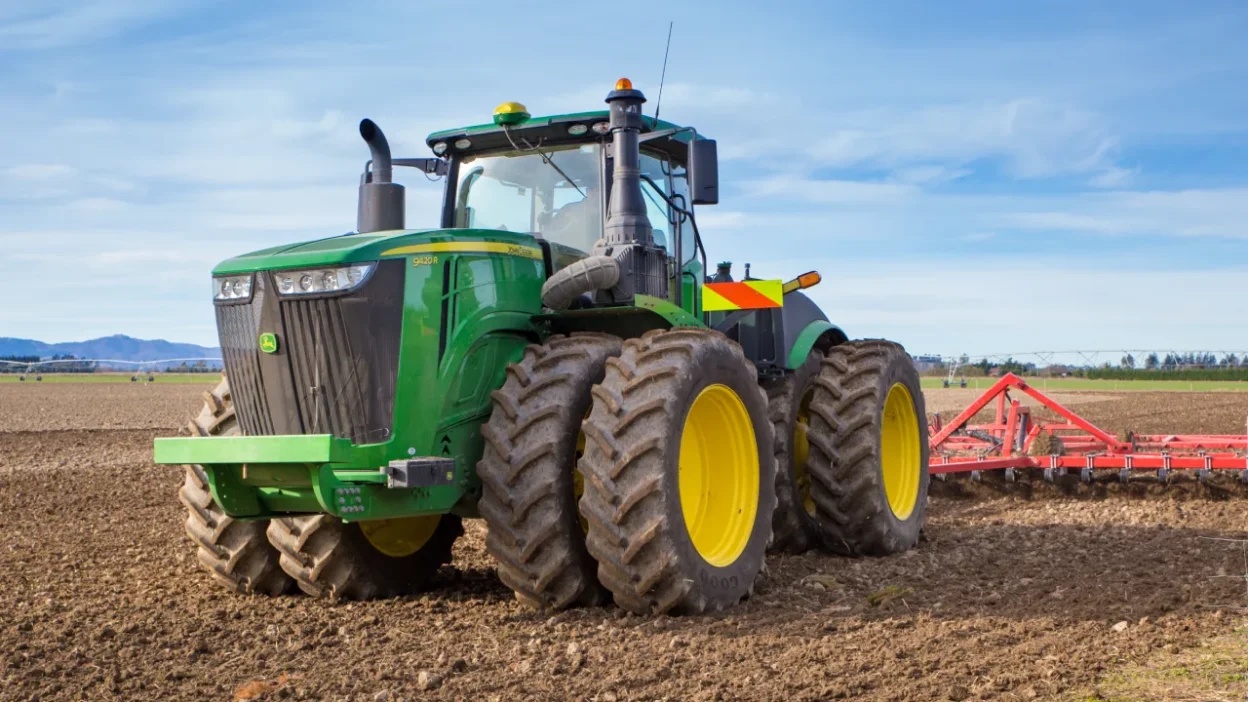
Buying a tractor is one of the most significant investments for any landowner, farmer, or contractor. In the United States, the market is vast, offering everything from 20-horsepower sub-compacts for gardening to 500-horsepower giants for commercial agriculture. However, this variety creates confusion. Without a clear plan, buyers purchase machines that are either too weak for the job or excessively expensive to operate.
This tractor buying guide provides a structured approach to navigating the US heavy equipment market. It is designed for small landowners managing 5 to 50 acres, ranchers, and construction contractors. Unlike generic guides, this resource focuses on the economic and technical realities of the American market, including regional availability, financing norms, and the differences between Tier 4 Final (emissions-compliant) and pre-emissions machinery.
Whether you are looking for how to buy a tractor for the first time or upgrading your fleet, this guide reduces uncertainty. It moves beyond glossy brochures to discuss real-world capabilities, total cost of ownership, and how to inspect a machine before money changes hands.
Step 1: Define Your Needs Before Buying a Tractor
Most buyer remorse comes from skipping this step. You must match the machine to the mission.
What Will You Use a Tractor For
Define primary tasks. A tractor excellent for mowing might be terrible for digging.
- Farming and agriculture: Primary needs are pulling power (torque) and hydraulic capacity. Key tasks include plowing, tilling, and baling hay. You need a machine with a heavy frame and strong drawbar horsepower.
- Livestock operations: You need to lift heavy round bales (often 1,000+ lbs) and clean manure. A hydrostatic transmission is often preferred here for easy back-and-forth movement.
- Landscaping and property maintenance: Tasks include mowing, grading driveways, and snow removal. A mid-sized compact tractor with a mid-PTO (for a belly mower) is often the right choice.
- Commercial and construction: These tractors run high hours moving pallets, digging foundations, or grading sites. Industrial tires and high hydraulic flow for backhoes are standard requirements.
Land Size, Terrain, and Working Conditions
Your property dictates the machine specifications.
- Acreage size:
- < 5 acres: Sub-compact tractor (under 25 HP).
- 5–20 acres: Compact tractor (25–45 HP).
- 20–50 acres: Utility tractor (45–75 HP).
- 100+ acres: Agricultural/Row Crop tractor (75+ HP).
- Flat land vs hills: If you have slopes greater than 15 degrees, 4-wheel drive (4WD) is not optional—it is a safety requirement for braking and traction. Wide wheel spacing and liquid-filled tires add stability on hills.
- Soil type: Heavy clay soil requires more horsepower to till than sandy loam. If you are pulling a 6-foot rotary tiller through Georgia clay, you need significantly more engine power than in Florida sand.
Budget Planning and Ownership Costs
The purchase price is just the entry fee. Calculate the total cost of ownership.
- Purchase price: New compact tractors often range from $15,000 to $40,000. Used utility tractors can range from $20,000 to $80,000, depending on hours and age.
- Maintenance: Budget approximately $2.00–$4.00 per engine hour for maintenance (fluids, filters, repairs) over the machine’s life.
- Insurance and storage: US lenders usually require physical damage insurance. Also, consider that storing a tractor outside ruins resale value and damages electrical components. Factor in the cost of a shed or cover.
Step 2: Types of Tractors Explained
Understanding the classification system helps you filter search results on marketplaces like JumboBee.
Sub-Compact Tractors
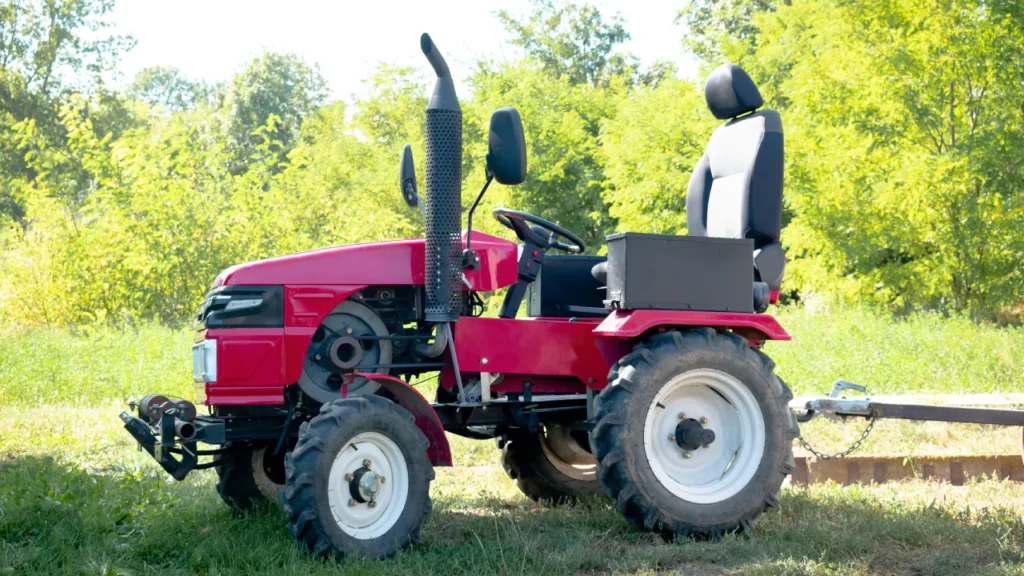
These are the smallest category, typically under 25 HP. They look like large lawn mowers but have diesel engines, hydraulics, and a 3-point hitch.
- Best use cases: Mowing lawns over 1 acre, light gardening, snow blowing driveways.
- Pros: Easy to store in a garage, fuel-efficient, and user-friendly for beginners.
- Cons: Limited lift capacity (usually under 800 lbs), low ground clearance.
Compact Tractors
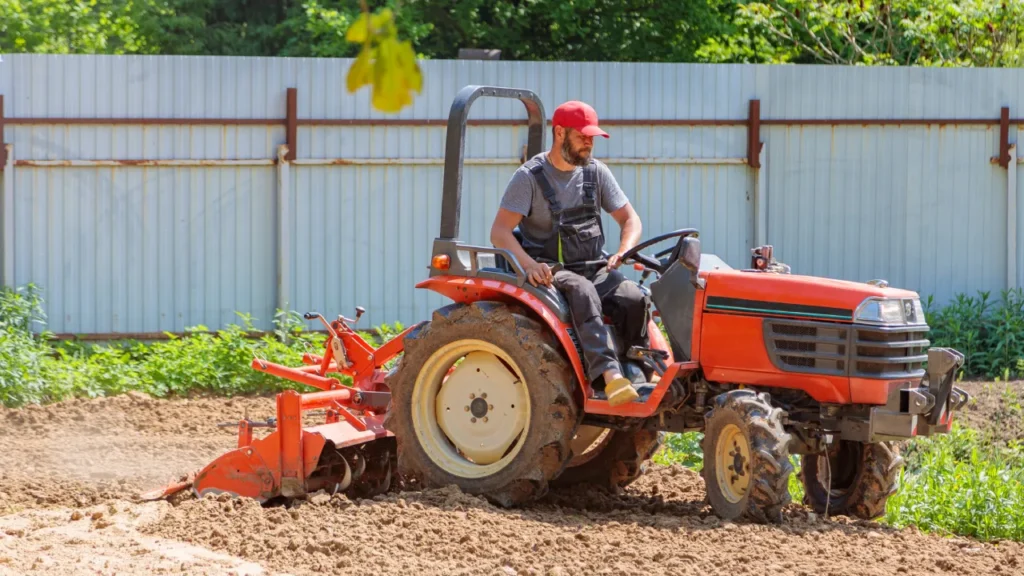
This is the most popular segment in the US for hobby farmers. Ranging from 25 to 60 HP, they bridge the gap between lawn care and farming.
- Who should buy: Owners of 5 to 20 acres.
- Capabilities: Can handle a front-end loader, a 6-foot rotary cutter (bush hog), and moderate tillage equipment.

Utility Tractors
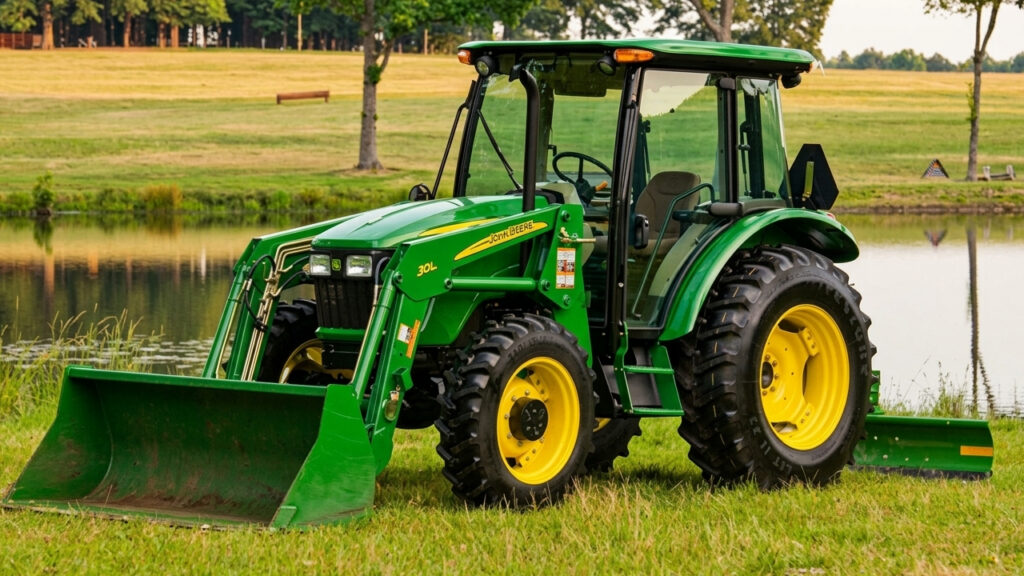
Ranging from 60 to 140 HP, these are workhorses. They are physically larger, heavier, and built for daily abuse.
- Heavy-duty applications: Baling hay, pulling large batwing mowers, heavy tillage.
- Features: Stronger hydraulic pumps, larger cabs, and heavier frames to provide traction for ground-engaging work.
High-Horsepower and Specialty Tractors
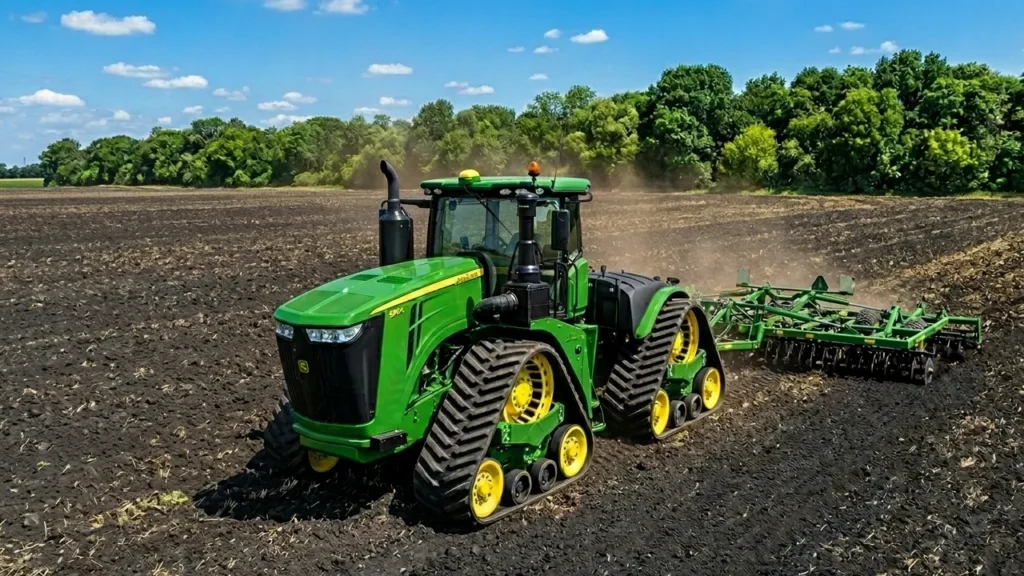
Tractors over 140 HP are strictly for large-scale production agriculture or heavy construction.
- Row-crop: Designed with adjustable wheel spacing to fit between crop rows.
- Specialty: High-clearance tractors for vegetable farming or narrow tractors for vineyards and orchards.
Step 3: Which Tractor to Buy Based on Key Specifications
Don’t look at the model number exclusively. Look at the data plate.
Horsepower and PTO Requirements
Horsepower is often misunderstood. There are two numbers you must know:
- Engine HP: The gross power produced by the engine.
- PTO (power take-off) HP: The power actually available at the rear shaft to run implements. This is usually 15% lower than engine HP.
The rule of thumb is:
- Rotary cutter: Needs 5 PTO HP per foot of width. (6-foot cutter = 30 PTO HP minimum).
- Tiller: Needs 5–7 PTO HP per foot, depending on soil.
Transmission Types
- Manual (gear): The most durable and efficient. Best for straight line work like plowing or mowing large fields, where you pick a gear and go.
- Hydrostatic (HST): Works like an automatic car (pedal operation). Best for loader work where you constantly change direction (forward/reverse). It uses some engine power, slightly reducing PTO efficiency.
- Shuttle shift: A hybrid. You use a clutch to change gears, but a lever on the steering column allows clutchless shifting from forward to reverse. Great for loader work without the power loss of HST.
Hydraulics, Hitch Systems, and Lift Capacity
- 3-point hitch:
- Category 1: Standard for compact tractors (pins are 7/8″ diameter).
- Category 2: Standard for utility tractors (pins are 1-1/8″ diameter).
- Hydraulic flow (GPM): Gallons Per Minute determines how fast your loader moves. If you plan to run a hydraulic post-hole digger or grapple, you need higher GPM (10+ GPM is ideal).
- Loader lift capacity: Check if the rating is “at the pivot pin” or “at the bucket edge.” The pivot pin number is always higher, but less realistic. You lift loads in the bucket, not at the pins.
Comfort, Safety, and Operator Features
- Cab vs open station: A cab with A/C is a lifesaver in the American South or during Northern winters, but it adds $5,000–$8,000 to the price and raises the center of gravity (riskier on hills).
- Ergonomics: Sit in the seat. Are the loader controls integrated into the armrest, or do you have to reach forward? Fatigue leads to accidents.

Step 4: New vs Used Tractors
This decision balances the budget against risk tolerance.
Buying a New Tractor
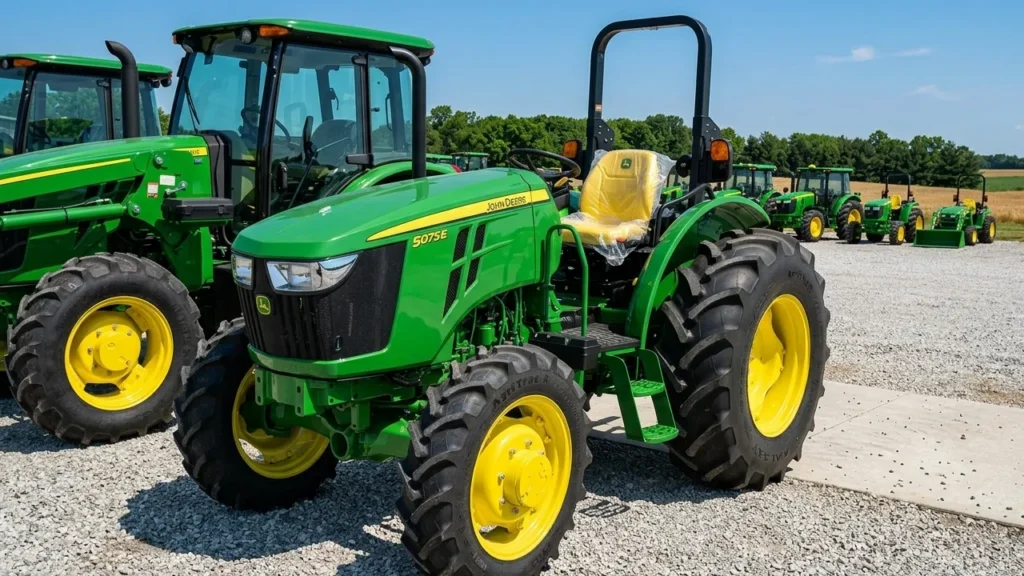
- Advantages:
- Warranty: Typically 2 years bumper-to-bumper and 5–6 years on the powertrain.
- Financing: Manufacturers often offer 0% interest for 60–84 months.
- Technology: Latest comfort features and efficiency.
- Disadvantages:
- Depreciation: Immediate drop in value (though less severe than cars).
- Emissions: New tractors over 25 HP in the U.S. typically fall under EPA nonroad diesel engine emissions rules (Tier 4 standards). To meet these strict regulations, modern machines include complex systems like Diesel Particulate Filters and require Diesel Exhaust Fluid. While cleaner, these systems add complexity and can be costly to repair if they fail.
Buying a Used Tractor
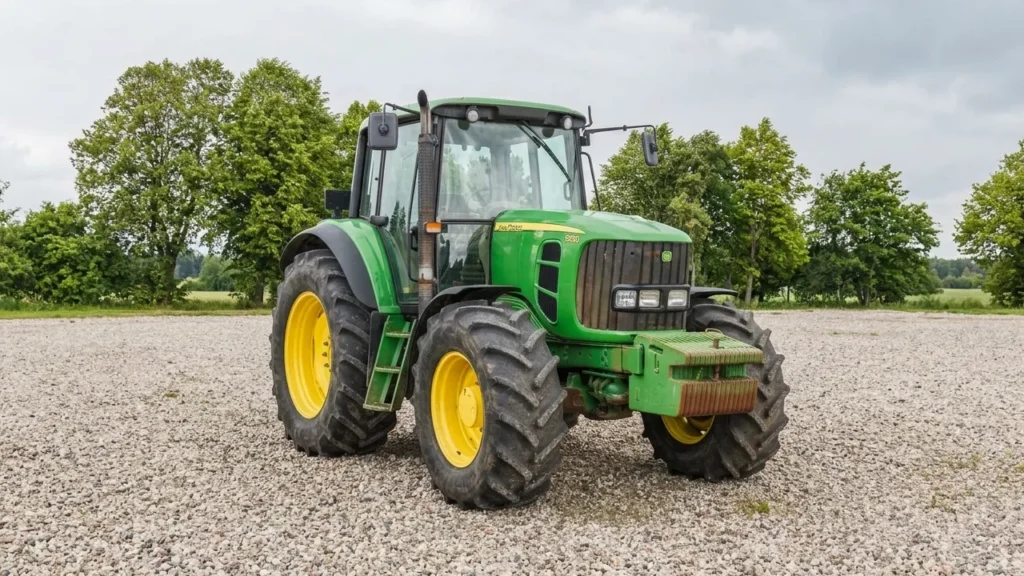
- Cost savings: You can often get more horsepower for your dollar.
- Pre-emissions: Tractors built before roughly 2011–2013 do not have DPF filters or DEF fluid requirements. These are highly sought after in the US for their mechanical simplicity.
- Risks: No warranty. You are responsible for all repairs immediately.
What to Check When Buying a Used Tractor
- Engine hours: Diesel engines last a long time.
- < 1,000 hours: Low usage.
- 1,000 – 4,000 hours: Mid-life (expect minor repairs).
- 5,000+ hours: High usage (expect overhaul soon).
- Service records: A machine with 2,000 hours and perfect fluid change records is better than a 500-hour machine that sat outside with original oil.
Step 5: Tractor Buying Checklist Before Purchase
Never buy without a thorough inspection. If buying online through JumboBee, request a detailed inspection report.
Visual and Mechanical Inspection
- Tires: Tractor tires are incredibly expensive ($1,000+ per rear tire). Check for dry rot, deep cuts, and remaining tread.
- Leaks: Look at the hydraulic cylinders on the loader. Wetness indicates bad seals. Check the PTO shaft seal at the rear.
- Welds: Inspect the loader arms and front axle. Cracks or non-factory welds suggest the tractor was abused or overloaded.
Test Driving a Tractor
- Cold start: Ask the seller not to warm it up before you arrive. Start it cold. White smoke that doesn’t clear up after a minute indicates fuel or compression issues.
- Load test: Drive the tractor up a slope in high gear. Does the engine bog down excessively? Does the clutch slip?
- Hydraulics: Raise the loader bucket fully and turn off the engine. If the bucket drops visibly within a minute, the hydraulic cylinders or valves are leaking internally.
Documentation and Legal Checks
- Lien search: In the USA, tractors do not always have titles like cars. They use UCC filings. Ensure the seller actually owns the machine and owes no money to a bank.
- Serial number: Verify the serial number on the frame matches the paperwork.
Step 6: Where to Buy a Tractor in the USA
Authorized Dealers
Buying from a local dealership (John Deere, Kubota, Case IH, etc.) is one of the safest routes. You get support, parts availability, and warranty work. However, you pay a premium for this service.
Online Marketplaces and Auctions
JumboBee connects buyers with sellers globally, including a vast inventory within the USA.
- Pros: Massive selection. You can compare prices across states to find the best deal.
- Risk management: Use platforms that verify sellers. Verified sellers on JumboBee have undergone checks to ensure legitimacy.
- Logistics: The challenge with online buying is shipping heavy equipment. JumboBee solves this by integrating logistics, handling the transport of a 10,000 lb machine from the seller to your farm.
Private Sellers and Trade-Ins
Buying from a neighbor or Craigslist can yield a bargain, but there is zero recourse if the engine blows up the next day. Private sales are best for experienced mechanics who can diagnose issues on the spot.
Step 7: Pricing, Negotiation, and Financing
How Tractor Pricing Works in the USA
Tractor pricing is regional. A 4WD tractor is more expensive in mountainous Colorado than in flat Kansas. Additionally, seasonality matters. Prices often drop in late winter (before planting) and late fall (after harvest).
Negotiation Tips When Buying a Tractor
- Cash vs finance: Dealers often have two prices. The 0% financing price is usually higher because the interest cost is baked into the price. If you bring cash (or your own bank loan), ask for the cash price, which can be 10–15% lower.
- Package deals: Dealers make a margin on attachments. Negotiate a package: “I will buy the tractor if you throw in the box blade and give me 20% off the rotary cutter.”
Financing and Payment Options
- Dealer financing: Often the easiest, with subsidized rates (0% or low APR).
- Ag credit / farm credit: Specialized lenders for rural America. They understand that farm income is seasonal.
- Equipment loans: Banks offer standard equipment loans, usually requiring 10–20% down.
Step 8: After You Buy a Tractor
Registration, Insurance, and Compliance
- Registration: Most states do not require tractor registration if used strictly for agriculture on private land. However, if you drive on public roads, you may need a slow-moving vehicle triangle and lighting compliance.
- Insurance: Standard homeowners’ insurance usually does not cover tractors. You need a specific inland marine rider or a standalone policy (like KTAC) to cover theft, fire, and accidental damage (e.g., rolling it into a pond).
Maintenance and Service Planning
Read the manual. The 50-Hour Service is the most critical maintenance event for a new tractor. It involves changing break-in oil and hydraulic filters to remove metal shavings from the manufacturing process. Skipping this voids warranties and shortens engine life.
Training and Safe Operation
Tractors are dangerous. They have a high center of gravity.
- ROPS: Always keep the Roll Over Protection Structure bar UP and wear your seatbelt.
- PTO safety: Never approach a spinning PTO shaft. It can catch clothing and cause fatal injuries instantly.

Conclusion
Learning how to buy a tractor involves balancing power, weight, and budget. The right tractor is not the one with the most horsepower; it is the one that fits your land and your daily tasks.
- Assess your terrain and tasks.
- Choose the right category (compact vs utility).
- Verify specs (PTO HP and lift capacity).
- Inspect thoroughly or use verified platforms.
Don’t rush the process. A tractor is a 20-year asset. When you are ready to search, compare options across the entire market to ensure you aren’t overpaying for local scarcity.
Ready to find your machine?
Browse thousands of verified listings on JumboBee. Whether you need a compact tractor for your homestead or a heavy-duty excavator for construction, JumboBee allows you to buy safely, handle inspections, and manage global or local shipping in one seamless platform.





Be the first to leave a comment
There are no replies to this post yet. Share your thoughts and help start the conversation.