 Equipment
  Trends
Buying heavy equipment is no longer just about checking a sticker price. In 2026, the landscape of heavy machinery acquisition has shifted. Supply chains have stabilized, but structural inflation, advanced emissions technology, and integrated software have permanently altered the pricing baseline.
Buyers often ask a simple question: how much does an excavator cost? The answer is never simple. A disconnect exists between the advertised purchase price and the reality of writing the check. You might see a listing for a mid-size excavator at $150,000, but by the time that machine lands on your job site—taxed, insured, transported, and fitted with the right bucket — you are looking at a significantly higher figure.
This guide provides a granular look at the real costs of owning an excavator in 2026. We move beyond basic estimates to analyze price formation across size classes, the economics of new versus used machinery, and the critical difference between upfront price and Total Cost of Ownership. Whether you are a fleet manager optimizing a budget or an independent contractor making a first major purchase, this data will secure your investment.
Excavator Price vs Excavator Cost
Understanding the financial commitment requires distinguishing between two terms often used interchangeably but which mean very different things to your balance sheet: excavator price and excavator cost.
What Excavator Price Means
Excavator price refers strictly to the Capital Expenditure (CapEx) required to acquire the asset. This is the transactional number negotiated with a dealer or a private seller.
In 2026, advertised prices typically include:
- Base machine: Chassis, engine, cabin, and boom/stick assembly.
- Standard configuration: Usually steel tracks (rubber for minis) and a standard digging bucket.
- Standard warranty: Manufacturer coverage for a set period (e.g., 12 months/2000 hours).
Advertised prices frequently exclude:
- Specialized attachments: Hydraulic breakers, tilt-rotators, or grading buckets.
- Logistics: Inland freight, port handling, or heavy haul permits.
- Sales tax: State and local taxes, which can add 4–10% to the bill.
- Dealer prep: Assembly fees, fluid fills, and pre-delivery inspections.
Buyers who focus solely on the excavator price often find themselves 15% to 20% over budget before the machine digs its first scoop of dirt.
What Excavator Cost Really Includes
Excavator cost represents the Total Cost of Ownership (TCO). This is the Operational Expenditure (OpEx) plus the depreciation of the asset over time. Experienced fleet managers know that a cheap machine with high fuel consumption and frequent downtime costs far more than a premium machine with high reliability.
Real excavator cost includes:
- Diesel and consumables: Fuel is the primary operating variable. DEF is required on Tier 4 Final / Stage V machines but is a minor supplementary cost (~2–4% of diesel volume).
- Preventative maintenance: Filters, fluids, and scheduled service intervals.
- Wear parts: Undercarriage components (sprockets, rollers, idlers), bucket teeth, and cutting edges.
- Insurance: Premiums for inland marine coverage and liability.
- Depreciation: The loss of asset value over time, which impacts your balance sheet and resale ability.
If you do not model Total Cost of Ownership, you are gambling on profitability.
Excavator Price Ranges by Size Class
To answer how much is an excavator in 2026, we must segment the market by operating weight. Prices vary exponentially as tonnage increases, not just due to raw material costs, but due to the complexity of hydraulic systems required to move heavy loads.
| Excavator Class | Operating Weight | New Price Range (2026) | Used Price Range (Varies by age & hours) | Typical Applications |
|---|---|---|---|---|
| Mini | < 6 Tons | $35,000 – $95,000 | $18,000 – $55,000 | Residential, Landscaping, Utility |
| Compact | 6 – 10 Tons | $90,000 – $160,000 | $50,000 – $95,000 | Urban Construction, Roadwork |
| Medium | 10 – 25 Tons | $150,000 – $320,000 | $75,000 – $180,000 | Commercial, General Earthmoving |
| Large | 25 – 50 Tons | $300,000 – $650,000 | $140,000 – $380,000 | Heavy Infrastructure, Quarrying |
| Heavy/Mining | > 50 Tons | $700,000+ | $350,000+ | Mining, Mass Excavation |
Mini and Compact Excavators
Mini excavators (under 6 tons) remain the highest volume segment. Their pricing is resilient because the barrier to entry is low for small contractors.
- New market: Prices have crept up due to electrification. Electric mini excavators command a 30–50% premium over diesel equivalents. Lower fuel and maintenance costs can offset this over time – particularly in high-utilisation or indoor/urban settings where diesel restrictions apply – though payback periods vary widely by usage pattern.
- Used market: High liquidity. A well-maintained 3-ton mini excavator sells quickly.
- Urban impact: As cities tighten noise and emissions regulations, demand for compact, Tier 4 Final, or electric machines keeps prices firm.
Medium Excavators (Core Market Segment)
The 10-ton to 25-ton range is the bread and butter of the construction industry.
- Competitiveness: This segment is flooded with options from every major manufacturer (CAT, Komatsu, Deere, SANY). Competition keeps excavator price increases moderate compared to other classes.
- Price spread: The gap between a value brand (e.g., SANY, LiuGong) and a premium brand (e.g., CAT, Volvo) is widest here. You might pay $160,000 for a new value brand unit versus $240,000 for a premium unit with integrated technology.
- Liquidity: These machines are easy to sell globally, making them a safer asset for resale.
Large and Heavy Excavators
Once you exceed 30 tons, the excavator cost structure changes.
- Customization: These are rarely bought “off the lot.” They are spec’d for specific jobs (e.g., long reach booms, heavy-duty undercarriages).
- Lead times: Factory orders can take 3–9 months, influencing price. Immediate availability commands a premium.
- Risk: Reselling a 50-ton excavator is harder than selling a 5-ton mini. The buyer pool is smaller, and transport costs are massive.
New Excavator Cost in 2026
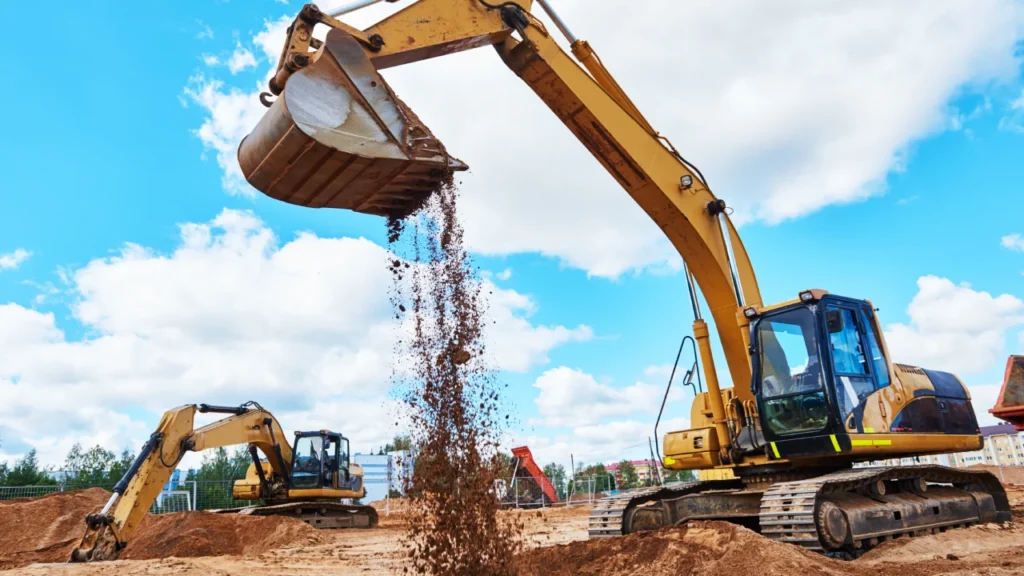
When asking how much does an excavator cost brand new, you are paying for reliability, warranty, and the latest efficiency technology.
What Drives New Excavator Pricing
- Emissions standards: The transition to stricter Environmental Protection Agency (EPA) Tier 4 Final and EU Stage V standards forced manufacturers to add expensive after-treatment systems (DPF, SCR) and in-engine modifications such as EGR. This adds $5,000–$15,000 to the base manufacturing cost.
- Steel and raw materials: While stabilized compared to 2022, global steel and component prices remain historically high.
- Electronics: Modern excavators are computers with tracks. Grade control systems, 360-degree cameras, and telematics are standard on premium models, driving up the base price.
Configuration and Optional Equipment Costs
The base price is just the starting line.
- Hydraulics: Adding auxiliary hydraulic piping (high flow/low flow) to run complex attachments can add $3,000–$8,000.
- Cab comfort: Air suspension seats, advanced climate control, and LED lighting packages add $2,000–$5,000.
- Grade control: Integrated 2D or 3D Global Positioning System (GPS) systems (like Cat Grade or Komatsu Intelligent Machine Control) can add $20,000–$40,000 to the excavator price.
| Size Class | Base Price (Standard Spec) | Fully Spec’d Price (Tech + Hydraulics) | Typical Lead Time |
|---|---|---|---|
| Mini (3.5 Tons) | $45,000 | $62,000 | Immediate – 4 Weeks |
| Medium (20 Tons) | $190,000 | $265,000 | 2 – 12 Weeks |
| Large (35 Tons) | $380,000 | $480,000 | 8 – 24 Weeks |
Why New Excavators Cost More Than Before
Prices will not revert to pre-2020 levels. The structural cost of manufacturing has increased. Labor rates in manufacturing hubs (Japan, USA, Europe) have risen, and logistics costs for raw materials have established a new baseline. Furthermore, the R&D cost for electric and hybrid powertrains is currently being amortized across product lines.
Used Excavator Prices and Depreciation
For many buyers, the smart money is on the secondary market. However, assessing how much is an excavator in the used market requires understanding the “usage versus age” equation.
| Machine Age | Typical Hours | % of New Price | Buyer Risk Level |
|---|---|---|---|
| 0–2 Years | < 2,000 | 80% – 90% | Low (Warranty often remains) |
| 3–5 Years | 2,000 – 5,000 | 60% – 75% | Moderate (Major service due) |
| 6–10 Years | 5,000 – 10,000 | 40% – 55% | High (Component replacement likely) |
| 10+ Years | 10,000+ | 20% – 35% | Very High (Rebuild candidate) |
How Depreciation Really Works for Excavators
Excavators experience front-loaded depreciation. A machine loses the most value the moment it leaves the dealer lot.
- Year 1 drop: Expect a 15–20% drop in value immediately.
- Plateau: Between years 3 and 7, depreciation slows – but major wear events, particularly undercarriage replacement around 4,000–5,000 hours, can compress value significantly if not budgeted for.
- Hour meter: A 3-year-old machine with 6,000 hours (double-shifted) is worth less than a 5-year-old machine with 3,000 hours.
- Undercarriage factor: The undercarriage represents roughly 20% of the machine’s value. If the tracks, sprockets, and rollers are 90% worn, deduct $15,000–$25,000 from the excavator cost immediately.
New Excavator Cost by Brand (Market Positioning)
Brand dictates price as much as steel does. In 2026, the market is stratified into three distinct tiers.
| Brand | Market Position | Mini Excavators | Medium Excavators | Resale Strength |
|---|---|---|---|---|
| Caterpillar | Premium | High | High | Excellent |
| Komatsu | Premium | High | High | Very Good |
| Volvo CE | Premium | High | High | Very Good |
| John Deere | Mid/Premium | Medium-High | Medium-High | Good (North America) |
| Hitachi | Mid/Premium | Medium-High | Medium-High | Good |
| Hyundai | Mid-Tier | Medium | Medium | Moderate |
| Doosan / Develon | Mid-Tier | Medium | Medium | Moderate |
| SANY / XCMG | Value | Low | Low | Low-Moderate |
Premium vs Mid-Tier vs Value Brands
- Premium (CAT, Komatsu, Volvo): You pay the highest excavator price upfront. In return, you get the most extensive dealer support, highest parts availability, and advanced technology integration.
- Mid-tier (Deere, Hitachi, Develon): These offer a balance. They are workhorses often utilizing similar components (engines, pumps) to premium brands but may lack some proprietary technology or have slightly smaller dealer networks in remote areas.
- Value (SANY, XCMG, LiuGong): Chinese manufacturers have aggressively entered the US and European markets. Their strategy is simple: offer a functional machine at 20–30% less than the competition. The trade-off is often lower resale value and a developing parts network.
Brand Impact on Resale Value
When calculating how much does an excavator cost over its life, resale is critical. A premium-brand machine might cost $25,000–$35,000 more upfront than a value-brand equivalent, but if it retains $40,000–$50,000 more at resale after five years, the total cost of ownership favours the premium unit. Value brands depreciate faster because the secondary market trusts them less, although this perception is slowly changing as their reliability record improves.
Hidden Costs That Change the Real Excavator Price
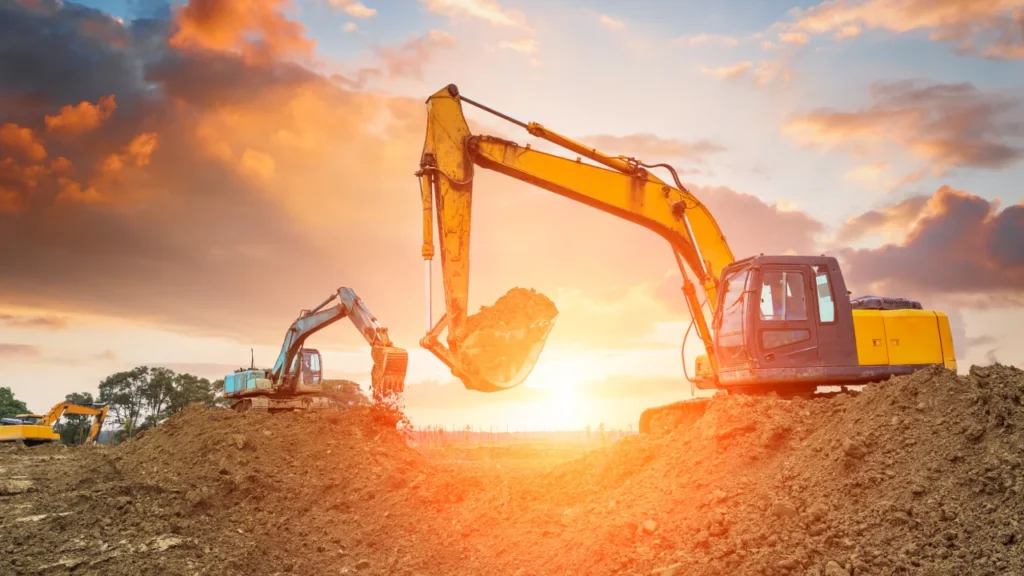
Smart buyers look for the costs that don’t appear on the sales invoice.
Transportation and Mobilization
You bought it, now you have to move it.
| Transport Type | Cost Range | When It Applies |
|---|---|---|
| Local Delivery | $300 – $1,000 | < 100 miles, standard width |
| Domestic Heavy Haul | $4 – $8 per mile | Long distance, oversized loads |
| International Shipping | $5,000 – $25,000+ | Importing via Roll-on/Roll-off or Flat Rack |
Logistics is where budgets break. Buying a cheap excavator in Texas when you are in New York might cost more than buying a local, slightly more expensive unit. Platforms like JumboBee integrate these logistics costs into the buying process, providing transparency on “landed cost” rather than just “machine cost.”
Attachments and Machine Setup
A bare excavator is useless.
- Buckets: $3,000 – $10,000 depending on size and reinforcement.
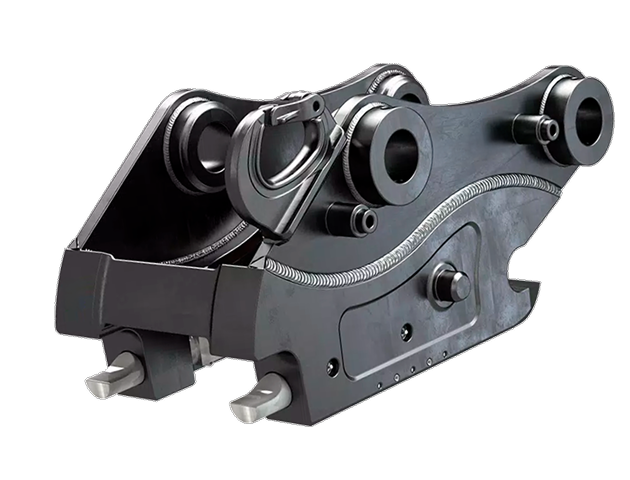
- Hydraulic quick coupler: $5,000 – $12,000 (essential for swapping tools fast).
- Auxiliary piping: If the used machine doesn’t have it, retrofitting costs $5,000+.
Compliance, Registration, and Insurance
- EPA/emissions: In California (CARB) and parts of Europe, you cannot operate older Tier 3 engines. Retrofitting is often impossible or cost-prohibitive. You must buy newer machines.
- Insurance: Inland Marine insurance typically costs 1–3% of the machine’s value annually.
- UCC filings: If financing, lenders will file liens which have nominal fees but add to the paperwork.
Excavator Cost vs Rental Economics
Sometimes the best way to manage excavator cost is not to buy one at all.
| Factor | Buy | Rent |
|---|---|---|
| Upfront Cost | High (Down payment + Taxes) | Low (Deposit + First Month) |
| Maintenance | Owner pays all | Rental company pays (usually) |
| Depreciation | Owner absorbs loss | None |
| Flexibility | Stuck with asset | Return when job ends |
| Availability | Always available | Subject to fleet availability |
Utilization Threshold Analysis
The industry standard break-even point is typically 60% utilization.
- If you will use the excavator more than 8–10 months per year (or >1,000 hours), buying is usually cheaper.
- If the project is 4 months long and you don’t have the next job lined up, renting eliminates the carrying costs of a dormant machine.
How to Estimate the Total Cost of an Excavator for Your Project
Use this framework to answer how much does an excavator cost for your specific situation.
Step-by-Step Cost Modeling Framework
- Define duration: How long is the project? (e.g., 24 months).
- Estimate hours: How many operational hours? (e.g., 1,500 hours).
- Select size: What is the smallest machine that can efficiently do the job? (Oversizing wastes fuel).
- Source price: Check JumboBee for current global market pricing on that size class.
- Add logistics: Estimate shipping from the seller to your site.
- Calculate residual: Estimate what you can sell the machine for after 24 months/1,500 hours.
- Calculate net cost: (Purchase Price + Operating Costs + Logistics) – Resale Value = Real Cost
How Marketplaces Influence Excavator Pricing
The internet has flattened pricing. In the past, you were limited to local dealer inventory. Today, you can source equipment globally.
| Region | Local Price Level | Export Demand | Price Volatility |
|---|---|---|---|
| North America | High | Moderate | Low |
| Europe | High | High | Low |
| Japan | Moderate | Very High | Moderate |
| Southeast Asia | Low | Moderate | High |
- Global arbitrage: Often, high-quality used excavators in Japan or Europe are priced lower than in the US due to strict local inspection regulations that force turnover.
- Opportunity: A buyer in the US can purchase a machine from Japan via a marketplace like JumboBee. Even with shipping and customs added, the total excavator price may be 15–20% lower than buying a comparable unit locally.
- Risk: Without proper inspection, this is risky. Verified marketplaces mitigate this by offering inspection reports and handling the import compliance.
Price Outlook Beyond 2026 (Structural View)
Looking ahead, excavator cost trends suggest stability but not reduction.
- Tech inflation: As autonomy and safety features become mandatory, base prices will rise.
- Labor shortages: The lack of skilled operators drives demand for “easy to operate” machines with automation, which are more expensive.
- Infrastructure spending: Government infrastructure bills in the US and abroad create a sustained floor for demand, preventing price crashes.
Flexibility is the new currency. Buyers who can source globally and handle logistics efficiently will beat local market pricing.
Conclusion
So, how much is an excavator in 2026?
- A mini excavator is $35,000 – $95,000.
- A standard construction excavator is $150,000 – $320,000.
- A production machine is $400,000+.
But the sticker price is just the entry fee. The real game is managing the Total Cost of Ownership. Smart buyers look at the purchase price, subtract the resale value, and add the operating expenses. They understand that a cheap machine with no parts support is a liability, while a premium machine with high resale value is an asset.
In a global market, you are not restricted to your local zip code. Platforms like JumboBee allow you to compare excavator price options worldwide, giving you the leverage to find the best machine for your budget. Whether you buy new or used, ensure you factor in logistics, compliance, and maintenance to get the true picture of your investment.
Ready to check real-time market prices?
New mini excavators range from $35,000 to $95,000. Medium excavators (10-25 tons) range from $150,000 to $320,000. Large excavators (30+ tons) start around $300,000 and can exceed $700,000 depending on configuration.
If you plan to use the machine for more than 60-70% of the year (approx. 8-10 months), buying is generally cheaper. For short-term projects or sporadic use, renting avoids maintenance, storage, and depreciation costs.
Used prices depend heavily on hours and condition. A medium excavator with 3,000–5,000 hours typically sells for 55–70% of its new price; with 5,000–8,000 hours, expect 40–55%. A $200,000 new machine with around 4,000 hours might sell for $110,000–$140,000 depending on condition and brand.
Caterpillar generally commands the highest resale value globally, followed closely by Komatsu and Volvo. These brands have extensive service networks which keep used machines desirable.
Logistics (shipping and permits) and undercarriage wear are the biggest hidden costs. Replacing a full undercarriage on a medium excavator can cost $15,000+, and shipping a large machine across the country can cost thousands in heavy haul fees.







Be the first to leave a comment
There are no replies to this post yet. Share your thoughts and help start the conversation.