 Trends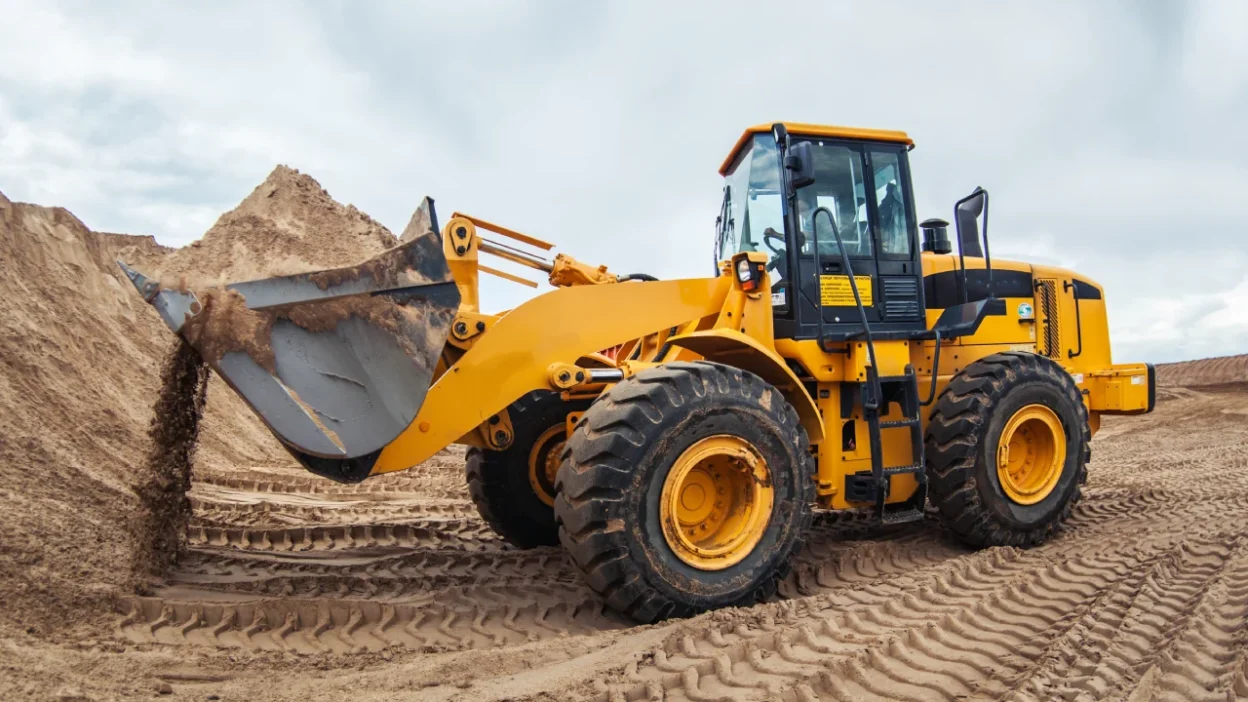
The construction equipment industry stands at a massive crossroads. For decades, the formula was simple: build bigger machines with more horsepower to move more dirt. That era is ending. Today, a shift occurs where efficiency, data, and flexibility matter just as much as raw power.
If you are a contractor, fleet manager, or investor, you cannot rely on the old playbook. The market evolves rapidly, driven by labor shortages, strict environmental regulations, and a volatile global supply chain.
This guide analyzes critical construction equipment trends. We look beyond basic year-over-year predictions. Instead, we focus on structural changes that will define how you buy, use, and sell heavy machinery for the next decade.
Introduction to Structural Shifts
Why is the industry changing now? It comes down to pressure. Margins in construction are notoriously thin. According to the CFMA’s annual financial benchmarking data, net profit margins for general contractors typically range from 2–6%, compressing further in highly competitive bid environments. Material costs fluctuate wildly due to global instability.
Finding skilled operators is harder than ever. According to analysis by the Information Technology and Innovation Foundation (ITIF), the construction industry in the US and Europe is facing a growing labor shortage driven by large-scale infrastructure and data center expansion toward 2026. To remain competitive, companies must do more with fewer skilled workers.
This necessity drives every trend discussed here. Technology is no longer a luxury; it is a survival tool. Sustainability is no longer just PR; it is a requirement to bid on government contracts.
We break down how these shifts impact the heavy construction equipment market. We also provide practical steps you can take to adapt your business model immediately.
Global Overview of Construction Equipment Market
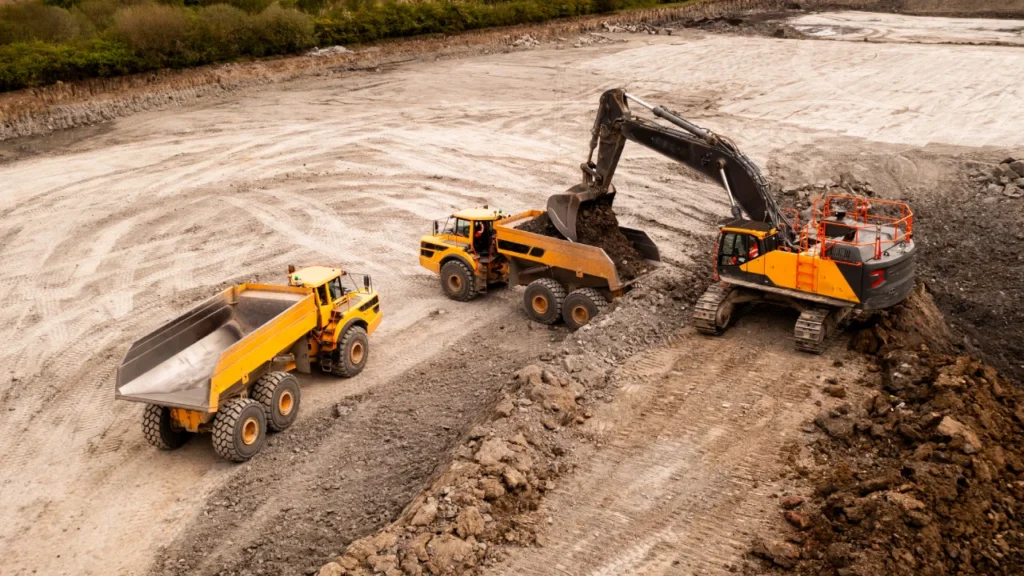
Before diving into technologies, we must look at the macro picture. The market is not growing evenly. Demand shifts based on regional infrastructure needs and economic stability. According to the World Bank, global growth is projected to remain steady at approximately 2.6% through 2026, though rising trade barriers and policy uncertainty continue to create a patchwork recovery across different sectors.
Global market value for construction equipment continues to rise, but the drivers of that growth change. In North America, the focus is on replacing aging fleets and meeting infrastructure demands spurred by federal funding. The OECD notes that while advanced economies show resilience, high interest rates and fiscal consolidation are forcing a shift toward equipment that prioritizes long-term operational efficiency over sheer volume.
In developing regions, rapid urbanization drives the need for new machinery. However, the types of machines required are shifting. The one-size-fits-all approach of global manufacturing is fading.
Regional Growth Dynamics
Growth dynamics vary significantly by region. North America sees high demand for replacement machinery and technology upgrades to combat labor shortages. Contractors are willing to pay a premium for automation.
The Asia-Pacific region continues its infrastructure expansion. This is specifically evident in energy and transport sectors. There is a massive appetite for heavy earthmoving gear here.
Europe focuses heavily on sustainability, retrofitting, and compact machinery. Urban zones here have the strictest emission regulations in the world. This drives innovation in electric mini-excavators.
Growth is not just about volume; it is about value. A modern excavator costs more than one from ten years ago because it contains sophisticated computers, sensors, and emissions control systems.
Heavy vs. General Equipment Segments
It is vital to distinguish between general equipment and the heavy sector. General equipment includes skid steers, compact track loaders, and mini excavators. This segment is driven largely by residential housing.
The heavy construction equipment market is different. It includes large excavators (20+ tons), wheel loaders, articulated dump trucks, and motor graders. These are driven by government spending, mining, and energy projects.
These assets have longer investment cycles and higher capital requirements. A decline in home building hurts skid steers, but it might not touch the 90-ton excavators digging lithium mines.
Heavy equipment currently sees a surge due to massive government stimulus packages globally. These projects require earthmoving capability that compact machines simply cannot provide.
Trend 1: Digitalization and Data-Driven Equipment Management
If you own a machine built in the last five years, you own a computer that happens to dig dirt. The biggest shift in the industry is the move from reactive repair to predictive management.
Telematics used to be about knowing where your machine was (GPS). Now, it is about knowing how your machine feels. Modern sensors monitor hydraulic pressure, engine temperature, idle times, and fuel burn in real-time.
Financial Impact of Telematics
Why this matters for your wallet is clear when you analyze failure scenarios. Imagine a transmission failure on a large wheel loader. In a reactive approach, the machine breaks down unexpectedly.
Downtime might be 5 days while you wait for parts and a technician. The repair cost is $15,000, and the rental replacement cost adds another $4,000. The total hit is $19,000, plus the unquantifiable cost of project delay.
In a data-driven approach, telematics detect abnormal vibration patterns weeks in advance. You schedule maintenance during a planned rain delay. The part cost is $2,000, and operational downtime is zero.
The savings on a single event can exceed $17,000. Data also allows fleet managers to calculate utilization rates accurately. If you see a dozer idling 40% of the time, you have an operational problem.
Integration and Software Ecosystems
The problem with early tech was fragmentation. A fleet with Cat, John Deere, and Komatsu machines needed three different login portals to check data. This was a nightmare for fleet managers.
This is changing. ISO standards like the AEMP Telematics Standard now allow data to flow between different manufacturers. This integration is vital for mixed fleets.
Key developments include unified dashboards that view all assets on one screen. You no longer need five passwords to see where your trucks are.
Marketplace integration is another leap forward. Platforms connect fleet management software directly to parts suppliers. If a code triggers, a part order can be drafted automatically.
Trend 2: The Human Element and Workforce Transformation
The most acute pain point in construction today is not the cost of steel or diesel. It is the lack of people. The Great Crew Change is underway as baby boomers retire.
They are taking decades of institutional knowledge with them. Younger generations are less attracted to traditional trade roles. This demographic cliff is forcing the industry to adapt.
Redesigning for Retention
Manufacturers are redesigning cabs to be more like cockpits. Joysticks, touchscreens, and climate control are standard. These features are retention tools.
If a skilled operator has the choice between a 15-year-old machine with manual levers and no AC, or a new machine with an air-suspension seat, they choose the latter.
Equipment quality has become a recruitment tool. Companies with modern fleets attract better talent. It is a competitive advantage in a tight labor market.
Deskilling Technologies
The skills gap drives the adoption of deskilling technologies. A novice operator in a traditional grader might take years to master finishing a slope.
With modern semi-autonomous grade control, that same novice can achieve nearly the same results in weeks. The machine handles the precision; the human handles the strategy.
This lowers the barrier to entry for new operators. It allows companies to hire from a broader, less specialized talent pool. Training is also shifting to the virtual world.
Simulators replicate the feel of specific machines. Operators can log hours and make mistakes without burning fuel or risking damage to actual equipment.
Trend 3: Electrification and Alternative Power Solutions
Diesel is still king, but its reign is challenged. Electrification moves faster than many skeptics predicted. However, it faces physical limitations in the heavy sector.
We must separate hype from reality. Electrification works now in compact machines. Mini excavators and compact wheel loaders are leading the charge.
These machines have duty cycles that allow for overnight charging. Their power requirements align well with current battery density. They are ideal for urban sites.
Heavy Equipment Reality
Where diesel – or hybrid – remains dominant is in heavy earthmoving. A 50-ton excavator running at full load requires massive energy density. Batteries are currently too heavy for this.
A battery pack large enough to run a large dozer for a 10-hour shift would cost more than the machine itself. It would also weigh as much as a small car.
For remote locations like mining sites without grid access, diesel remains the only viable option. You cannot run an extension cord into the middle of the desert.
Rise of Hybrids
However, hybrid technology is the sweet spot for the heavy construction equipment market. Several hybrid approaches are now available. The most established uses ultracapacitors to capture energy during swing braking – when the excavator’s upper structure decelerates, that kinetic energy is recovered and reused on the next swing or lift cycle.
Komatsu and Hitachi have offered this system commercially for over a decade. Other hybrid designs use lithium battery buffers or hydraulic accumulators, with different trade-offs in energy density and cycle life.
Across these variants, real-world fuel savings typically range from 15–30% depending on application and duty cycle.
It is a proven, robust solution. It bridges the gap between diesel and full electric. It offers savings today without the infrastructure headaches of tomorrow.
Infrastructure Bottlenecks
Infrastructure remains the biggest bottleneck. Buying an electric machine is the easy part; charging it is the hard part.
Scenario: You are building a highway in a rural area. There is no power grid. Bringing a diesel generator to charge an electric excavator defeats the purpose.
Manufacturers are working on fast charging solutions. But for now, range anxiety is real. Contractors must assess job site readiness carefully.
Trend 4: Rising Demand for Used and Refurbished Equipment
This is one of the most immediate trends affecting buyers today. The stigma around used equipment is vanishing. Instead, it becomes a strategic financial maneuver. The World Economic Forum highlights that the construction sector is the world’s largest consumer of raw materials, and a shift toward circularity — including the reuse of machinery — is essential to narrowing the global infrastructure gap while reducing costs.
New equipment prices have skyrocketed due to inflation and tech. Supply chain delays mean ordering a new custom dozer might take 8 to 12 months. To combat these delays, the OECD notes that Product Life Extension models, such as refurbishment and remanufacturing, are moving from niche markets to the mainstream as firms seek to decouple economic growth from resource constraints.
In construction, time is money. You cannot bid on a job starting next month if your machine arrives next year. Used equipment fills this gap immediately.
New ROI Calculation
The ROI calculation has shifted. A new large excavator might cost $350,000 with a 9-month wait. A used model might cost $210,000 with immediate availability.
The used machine costs 40% less upfront. However, total cost of ownership is more complex. A machine at 8,000–12,000 hours may carry meaningfully higher annual maintenance costs – budgeting an additional $15,000–30,000 per year for parts and service is not unusual at this stage. Even accounting for this, immediate availability and the flatter depreciation curve often make the used machine the stronger financial choice for projects of 12 months or more. Run the numbers against your specific machine condition before committing.
Furthermore, the depreciation curve flattens. A new machine loses significant value the moment it hits the dirt. Industry auction data from major remarketers suggests first-year depreciation commonly runs 15–25% for standard earthmoving equipment, though the range varies by brand, machine type, and hour accumulation. High-demand models in supply-constrained markets can hold value more aggressively.
A used machine holds value better if maintained well. This protects your balance sheet and improves your liquidity.
Global Arbitrage
Secondary market growth is exploding. This leads to the rise of global marketplaces. Buyers in one continent connect with sellers in another. According to UNCTAD, while global merchandise trade growth is slowing to 2.6% in 2026, South-South trade between developing nations continues to outpace traditional North-South flows, creating new corridors for equipment redistribution.
Global arbitrage is becoming a standard tactic. A tractor model might be scarce in Europe but abundant in the US Midwest. Smart buyers exploit this. The World Bank notes that the expansion of digital trade frameworks is essential for this trend, as the legal recognition of e-signatures and paperless trade systems reduces the friction of cross-border transactions for small and medium enterprises.
Platforms that handle inspection and logistics bridge this gap. They allow a buyer in Egypt to purchase a tractor from the USA with confidence.
Reman Revolution
The Reman (Remanufacturing) trend is also gaining steam. OEMs are investing heavily in facilities that rebuild components to as-new specs.
Buying a remanufactured engine is often 30-40% cheaper than a new one. It comes with a similar warranty and is far more sustainable.
This supports the Circular Economy model. It keeps raw materials in use for longer and reduces the industry’s carbon footprint.
Trend 5: Automation and Semi-Autonomous Machines
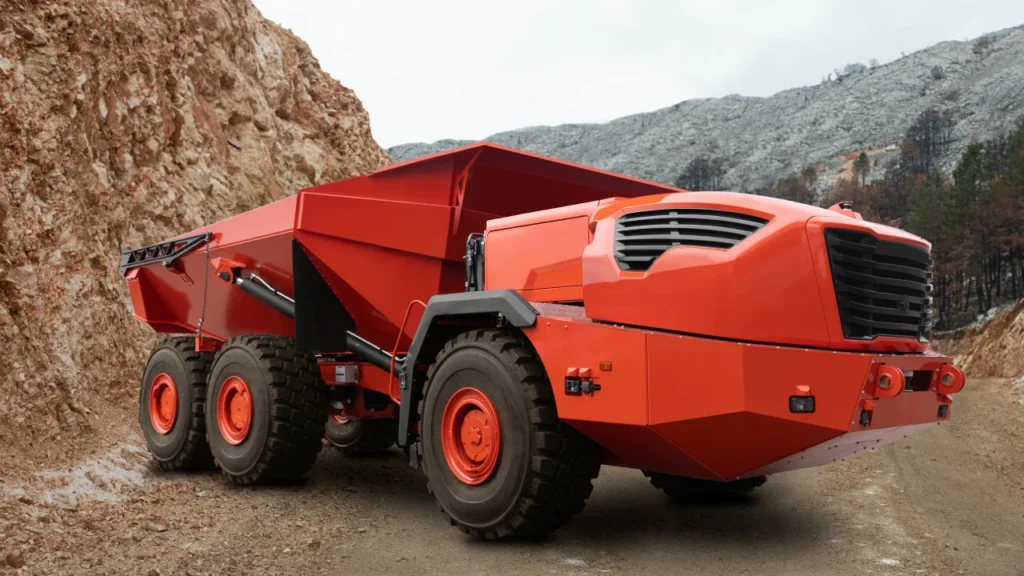
Robots are not taking over the job site entirely, but they certainly help. Full autonomy is limited to highly controlled environments like mines.
In these closed loops, there are fewer variables. Safety perimeters can be strictly enforced. But on a chaotic urban job site, full autonomy is years away.
The mainstream trend is Operator Assistance. This technology enhances human performance rather than replacing it.
Grade Control and Weighing
Examples of Assistance Tech include 2D/3D Grade Control. The machine automatically stops the bucket from digging too deep.
An inexperienced operator can dig a perfect grade on the first try. This reduces rework and eliminates the need for manual grade checking.
Payload weighing is another game-changer. The loader measures the weight of the dirt in the bucket instantly.
This prevents underloading, which is inefficient. It also prevents overloading, which is dangerous and illegal. Every cycle is optimized.
Barriers to Adoption
Barriers to mass adoption exist. Retrofitting a fleet with 3D guidance is expensive. It often costs $20,000 to $50,000 per machine.
Connectivity is another issue. These systems require robust GPS and internet connections. Signals can be spotty in remote areas or deep urban canyons.
Trust is the final hurdle. Site managers hesitate to trust software with safety-critical tasks. But as the tech proves itself, adoption is accelerating.
Trend 6: Sustainability and Emissions Regulations
Green construction is no longer optional. It is regulatory. Governments use both carrots and sticks to force the industry toward lower emissions.
In Europe, stringent Stage V emissions standards are mandatory. Some cities have Low Emission Zones where older diesel machines are banned entirely.
In the USA, Tier 4 Final standards are the baseline. California pushes even harder, incentivizing zero-emission fleets.
Contract Eligibility
If you want to win government infrastructure contracts, you need to prove your fleet meets standards. Owning a fleet of 20-year-old dirty diesels might disqualify you.
This regulatory pressure is reshaping resale values. An older, non-compliant machine might be worthless in California but valuable elsewhere.
This disparity drives the export market for used equipment. Machines migrate from highly regulated zones to less regulated ones.
Design Changes
Manufacturers are redesigning machines from the ground up. They are using recycled steel and plastics in manufacturing.
They are designing machines for Reman. They ensure that 90% of the machine by weight can be recovered and reused.
HVO (Hydrotreated Vegetable Oil) fuel compatibility is a major interim solution. Many new diesel engines are certified to run on HVO.
This reduces net carbon emissions by up to 90% without changing the engine. It allows fleets to go green instantly.
Trend 7: Shift Toward Rental, Leasing, and Flexible Ownership
Ownership is not the only path to access. The concept of Equipment-as-a-Service (EaaS) is gaining traction.
Instead of buying a machine, you pay for the output of the machine. You pay for cubic yards moved or hours operated.
This shifts the risk of downtime and maintenance. It moves from the user to the provider. It turns capex into opex.
Rental Growth Drivers
Rental growth is driven by uncertainty. In a volatile economy, contractors hesitate to lock up capital. Renting allows them to scale their fleet up or down.
It also allows access to specialized gear. You might own your core fleet of excavators. But you rent trench rollers or large cranes that you use rarely.
Dealers are transforming into rental houses. They do not just want to sell you iron. They want to sell you a subscription.
This power-by-the-hour model aligns incentives. Both the dealer and the contractor want the machine running efficiently.
Trend 8: Supply Chain 2.0 and Regionalization
The construction equipment industry is global. A factory shutdown in China affects parts availability in Texas. A war in Eastern Europe affects steel prices.
The Just-in-Time manufacturing model failed during the pandemic. It prioritized low inventory costs but left no buffer for error.
Now, manufacturers move toward Just-in-Case. They hold more inventory of critical components like semiconductors.
Regionalization Strategy
Regionalization is the new strategy. Manufacturers are building factories closer to where the machines are sold. This reduces shipping times and tariff risks.
For buyers, this volatility emphasizes the importance of logistics. Buying a machine is easy; getting it to your site is the challenge.
Supply chain friction has made logistics providers key players. Digital control towers track shipments in real-time. Buyers can see exactly where their machine is.
What These Construction Equipment Trends Mean for Buyers and Contractors
How do you apply this knowledge? Purchasing strategies are changing. The Hybrid Fleet Strategy is becoming the gold standard.
Smart companies adopt a mixed approach. They balance ownership with flexibility. This protects them from market swings.
Three-Pronged Strategy
- Core fleet: Buy new or low-hour used machines for daily tasks. These are the workhorses you know you will use for 5 years.
- Flex fleet: Rent for peak demand or specific projects. This keeps your balance sheet light and preserves cash.
- Strategic used buys: Purchase high-quality used heavy equipment for long-duration projects. This is for jobs where immediate delivery is crucial.
Buy vs. Rent Decision Matrix
| Factor | Buy (New/Used) | Rent |
|---|---|---|
| Utilization | Over 60% (1,000+ hrs/year) | Under 40% (< 600 hrs/year) |
| Project Length | 12+ Months | Weeks or Months |
| Cash Flow | Capital available | Preserve cash |
| Maintenance | Have in-house shop | Outsourced to rental co. |
Risk management is critical. Flexibility is your best defense. Avoid over-leveraging on new equipment if the outlook is shaky.
High-quality used equipment offers a safer exit strategy. If work dries up, you can sell the asset with less financial loss.
What to Expect Beyond 2026
We avoid crystal balls, but certain trajectories are set. Prices will stabilize but remain high. The days of cheap machinery are gone.
Tech adoption will accelerate. As workforce demographics shift, automation becomes mandatory, not optional.
Global trade will increase. Buyers will increasingly look across borders for the right iron. The market will become truly borderless.
We are in a 10-to-15-year transition. Diesel will not vanish overnight. Automation will not replace people tomorrow.
The industry moves toward a hybrid future. Hybrid engines, hybrid ownership models, and hybrid human-machine workflows. Success belongs to the adaptable.
The Digital Product Passport (DPP) is a major initiative driven by the EU. It requires digital documentation for construction products and machinery. Think of it as a digital twin of the machine’s history. It tracks data on materials, maintenance, and repair logs.
For buyers, this increases transparency. You can scan a QR code on a used excavator and see its entire life. You see where it was made and what parts were replaced. This will likely boost resale value for well-maintained machines.
This is a complex financial decision. Tier 4 Final machines are expensive and require high-quality fuel and DEF. If you export this to a region with only high-sulfur fuel, the emission system will fail. This leads to massive repair bills.
However, some manufacturers offer de-tiering kits. These allow high-spec machines to run on lower-quality fuel. If you plan to resell locally later, the Tier 4 machine holds better value. If the destination is strictly non-regulated, a simpler Tier 3 machine is often better.
Standard renting is time-based. You pay for the day or month, regardless of use. EaaS is output-based. You pay per hour the engine runs or per ton of dirt moved.
EaaS also includes a deeper level of service. Maintenance and parts are included. It aligns costs perfectly with productivity. If you don’t work due to rain, you don’t pay. A rental clock keeps ticking regardless of the weather.
This is the biggest unknown in the industry. Early data suggests they hold value well if battery health is certified. The battery is the most expensive component, often 40% of the cost.
If a 5-year-old electric mini-excavator has 90% battery capacity, it commands a premium. Operating costs are low. But if the battery is dead, the value plummets. Battery Health Certificates will become mandatory for this market.
Labor shortages drive up the price of technology-enabled equipment. Machines with ease-of-use features are in higher demand. Contractors need machines that make rookies look like pros.
Conversely, basic machines with manual controls are seeing softer demand. It is hard to find operators who can run them efficiently. The labor shortage effectively places a premium on automation features.
An electric motor has significantly fewer moving parts than a diesel engine – there are no pistons, crankshafts, camshafts, fuel injectors, or turbochargers to service. This mechanical simplicity is the primary driver of the maintenance cost advantage.
Manufacturers estimate maintenance cost reductions of 30% to 50%. However, this is offset by the eventual cost of battery replacement. For the first 5 years, the operating cost advantage is undeniable.
A Grey Market machine is one built for a specific region but imported into another. The risk increases because of digitalization. Modern machines are software-locked to their region.
If you bring a Japanese-spec excavator to the US, the local dealer may not be able to service it. The diagnostic laptop might not talk to the ECU. Telematics might not work. It is riskier now than in the mechanical era.
HVO is a drop-in replacement for diesel. Unlike traditional biodiesel, it is chemically almost identical to mineral diesel. It is stable and works in cold climates.
The advantage is instant decarbonization. You can reduce your carbon footprint by 90% without buying new machines. It allows you to bid on green contracts with existing iron. The downside is higher cost and variable availability.
3D printing (additive manufacturing) is slowly solving the long tail parts problem. Dealers don’t want to stock a part for a 20-year-old machine. It takes up shelf space.
With 3D printing, they can print the part on demand. This keeps older machines running longer. It reduces the need to scrap a machine just because a plastic bracket is no longer made.
AI takes telematics data to the next level. It doesn’t just report a high temperature. It analyzes patterns across thousands of machines. It learns what a failure looks like before it happens.
It might notice a tiny pressure drop combined with a vibration. A human might miss this. AI flags it as a pre-failure indicator for a specific bearing. This precision prevents catastrophic breakdowns.
For heavy equipment, yes. Hydrogen combustion engines are very similar to diesel engines. They are robust and handle dust and vibration well. They offer the high power density that batteries lack.
Several major OEMs are betting on hydrogen for their largest machines. It allows them to use existing supply chains and engine block designs. The challenge, as always, is fuel storage and distribution on site.
Insurance for autonomous or semi-autonomous gear is complex. Who is liable if a machine digs in the wrong spot? The operator or the software provider?
You need specialized cyber-physical policies. These cover standard physical damage but also liability from software errors. Standard cargo or liability policies often have exclusions for autonomous operation.
Auctions are growing in speed. Private treaty is growing in value. As machines get more complex, buyers want inspection reports and warranties. These are harder to get at a rapid-fire auction.
Online marketplaces that offer a middle ground are winning. They offer the Buy Now speed of an auction but the detailed data of a private sale. This hybrid model is the future of used equipment trading.






Be the first to leave a comment
There are no replies to this post yet. Share your thoughts and help start the conversation.