 News
News 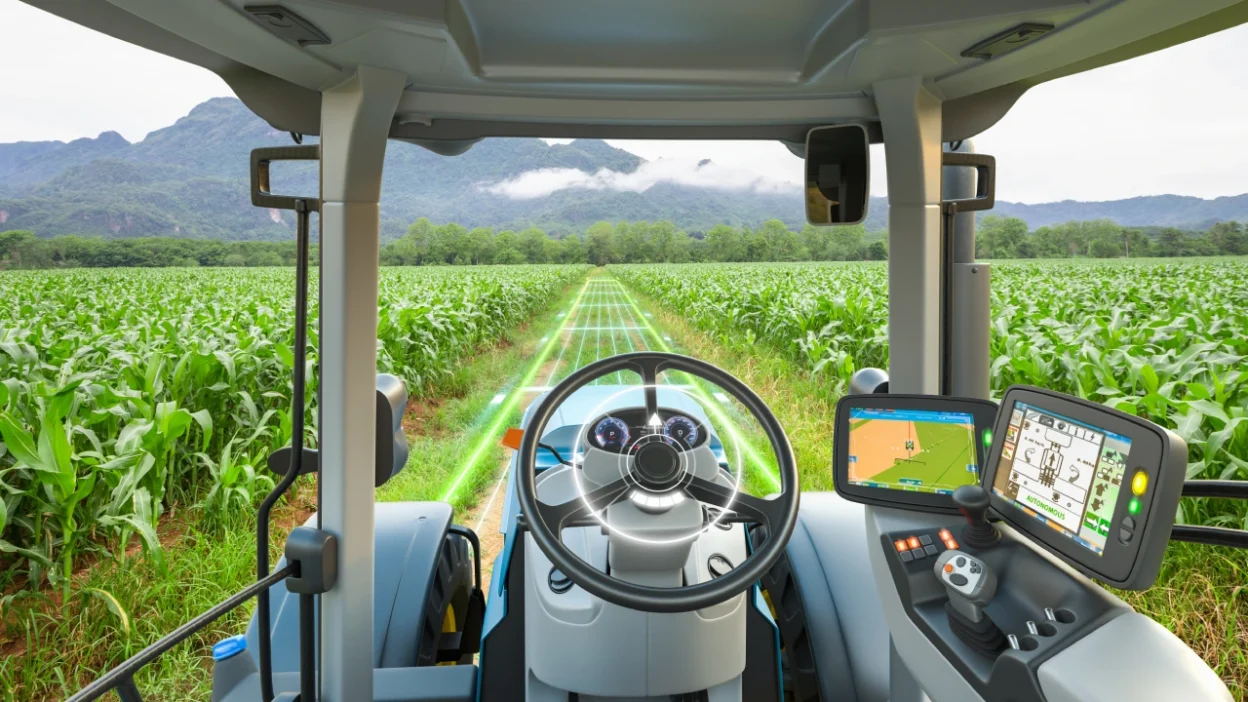
Farming is undergoing a massive transformation. As we navigate through this year, heavy machinery is no longer just about horsepower and steel. Today, algorithms, sensors, and global data networks dictate how efficiently a farm operates and how profitably a business scales.
Understanding artificial intelligence in agriculture requires looking beyond basic field operations. While automated irrigation and drone crop monitoring capture public attention, massive financial shifts are happening inside the machinery itself. Data now drives how agribusinesses maintain fleets, calculate depreciation, and source heavy equipment across international borders.
Let’s break down how data-driven technologies reshape the agricultural machinery landscape. We will explore practical financial outcomes, examine real-world equipment decisions, and demonstrate how global platforms enable smarter sourcing strategies for high-value assets.
What AI Means for Agriculture in 2026

Modern agriculture relies on continuous data processing. Traditional farming required operators to make decisions based on historical knowledge, manual soil testing, and visual equipment inspections. Today, farming operations process terabytes of data daily.
Shift from traditional farming to data-driven agriculture involves integrating machine learning, advanced sensors, and automation directly into core workflows. Tractors communicate with cloud servers. Combines adjust their internal settings based on real-time grain moisture analysis. Marketplaces track global supply chains to predict machinery values.
According to reports from the Food and Agriculture Organization, agriculture must become significantly more data-intensive to meet the food demands of a growing global population. The FAO highlights that optimizing existing resources through digital tools is mandatory for sustainable production.
Macro trend is clear: equipment that cannot collect, process, or act on data is rapidly becoming obsolete. Agribusinesses now treat machinery as mobile computing platforms rather than simple mechanical tools. This shift allows farm managers to track every drop of fuel, every hour of operation, and every subtle change in engine performance.
How AI Improves Productivity and Reduces Costs in Farming
Machine learning directly impacts the bottom line by optimizing yields and slashing input costs. Farm managers constantly battle fluctuating prices for fuel, fertilizers, and labor. Data analytics provides a defense against these rising expenses.
Research from McKinsey & Company indicates that data-driven farming practices can increase agricultural productivity while significantly reducing resource waste. When applied to heavy machinery, these practices yield immediate financial returns.
Consider fuel consumption. An automated routing system calculates the most efficient path for a tractor across a highly irregular field. By avoiding overlapping passes and minimizing idle time during turns, a farm can reduce fuel consumption by up to 15 percent per machine. For an operation running five large tractors, this translates to thousands of dollars saved annually.
Better planning and forecasting also reduce fertilizer and chemical inputs. Instead of applying uniform amounts of fertilizer across an entire field, data-connected sprayers adjust their output minute by minute. Sensors read soil conditions and plant health, instructing the machinery to apply chemicals only where absolutely necessary.
Labor costs drop as automation takes over repetitive tasks. Operators experience less fatigue when machines handle steering and implement adjustments. This allows less experienced operators to achieve the same efficiency as seasoned veterans, solving a major challenge in modern agricultural staffing.
Key AI Applications in Agriculture Equipment
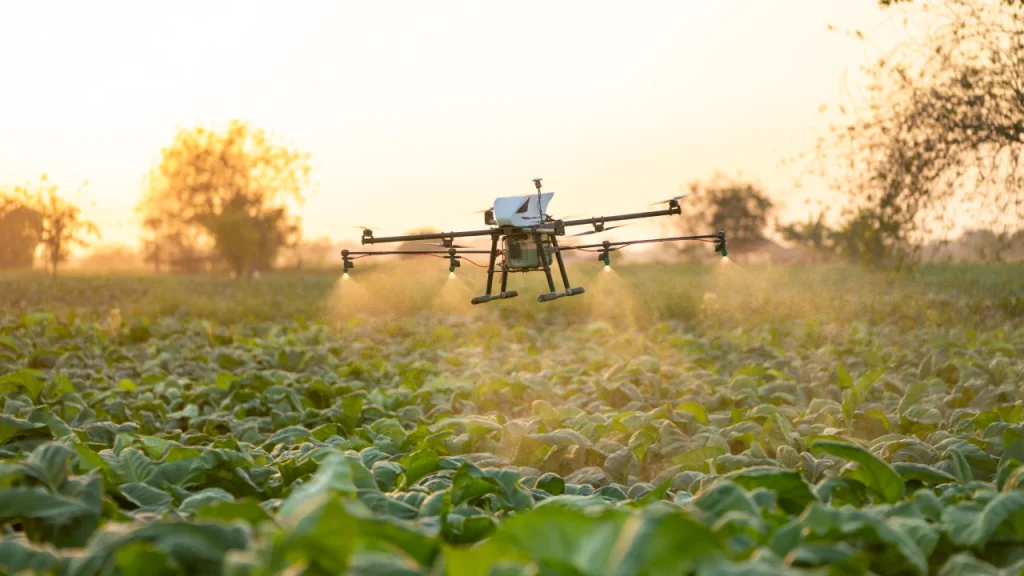
Four applications account for most of the measurable return on data-driven machinery. Each one attaches to a different part of the operating budget.
Predictive Maintenance
Onboard sensors monitor vibration, fluid temperature, and hydraulic pressure, flagging component wear weeks before failure. This converts emergency repairs into scheduled ones and protects the harvest window.
Precision Spraying
Camera and sensor systems distinguish crop from weed in milliseconds and trigger individual nozzles. Chemical is applied only where it is needed, cutting herbicide volume without cutting coverage.
Route Optimization
Guidance software calculates the most efficient path across irregular field boundaries, eliminating overlapping passes and reducing idle time on headland turns. Fuel and hours both drop.
Pricing Analytics
Valuation engines track global listings, days on market, and realized sale prices to establish what a specific configuration is actually worth right now, rather than what a printed guide said last quarter.
The first three save money on machines a farm already owns. The fourth changes which machines a farm should buy in the first place.
AI in Farm Equipment: Smarter Machines and Precision Agriculture
Heavy equipment manufacturers are at the forefront of the digital farming revolution. The integration of AI in agriculture is most visible inside the cab of modern tractors, combines, and forage harvesters.
John Deere provides a perfect real-world example of this implementation. Their latest machinery features sophisticated vision systems and machine learning algorithms. Cameras mounted on sprayers distinguish between crops and weeds in milliseconds, triggering individual nozzles to spray herbicide only on the weed. This precision reduces chemical usage dramatically.
Equipment becomes data-driven through interconnected systems:
- GPS-guided tractors handle sub-inch accuracy steering
- Automated combines adjust rotor speed and sieve clearance continuously
- Sensor-based implement adjustments maintain exact planting depths
When a modern combine harvests a field, it does not just cut crops. It measures yield per square foot, analyzes grain quality, and maps field topography. It sends this data back to the farm office in real time. If the machine detects high moisture levels in a specific field sector, it automatically recalibrates its threshing mechanism to prevent grain damage.
This level of automation means the machine constantly optimizes its own performance. The operator transitions from a driver to a systems manager, overseeing the data flow while the machine executes the physical labor with mathematical precision.
Predictive Maintenance: Reducing Downtime and Extending Equipment Life
Equipment failure during a critical harvest window causes catastrophic financial losses. Traditional maintenance relies on fixed schedules, such as changing the oil every 250 hours. Predictive maintenance completely changes this approach.
Algorithms predict failures before they happen by analyzing continuous streams of data from internal machine sensors. These sensors monitor engine vibration, fluid temperatures, hydraulic pressure, and exhaust composition. Machine learning models compare this live data against millions of hours of historical machinery performance.
When an algorithm detects a tiny anomaly in hydraulic pressure, it alerts the fleet manager weeks before a hose bursts. This early warning allows the farm to order parts and schedule repairs during planned downtime, such as a rainy day.
Financial impact is massive. It reduces downtime and improves asset utilization.
| Maintenance Approach | Unplanned Downtime Cost | Repair Cost | Asset Lifespan |
|---|---|---|---|
| Reactive Maintenance | High (Harvest delays) | High (Catastrophic failure) | Short |
| Scheduled Maintenance | Medium (Fixed intervals) | Medium (Replacing good parts) | Average |
| Predictive Maintenance | Near Zero (Planned fixes) | Low (Targeted repairs) | Maximum |
Fewer repairs and longer lifecycles mean better capital efficiency. Catching a failing bearing early might cost $200 in parts and one hour of labor. Waiting for that bearing to shatter inside a transmission could cost $30,000 and sideline the machine for three weeks.
Benefits and Limitations of AI in Agriculture
Data-driven machinery delivers real, measurable gains, but it is not free and it is not universally worth it. An honest view of both sides produces better purchasing decisions than vendor marketing does.
| Benefits | Limitations |
|---|---|
| Lower fuel and input costs through reduced overlap and targeted application | High upfront cost, with full RTK systems reaching five figures per machine |
| Fewer catastrophic failures and less unplanned downtime | Requires connectivity; weak rural broadband or cellular coverage degrades performance |
| Less operator fatigue and lower dependence on experienced staff | Training burden, since operators shift from driving to managing systems |
| Better resale positioning, as data-equipped machines hold value | Data ownership and portability questions between brands and platforms |
| Accurate cost-per-hour and replacement timing | Diminishing returns on small acreage, where payback stretches out |
| Transparent global valuation and sourcing | Vendor lock-in, with proprietary systems that do not talk to each other |
Two limitations deserve particular attention. Connectivity is the first: a predictive maintenance system that cannot reach the cloud is just a dashboard light. The second is scale. Precision technology pays back fastest on large acreage with high input costs, and a smaller operation may see a payback period long enough that a used machine with basic guidance is the smarter buy.
None of this argues against adopting the technology. It argues for sizing the investment to the operation rather than to the brochure.
Cost of AI Systems in Farming
Precision and AI-enabled systems span a wide price range, and the number that matters is not the sticker but the payback period. The figures below are indicative planning ranges for budgeting purposes, not quotes.
| System Type | Indicative Cost Range | Typical Use |
|---|---|---|
| Entry-level visual guidance (lightbar, no steering control) | $800 – $2,500 | Tillage, general field work, first step into precision |
| Basic autosteer | $2,500 – $8,000 | Planting and spraying on straightforward field layouts |
| Advanced autosteer with RTK, analytics, software integration | $8,000 – $15,000 | Controlled traffic, inter-row cultivation, sub-inch work |
| Full RTK automatic steering, high-end configurations | Up to $35,000 | Large commercial operations demanding maximum precision |
| Retrofit steering hardware on older tractors | Add $8,000 – $15,000 | Machines without factory autosteer preparation |
| ISOBUS implement control | Add $2,000 – $5,000 | Variable rate application and implement integration |
| Terrain compensation (IMU) | Add $1,500 – $3,000 | Sloping or uneven ground |
| RTK correction subscription | Several hundred to low four figures annually | Ongoing signal correction, unless subscription-free |
Two points shape the budget. First, retrofit is a real option: an older tractor can carry modern guidance, which matters when comparing a used machine plus a retrofit kit against a new machine with factory technology. Second, subscriptions are an operating cost, not a capital one, and they continue for the life of the machine.
Published payback periods for guidance systems commonly fall in the one-to-two year range on sufficient acreage. That figure is the one to test against your own hectares and input spend before committing.
What This Looks Like in Practice
Two short examples show where the money actually appears.
Case 1 — Savings through predictive maintenance
A mid-size grain operation runs a fleet of four combines. Mid-season, the telemetry on one machine flags a rising vibration signature on a rotor bearing, well inside normal operating tolerance but trending the wrong way. The farm orders the part, schedules the replacement for the next rain day, and completes it in an afternoon.
Result: A planned repair measured in hundreds of dollars replaced an unplanned one measured in tens of thousands, and the combine was in the field on the day it mattered. The value here was not the repair cost avoided. It was the harvest window protected.
Case 2 — Optimization through route planning and section control
A grower farming irregular, terraced fields switches from operator-judged passes to guidance-planned routes with automatic section shutoff on the sprayer. Overlap on headlands and point rows drops sharply, which reduces both fuel burn and chemical applied to ground that was already covered.
Result: Fewer machine hours for the same acreage, lower input volume, and less operator fatigue across long days. The fuel saving was visible immediately; the input saving compounded across every pass of the season.
How AI Is Changing Equipment Buying Decisions
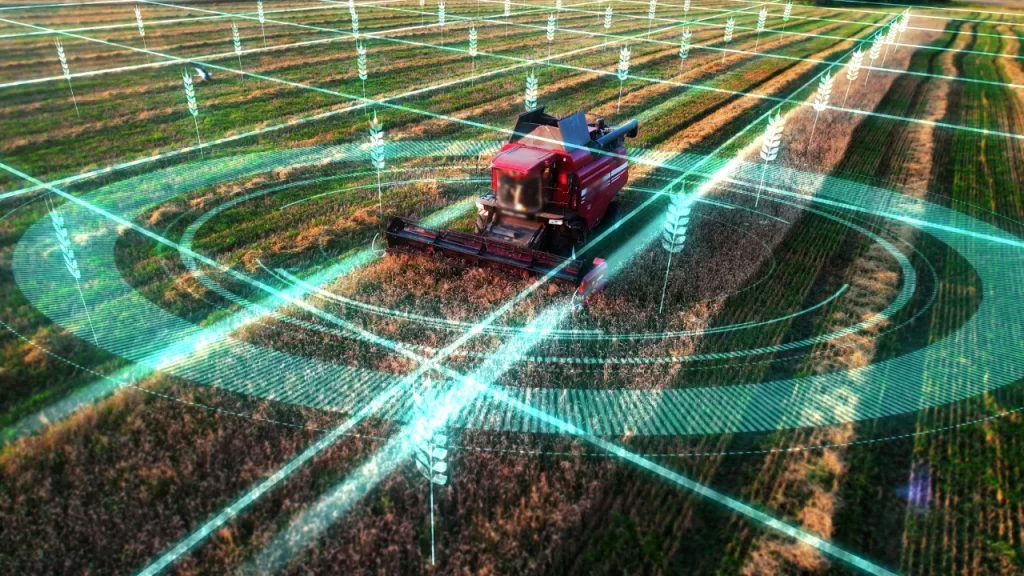
Access to global data changes how farm managers buy machinery. In the past, buying a tractor relied heavily on brand loyalty, local dealer relationships, and intuition. Today, data-driven decision-making governs capital expenditures.
Buyers now compare performance, specifications, and return on investment using advanced analytics. They evaluate heavy machinery based on precise cost-per-hour calculations rather than just the sticker price.
Let us break down a cost-per-hour evaluation for a used 2023 John Deere 8R 370.
- Purchase price is $366,000.
- Expected residual value after four years is $200,000.
- Expected usage is 800 hours per year, totaling 3,200 hours.
- Depreciation cost equals $166,000 divided by 3,200 hours, resulting in roughly $51.87 per hour.
Buyers combine this depreciation metric with projected fuel burn rates, estimated maintenance costs, and labor efficiency gains. By analyzing usage patterns, a farm manager might realize that buying a slightly older machine with specific precision attachments yields a better ROI than buying a brand-new model with standard features.
Moving away from intuition-based buying protects profit margins. Fleet managers use data to determine exactly when a machine reaches its peak depreciation curve, signaling the optimal time to sell it on the global market and upgrade.
AI in Equipment Pricing: From Static Prices to Data-Driven Valuation
Valuing heavy machinery used to be a slow, manual process relying on printed guides and local auction results. Now, pricing models analyze vast amounts of global market data instantly.
Dynamic pricing trends reflect real-time shifts in supply and demand. Algorithms track how many specific combine models are available globally, how long they sit on the market, and what prices they actually sell for. If a massive drought hits a major agricultural region, demand for certain harvesting equipment might drop locally but rise in another hemisphere.
Readers following AI in agriculture news will notice that valuation platforms now account for highly specific machine configurations. A tractor with a continuously variable transmission, dual tires, and an upgraded technology package will be priced dynamically against identical models worldwide.
This creates a transparent environment where similar machines are priced differently across regions based on local economic factors. A machine sitting unsold in the American Midwest might be heavily discounted, while the exact same model commands a premium in Eastern Europe due to regional scarcity. Data exposes these valuation gaps instantly.
AI in Global Equipment Trade: Finding Better Deals Across Markets
The ability to process global listings has revolutionized how agribusinesses source heavy machinery. Buyers are no longer restricted to the inventory sitting on their local dealer lot.
Algorithms continuously analyze listings across countries, identifying price gaps and cross-border opportunities. If a construction firm in Ukraine or a farm in Egypt needs a specific Case IH or New Holland tractor, data tools scan the global market to find the best combination of purchase price, machine condition, and shipping cost.
This creates a massive global sourcing advantage. A buyer in South America might find that purchasing a used 2018 John Deere 333G from the United States, paying for ocean freight, and handling import duties still results in a 15 percent savings compared to buying locally.
Artificial intelligence in agriculture logistics calculates complex shipping routes, estimates customs processing times, and optimizes container space. Disassembling a large combine to fit into standard shipping containers requires precise engineering data. Global platforms automate these calculations, presenting the buyer with a clear, landed cost before they ever click purchase.
Why Equipment Prices Differ Globally (and How Data Helps Identify Opportunities)
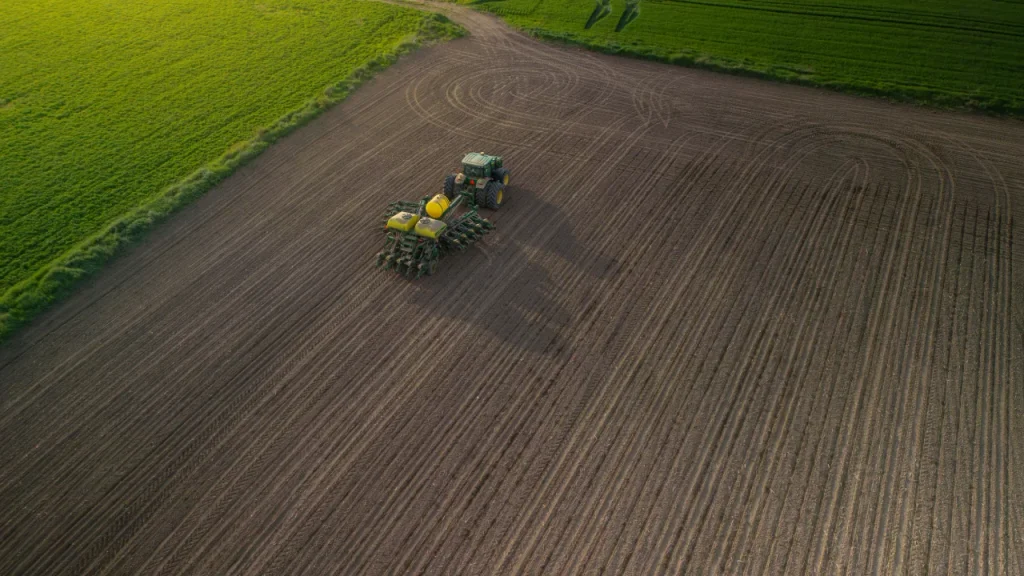
Understanding global price variations is crucial for smart sourcing. Prices differ drastically from continent to continent, and data helps buyers capitalize on these discrepancies.
Regional supply limitations often drive up local prices. If a specific country lacks a strong secondary market for heavy machinery, buyers there face inflated costs. Conversely, markets with high turnover rates, like the United States, frequently have surplus inventory of high-quality used machines.
Logistics accessibility plays a major role. Landlocked regions or areas with poor port infrastructure face higher inbound freight costs, which inflates the final retail price of machinery.
Manufacturer distribution constraints also impact availability. Brands like CLAAS, FENDT, or MacDon might have strong dealer networks in Europe but limited presence in specific parts of Asia or Africa. This creates localized monopolies where limited supply dictates high prices.
Local demand differences shift values based on crop cycles and regional farming practices. A specific type of planting attachment might be highly sought after in a region growing specialized row crops, but nearly worthless in a region focused on broadacre cereal grains.
| Factor | Impact on Local Market | Sourcing Opportunity |
|---|---|---|
| High Local Demand | Prices increase rapidly | Source from low-demand regions |
| Surplus Inventory | Prices drop to clear lots | Excellent buying opportunity |
| Distribution Limits | Brand scarcity drives premiums | Import directly from abundant markets |
| Favorable Currency | Increased buying power | Buy internationally using strong currency |
Data analytics platforms track all these variables simultaneously, highlighting the exact moments when buying across borders becomes highly profitable.
How JumboBee Uses Data to Simplify Equipment Search and Global Sourcing
Everything above describes machines a farm already runs. But the same data eventually points outward: once data shows inefficiency or replacement need — a machine whose cost-per-hour has crossed the line, a repair bill that no longer justifies the asset, a depreciation curve about to steepen — the question stops being how to optimize the fleet and becomes where to source the replacement. That is a global search problem, and it used to be a risky one.
JumboBee eliminates these barriers by utilizing advanced data systems to connect buyers and sellers seamlessly.
Global listings access allows users to search thousands of heavy machinery units, from farm tractors to construction excavators. Smart filters help buyers instantly sort through brands like AGCO, Case IH, and John Deere based on precise specifications, operating hours, and location.
Price comparison across regions is built into the platform. Buyers can see exact market values and identify cross-border arbitrage opportunities without leaving their desks. What makes the platform truly unique is complete transparency in pricing. Buyers see everything included before they buy. Equipment costs, shipping rates, inspections, and necessary fees are calculated instantly, ensuring zero hidden charges.
Logistics support is fully integrated. JumboBee handles the complex international supply chain. This includes custom shipping solutions, disassembly and loading services, cargo insurance, and strict import/export compliance. Whether shipping to Mongolia, Egypt, or Ukraine, the platform ensures the equipment arrives ready for use.
Every seller is verified to protect your business, allowing you to shop with total confidence. Optional professional pre-sale inspections provide deep insights into machine health, bridging the gap between global sourcing and local peace of mind.
Future of AI in Agriculture and Equipment Markets
Looking ahead, the integration of data and machinery will only accelerate. Automation growth will push the industry toward fully autonomous fleets. Tractors and combines will not only steer themselves but also coordinate complex logistics, such as dispatching grain carts exactly when the combine hopper is full.
Smarter marketplaces will dominate the equipment trade. As algorithms become more sophisticated, platforms will predict exactly when a farm should sell a specific asset based on upcoming regional weather patterns and global commodity prices.
Increased transparency will benefit both buyers and sellers. According to digital economic reports from the World Bank, transparent global marketplaces reduce friction in international trade, allowing developing agricultural sectors to access high-quality machinery at fair market values. This democratization of heavy equipment will drive global food security.
Anyone tracking AI in agriculture news knows that the gap between heavily digitized farms and traditional operations is widening. Agribusinesses that adopt data-driven machinery management and global sourcing strategies will maintain strong profit margins, while those relying on isolated local markets will struggle with rising capital costs.
Conclusion
Artificial intelligence in agriculture extends far beyond drones and soil sensors. It fundamentally changes how heavy equipment is valued, maintained, and traded globally.
Machine learning drives unprecedented efficiency in the field. Predictive maintenance protects massive capital investments by eliminating catastrophic failures. Most importantly, equipment becomes data-centric, transforming tractors and combines into intelligent assets that generate continuous ROI.
Global sourcing becomes more accessible than ever before. Advanced platforms process complex logistics, calculate transparent landed costs, and connect buyers with verified sellers worldwide. By leveraging AI in agriculture, farm managers and construction fleet operators can break free from local market constraints, finding the exact machinery they need at the best possible global price.
The tools to modernize your fleet and protect your capital are already here. Success in modern agriculture belongs to those who use data to trade smarter.






Be the first to leave a comment
There are no replies to this post yet. Share your thoughts and help start the conversation.