


 Buying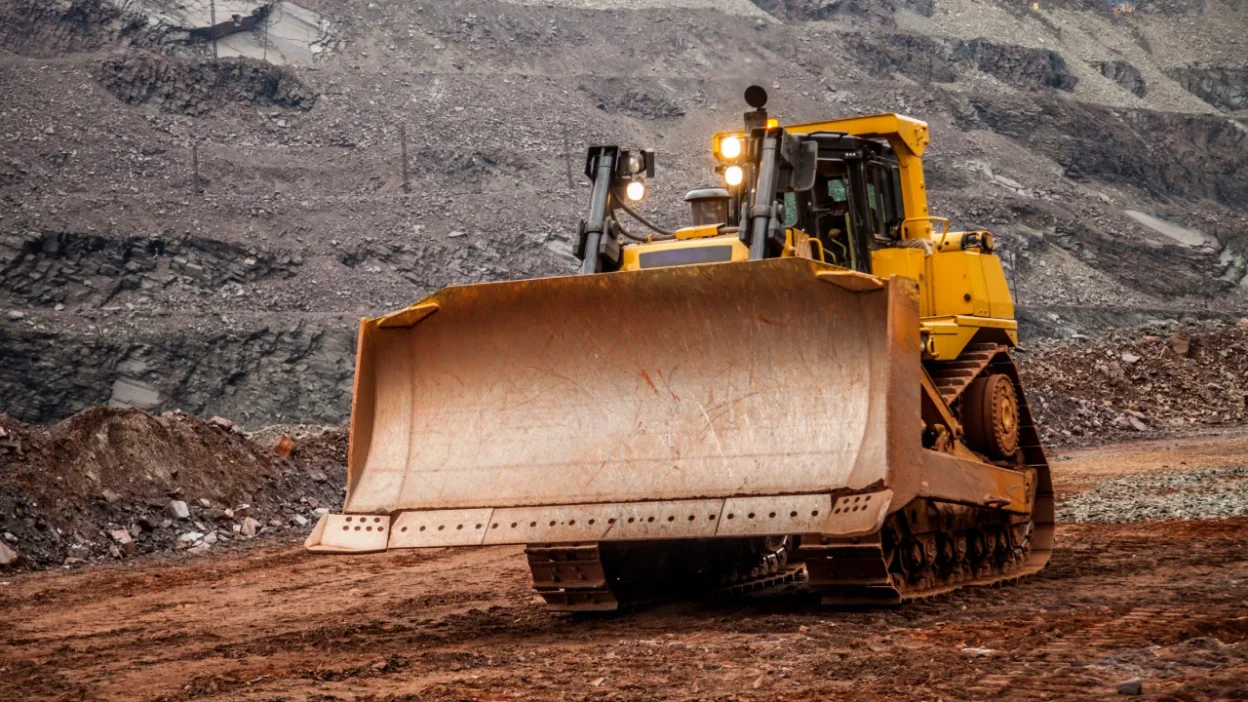
Selecting heavy equipment is never just about buying a machine. It is about buying productivity. In the construction industry, the bulldozer is the backbone of site preparation. If you choose the wrong unit, you bleed money through fuel inefficiency, undercarriage wear, and project delays. If you choose correctly, you maximize your Return on Investment and keep project timelines on track.
This guide provides a structured engineering framework for selecting the right machine. We move beyond basic spec sheets and look at the physics of earthmoving. We will cover bulldozer types, terrain analysis, blade hydrodynamics, cost modeling, and brand comparisons.
Whether you are a fleet manager in the United States, a contractor in Egypt, or a site planner in Mongolia, the physics of dirt remain the same. This guide helps you master them, so when you are ready to source your next machine on global marketplaces like JumboBee, you can evaluate the inventory of dozers with absolute confidence.
Understanding Bulldozer Types: Foundation of Smart Selection
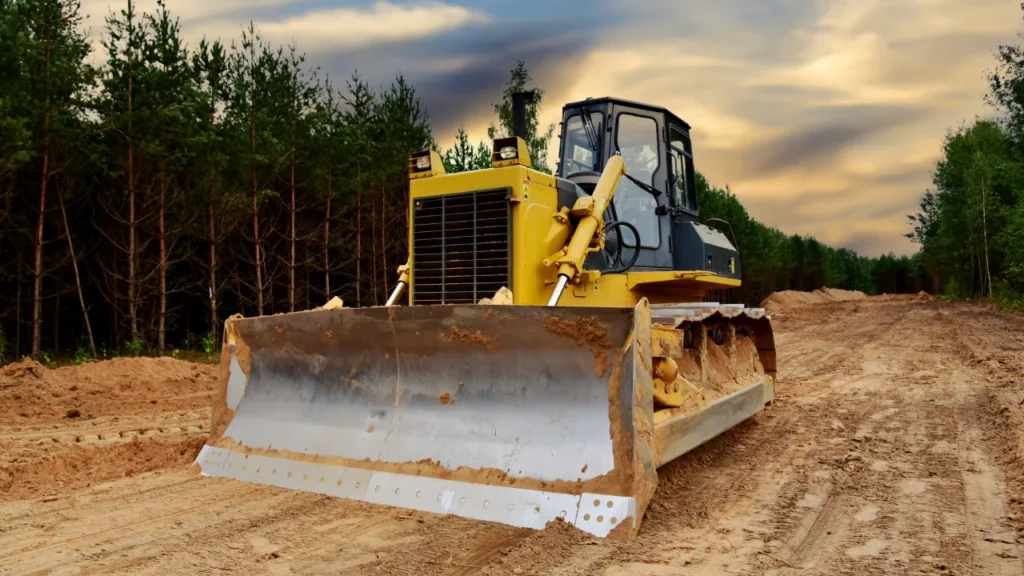
Before analyzing soil or calculating costs, you must understand the mechanical differences between the machines available on the market. Manufacturers design different types of bulldozers to solve specific problems.
Main Types of Bulldozers
| Bulldozer Type | Best for | Terrain | Speed |
|---|---|---|---|
| Crawler Bulldozer | Heavy earthmoving, land clearing | Soft, uneven, or abrasive | Slow (prioritizes traction) |
| Wheel Bulldozer | Road maintenance, spreading fill, mining | Hard surfaces, long distances | Fast (up to 3x faster than crawlers) |
| Mini Dozer | Residential grading, finish work, landscaping | Tight spaces, delicate or finished surfaces | Moderate (prioritizes precision) |
Crawler Bulldozers
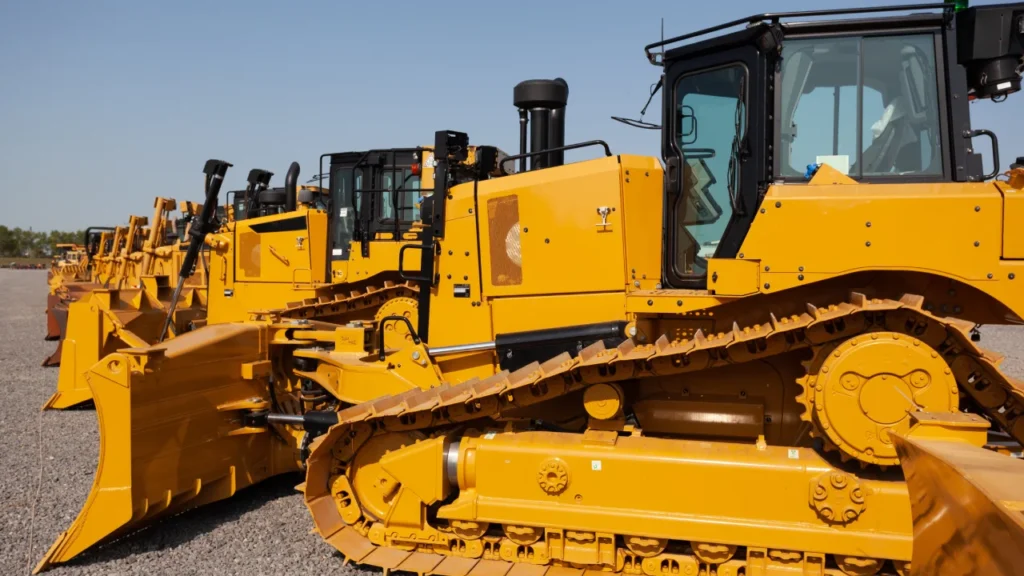
Crawler dozers are the most common image people have of this machine. They sit on continuous tracks. These tracks act like a belt, laying down their own road as they move.
- Primary advantage: Traction. The heavy metal tracks dig into the ground, allowing the machine to push massive loads without slipping.
- Best use: Heavy earthmoving, land clearing, and working on soft, uneven, or abrasive terrain.
Wheel Bulldozers
Wheel dozers replace tracks with massive, heavy-duty rubber tires. They are built on an articulated frame (the machine bends in the middle to steer).
- Primary advantage: Speed and Mobility. A wheel dozer can travel across a job site at speeds up to three times faster than a crawler.
- Best use: Road maintenance, spreading fill material over long distances, and mining applications where the machine must travel between pits.
Mini Dozers
Mini dozers (or compact dozers) are scaled-down versions of crawlers. They often weigh less than 20,000 pounds and have lower horsepower.
- Primary advantage: Precision and Access. They fit in residential backyards, between buildings, and on finished driveways without destroying the surface.
- Best use: Residential grading, finish work, and landscaping.
Crawler versus Wheel Dozers: Engineering Comparison
To make an engineering-based decision, you must compare the physical capabilities of these two bulldozer types.
| Feature | Crawler Dozer | Wheel Dozer |
|---|---|---|
| Traction Coefficient | High (0.90+) | Medium (0.55 – 0.65) |
| Ground Pressure | Low (Better flotation) | Higher (Concentrated weight) |
| Travel Speed | Low (6-8 miles per hour) | High (15-20 miles per hour) |
| Undercarriage Wear | High cost items (Pins/Bushings) | Lower cost (Tires) |
| Maneuverability | Counter-rotation (hydrostatic models) | Articulated steering radius |
| Terrain Suitability | Soft, muddy, rocky, steep | Hard, compact, flat |
Crawler dozers convert engine power into drawbar pull (pushing force) more efficiently on soft ground. If your site is mud or loose sand, a wheel dozer will spin its tires, wasting fuel and power. However, on hard-packed surfaces like a coal mine floor or a road base, the wheel dozer utilizes its weight effectively and moves faster, completing more cycles per hour.
Ground Conditions and Terrain Analysis
You cannot select a machine without analyzing the ground it will stand on. The interaction between the machine’s tracks/tires and the soil determines productivity.
Soil Composition and Load Bearing Capacity
Soil density changes how a dozer behaves.
- Clay: When wet, clay becomes slippery and heavy. It sticks to blades and tracks. You need different types of bulldozers with self-cleaning track shoes or Low Ground Pressure configurations.
- Sand: Sand is abrasive. It acts like sandpaper on the undercarriage. It also shifts under weight. Flotation is key here.
- Rock: Rock requires extreme structural strength. You need a dozer with a reinforced undercarriage and extreme service track shoes to prevent breakage.
Ground Pressure Calculations
Ground pressure is measured in pounds per square inch. It calculates how much weight the machine exerts on a specific area of ground.
Formula:
Operating Weight (pounds) ÷ Total Contact Area of Tracks (square inches) = Ground Pressure (pounds per square inch)
Why it matters:
- A human walking exerts roughly 8 pounds per square inch (standing on both feet, only about 3).
- A standard car exerts roughly 30 pounds per square inch.
- Types of bulldozers configured for swamps (Low Ground Pressure tracks) can exert as little as 4-5 pounds per square inch.
If you bring a standard dozer (8-9 pounds per square inch) into a swamp where the ground bearing capacity is only 6 pounds per square inch, the machine will sink. It will spend 50% of its horsepower trying to climb out of its own hole rather than pushing dirt.
Slope and Grade Requirements
Gravity fights against the dozer when working on slopes.
- Drawbar pull: This is the usable force available at the tracks to push a load. As the slope increases, available drawbar pull decreases because the machine must lift its own weight up the hill.
- Stability thresholds: Crawler dozers have a lower center of gravity than wheel dozers. On grades steeper than roughly 35% (about 20 degrees), wheel dozers rapidly lose traction and stability. Crawlers are strongly preferred for steep grade work.
Blade Types and Material Handling Performance
The blade is the business end of the machine. Using the wrong blade is like trying to eat soup with a fork — it works, but it is messy and slow.
Common Blade Configurations
S-Blade (Straight Blade)
This is a flat, straight blade. It does not have side wings.
- Physics: It cuts into the ground easily because all hydraulic force is concentrated on a short edge.
- Application: Fine grading, handling heavy/dense materials like rock. It breaks ground well but carries very little dirt.
U-Blade (Universal Blade)
This blade has large wings on the sides, forming a U-shape.
- Physics: The wings trap the material, allowing the dozer to push massive piles without the dirt spilling out the sides.
- Application: Pushing light, loose material (coal, woodchips, loose soil) over long distances. It has poor ground penetration capabilities.
Semi-Universal Blade
The hybrid option. It has smaller wings than a U-blade but is wider than an S-blade.
- Physics: It balances penetration power with carrying capacity.
- Application: The standard choice for most general construction types of bulldozers. It handles backfilling, crowning, and stripping effectively.
Angle Blade (Power Angle Tilt)
This blade can pivot left or right hydraulically.
- Physics: It allows the operator to windrow material (push it to the side) while driving forward.
- Application: Road building, digging ditches, spreading fill. It is less durable for heavy rock work but highly versatile.
Blade Capacity and Productivity Modeling
When calculating how much dirt you can move, you look at blade capacity.
- Capacity: Measured in cubic yards or cubic meters.
- Cycle efficiency: A U-blade might carry 10 cubic yards, while an S-blade carries 4. If the travel distance is long, the U-blade moves 2.5 times the material per pass – a 150% efficiency gain.
Selection table:
| Blade Type | Penetration | Capacity | Load Retention | Ideal Material |
|---|---|---|---|---|
| S-Blade | Excellent | Low | Poor | Hard Rock / Compact Soil |
| U-Blade | Poor | Very High | Excellent | Coal / Soft Earth |
| Semi-Universal Blade | Good | Medium/High | Good | General Earth / Gravel |
| Angle | Medium | Medium | Poor | Road Base / Snow |
Core Technical Specifications That Influence Selection
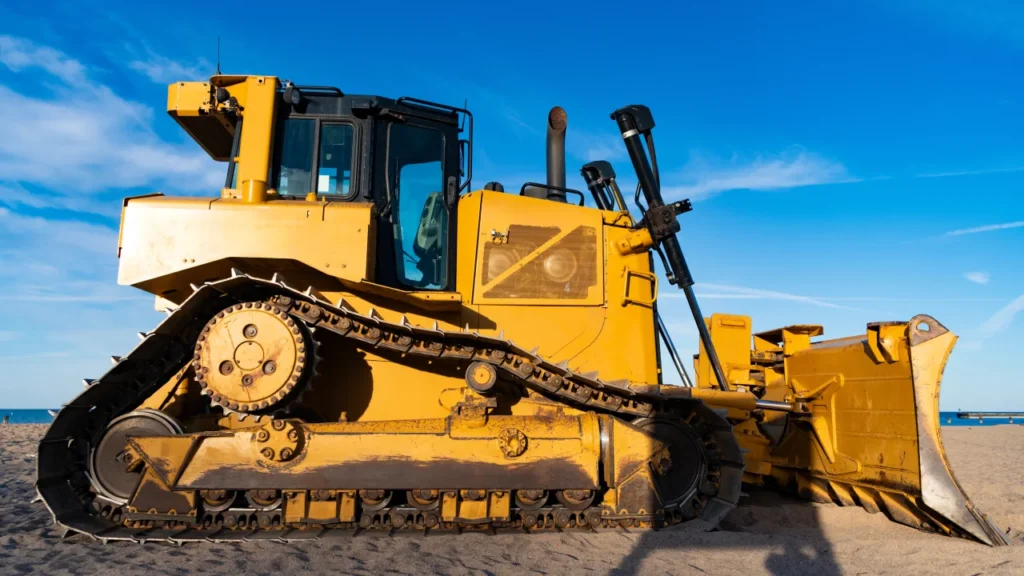
When browsing listings on JumboBee, you will see spec sheets. Here is how to interpret the numbers that actually matter.
Engine Power and Torque Curves
Do not just look at horsepower. Look at torque rise.
- Torque rise: When a dozer hits a heavy rock, the engine revolutions per minute drop. A good engine increases torque as revolutions per minute drop to prevent stalling.
- Net power: Ensure you are looking at Net Power (power available after the fan, alternator, and air cleaner take their share), not Gross Power.
Operating Weight and Machine Balance
Weight equals traction. You cannot push a 10-ton rock with a 5-ton machine, regardless of horsepower. The machine will just spin its tracks.
Rule of thumb: Heavier machines penetrate hard ground better. Lighter machines float on soft ground better.
Transmission Systems
- Hydrostatic drive: Uses hydraulic fluid to power the tracks. Provides infinite speed control and power turns (tracks counter-rotate). Great for fine grading and tight spaces.
- Torque converter/powershift: Uses gears. More efficient for long, straight pushes. Preferred on massive mining dozers.
Undercarriage Design and Wear Rate
The undercarriage can account for up to half of a dozer’s lifetime repair and maintenance costs.
- High drive (elevated sprocket): Popularized by Caterpillar. Lifts the final drive gears out of the mud and impact zone. Easier to service segments.
- Oval track (standard): Keeps the center of gravity lower. Often preferred for side-slope stability.
Productivity Modeling: How to Estimate Output Before Buying
This section separates the professionals from the amateurs. Before buying, you should estimate how much dirt the machine can move per hour.
Calculating Dozer Production Rate
Use this simplified engineering formula to predict performance:
Production (loose cubic yards per hour) = (Blade Load x 60 minutes) ÷ Cycle Time
- Loose cubic yards: Loose material volume.
- Blade load: The capacity of the blade (in yards).
- Cycle time: The time it takes to push, reverse, and reposition (in minutes).
Example Calculation:
- Machine: Mid-size Crawler with Semi-Universal Blade.
- Blade capacity: 5 cubic yards.
- Cycle time: 1.5 minutes (push, back up, maneuver).
- Calculation: (5 x 60) ÷ 1.5 = 200 Cubic Yards per Hour.
If your project requires moving 20,000 yards of dirt, this machine will take 100 operating hours.
Fuel Consumption Modeling
Fuel is a major daily cost.
- Gallons per hour: Manufacturers provide estimates, but load factors change this.
- High load factor: Constant heavy pushing (100% engine load).
- Medium load factor: General grading (50-60% engine load).
If a machine burns 8 gallons per hour at $4.00 per gallon, that is $32 per hour. Over a 2,000-hour year, that is $64,000 in fuel alone. Different types of dozers with fuel-saving drivetrains and automation, like the diesel-electric Caterpillar D7E or the hydrostatic, intelligent Machine Control-equipped Komatsu D71i, can reduce this by 15-20%.
Total Cost of Ownership Framework
The purchase price is just the entry fee. The real cost is Total Cost of Ownership.
Purchase Price versus Lifetime Cost
A cheap used dozer might cost $50,000 less upfront. However, if it burns 2 more gallons of fuel per hour and requires an undercarriage replacement in 6 months, that $50,000 savings disappears in year one.
Undercarriage Replacement Cost
Tracks wear out.
- Steel tracks: Expensive to replace ($15,000 – $50,000+ depending on size).
- Wear factors: Speed kills tracks. Reverse travel kills tracks faster (bushings wear in reverse). Working in sand accelerates wear by two times compared to clay.
Maintenance Intervals
Check the service manual.
- Does the machine need an oil change every 250 hours or 500 hours?
- Are the grease points accessible? If grease points are hard to reach, operators will skip them, leading to pin failure.
Depreciation and Resale Trends
Certain brands of bulldozers hold value better than others.
- Tier 1 brands (Caterpillar, Komatsu): High resale value, high liquidity on the global market.
- Tier 2 brands: Lower upfront cost, but harder to sell later.
Comparing Leading Brands of Bulldozers
When browsing JumboBee, you will see machines from all over the world. Here is how the major players compare.
Caterpillar
- Reputation: The global standard.
- Strengths: Massive dealer network, high parts availability, elevated sprocket design (High Drive).
- Tech: Caterpillar Command and Grade technologies are top-tier.
- Best for: Buyers who need guaranteed parts support anywhere in the world.
Komatsu
- Reputation: The primary rival to Caterpillar. Innovative and efficient.
- Strengths: Intelligent Machine Control is integrated into the factory hydraulics, not bolted on. Very reliable undercarriages.
- Tech: Their Global Positioning Systems are often seen as more user-friendly.
- Best for: Contractors who want advanced automation straight from the factory.
John Deere
- Reputation: Strong in North America.
- Strengths: Hydrostatic drives. Deere mastered hydrostatic transmissions early, making their small and mid-sized dozers incredibly agile.
- Best for: Site development and fine grading where agility beats raw power.
Liebherr
- Reputation: German engineering. High efficiency.
- Strengths: Hydrostatic drive pioneers. Excellent fuel efficiency.
- Best for: European markets and operators who prioritize fuel savings.
Case Construction Equipment
- Reputation: Value and power.
- Strengths: Strong blade force. Good value for money in the mid-size range.
- Best for: Contractors needing reliable power without the premium price tag of the top two brands of bulldozers.
Technology and Modern Bulldozer Systems
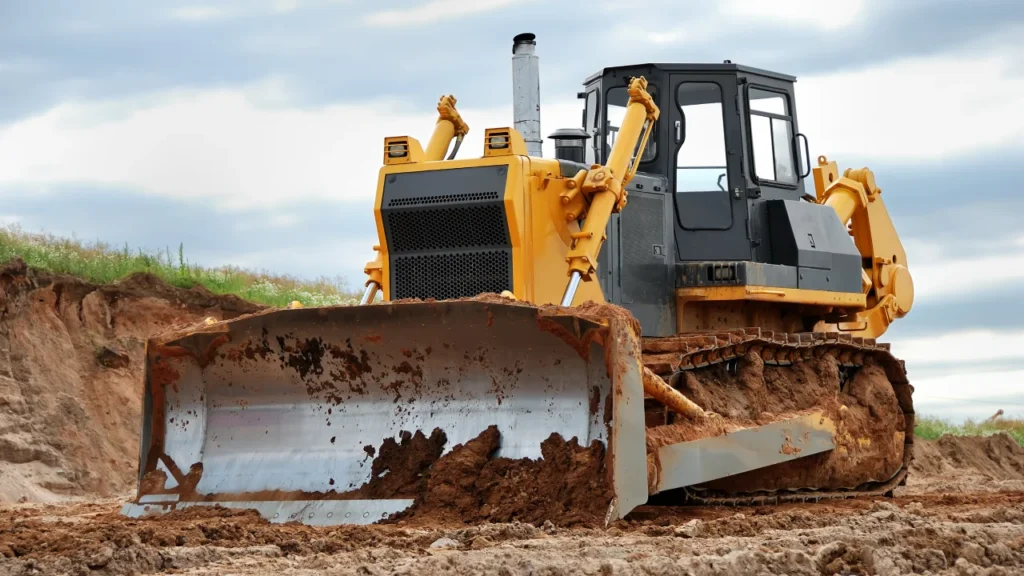
In 2026, technology is standard.
Global Positioning System and Grade Control Systems
Old dozers relied on survey stakes and operator skill. Modern dozers use Global Positioning Systems.
- Three-dimensional grade control: The site plan is uploaded to the dozer. The computer controls the blade height automatically.
- Benefit: Even a rookie operator can grade to within an inch of accuracy. This saves material (you do not over-cut) and time (fewer passes).
Telematics and Fleet Monitoring
Systems like JDLink (Deere), Product Link (Caterpillar), or Komtrax (Komatsu) send data to your phone.
- Data points: Idle time, fuel burn, location, fault codes.
- Value: If a machine is idling 40% of the time, you have too many machines on site. Move it to another job.
Operator Comfort and Visibility
A comfortable operator is a productive operator.
- Cab design: Look for pressurized cabs (keeps dust out), air suspension seats, and 360-degree cameras.
- Fatigue: Low-effort joystick controls reduce arm fatigue compared to old lever systems.
For operator safety standards, see the Occupational Safety and Health Administration guidance on heavy equipment operation.
Environmental and Regulatory Considerations
Regulations are strict in 2026. Among them are emission control, city standards, and global influence.
- Tier 4 Final / Stage V: In the United States (Tier 4 Final), the European Union (Stage V), and Japan (its own equivalent standard), engines must adhere to strict regulations for emissions from heavy equipment with compression-ignition (diesel) engines. They use Diesel Exhaust Fluid and Diesel Particulate Filters.
- Urban jobsites: Some cities have noise restrictions. Hydrostatic dozers are generally quieter than older direct-drive engines.
- Global compliance: If you buy a Tier 4 machine in the United States and ship it to a region with high-sulfur fuel, the engine will fail. JumboBee can help verify if a machine is suitable for your destination country.
New versus Used Bulldozers: Strategic Decision
Let’s also look at why buying used might be a smart strategy to lower capital expenditure.
Inspection Checklist
When inspecting a used machine (or hiring a JumboBee partner to inspect used dozers for you):
- Undercarriage: Measure the rail height and bushing wear. If it is 80% worn, factor in a $20,000 replacement cost immediately.
- Engine blow-by: Remove the oil filler cap while the engine is running. Smoke puffing out indicates worn piston rings.
- Hydraulics: Check for drift. Lift the blade and hold it. If it slowly drops, the internal seals are leaking.
- Final drives: Check for leaks on the inside of the sprocket.
Financing Considerations
Used equipment financing often requires a larger down payment but results in lower monthly payments.
Real-World Selection Scenarios
Let’s apply this knowledge to specific jobs.
Scenario 1: Large-Scale Earthmoving Project (Highway Construction)
- Goal: Move 500,000 yards of dirt.
- Terrain: Mixed clay and soil.
- Selection: Large Crawler Dozer (for example, Caterpillar D8 or D9 size).
- Blade: Universal Blade or Semi-Universal Blade for maximum carrying capacity.
- Why: You need raw pushing power and efficiency. Speed is less important than volume per cycle.
Scenario 2: Urban Infrastructure Development
- Goal: Grading a parking lot between buildings.
- Terrain: Compacted fill, tight spaces.
- Selection: Mid-size Crawler Dozer with Hydrostatic Drive (for example, Deere 700 or Caterpillar D5).
- Blade: Power Angle Tilt Blade.
- Why: You need the ability to angle the blade to windrow material to the side and the agility to turn in tight circles.
Scenario 3: Wet Terrain and Forestry Application
- Goal: Clearing land in a swampy area.
- Terrain: Soft mud, roots.
- Selection: Low Ground Pressure Crawler.
- Blade: Root Rake or Straight Blade.
- Why: Standard tracks will sink. Low Ground Pressure tracks float.
Scenario 4: Road Construction on Compact Surfaces
- Goal: Spreading gravel base for miles of road.
- Terrain: Hard packed road base.
- Selection: Wheel Dozer.
- Blade: Straight or Coal blade.
- Why: The wheel dozer travels between work areas at 15+ miles per hour and spreads material at several times a crawler’s working speed. A crawler would be too slow and would damage the compacted surface with its grousers. These different types of dozers excel here.
Common Mistakes When Choosing Between Different Types of Bulldozers
Oversizing Equipment
Bigger is better is a lie. A D10-sized dozer on a residential site is a nightmare. It cannot maneuver, it consumes too much fuel, and it is expensive to transport. Match the machine to the job size.
Ignoring Ground Pressure
Buying a standard track dozer for soft ground is the most common error. The machine will get stuck, requiring an excavator to pull it out. This kills productivity.
Focusing Only on Horsepower
Two machines might have 200 horsepower. But if one weighs 40,000 pounds and the other weighs 50,000 pounds, the heavier one will push more. Horsepower without weight equals wheel spin.
Underestimating Operating Cost
Buyers often spend their whole budget on the purchase price and leave zero reserve for the first undercarriage replacement. Always budget for the first fix.
Decision Framework: How to Choose the Right Bulldozer
Use this checklist before you click Buy or Make Offer on JumboBee.
- Terrain Type: Is it soft (Clay/Sand) or Hard (Rock/Compact)?
a. Soft -> Low Ground Pressure Crawler
b. Hard, compacted surfaces with long travel distances -> Wheel Dozer
c. Hard rock requiring ripping -> Heavy Crawler - Material Density: Are you pushing light coal or heavy granite?
a. Light -> Universal Blade
b. Heavy -> Straight Blade or Semi-Universal Blade - Precision Requirement: Do you need to grade to within an inch? (Tighter tolerances require a robotic total station, not just GPS.)
a. Yes -> Look for Hydrostatic drive + Global Positioning System/Grade Control - Transport: Can you legally move this machine?
a. Large dozers require permitted heavy haul trailers. Mini dozers fit on standard trailers - Budget & Total Cost of Ownership: Have you calculated fuel burn and track wear?
- Resale Horizon: Do you plan to sell it in 2 years?
a. Yes -> Stick to major brands of bulldozers like Caterpillar or Komatsu
Final Thoughts
The bulldozer is an instrument of force, but selecting one requires precision. By understanding the bulldozer types, analyzing your terrain’s pounds per square inch requirements, and modeling your productivity, you transform a purchase into a strategic investment.
Different types of bulldozers serve fundamentally different operational purposes. A wheel dozer is a sprinter; a crawler is a linebacker. A mini dozer is a surgeon; a mining dozer is a sledgehammer.
When you are ready to expand your fleet, the global market offers incredible opportunities. Whether you need a low-hour unit from the United States or a specialized machine from Europe, the key is transparent access and reliable logistics.
Ready to find your next machine?
Explore hundreds of verified listings for different types of dozers on JumboBee. With our global logistics support, inspection services, and secure payment protection, we make buying heavy equipment across borders as easy as buying it from next door.
Search brands of bulldozers on JumboBee today and equip your site for success.


Be the first to leave a comment
There are no replies to this post yet. Share your thoughts and help start the conversation.