


 Success Stories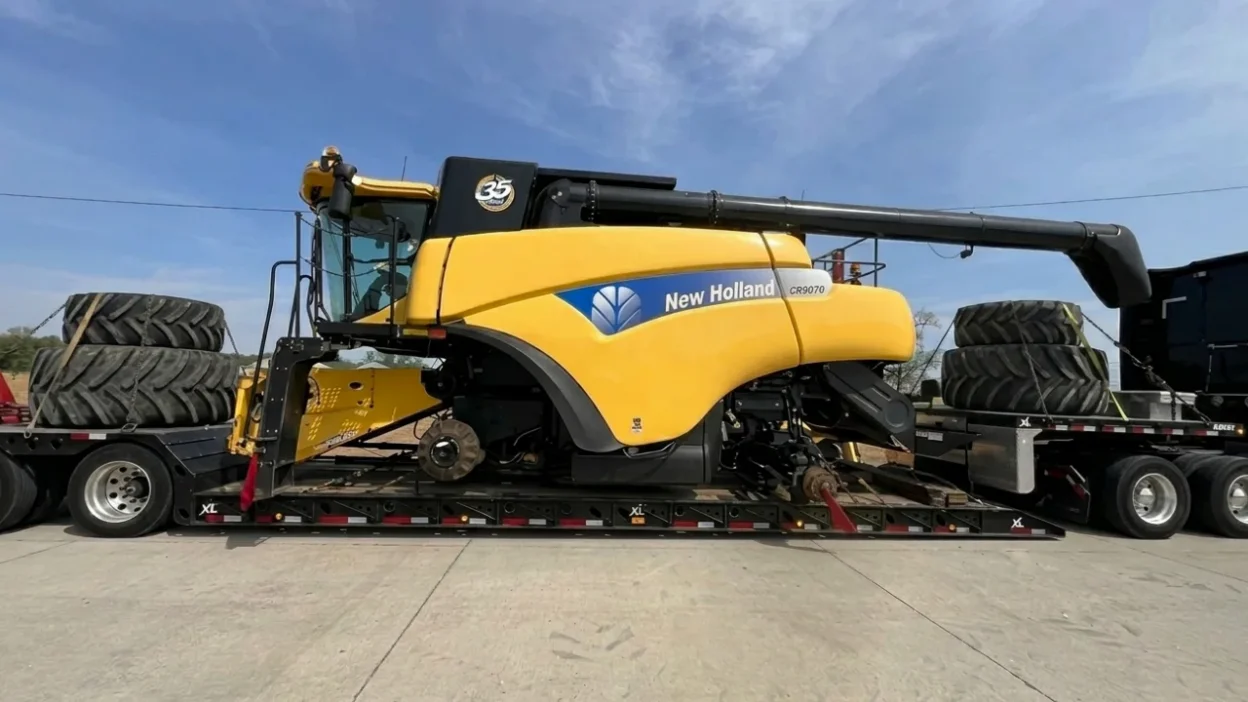
South America’s massive harvest seasons demand world-class machinery, forcing savvy agribusinesses to source directly from North America. When operators decide to buy a combine harvester in the USA, they unlock access to a massive equipment inventory. But buying the equipment is the easy part. The real challenge is moving it.
Executing agricultural equipment transport from the USA to Argentina is a high-stakes logistical minefield. Any operation to import farm equipment to Argentina means battling strict out-of-gauge freight permits, mandatory equipment disassembly, and Argentina’s zero-tolerance phytosanitary laws.
In this heavy equipment shipping case study, we break down the flawless used combine harvester export of a New Holland CR9070 from Illinois to Buenos Aires. See how we engineered a custom, multi-modal strategy to beat oversized restrictions, bypass customs delays, and deliver this critical asset on time and ready for the field.
Sourcing Safely via JumboBee
Before the physical logistics could begin, the Argentine buyer faced the immediate risk of purchasing a six-figure asset located 5,000 miles away. Buying international heavy equipment blind is a massive financial risk, but flying to the American Midwest simply wasn’t efficient.
To solve this, the buyer sourced the machinery through JumboBee.com. JumboBee is a specialized global marketplace that eliminates the traditional barriers of cross-border equipment trade by providing a safe, highly transparent buying environment.
Because they chose to buy a combine harvester in the USA through a trusted platform, the buyer was able to make a confident, data-driven purchase without leaving South America. The platform facilitated:
- Rigorous digital verification: The buyer accessed comprehensive video walkarounds showing cold engine starts, close-up inspection photos of the rotor concaves and sieves, and digital fluid analysis records.
- Secure transactions: JumboBee’s transaction support ensured funds were handled securely, meaning the buyer never had to wire money to an unknown foreign entity.
- Financial transparency: Understanding accurate market valuation is critical. The buyer negotiated a highly competitive New Holland CR9070 price of $145,000 for a machine showing 1,800 separator hours, with zero hidden platform fees.
By utilizing JumboBee to find and secure the right machinery, the buyer established a rock-solid foundation for the complex export process that followed.
Project Overview
To understand the scope of this logistical undertaking, look at the baseline metrics of the shipment. Moving a machine of this magnitude requires specialized equipment and precise dimensional planning at every stage of transit, making this a perfect oversized cargo shipping example.
| Project Metric | Detail Specification |
|---|---|
| Equipment | New Holland CR9070 Combine Harvester |
| Origin | Illinois, USA (Agricultural Dealership) |
| Destination | Port of Zarate, Buenos Aires Province, Argentina |
| Shipping Method | Out-of-Gauge (OOG) Flat Rack |
| Operating Weight | Approx. 35,000 lbs (15,875 kg) base unit |
| Transport Dimensions (Pre-Prep) | 32.7 ft (L) x 11.5 ft (W) x 13.1 ft (H) |
| Total Transit Time | 42 Days (Door-to-Port) |
Challenge
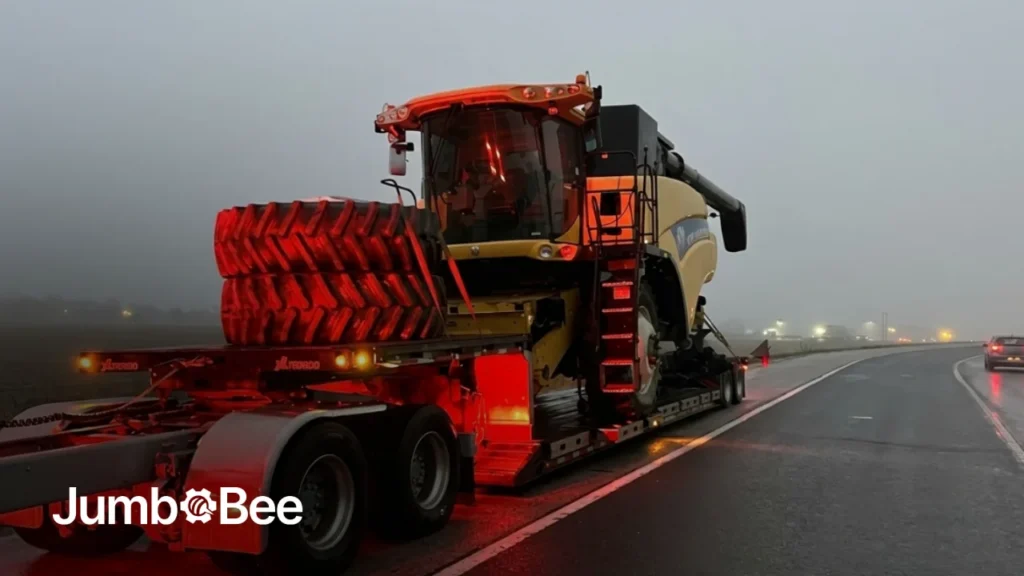
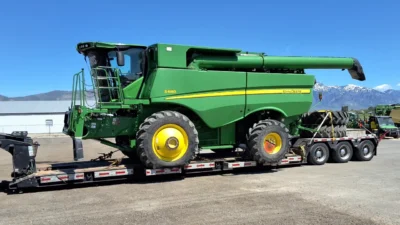
Sourcing combine harvesters from the United States offers undeniable financial and technological benefits, but the physical reality of moving a 35,000-pound, nearly 12-foot-wide machine to South America carries immense operational risk. This project was not a standard freight movement; a specialized used combine harvester export represents a highly specialized heavy-haul operation fraught with critical failure points.
First, the sheer size of the New Holland CR9070 triggered immediate oversized transport restrictions within the United States. Navigating inland routes from Illinois to the departure port required specialized permitting across multiple state lines, continuous route surveys to avoid low bridges, and the mandatory use of certified civilian escort vehicles.
Second, the structural reality of international combine harvester shipping required severe equipment disassembly. Because the client required a specific delivery window that did not align with available Roll-on/Roll-off (RoRo) vessel schedules, we had to utilize Out-of-Gauge Flat Rack Shipping. However, the machine’s factory width vastly exceeded standard flat rack limits, necessitating the removal of its massive dual wheels, ladders, and exhaust extensions just to safely fit onto the cargo platform.
Third, and perhaps most critically, when you import farm equipment to Argentina, the project faces massive hurdles regarding phytosanitary compliance (SENASA requirements). Argentina enforces a strict, zero-tolerance policy against the importation of foreign soil, seeds, and biological matter to protect its domestic ecosystem. A combine harvester is literally designed to process organic matter, meaning its internal rotors, sieves, and grain tanks are inherently packed with agricultural debris. Failing to achieve absolute biological sterility results in immediate rejection at the destination port.
Finally, we had to ensure flawless inspection requirements, specifically the National Cargo Bureau inspection for out-of-gauge lashing, while eliminating the inherent risk of delays, rolled bookings, and devastating storage costs at the port terminal.
Logistics Solution
To overcome these severe operational threats, we designed a rigorous, six-step logistical protocol. This approach eliminated guesswork and ensured every physical and administrative requirement was met before the machine ever reached the ocean.
Step 1: Inland Transport & Route Planning
Moving a Class 9 combine from rural Illinois to an East Coast port is a major undertaking. As a textbook oversized cargo shipping example, standard flatbed trailers were insufficient.
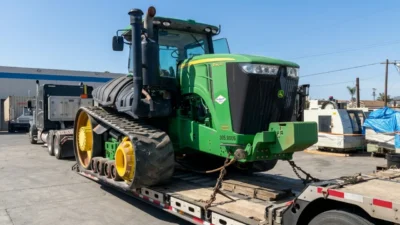
We deployed a specialized Removable Gooseneck lowboy trailer. The RGN design allows the trailer bed to drop mere inches above the asphalt, drastically reducing the overall transit height and helping to clear highway overpasses that would otherwise be impassable.
Prior to dispatch, our logistics engineers conducted comprehensive route planning, securing Department of Transportation oversize permits for every state crossed. By anticipating tight turns, calculating bridge weight limits, and utilizing front and rear pilot cars, we mitigated the risk of transit delays and ensured the machine reached the port staging area precisely on schedule.
Step 2: Equipment Preparation
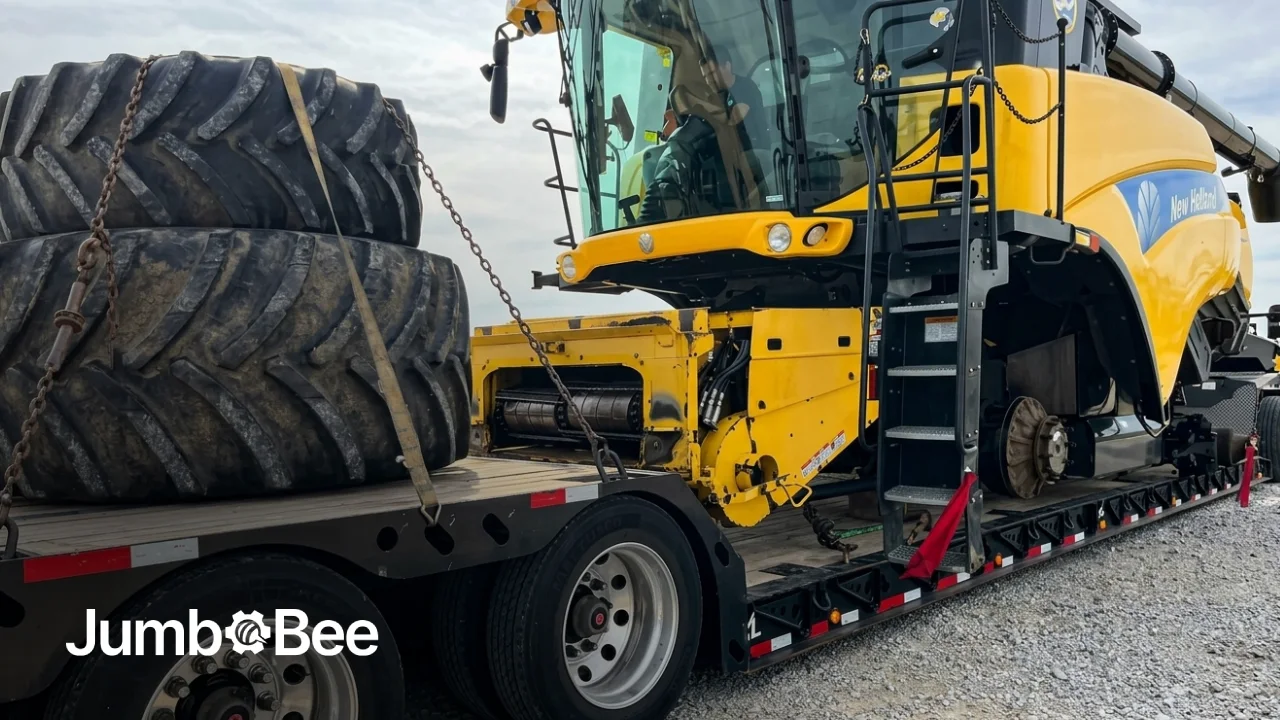
Transitioning from inland road transport to ocean freight required a drastic physical transformation of the machinery. Because we utilized a flat rack rather than a RoRo vessel, the overall width and height of the New Holland CR9070 had to be systematically reduced to prevent interference with adjacent cargo cells on the ship.
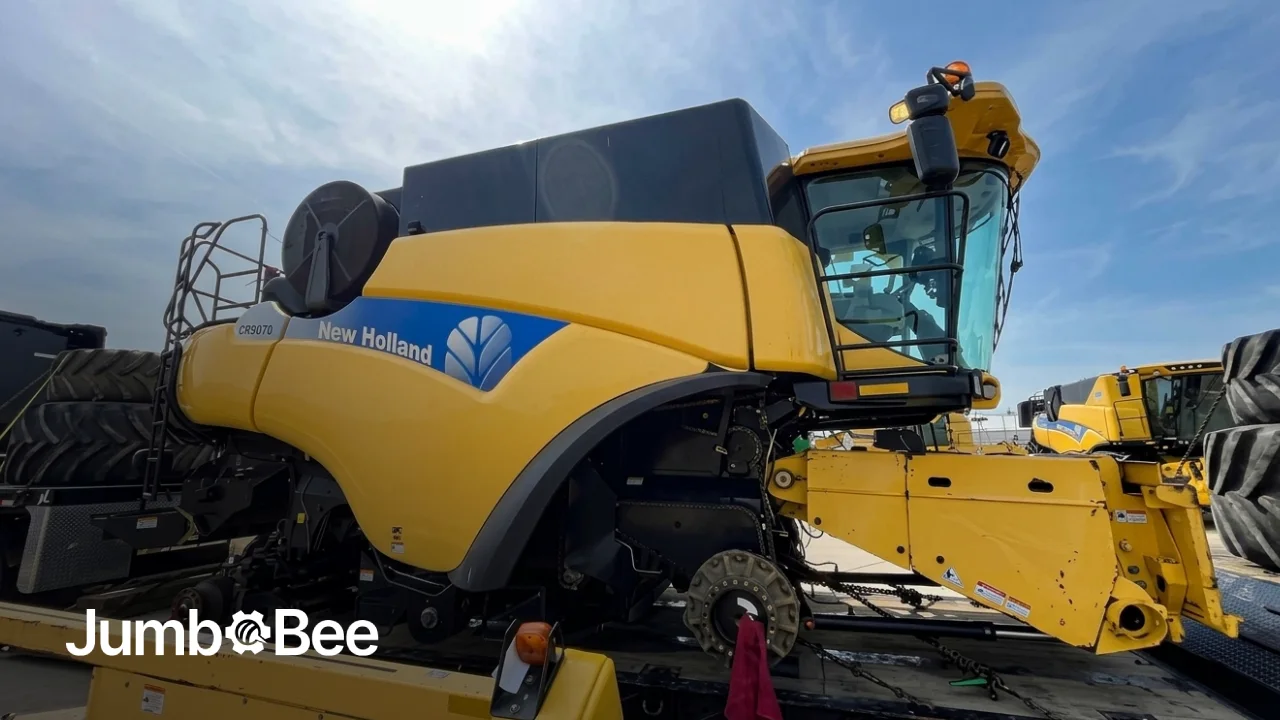
Our specialized port mechanics initiated a calculated disassembly. The enormous front dual tires were unbolted and removed, immediately reducing the machine’s width by several feet. To allow the combine to be moved without its main drive wheels, custom blocking and temporary transport hubs were fitted.
We also removed the external cab mirrors, the GPS receiver dome, and the extended unloading auger. Every removed component was meticulously cataloged, wrapped in heavy-duty industrial shrink film, and secured directly to the flat rack alongside the main combine body to ensure safe transport and easy reassembly in Argentina.
Step 3: Cleaning & Compliance
This phase represented the highest risk factor of the entire operation. Combines are notoriously difficult to clean because their internal mechanics – the twin rotors, concaves, self-leveling cleaning shoes, and 350-bushel grain tanks – feature hundreds of hidden crevices where crop residue collects.
To meet Argentina’s draconian biological import standards, the machinery underwent a grueling, multi-day industrial washing process. Mechanics removed all external side panels, opened every grain trap door, and utilized high-volume industrial air compressors to blow out the threshing mechanisms.
Following the dry purge, high-temperature pressure washers were used to blast away years of baked-on dirt, grease, and field mud from the undercarriage, hydrostatic drive components, and header connections. Even a single hidden kernel of North American corn could trigger a SENASA quarantine, making this intense biological decontamination a strictly non-negotiable step.
Step 4: Inspections & Documentation
Once the equipment was sterilized and reduced in size, the administrative firewall was erected. International customs delays are almost exclusively caused by poor paperwork. We prepared a flawless documentation package that included the original commercial invoice, the clear US title (proving no outstanding domestic liens), and the mandatory Automated Export System filing.
Furthermore, because the cargo was categorized as Out-of-Gauge, it required an official National Cargo Bureau inspection. We coordinated with certified maritime surveyors who meticulously inspected the wire ropes, turnbuckles, and dunnage used to secure the combine to the flat rack. Having this certified documentation prepared in advance prevented the vessel captain from rejecting the load during the final stowing phase.
Step 5: Fumigation (SENASA Compliance)
Even with visual sterility achieved during the cleaning phase, Argentina’s SENASA requires chemical verification to prevent the introduction of microscopic pests or fungal spores.
The fully prepped flat rack was moved to a designated isolation zone at the port. Professional pest control experts draped the entire machine in a massive impermeable gas tent. A highly regulated chemical fumigant (typically methyl bromide or a SENASA-approved equivalent) was introduced into the sealed environment, penetrating the cab interior, engine block, and enclosed grain elevators.
Upon completion, a recognized fumigation certificate was issued. Without this exact piece of paper, the Argentine border authorities would have instantly flagged the shipment for rejection or mandatory, highly-taxed local fumigation at the buyer’s expense.
Step 6: Ocean Freight (Flat Rack)
While RoRo vs Container shipping is often debated for vehicles, combine harvester shipping frequently demands flexible solutions when harvest timelines dictate that we cannot wait for the next available specialized agricultural RoRo vessel. We elected to use a 40-foot flat rack container.
This method requires ultimate precision. Because flat racks lack sidewalls and a roof, the cargo is exposed to the elements and the brutal kinetic forces of the open ocean. Our stevedores utilized heavy-duty timber dunnage to block the axles, preventing longitudinal shifting. High-tensile steel lashing chains were cross-tensioned from the combine’s factory-designated tie-down points directly to the flat rack’s heavy D-rings.
A pre-loading stowage inspection verified that the center of gravity was perfectly balanced, allowing the gantry crane to safely hoist the entire 35,000-pound package deep into the hull of the container ship, protecting it from saltwater spray.
Timeline
Precision scheduling was critical to ensure the machine arrived in time to be reassembled and deployed for the February–April harvest window. Every phase was tracked against a rigid calendar.
| Project Phase | Duration | Details |
|---|---|---|
| Inland Transport & Permitting | 4 Days | Dispatch from Illinois, transit to East Coast Port via RGN. |
| Preparation & Cleaning | 6 Days | Tire removal, dimension reduction, deep industrial power washing. |
| Fumigation & Certifications | 3 Days | Chemical tenting, NCB lashing inspection, AES customs clearance. |
| Ocean Transit | 24 Days | Direct maritime route to the Port of Zarate, Buenos Aires Province. |
| Destination Port Handling | 5 Days | Discharge, SENASA inspection clearance, customs release. |
| Total Project Timeline | 42 Days | Successfully delivered within the required seasonal window. |
Result
Because the initial New Holland CR9070 price was highly favorable, the total landed cost remained highly profitable despite the complex shipping fees. The execution of this highly structured logistics plan yielded a perfect operational outcome, proving that a complex used combine harvester export can be managed seamlessly. As a prime oversized cargo shipping example for the industry, the New Holland CR9070 was delivered to the agricultural enterprise in Argentina strictly on time.
Since combine harvester shipping carries immense phytosanitary risks, our preparation protocols anticipated every regulatory hurdle, ensuring there were absolutely no unexpected costs. The deep-cleaning and fumigation phases worked exactly as intended; SENASA authorities inspected the machinery upon arrival at the Port of Zarate and passed it on the first attempt, preventing thousands of dollars in potential quarantine and terminal storage fees.
Customs cleared the commercial documentation without a single inquiry. Upon delivery to the farm, the local mechanics easily reattached the dual tires and cab components using the perfectly preserved hardware, ensuring the equipment was ready for immediate, heavy-duty field use.
Key Takeaways
Executing cross-border heavy machinery transactions requires moving past standard freight practices and adopting specialized project cargo mindsets. Based on this successful heavy equipment shipping case study, agricultural buyers should note the following expert insights:
- Secure sourcing is step one: Utilizing verified platforms like JumboBee ensures you acquire quality machinery before logistics even begin.
- Proper pre-export preparation eliminates border delays: Investing heavily in domestic industrial cleaning and fumigation is exponentially cheaper than paying port quarantine fees in South America.
- Shipping method selection directly impacts cost and safety: When RoRo is unavailable, Flat Rack shipping is a highly viable alternative, provided you have the engineering support to disassemble and lash the equipment correctly.
- Phytosanitary compliance is critical for LATAM imports: You cannot bypass SENASA. Complete biological decontamination is the most vital step in executing agricultural equipment transport from the USA to Argentina and is an absolute requirement when you import it.
- Oversized cargo requires early logistics planning: Waiting until the purchase is complete to figure out inland transport will result in heavy delays. Route surveys and oversize permits must be coordinated weeks in advance.
Ready to Upgrade Your Agricultural Fleet?
Successfully acquiring and navigating the complex web of overseas trade requires proven expertise from start to finish.
1. Find your equipment
Ready to buy a combine harvester in the USA? Browse fully verified, high-capacity machinery and make safe international purchases directly through JumboBee.
2. Ship it safely
Don’t risk your harvest timeline on inexperienced freight forwarders. Get a seamless, highly accurate logistics quote from Atlantic Project Cargo to handle all your complex heavy shipping needs.



Be the first to leave a comment
There are no replies to this post yet. Share your thoughts and help start the conversation.