


 Selling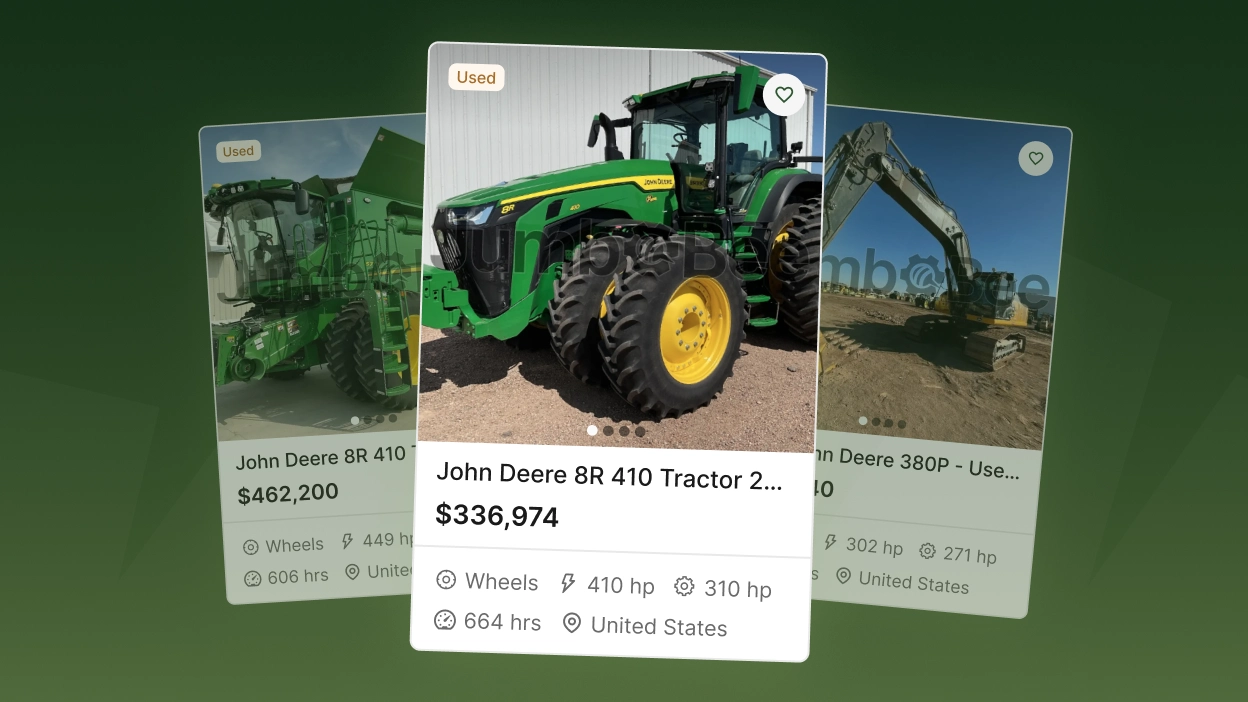
Selling machinery is not just about parking a tractor on a digital lot and waiting for a phone call. It is about data, presentation, and trust. When you list a piece of iron worth $50,000 or $500,000, you are competing against thousands of other sellers globally. A sloppy listing tells buyers that the machine was likely maintained poorly too. A professional listing tells them the machine is a safe investment.
This article serves as a practical equipment listing guide to help you build listings that do not just sit there – they sell. We will cover how to structure your data, price your assets, and use photography to close deals faster on platforms like JumboBee.
Why Equipment Listing Quality Matters
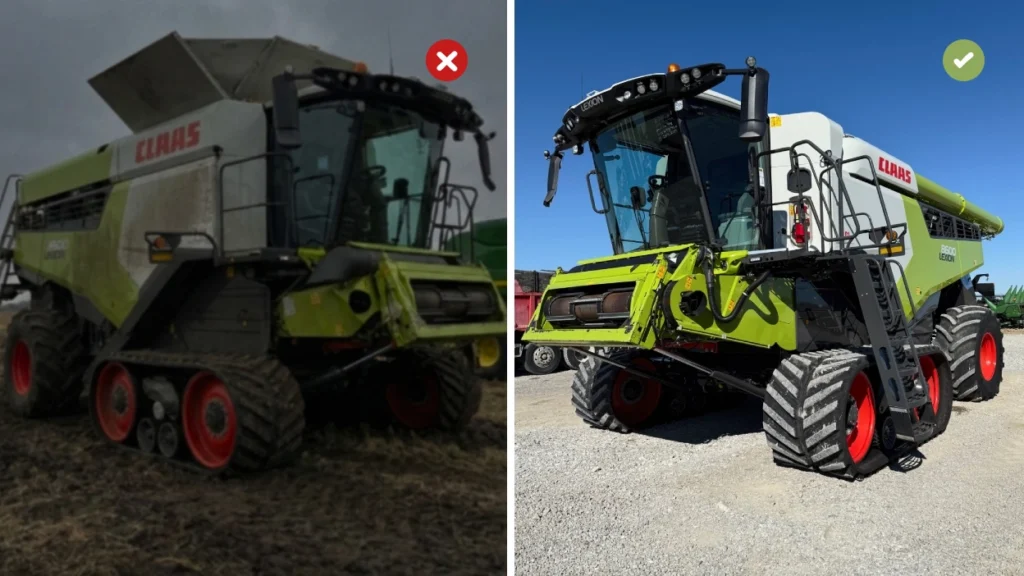
Most sellers fail because they treat an online listing like a classified ad in a local newspaper. They upload one blurry photo, write “runs good,” and hide the price. In the digital age, this approach destroys value.
There is a massive difference between listing equipment and selling equipment. Listing is administrative; selling is psychological. When you learn how to sell heavy equipment online effectively, you realize that buyers are risk-averse. They are terrified of buying a lemon, especially if they are located in a different state or country.
Your goal is to remove that fear. A high-converting listing answers questions before the buyer even thinks to ask them. It reduces friction. By following the heavy equipment listing tips in this guide, you will stop attracting tire kickers (people who have no intention of buying) and start generating inquiries from serious procurement managers and business owners ready to wire funds.
How Buyers Actually Evaluate Heavy Equipment Listings
To sell effectively, you must think like a buyer. Buyers of industrial machinery are not shopping for fun. They are solving a business problem. They need a machine to dig a foundation, harvest a crop, or grade a road. Every minute they spend searching is lost productivity.
Buyer Intent and Decision Stages
Buyers move through three distinct stages. Understanding this is crucial when learning how to sell heavy equipment online.
- Research phase: The buyer realizes they need a 30-ton excavator. They are comparing brands (Cat versus Komatsu) and models. They need specifications.
- Validation phase: They have narrowed it down to a specific model. Now they are comparing individual listings based on hours, condition, and location. They need history and proof.
- Purchase phase: They are ready to make an offer. They need trust signals and clear contact info.
If your listing lacks technical details, you lose the researcher. If it lacks good photos, you lose the validator. If it lacks trust, you lose the purchaser. A comprehensive equipment listing guide always emphasizes catering to all three stages simultaneously.
What Makes Buyer Open Listing vs Ignore It
Buyers scan search results at lightning speed. Eye-tracking studies on e-commerce sites show that users decide to click a product in less than 3 seconds. In the heavy equipment world, three factors stop the scroll:
- Lead image: Is the machine clean and fully visible?
- Headline: Does it confirm the exact specification I need?
- Price: Is it visible?
Listings that say Call for Price get skipped by 60% of buyers. Listings with a blurry thumbnail get skipped by everyone. Your first job is simply to get the click.
Core Elements of High-Converting Equipment Listing
A strong listing is built on a foundation of data. If you skip these core elements, no amount of sales language will save you. Here are essential heavy equipment listing tips for structure.
Clear, Specific Listing Title
The title is the most important Search Engine Optimization element of your page. It must be factual. Do not use sales fluff like GREAT DEAL or LOOK HERE in the title. It wastes space and looks unprofessional.
- Bad title: 2015 EXCAVATOR CHEAP RUNS GOOD
- Good title: 2015 Caterpillar 336F L Excavator – 4,500 Hours – Aux Hydraulics – Tier 4 Final
- Formula for success: Year + Brand + Model + Key Configuration + Hours/Mileage
Using this format helps you master how to sell heavy equipment online because it matches exactly what buyers type into search bars.
Accurate and Complete Technical Specifications
Never assume the buyer knows the standard specifications of your machine. Configurations vary wildly. A John Deere 8R tractor might have a standard transmission or an IVT (Infinitely Variable Transmission). That difference is worth thousands of dollars.
Critical specs to include:
| Category | Specs Required |
|---|---|
| Engine | Horsepower, Fuel Type, EPA Tier Level (Crucial for United States/European Union buyers) |
| Drive | 2WD/4WD, Track vs. Wheel, Tire size/condition % |
| Capacity | Bucket size, Lift capacity, Boom length |
| Comfort | Enclosed Cab vs. Open Roll-Over Protective Structure, A/C, Heat, Radio |
| Hydraulics | Standard flow, High flow, Auxiliary lines |
Missing specifications create doubt. If you don’t list High Flow Hydraulics on a skid steer, the buyer assumes it doesn’t have it and moves to the next listing. This is a fundamental rule in any equipment listing guide.
Pricing Strategy That Drives Inquiries
Pricing is a marketing tool, not just a financial target. Many sellers fail to understand how to sell heavy equipment online because they play games with the price.
How Buyers Interpret Price Signals
In Business-to-Business sales, time is money. When a buyer sees Call for Price, they assume one of two things:
- The price is embarrassingly high.
- The seller is difficult to deal with.
Transparency creates trust. Even if your price is slightly higher than the market average, listing it filters out people who cannot afford it. This is one of the most practical heavy equipment listing tips you can implement immediately.
Psychological Anchoring
If you list a dozer for $150,000, that is the anchor. If you list it for $149,500, it feels significantly cheaper due to the left-digit effect. It sounds basic, but it works on multi-million dollar deals just as well as it works in a grocery store.
New vs Used Pricing Context
Used equipment requires context. A 2018 model with 2,000 hours is worth more than a 2018 model with 8,000 hours. However, you must explain why your price is justified if it is on the higher end.
- Justification: Price includes a brand new undercarriage installed last month ($12,000 value).
- Context: Machine only used for light grading, never rock work.
By adding context, you are not just listing a price; you are demonstrating value. This nuance is part of an advanced equipment listing guide strategy.
Equipment Photos That Actually Sell
Photos are the closest a buyer gets to a test drive online. If you want to know how to sell heavy equipment online to international buyers (like those on JumboBee), you must provide a visual inspection through photos.
Mandatory Photo Set for Heavy Equipment Listings
Quantity helps, but quality wins. A standard listing should have 20–30 photos.
The walkaround sequence:
- Corners: 4 photos form each corner (Front-Left, Front-Right, etc.) showing the whole machine.
- Cab interior: Seat condition, dashboard (showing hours!), controls, headliner.
- Engine bay: Left side, right side, filters, lack of leaks.
- Undercarriage/tires: Close-ups of sprocket teeth, track tension, or tire tread depth.
- Data plate: A clear photo of the serial number plate is mandatory for trust.
Common Photo Mistakes That Kill Trust
Avoid these errors to improve your heavy equipment listing tips adherence:
- Working photo: Don’t only show the machine covered in mud in a pit. Buyers want to see the metal, not the dirt. Wash the machine.
- Shadow: Taking photos at noon creates harsh shadows that hide leaks. Overcast days are best for photography.
- Crop: Don’t cut off the bucket or the wheels. Frame the shot properly.
Writing Descriptions That Answer Buyer Objections
The description section is your sales pitch. A good equipment listing guide focuses on answering Why are you selling? and What is wrong with it?
What Good Description Should Communicate
Be narrative but concise.
- History: One owner, ex-municipal fleet machine. (Fleet maintenance is usually highly regarded).
- Recent work: List parts replaced in the last 6 months.
- Reason for sale: Upgrading to a larger model or Retiring from business. This assures the buyer the machine isn’t broken.
- Honesty: Minor dent on rear panel, does not affect operation.
What to Avoid in Equipment Descriptions
- ALL CAPS: IT LOOKS LIKE YOU ARE SCREAMING.
- Vague promises: Ready to work means nothing. Fresh service completed at 5,000 hours means something.
- Copy-paste: Do not copy the manufacturer’s brochure. The buyer knows what a Cat D6 is supposed to do. They want to know what your Cat D6 has done.
Avoiding these pitfalls is essential when learning how to sell heavy equipment online.
Trust Signals That Increase Conversion
On a global platform like JumboBee, you might be selling to a buyer in Egypt, Mongolia, or the USA. Trust is the currency of the transaction.
Documentation and Verification
To master heavy equipment listing tips, you must provide proof.
- Service records: Digital scans of maintenance logs increase resale value significantly.
- Oil samples: If you have recent fluid analysis reports, upload them.
- Video: A video of the machine starting cold (cold start) and operating all hydraulic functions is the gold standard.
Seller Transparency and Responsiveness
When a lead comes in, speed matters. Responding within the first hour can increase conversion rates by up to 700%.
- Provide clear contact methods.
- Be ready to answer technical questions.
- If using JumboBee, ensure your profile is verified.
Common Heavy Equipment Listing Mistakes
Even experienced dealers make mistakes. Here is a quick summary of what to avoid in this equipment listing guide:
- Wrong category: Listing a Wheel Loader under “Skid Steers.” It will never be found.
- Typos in keywords: Spelling Caterpillar as Caterpilar means you miss out on search traffic.
- Ignoring mobile users: Write short paragraphs. Huge blocks of text are unreadable on smartphones, where 60% of buyers search.
Correcting these errors is the fastest way to learn how to sell heavy equipment online successfully.
Optimizing Listings for Online Marketplaces
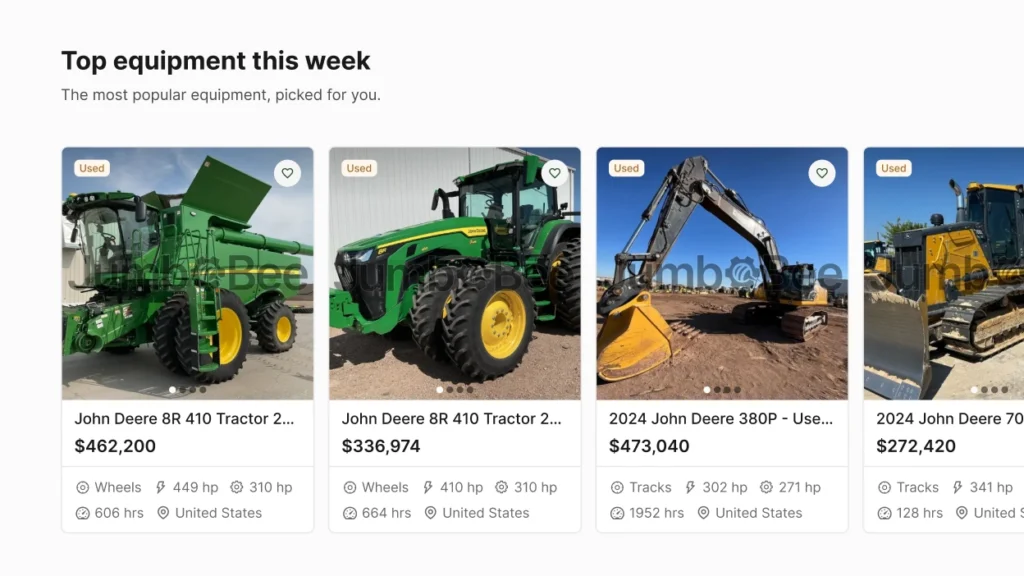
Marketplaces use algorithms to decide which listings to show first.
How Marketplaces Rank and Surface Listings
Platforms reward completeness. A listing with 30 photos, a filled-out specification sheet, and a price will rank higher than a sparse listing. This is Algorithmic Search Engine Optimization.
- Freshness: Update your listing every few weeks if it hasn’t sold.
- Engagement: If people click your listing and stay to read it, the platform promotes it more. This is why good photos and descriptions matter—they keep people looking.
How Better Listings Lead to Better Exposure
High-quality listings get featured in newsletters and “Top Picks” sections. By following these heavy equipment listing tips, you increase the chance of the platform doing free marketing for you.
Final Checklist for Sellers
Before you hit Publish, run your draft through this equipment listing guide checklist.
| Check | Item |
|---|---|
| [ ] | Title: Includes Year, Make, Model, Key Spec. |
| [ ] | Photos: 20+ images, clean machine, includes VIN plate. |
| [ ] | Video: Walkaround and operation video included. |
| [ ] | Specs: Engine, transmission, and hydraulic details filled out. |
| [ ] | Price: Clearly listed (or competitive range). |
| [ ] | Description: Includes service history and reason for sale. |
| [ ] | Contact: You are ready to reply instantly. |
Conclusion
Creating a high-converting listing is an investment of time that pays massive dividends. It shortens the sales cycle, justifies a higher price point, and attracts professional buyers rather than bargain hunters. By mastering how to sell heavy equipment online, you move from being a passive seller to an active merchant.
Key heavy equipment listing tips like transparent pricing, detailed photography, and complete specifications are your best tools for success. Buyers want to feel safe. Give them the information they need to feel confident, and they will reward you with a purchase.
Ready to sell your machinery to a global audience?
JumboBee makes it easy. You can list your equipment for a worldwide audience of verified buyers. The best part? You pay only when you sell. No listing fees, no monthly subscriptions. Plus, JumboBee handles the complex logistics and export compliance, so you don’t have to.


Be the first to leave a comment
There are no replies to this post yet. Share your thoughts and help start the conversation.