


 Financing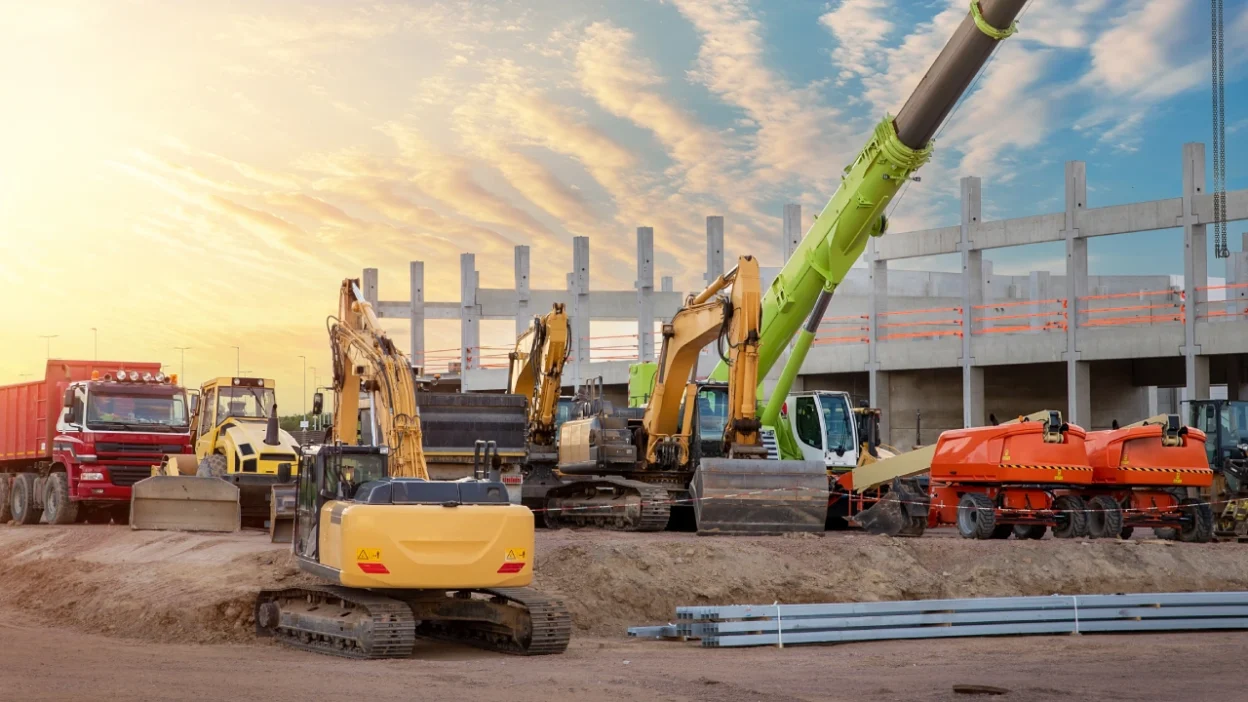
Heavy machinery is the backbone of any construction operation. From excavators digging foundations to cranes lifting steel beams, your ability to bid on profitable projects depends entirely on your fleet. However, purchasing yellow iron outright drains liquidity fast. A single mid-sized dozer can cost as much as a small house. This is where construction equipment financing becomes a strategic tool rather than just a debt instrument.
Smart contractors do not bury all their cash in depreciating assets. They use financing to match the cost of the equipment with the revenue it generates. By spreading payments over time, you keep working capital free for payroll, materials, and operational emergencies.
This guide covers everything you need to know about securing capital. You will learn about specific programs, how construction equipment loan rates are calculated, and how to structure a deal that benefits your bottom line.
Whether you are a startup needing a skid steer or an established firm upgrading a fleet of backhoes, understanding these financial products is essential for survival and growth.
How Construction Equipment Financing Works
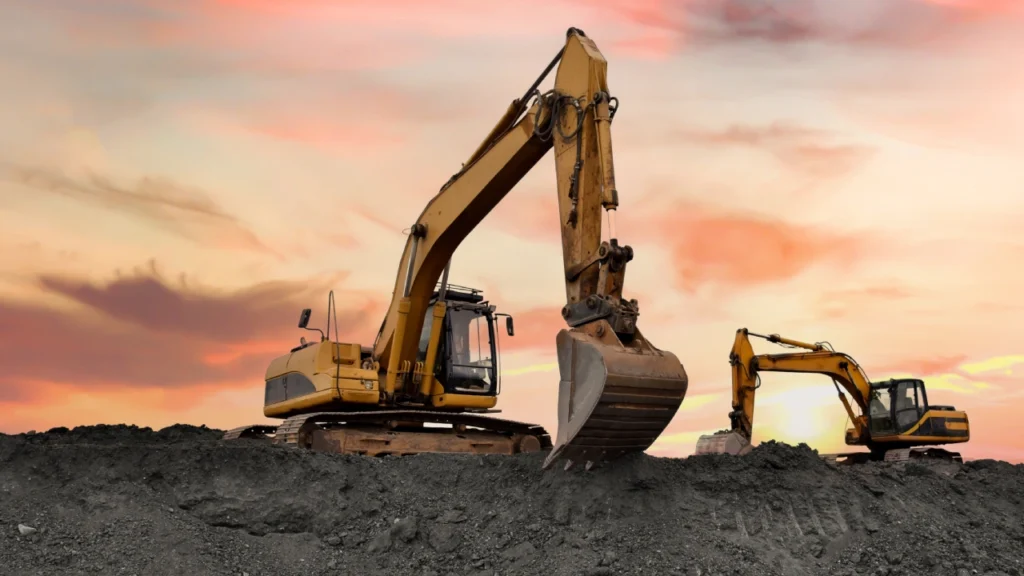
Financing heavy machinery differs from a standard business line of credit. In this scenario, the equipment itself serves as collateral. This reduces risk for the lender because they can repossess the asset if you default. Because the loan is secured by hard assets, approval odds are generally higher, and interest rates are lower than those of unsecured loans.
The process usually follows a linear path: you identify the machine (new or used), submit an application with financial documents, and receive an approval outlining terms. Once signed, the lender pays the seller (like a dealership or a marketplace like JumboBee), and you take possession of the machine while making monthly payments.
What Construction Equipment Financing Includes
Construction equipment financing is a broad umbrella term. It covers various financial structures designed to help you acquire physical assets without paying the full price upfront. Most programs cover:
- Heavy earthmoving equipment: Excavators, bulldozers, graders, and wheel loaders.
- Material handling: Forklifts, telehandlers, and cranes.
- Roadwork machinery: Pavers, rollers, and cold planers.
- Attachments: Hydraulic breakers, buckets, and augers (often bundled with the machine and can add up to 20% to the purchase price).
- Soft costs: Some lenders allow you to roll shipping, taxes, and assembly fees into the loan, though this often requires a stronger credit profile.
You are not limited to brand-new inventory. Financing is widely available for used equipment, provided the machinery has remaining useful life and holds value. Lenders will look at the age and hours of the machine to determine if it fits their risk model.
Who Uses Construction Equipment Finance
Usage of construction equipment finance spans the entire industry, but the motivation differs by company size.
Small Contractors and Owner-Operators
For a one-person operation or a small team, financing is often the only way to access professional-grade gear. Using a construction equipment loan allows these businesses to stop renting and start building equity. It stabilizes monthly costs and ensures the machine is available whenever a job pops up.
Mid-Sized Construction Companies
These firms use financing to manage cash flow. They might have the cash to buy a $150,000 loader, but spending that cash limits their ability to bond for larger projects or cover payroll during slow receivable cycles. Financing keeps their liquidity ratios healthy.
Large Fleet Operators
Big firms often use leasing programs to cycle through equipment every 3-5 years. This ensures they are always running the latest technology with lower maintenance costs, avoiding the hassle of reselling old units.
Main Types of Construction Equipment Financing Programs
Choosing the right structure is as important as choosing the right excavator. The wrong loan product can trap you in high payments or leave you with a balloon payment you cannot afford.
Traditional Construction Equipment Loans
This is the most common form of financing. It functions like a standard auto loan but on a larger scale. You borrow money from a bank or specialized equipment lender to pay for the machine. You make principal-plus-interest payments for a set term (usually 3 to 7 years).
- Ownership: You own the equipment once the final payment is made.
- Depreciation: Because you own the equipment (not the lender), you can claim depreciation on your taxes – including potential Section 179 expensing
- Balance sheet: The loan appears as a liability, and the equipment appears as an asset.
A traditional construction equipment loan is ideal for core fleet assets—machines you plan to keep for 10+ years. If you take good care of your gear, you will have years of payment-free usage after the loan is paid off.
Equipment Leasing Programs
Leasing is effectively a long-term rental with specific contractual obligations. There are two main types of leases in the construction world:
1. Operating Lease (Fair Market Value Lease)
You pay for the usage of the equipment. Monthly payments are generally lower because you are not paying down the full principal. At the end of the term, you return the equipment, upgrade to a new model, or buy it for its Fair Market Value (FMV). This is excellent for machines that depreciate quickly or require frequent technology updates.
2. Capital Lease (Finance Lease / $1 Buyout)
A finance lease (also called a capital lease or $1 buyout lease) is structured similarly to a loan – you make higher monthly payments and effectively own the asset at the end. It is often chosen for specific accounting or cash-flow reasons.
SBA and Government-Backed Equipment Financing
The U.S. Small Business Administration (SBA) offers robust programs that can be used for equipment. The most common is the SBA 7(a) loan, and the SBA 504 loan is also well-suited for large equipment purchases, particularly for assets over $250K–$500K, and is commonly used alongside real estate acquisitions.
- Rates: Capped interest rates, often lower than private market averages.
- Terms: Longer repayment terms (up to 10 years for equipment), which lower monthly payments.
- Security: The government guarantees a portion of the loan, encouraging lenders to work with riskier borrowers.
Note: SBA program terms and rate caps are subject to change. Verify current terms at sba.gov before applying.
The trade-off is speed and paperwork. SBA loans require extensive documentation: tax returns, P&L statements, business plans, and personal financial statements. Approval can take 30 to 90 days. This is not the route if you need a machine next week to start a job.
Alternative and Short-Term Equipment Financing
Online lenders and fintech companies have filled the gap left by slow-moving banks. These lenders use algorithms to assess cash flow rather than just credit scores.
- Speed: Approvals can happen in 24 hours; funding in 48 hours.
- Flexibility: Easier approval for C-credit borrowers or younger businesses.
- Cost: You pay a premium for speed. Rates are higher, and terms might be shorter (12 to 36 months).
This route is useful for emergency replacements. If your main dozer blows an engine mid-project, waiting two months for an SBA loan isn’t an option. An alternative construction equipment loan gets you back to work immediately.
Construction Equipment Loan Rates Explained
Understanding the cost of capital is vital. Construction equipment loan rates vary wildly based on the borrower’s profile and the asset itself. It is rarely a one-size-fits-all number.
What Impacts Construction Equipment Loan Rates
Lenders view rates as a price for risk. The riskier the deal, the higher the rate.
- Credit profile and time in business: A credit score of 700+ combined with 2+ years of business history commands the best rates (A-Paper). If you have a 600 score or are a startup, lenders see a higher probability of default, driving rates up.
- Equipment age and condition: New equipment gets better rates. It has a warranty and predictable resale value. Old used equipment carries a mechanical risk; if the machine dies, the borrower might stop paying. Consequently, loans for older gear often have higher interest rates to offset this risk.
- Down payment: Putting 20% down lowers the lender’s exposure. If they have to repossess and sell the machine, they are less likely to lose money. Larger down payments often negotiate lower interest rates.
Typical Construction Equipment Loan Rate Ranges
While market conditions fluctuate, here is a general breakdown of what you might expect.
| Lender Type | Borrower Profile | Rate Range (Est.) |
|---|---|---|
| Traditional bank | Strong Credit (720+), 5+ Years in Business | 6% – 9% |
| SBA lenders | Good Credit (680+), Meets SBA Criteria | Prime + 2.75% to 4.75% (varies by size/term)* |
| Equipment finance companies | Medium Credit (640+), 2+ Years in Business | 8% – 16% |
| Alternative / fintech | Fair/Poor Credit (600+), or Startups | 15% – 30%+ |
*SBA 7(a) rates are capped by loan amount and maturity. For loans over $50K with terms over 7 years, the cap is typically Prime + 2.75%. Smaller, shorter loans carry higher spreads. Verify current caps at sba.gov
Fixed vs Variable Rates
Fixed Rates
The interest rate remains the same for the life of the loan. Your monthly payment never changes.
- Pros: Predictability. You can budget precisely for the next 5 years.
- Cons: Usually starts slightly higher than the initial variable rate.
Variable Rates
The rate fluctuates based on a market index (like SOFR or Prime).
- Pros: Potential for lower costs if market rates drop.
- Cons: If the economy tightens and rates spike, your monthly equipment payment could jump hundreds of dollars, squeezing cash flow.
Variable rates are often indexed to the Prime Rate (for bank loans) or SOFR (for some institutional lenders). Ask your lender which index applies and how adjustments are calculated.
Comparing Construction Equipment Financing Programs
You must look beyond the interest rate. Two loans with the same rate can have vastly different impacts on your business based on terms and flexibility.
Loan Amounts and Term Lengths
- Small-ticket financing (under $150K): Many lenders offer App-Only programs for smaller ticket amounts, though thresholds vary by lender..
- Large-ticket financing (over $150k): Requires a full financial package (tax returns, bank statements). Lenders will analyze your Debt-Service Coverage Ratio (DSCR). Terms can extend to 7 or even 10 years for assets with long lifespans, like cranes or heavy excavators.
- Matching term to lifespan: Never finance a piece of equipment for longer than you intend to use it. You do not want to be paying on a loan for a skid steer that you scrapped two years ago.
Approval Speed and Documentation Requirements
- Traditional lenders: Speed is 2-4 weeks. Requires extensive docs (2 years’ tax returns, P&L, Balance Sheet, etc.). Best for planned purchases where the lowest cost is a priority.
- Alternative programs: Speed is 1-3 days. Requires minimal docs (3 months’ bank statements, Driver’s License). Best for immediate needs or auction purchases.
Flexibility and Early Payoff Options
Construction is seasonal. Some programs offer seasonal payments, allowing you to pay less (or nothing) during winter months when work halts, and more during summer. Not every lender offers this. It is often beneficial to use dedicated lending services to connect with lenders who understand the construction cycle and offer these flexible terms.
Prepayment Penalties
This is a critical detail. If you have a great year and want to pay off your loan early to save interest, some lenders will penalize you.
- Simple interest loans: Usually allow early payoff with savings.
- Precomputed (flat-fee) loan contracts: Some lenders – especially alternative/online lenders – use precomputed interest (sometimes called factor rate loans), where total interest is fixed at origination. Early payoff saves no interest in these structures. You owe the total interest regardless of when you pay. If the contract says you owe $130,000 total, you pay $130,000 whether it takes 5 years or 5 days.
How to Choose the Right Construction Equipment Financing
Making the right choice involves analyzing your business strategy, not just the monthly payment.
Matching Financing Type to Business Goals
- Goal: aggressive growth. If you are scaling rapidly, cash is king. You need money for hiring and materials. Strategy: Choose a lease or a longer-term loan with a lower monthly payment. Keep your cash reserves high to fund operations.
- Goal: long-term stability. You are a family business with steady work. Strategy: Choose a traditional loan with a high down payment. Minimize interest costs and own the asset outright as soon as possible.
Buy vs Lease Decision Framework
Use this simple logic flow:
- Will you use this machine for more than 5 years?
Yes: Buy/Loan. No: Lease. - Does the machine require heavy maintenance as it ages?
Yes: Lease (let the lessor handle the disposal). No: Buy. - Do you care about owning the asset for equity?
Yes: Buy. No: Lease.
This is a simplified framework. Equipment with high maintenance costs as it ages or rapid technology obsolescence may favor leasing even for longer holds.
Financing New vs Used Construction Equipment
- New equipment: Pros include warranty protection, lower interest rates, and the latest tech. Cons are the high initial price and rapid depreciation in year one.
- Used equipment: Pros include a lower purchase price and a slower depreciation curve. You get more machine for your money. Cons are higher maintenance risk and slightly higher interest rates.
Lenders are increasingly comfortable with used equipment financing, especially for top-tier brands like Caterpillar, Komatsu, or John Deere. The key is sourcing from a reputable seller where the condition is verified. This reassures the lender that the asset is worth the loan amount.
Construction Equipment Financing for Small Businesses
Small businesses and startups face the steepest climb. Without a long track record, lenders view you as high risk. However, securing construction equipment finance is possible if you present your case correctly.
Common Credit Challenges
- Thin credit file: You might pay all your bills on time, but if you haven’t borrowed business capital before, you have no commercial credit score. Lenders rely heavily on your personal FICO score in this instance.
- Limited operating history: Most banks require 2 years in business. If you have been operating for 6 months, you are automatically disqualified from prime bank loans.
- Cash flow volatility: Lenders hate seeing negative balances in bank statements. Even if you are profitable annually, frequent overdrafts will kill a deal.
Financing Options for Startups and Young Companies
If you are a startup, look for Startup Programs. These are specific construction equipment financing tiers designed for companies with 0-2 years of history. Requirements typically include strong personal credit (680+ FICO), a higher down payment (10-30%), and potentially additional collateral.
How to Improve Approval Odds
- Prepare a contract: Show the lender a signed contract for a job that requires this specific machine. It proves the equipment will generate immediate revenue.
- Clean up bank statements: Before applying, ensure you have 3 months of clean banking with no overdrafts and steady deposits.
- Resume power: If your business is new, provide a resume showing your personal experience in the industry. If you have been a site foreman for 10 years and are now starting your own company, that experience counts.
Common Mistakes in Construction Equipment Finance
Avoid these pitfalls to save thousands of dollars.
Focusing Only on Monthly Payments
Dealers often ask, What payment can you afford? If you say $2,000, they might stretch the term to 84 months to hit that number. While the payment fits, you might end up paying double the machine’s value in interest. Always look at the APR and total payback amount.
Ignoring Total Cost of Financing
Fees add up. Origination fees, documentation fees, UCC filing fees, and inspection fees can add 2-5% to the cost of the loan. Ask for a T-Value or an amortization schedule that shows every dollar leaving your account.
Choosing the Wrong Loan Term
Matching the loan term to the asset’s life is crucial. Financing a used pickup truck for 7 years is a mistake because the truck will be dead before the loan is paid. Conversely, financing a 50-ton crane for 2 years will create payments so high they cripple your cash flow. Align the debt with the asset’s utility.
Conclusion
The difference between a struggling contractor and a profitable construction firm often comes down to capital strategy. Construction equipment financing is the lever that allows you to bid on bigger jobs, work more efficiently, and scale your operations without liquidating your cash reserves.
By understanding the difference between loans and leases, monitoring construction equipment loan rates, and avoiding common pitfalls like term mismatches, you can build a fleet that works for you, not against you.
When you are ready to expand your fleet, the quality of the equipment and the reliability of the seller matter just as much as the financing. JumboBee connects buyers with a global inventory of verified heavy equipment. Whether you are looking for a John Deere tractor or a CAT excavator, JumboBee offers transparent pricing and built-in logistics.
More importantly, JumboBee understands the financial ecosystem of construction. In practice, contractors prefer platforms that combine verified equipment listings with immediate access to capital. That is why JumboBee integrates financing workflows, allowing buyers to compare financing structures while sourcing equipment from a single, trusted marketplace.
This article is for informational purposes only and does not constitute financial, legal, or tax advice. Consult qualified professionals before making financing decisions.
Generally, a score of 650+ opens up decent options. Scores below 620 will restrict you to sub-prime lenders with higher rates. However, solid business revenue can sometimes offset a lower personal credit score
It varies by program. Banks take 2-4 weeks. Alternative lenders and online platforms can approve you in as little as 2-4 hours, with funding in 1-2 business days.
Lender policies vary – age limits depend heavily on asset type, brand, condition, and remaining useful life. Some lenders finance equipment older than 15 years for premium brands. Top-tier brands hold value better, making them easier to finance.
Yes, especially if you have strong credit. You can negotiate the interest rate, the origination fees, and the down payment amount. It helps to have quotes from two different lenders to create leverage.


Be the first to leave a comment
There are no replies to this post yet. Share your thoughts and help start the conversation.