Equipment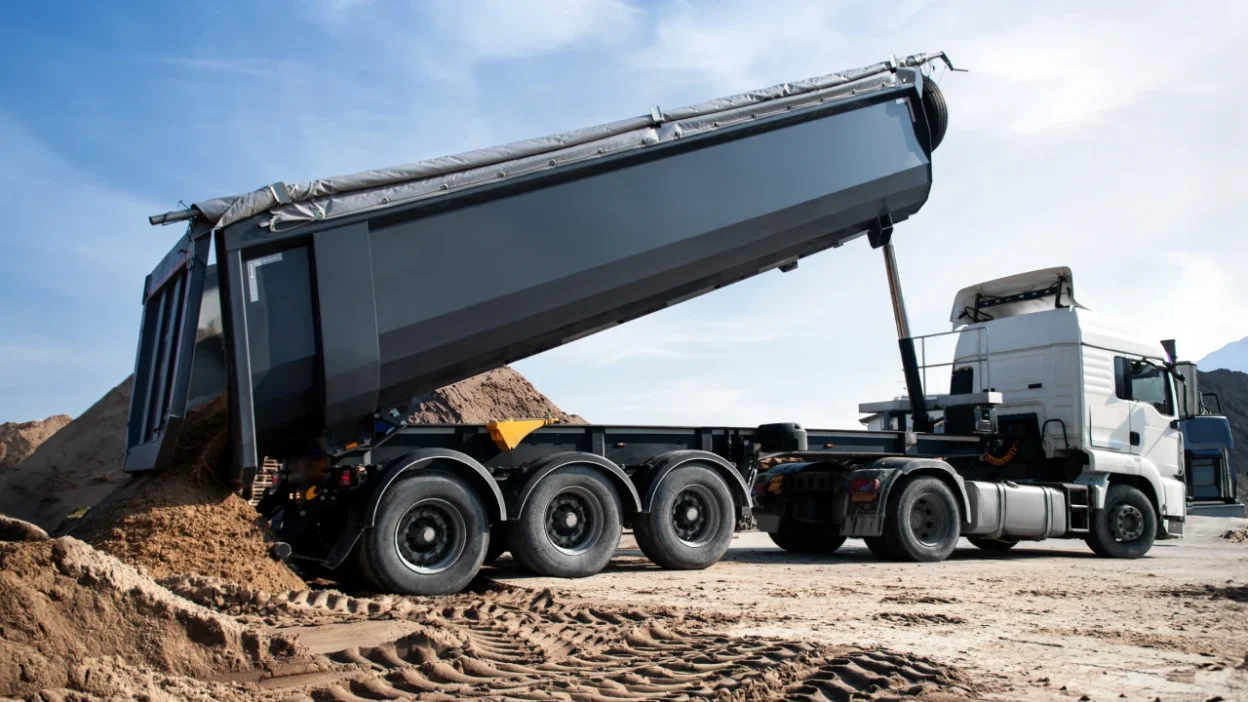
Material handling is one of the key processes in modern construction — it ensures that every load, beam, and concrete block moves efficiently and safely across the site. From cranes and conveyors to forklifts and loaders, these machines keep construction projects on schedule.
Without proper material handling construction strategies, sites face delays, increased costs, and higher accident risks. It is not just about moving dirt; it is about precise logistics. Whether you are building a residential complex or a massive bridge, the right machinery dictates the pace of progress.
At JumboBee, we connect buyers and contractors with reliable suppliers of heavy and material handling equipment worldwide, making it easier to compare prices, arrange financing, and manage shipping in one place.
What Is Material Handling in Construction?
Material handling involves the movement, storage, control, and protection of materials throughout the manufacturing, distribution, consumption, and disposal processes. In the context of a job site, it refers specifically to how you receive, store, and move resources like steel, lumber, concrete, and soil.
Successful construction material handling relies on balancing three main factors:
- Efficiency: Minimizing the distance materials travel.
- Safety: Reducing manual lifting to prevent injuries.
- Cost: Lowering operational expenses through proper machine selection.
On-site vs. Off-site Handling
Handling happens in two stages. Off-site handling involves the transport of raw materials from the manufacturer to your project location. This requires heavy haulers and logistics planning. On-site handling is the movement of those materials from the drop-off point to the specific area where they are needed for installation.
Importance for Productivity and Safety
According to recent industry data, material handling accounts for 25% of all construction injuries. Using the correct types of material handling equipment drastically reduces physical strain on workers. Furthermore, automated or mechanical handling ensures that heavy loads are moved faster than manual labor ever could.
Calculation of Downtime Cost
Imagine a site renting a crane for $1,500 per day. If poor material organization delays the crane’s operation by just 2 hours a day, you are losing valuable rental value.
- $1,500 / 8 hours = $187.50 per hour
- 2 hours wasted = $375 lost daily
- Over a 20-day project = $7,500 lost directly (not counting labor wages)
On JumboBee, you can explore hundreds of equipment listings and find verified dealers who specialize in construction handling systems.
Main Types of Material Handling Equipment
Depending on their function, material handling machines used in construction can be grouped into eight major categories. Let’s look at each one.
1. Cranes
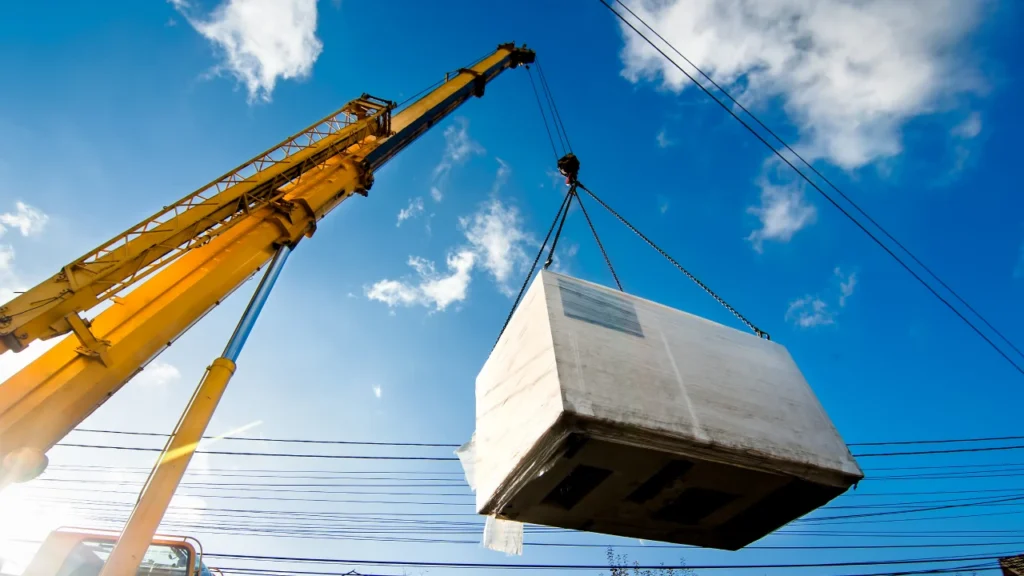
Cranes are the giants of the job site. They are essential for lifting and moving heavy loads vertically and horizontally. On high-rise projects, bridges, and industrial plant construction, cranes are non-negotiable.
Common types:
- Tower cranes: Fixed to the ground on a concrete slab. They offer the best height and lifting capacity for tall buildings.
- Mobile cranes: Mounted on crawlers or tires. They provide flexibility and can move around the site or travel between sites on public roads.
- Crawler cranes: Mounted on an undercarriage with a set of tracks (crawlers) that provide stability and mobility. They can move around a site while carrying a load, unlike most mobile cranes that must use outriggers.
Safety regulation note: Operating cranes requires strict adherence to load charts. A load chart tells the operator the crane’s lifting capacity at specific boom angles and radii. Modern cranes come equipped with Load Moment Indicators (LMI) that warn the operator if the machine approaches its tipping point.
On JumboBee: Explore cranes from trusted brands like Liebherr, Manitowoc, and XCMG.
2. Forklifts
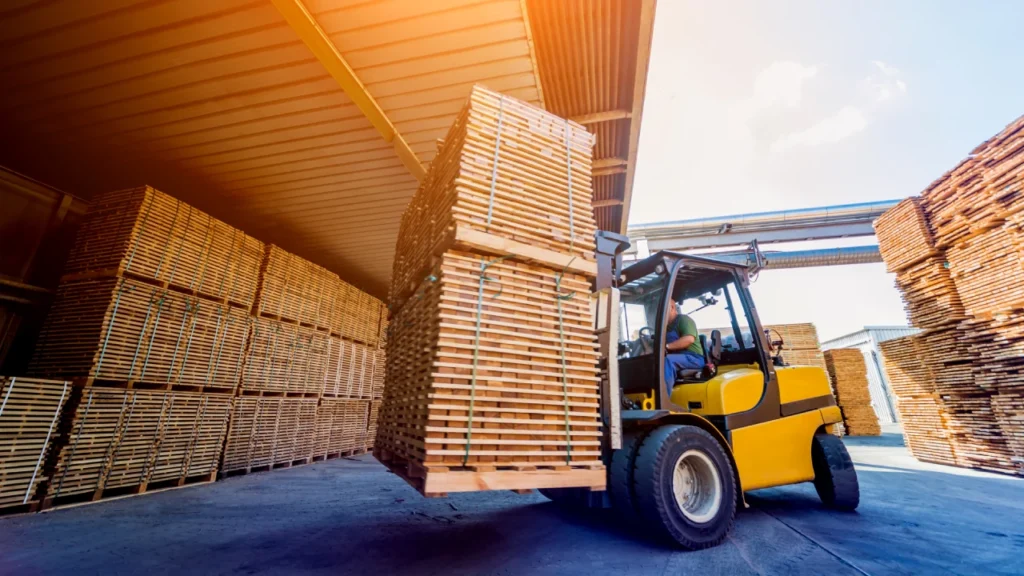
Forklifts are compact and versatile vehicles used primarily for moving palletized goods. While standard forklifts are common in warehouses, construction sites typically require more rugged versions.
Key categories:
- Rough terrain forklifts: Designed with large, pneumatic tires and higher ground clearance to navigate mud, gravel, and uneven surfaces.
- Telehandlers (telescopic handlers): These are a hybrid between a crane and a forklift. They have a boom that extends forward and upward. This allows you to place pallets of bricks or roofing material directly onto the second or third floor of a building.
Capacity Calculation Example
When using a forklift, you must understand the Load Center. If a forklift is rated for 5,000 lbs at a 24-inch load center, but your load is long and shifts the center to 36 inches, the capacity drops significantly.
- Formula: New Capacity = Rated Capacity x (Rated Load Center / New Load Center)
- Calculation: 5,000 lbs x (24 / 36) = 3,333 lbs
- Result: Lifting the original 5,000 lbs would tip the machine.
JumboBee offers both new and used forklifts with global shipping options.
3. Conveyors
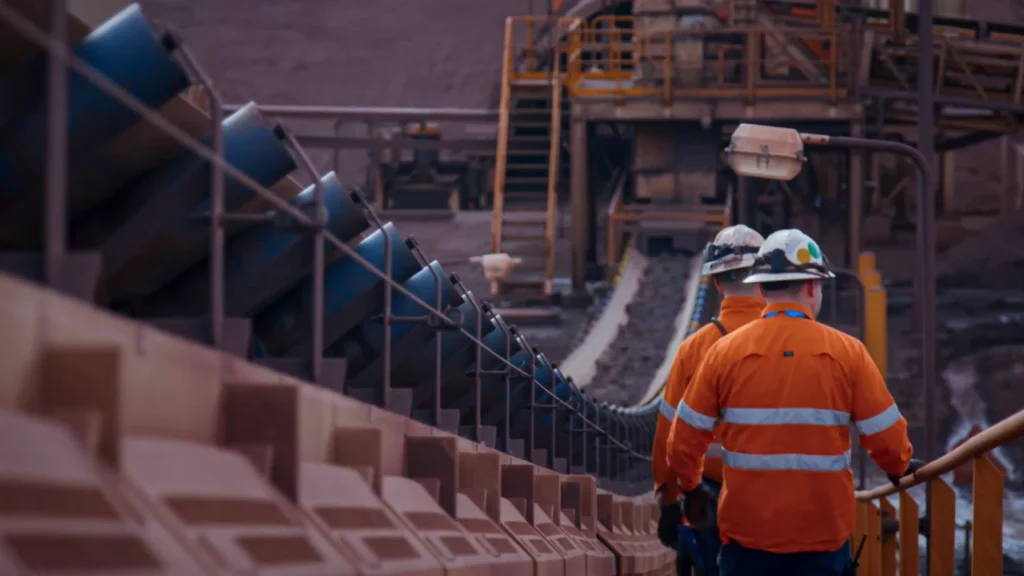
Conveyors are used for the continuous transport of bulk materials like sand, gravel, cement, or concrete. They are particularly useful when materials need to be moved over a long distance, up a steep incline, or into areas where trucks cannot access.
| Conveyor Type | Best Used For |
|---|---|
| Belt Conveyors | Moving large volumes of soil, aggregate, or demolition debris over long distances. |
| Screw Conveyors | Moving semi-solid materials like wet concrete or granular items like cement powder inside a tube. |
| Pneumatic Conveyors | Using air pressure to move fine powders (like cement or fly ash) through pipes. |
Using conveyors significantly reduces manual wheelbarrow work, which is a primary cause of worker fatigue and back injuries.
4. Hoists and Winches
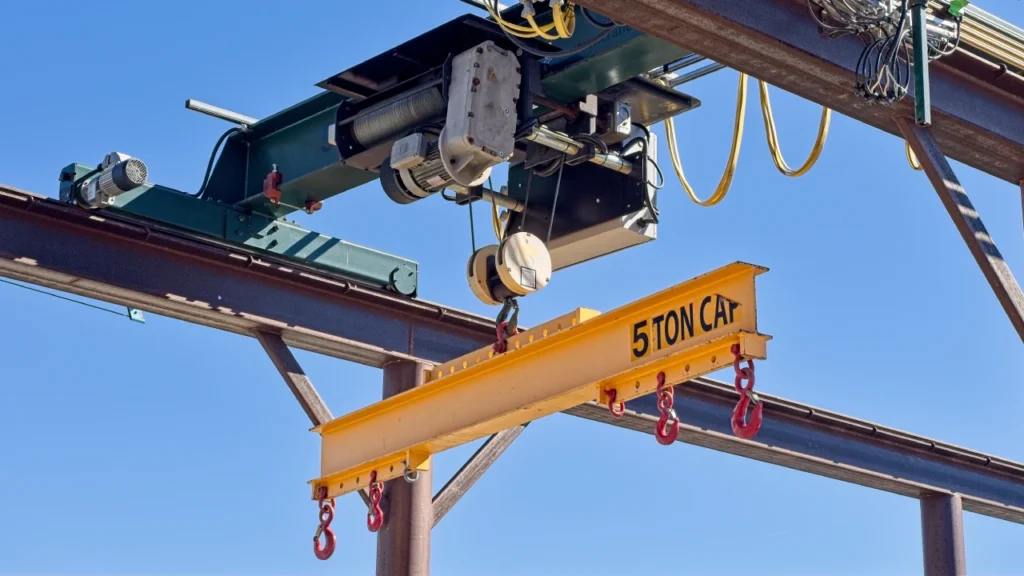
While cranes move loads horizontally and vertically, hoists are dedicated almost exclusively to vertical lifting.
- Hoists: These use a lifting medium (wire rope or chain) to lift loads. On construction sites, Material Hoists (often called buck hoists) travel vertically along the side of a building to deliver tools and materials to different floors.
- Winches: These are typically used for pulling loads horizontally, though they can be rigged for lifting. They consist of a spool and a crank (manual or powered).
Power sources:
- Electric: Common for indoor use or where power is available.
- Hydraulic: Used for heavy-duty lifting where electric power might be insufficient or unsafe.
- Diesel: Common for outdoor, standalone winches.
Reliability is key here. A hoist failure on a 40-story building halts progress on upper floors immediately.
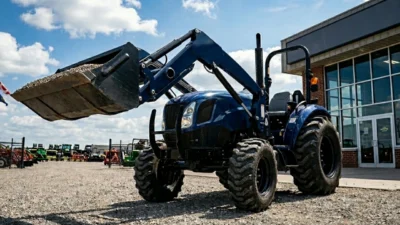
5. Loaders
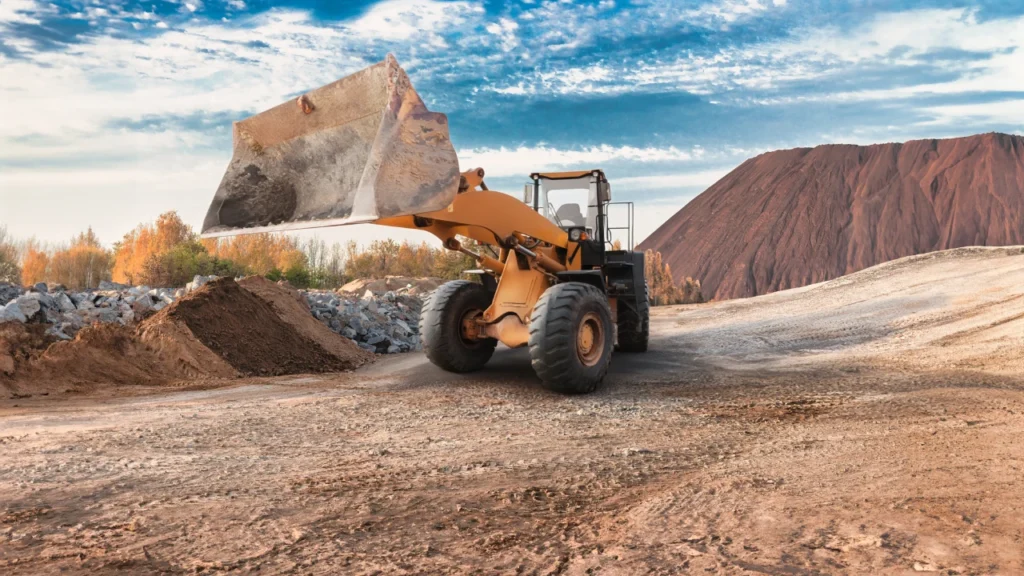
Loaders are the workhorses for moving loose construction material handling tasks. They scoop, lift, and dump materials like soil, rock, sand, and demolition debris.
Varieties
- Wheel loaders: Large, four-wheel-drive machines with a front-mounted bucket. They are fast and mobile, ideal for loading dump trucks.
- Backhoe loaders: The Swiss Army Knife of construction. Features a loader bucket on the front and a digging hoe on the back. Perfect for smaller sites.
- Skid steer loaders: Small, rigid-frame engines with lift arms. They turn by skidding (locking wheels on one side). They are incredibly agile and fit in tight spaces.
Bucket Capacity Math
If you need to move 1,000 cubic yards of soil and your loader has a 3-cubic-yard bucket:
- 1,000 / 3 = 333 trips.
- If a cycle takes 2 minutes: 333 \times 2 = 666 minutes (approx 11 hours).
- Optimization: Upgrading to a 5-yard bucket reduces this to 200 trips (6.6 hours), saving nearly half a day.
Browse loaders on JumboBee: Find models from Caterpillar, Komatsu, and Volvo ready for export.
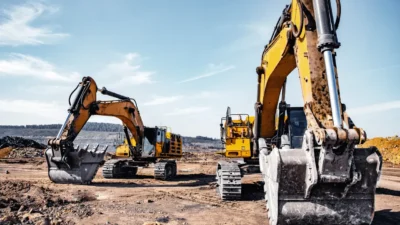
6. Excavators
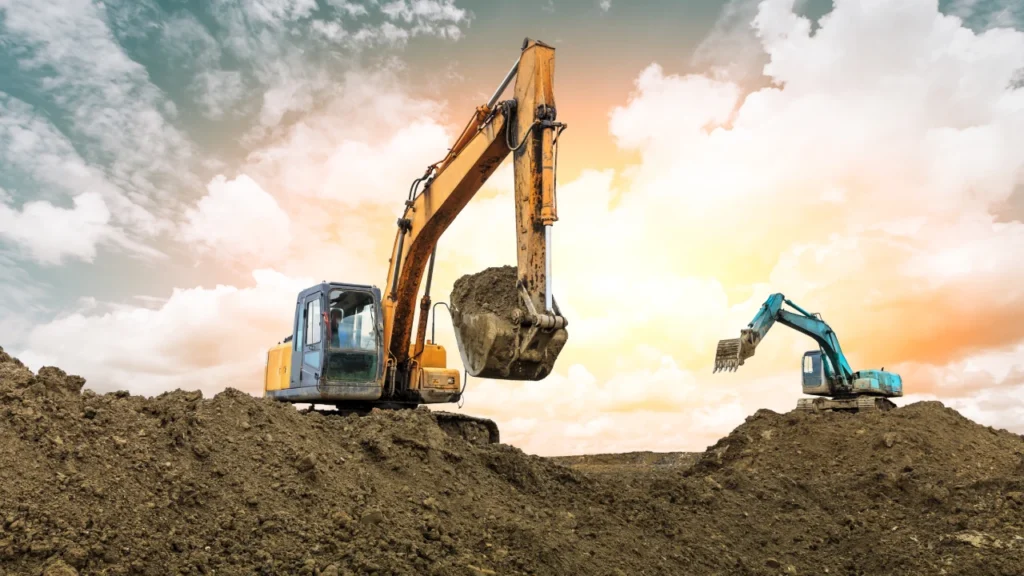
While primarily known for digging, excavators are vital types of material handling equipment. With 360-degree rotation and heavy hydraulic power, they handle materials that are too awkward or heavy for loaders.
Modern excavators are tool carriers. By swapping the bucket, they transform into specialized handlers:
- Grapples: For handling logs, pipes, or demolition scrap.
- Thumbs: Hydraulically activated clamps that press against the bucket to pick up rocks or concrete chunks.
- Magnets: For moving scrap metal and rebar.
On larger infrastructure projects, excavators serve as the primary method for placing large drainage pipes into trenches.
7. Dump Trucks
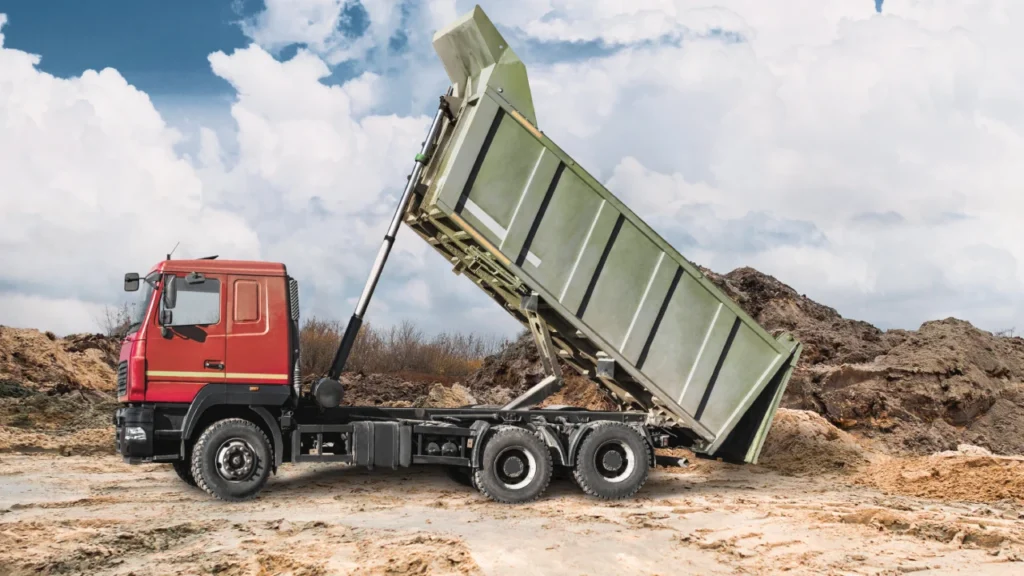
Dump trucks handle the transport phase of material handling. They move bulk materials between the source (like a quarry) and the construction site, or move waste away from the site.
Main variants are:
- Rigid dump trucks: Built for mining and massive quarries. They haul huge loads but require well-maintained roads.
- Articulated dump trucks: The cab and the dump box are connected by a pivot hinge. This allows all wheels to stay on the ground on uneven terrain. They are the standard for most rough construction sites.
- Standard dump trucks: Road-legal trucks used to bring asphalt or gravel to the site from suppliers.
Payload Management
Overloading trucks causes safety hazards and mechanical failure. Underloading wastes fuel. Modern trucks often feature onboard weighing systems to ensure every load is optimized to the maximum legal or technical limit.
Buyers can compare dump truck specs, financing options, and freight costs in one Jumbobee dashboard.
8. Storage and Handling Systems
Not all material handling equipment moves. Some of it is stationary, designed to store and organize materials until they are needed.
- Silos and hoppers: Used for storing cement, sand, or grain. They protect materials from weather and allow for gravity-fed dispensing.
- Stacking frames and racks: Essential for storing scaffolding, pipes, and lumber vertically or horizontally to save ground space.
- Rigging gear: Slings, shackles, and spreader bars. These are the interface between the lifting machine (crane) and the material.
Proper storage prevents material damage (like water-logged cement) and reduces the time workers spend searching for items.
Choosing the Right Equipment for Your Site
Selecting the correct types of material handling equipment requires analyzing your specific project needs. Buying the biggest machine isn’t always the best answer; often, agility and cost-efficiency matter more.
1. Load Type and Capacity
Analyze what you are moving. Is it palletized? Is it loose soil? Is it liquid concrete?
- Solid/palletized: Telehandlers or Forklifts.
- Loose/bulk: Loaders or Conveyors.
- Heavy/single object: Cranes.
2. Terrain and Space
A warehouse forklift will get stuck in site mud immediately.
- Rough terrain: Requires tracks or large pneumatic tires (Excavators, Crawler Cranes, ADTs).
- Tight spaces: Requires skid steers or compact excavators.
- Vertical height: Requires tower cranes or material hoists.
3. Power Source and Regulations
Emissions regulations are tightening globally.
- Tier 4 Final / EU Stage V: If you are working in North America or Europe, your diesel equipment must meet these strict emission standards.
- Electric/hybrid: For indoor work or urban centers with noise restrictions, electric mini-excavators and forklifts are becoming mandatory.
4. Budget and Total Cost of Ownership
Don’t just look at the purchase price.
- Formula: TCO = Acquisition\ Cost + (Operating\ Costs + Maintenance + Fuel) – Resale\ Value
- Advice: Buying a premium brand like Caterpillar or John Deere might cost more upfront, but their parts availability and high resale value often result in a lower TCO over 5 years compared to cheaper, unsupported brands.
Through JumboBee’s global marketplace, you can request quotes, compare machines, and arrange delivery to your project site.
Conclusion
Material handling equipment is the backbone of every construction site — enabling safe, fast, and precise work. Whether you are lifting steel beams 50 stories high or moving gravel for a driveway, the machinery you choose dictates your project’s profitability and safety record.
From the brute strength of excavators to the precise reach of telehandlers, understanding these 8 types of material handling equipment ensures you have the right tool for the job.
With JumboBee, you can explore verified listings, request financing, and arrange worldwide shipping in just a few clicks. We take the complexity out of heavy equipment procurement so you can focus on building.