


 News
News 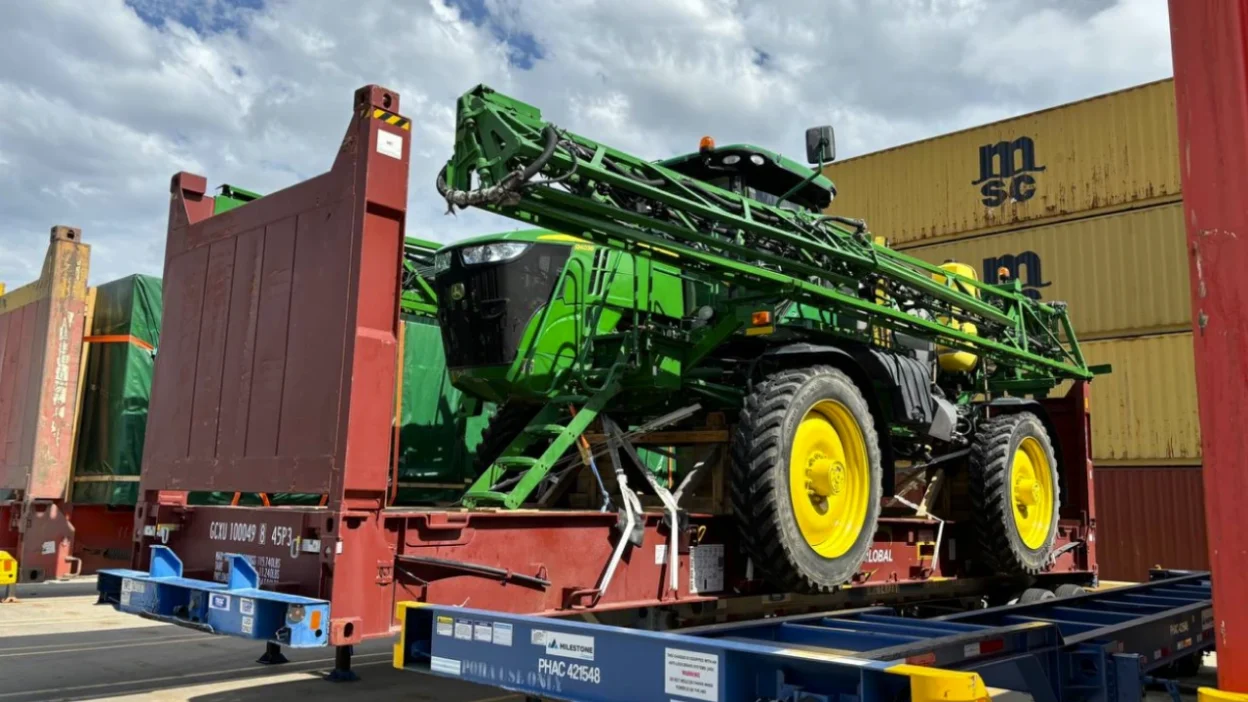
Paraguay Law No. 7565 introduces new eligibility rules for used agricultural machinery entering the country, and the most important one for buyers is age: equipment generally cannot be older than five years to qualify for import. The law, promulgated in December 2025, adds phytosanitary and risk-mitigation requirements on top of the country’s existing open import policy, and it is currently moving through the regulatory implementation stage under SENAVE, DNIT, and the Ministry of Industry and Commerce (MIC).
For buyers, this changes how equipment should be evaluated before purchase. A tractor or combine that looks like a great deal at auction can become unusable inventory if it doesn’t meet the manufacturing-year threshold or lacks the documentation customs and SENAVE will ask for. For sellers and exporters, it means every listing bound for Paraguay needs the paperwork to back up the machine’s age, condition, and origin.
This guide walks through what changed under Law No. 7565, which equipment categories are affected, how to check eligibility before you buy, and how JumboBee helps buyers find machinery that fits Paraguay’s current requirements.
What Is Paraguay Law No. 7565?
Law No. 7565 is Paraguay’s framework for phytosanitary measures and risk mitigation on used agricultural machinery, equipment, and implements entering the country. It was promulgated in December 2025 following review by Paraguay’s National Competition Commission (CONACOM) and is now in its regulatory implementation phase, meaning SENAVE, DNIT, and MIC are finalizing the specific procedures importers will follow.
The law responds to a straightforward problem: used machinery arriving from overseas can carry soil, plant material, seeds, or pests that pose a biosecurity risk to Paraguay’s agricultural sector. Rather than banning used equipment outright – Paraguay has historically kept an open import policy for farm machinery, unlike its restrictions on used vehicles – the law sets conditions under which used equipment can still enter the country safely.
The core condition buyers need to know is the age limit: used agricultural machinery is expected to be no older than five years from its manufacturing date to qualify for import. Alongside that, the law calls for origin certification, phytosanitary clearance, and a registration process for imported machinery, with SENAVE handling the phytosanitary side, DNIT overseeing customs and tax processing, and MIC providing broader industry oversight.
It’s worth being direct about one thing: because the law is still being regulated, exact inspection protocols can vary by equipment category and may continue to be refined. Buyers should treat the five-year threshold and documentation requirements below as the baseline to plan around, and confirm current procedure with a customs broker or SENAVE before finalizing a purchase.
What Agricultural Equipment Can Be Imported Into Paraguay?
Most categories of used farm equipment remain importable under Law No. 7565, provided they meet the manufacturing-year threshold and can be supported with the right documentation. The table below breaks down what buyers should check for the most commonly traded categories.
| Equipment Type | Key Eligibility Requirements | What Buyers Should Verify Before Purchase |
|---|---|---|
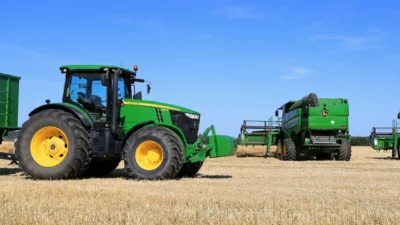
| Tractors | Manufactured within the last 5 years; technical and phytosanitary documentation required | Manufacturing year, engine hours, serial number, condition, and document availability |
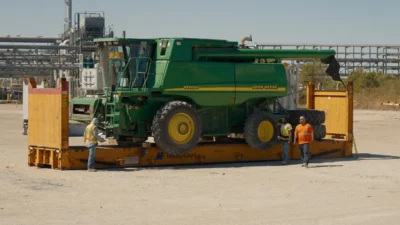
| Combine Harvesters | Manufactured within the last 5 years; cleaning and phytosanitary compliance | Service history, hidden contamination risk (chaff, seed residue), serial number, and export documentation |
| Cotton Pickers | Manufactured within the last 5 years; technical inspection and cleaning requirements | Equipment dimensions, operating condition, documentation, and pre-export preparation needs |
| Planters | Manufactured within the last 5 years; inspection and documentation required | Serial number, structural condition, year of manufacture, and seller documentation |
| Seeders | Manufactured within the last 5 years; compliance with cleaning and technical requirements | Equipment condition, original documentation, and manufacturing year |
| Sprayers | Manufactured within the last 5 years; cleaning and treatment requirements | Tank and system cleanliness, equipment condition, serial number, and required certificates |
| Fumigators | Manufactured within the last 5 years; technical and phytosanitary compliance | Treatment history, condition, documentation, and manufacturing year |
The manufacturing year is only the starting point. A machine that falls inside the five-year window can still get held up at customs if the seller can’t produce a bill of sale, title, or export certificate that confirms that year. Always ask for original documentation alongside the serial number – plate data alone isn’t always trusted without paperwork to match it.
How to Know if a Machine Is Paraguay-Eligible
Confirming eligibility before you pay is the single biggest risk-reduction step in this process. Run through this checklist on any machine you’re considering:
- Manufacturing year – confirm it falls within the five-year window, using the serial number or data plate, not just the seller’s word.
- Serial number – cross-check it against the machine’s documentation and, where possible, the manufacturer’s records.
- Engine hours – low hours can indicate light use, but verify they match service records rather than the odometer alone.
- Equipment condition – inspect for structural damage, leaks, and worn components that could complicate customs inspection.
- Service history – dealer or fleet maintenance records add credibility and can speed up phytosanitary review.
- Original documentation – title, bill of sale, and any export certificates the seller can provide.
- Manufacturer warranty – confirm if any coverage remains and whether it transfers internationally.
- Seller credibility – check reviews, transaction history, and whether the seller has exported to Paraguay before.
Complete these checks before payment, not after. Once funds move, buyers lose leverage to negotiate a price adjustment or walk away if the equipment turns out to be five years and one month too old, or if the paperwork simply doesn’t exist. A five-minute serial number lookup is far cheaper than a container that gets flagged at the port.
Buying at Auction vs Buying from a Dealer
Where you buy shapes how much documentation and history you’ll actually get, which directly affects your compliance risk under Law No. 7565. The comparison below outlines the trade-offs.
| Factor | Buying at Auction | Buying from a Dealer |
|---|---|---|
| Documentation availability | Often limited to a basic listing; title and service records may be incomplete | Typically includes title, service records, and dealer-verified condition reports |
| Equipment history | Frequently unknown or self-reported by the previous owner | Usually documented through trade-in or fleet records |
| Compliance risk | Higher – manufacturing year and condition claims are harder to verify before bidding | Lower – dealers are more likely to confirm eligibility details upfront |
| Inspection opportunities | Limited, sometimes only photos or a short preview window | Often available in person or via detailed video/photo documentation |
| Typical buyer risks | Winning a bid on equipment that’s older than represented or missing paperwork | Higher purchase price, but fewer surprises after the sale |
For international buyers, dealer inventory and vetted marketplace listings generally carry less compliance risk simply because the documentation trail is more complete. Auctions can still be a good source of eligible equipment, but only when you verify the manufacturing year and request documentation before bidding, not after you’ve won.
Common Mistakes Buyers Make
Most import problems trace back to a handful of avoidable mistakes rather than genuinely difficult judgment calls.
Buying equipment older than the legal limit is the most common one – sellers don’t always list an accurate manufacturing year, and buyers don’t always double-check it against the serial number before bidding or paying. Assuming every US-made machine is automatically eligible is a close second; origin doesn’t override the age requirement.
Ignoring documentation requirements causes delays even when the equipment itself qualifies. Purchasing before confirming eligibility – especially at auction, where bids move fast – locks buyers into machines they can’t legally bring into Paraguay. Focusing only on price leads buyers toward older, undocumented equipment that looks cheap upfront but becomes expensive once it’s stuck at customs.
Not verifying serial numbers means buyers are trusting a listing description instead of an independently checkable fact. And overlooking maintenance history matters more than it seems: a combine with no service records is harder to clear through phytosanitary inspection, since inspectors have less basis to trust the cleaning and treatment claims in the listing.
Why 2021+ Equipment Has Become More Valuable
Machinery built in 2021 or later sits comfortably inside the five-year eligibility window, and that has started to shift demand patterns in the used equipment market. Supply of qualifying machines is inherently limited – each year that passes, another model year ages out of eligibility, shrinking the eligible pool unless new inventory keeps entering the market.
That scarcity, combined with steady demand from Paraguayan buyers who need import-ready equipment now, has made 2021-and-newer tractors, combines, and implements more sought-after than older comparable models. Buyers who purchase within the eligible window also tend to see smoother customs clearance, since there’s no ambiguity about whether the machine qualifies. That translates into fewer delays and less back-and-forth with SENAVE and DNIT during processing.
There’s a resale angle too. Equipment that’s currently within the import window will still have room to run before it ages out, which supports resale value for buyers who plan to sell within Paraguay a few years down the line. None of this guarantees a specific return – market prices for used equipment move with commodity cycles and global supply just as much as with import rules – but the compliance advantage of newer equipment is straightforward and worth factoring into a purchase decision.
How to Find Paraguay-Eligible Equipment on JumboBee
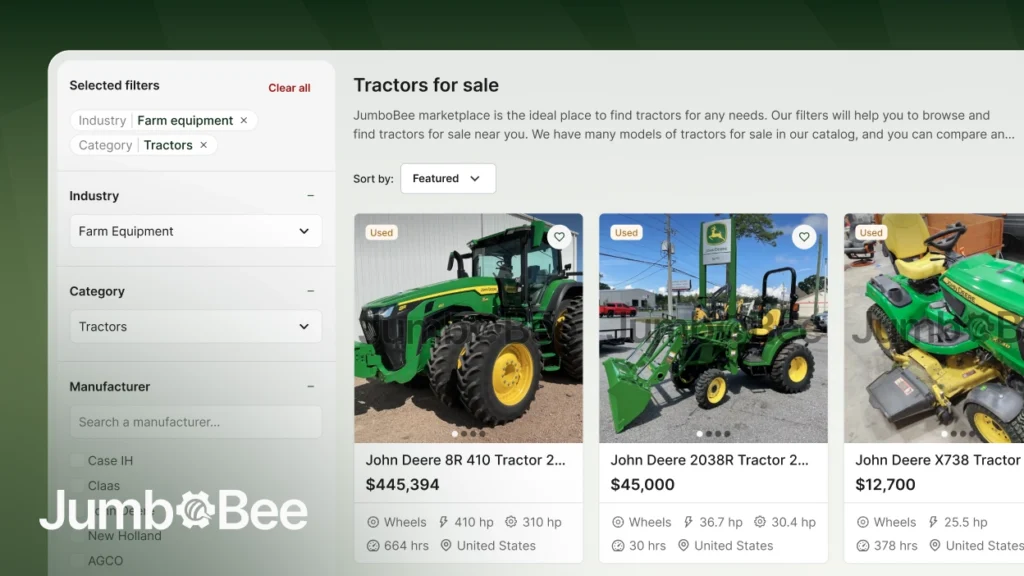
JumboBee is built to make it easy to filter down to equipment that fits Paraguay’s current import requirements, rather than scrolling through listings and checking each one manually.
Start with the manufacturing year filter to narrow results to machines built within the eligible window. From there, browse by agricultural equipment category – tractors, combine harvesters, and sprayers each have their own listing pages. Review each listing’s details closely, including photos, hours, and any service documentation the seller has uploaded, and reach out to the seller directly with questions about serial numbers or original paperwork before committing to a purchase.
Even with a manufacturing-year filter narrowing your search, always verify documentation directly with the seller before finalizing payment. The filter tells you a machine fits the age requirement; it doesn’t replace confirming that the paperwork exists to prove it at customs.
What Happens After You Buy the Equipment?
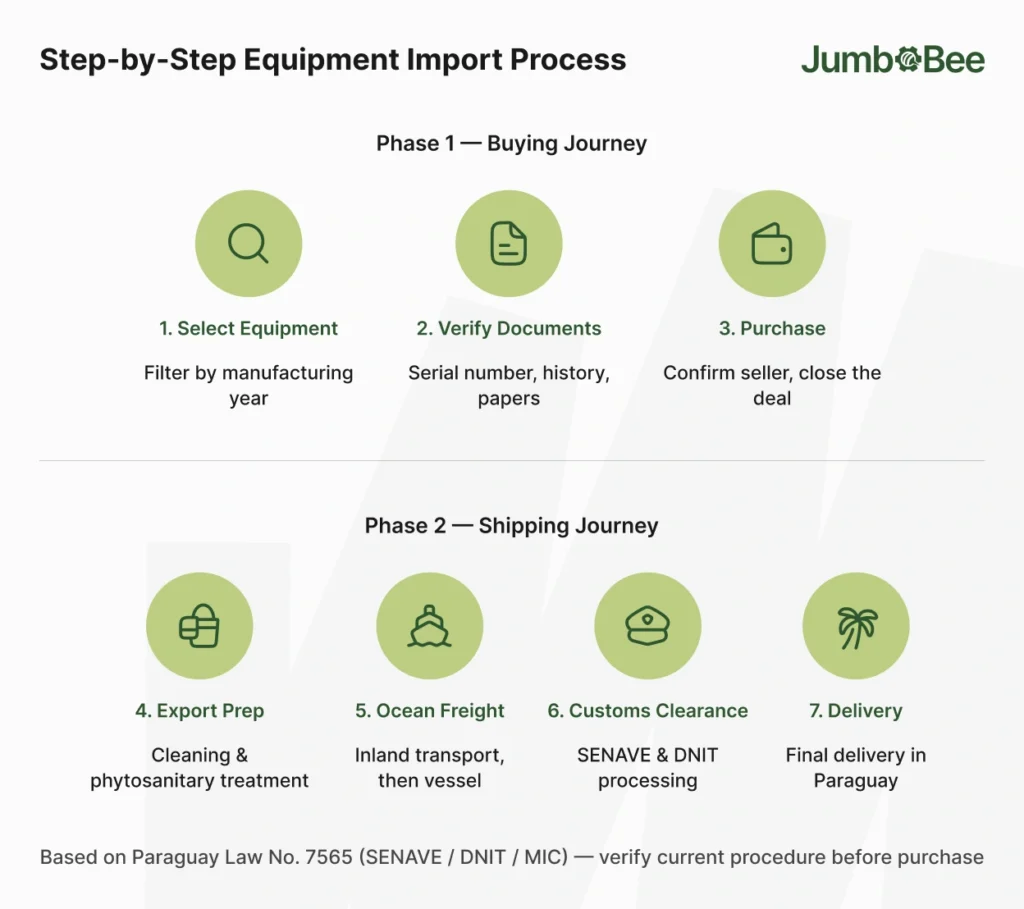
Purchasing eligible equipment is the first stage of a longer process, and buyers who plan for the export stage upfront avoid most of the delays that catch people off guard later.
Once a purchase is confirmed, the machine typically goes through an inspection to verify its condition and documentation, followed by cleaning to meet phytosanitary standards. From there, sellers or their logistics partners assemble the export paperwork, arrange inland transportation to a port, coordinate ocean freight to Paraguay, prepare customs documentation for entry, and manage final delivery to the buyer.
Each of these stages has its own timeline, and skipping or rushing any of them – particularly cleaning and documentation – is where equipment gets held up on the Paraguayan side, regardless of whether it met the age requirement in the first place.
Preparing Equipment for Export to Paraguay
Imported machinery also has to be properly prepared before it ever leaves the United States, and this preparation stage is where phytosanitary compliance is largely established.
That preparation typically includes thorough cleaning to remove soil, plant debris, and seed residue, phytosanitary treatment where required, a technical inspection to confirm condition and specifications match the listing, assembly of export documentation, and selection of the right shipping method for the equipment’s size and value.
Once buyers have selected compliant equipment, many choose JumboBee to prepare machinery for export, coordinate documentation, and manage international transportation to Paraguay. Their agricultural equipment shipping services cover the logistics side of the process – the part that begins once the buying decision is already made.
Looking for Agricultural Equipment Eligible for Import into Paraguay?
Browse tractors, combines, sprayers, planters, seeders, cotton pickers, and other agricultural equipment that meets Paraguay’s current import requirements.
It’s a Paraguayan law, promulgated in December 2025, that establishes phytosanitary measures and risk-mitigation requirements for used agricultural machinery entering the country, including a general five-year manufacturing-age limit.
Under the requirements established by Law No. 7565, machinery is generally expected to fall within a five-year manufacturing window to qualify for import. Buyers should confirm current procedure with SENAVE or a customs broker before purchasing older equipment.
Yes. Combine harvesters fall under the same manufacturing-year and phytosanitary requirements as other used agricultural machinery categories.
Tractors, combine harvesters, cotton pickers, planters, seeders, sprayers, and fumigators are among the categories covered, along with other used agricultural implements.
Cross-check the machine’s serial number against manufacturer records or documentation, rather than relying solely on the seller’s description.
Ask for the title or bill of sale, service and maintenance records, and any prior export or phytosanitary certificates the seller holds.
Yes, if it meets the manufacturing-year requirement and the necessary documentation can be obtained. Auction buyers should verify both before bidding, since documentation is often harder to secure after the sale.
Equipment that doesn’t meet the age or documentation requirements can be delayed, rejected at customs, or returned, which is why eligibility should be confirmed before purchase, not after shipping.
Yes. JumboBee’s manufacturing year filter and equipment category pages help buyers narrow their search to machinery that fits Paraguay’s current import requirements.
Marketplaces such as JumboBee specialize in preparing agricultural equipment for export and coordinating international shipping to destinations including Paraguay.


Be the first to leave a comment
There are no replies to this post yet. Share your thoughts and help start the conversation.