


 Buying
You are standing in front of two machines. One is fresh off the factory line, fully warranted, smelling like new steel and hydraulic fluid. The other has 3,200 hours on it, a few scratches, and a price tag that is 40% lower.
Which one do you buy?
If your answer was immediate, you might be leaving money on the table. The decision between new and used heavy equipment is not about preference – it is about strategy, cash flow, operational risk, and where you plan to operate.
In 2026, the global construction equipment market is estimated at over $180 billion, and used equipment transactions are widely reported to be growing faster than new sales in several segments, particularly in emerging and cross-border markets. Meanwhile, inflation, supply chain disruptions still felt from the 2020s, and tightening credit conditions mean that capital efficiency matters more than ever.
This guide breaks down every major factor: real costs, depreciation math, risk scenarios, financing, and a decision framework built for buyers who are serious about ROI – whether you are buying locally or sourcing across borders.
Real Question Is Not New or Used
That is actually the wrong starting question. The right questions are:
- How urgently do you need the machine operating?
- What is your access to spare parts and certified technicians?
- Are you planning to export or import this machine across borders?
- How does depreciation affect your balance sheet?
- What is your financing structure, and how much capital can you tie up?
Two contractors can look at the same used excavator and make completely different rational decisions. One has a service network nearby and a small fleet to expand. The other is working in a remote region with no authorized dealer within 500 kilometers. Same machine, opposite right answers.
Let us work through everything.
New vs Used Heavy Equipment: Quick Comparison Table
| Factor | New Equipment | Used Equipment |
|---|---|---|
| Purchase Price | Highest upfront cost | 20–50% lower |
| Depreciation | Rapid first 2–3 years | Mostly stabilized |
| Warranty | Full manufacturer warranty | Limited or none |
| Availability | Possible lead times (weeks to months) | Often available immediately |
| Financing | Easier via brand programs | Depends on lender, asset age |
| Export Flexibility | May carry regional brand restrictions | Often easier to move globally |
| Compliance Risk | Meets current emissions standards | Requires verification |
| Resale Value Predictability | Moderate | Higher short-term predictability |
Cost Breakdown: What You Really Pay
Initial Purchase Price
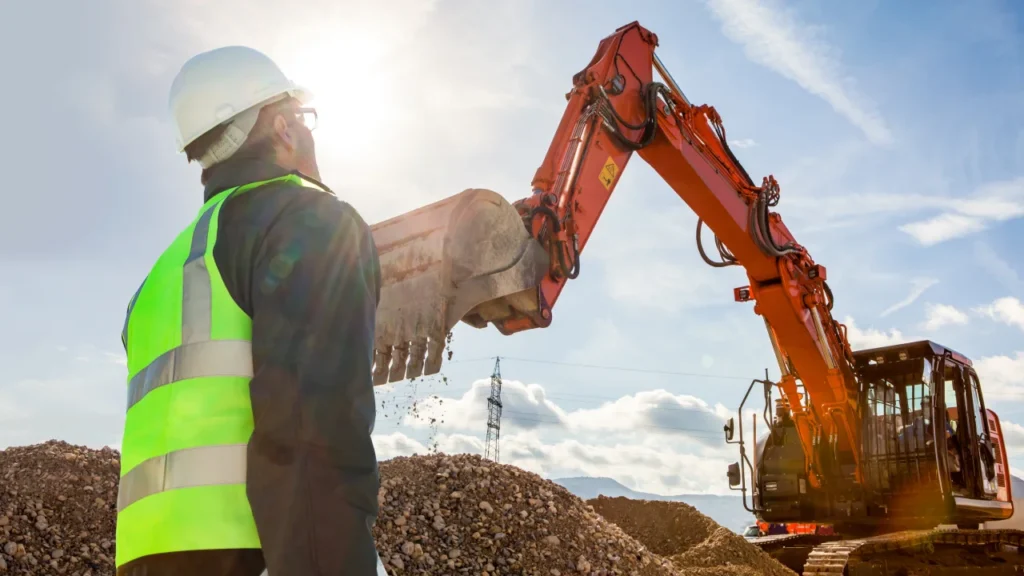
A new 20-ton excavator from a major manufacturer runs roughly $150,000–$200,000 in 2026. A comparable 2020–2022 model with 3,000 hours? You are likely looking at $85,000–$110,000 depending on condition, brand, and market. That gap – $50,000 to $90,000 – is real capital you can deploy elsewhere.
For large fleets, this multiplies fast. A contractor expanding a fleet by five machines can save $250,000–$450,000 by going used, assuming thorough inspection and decent condition.
Depreciation Curve
This is where new equipment gets expensive in ways buyers often underestimate.
Based on used-equipment market data (e.g., EquipmentWatch, Iron Solutions residual value indices), heavy construction equipment typically loses market value at roughly:
- Year 1: 20–30% of purchase value lost
- Year 2–3: Additional 6–8% per year
- Year 4–7: Depreciation slows to 5–8% per year
- Year 8+: Relatively stable residual value
Example
You buy a new wheel loader for $180,000.
- After Year 1: Worth approximately $130,000 (lost $50,000)
- After Year 3: Worth approximately $105,000 (lost $75,000)
- After Year 5: Worth approximately $85,000
Now compare: You buy a 3-year-old equivalent machine for $105,000.
- After Year 2 of your ownership (machine is now 5 years old): Still worth approximately $85,000
You paid $105,000, and two years later the machine is worth $85,000. You absorbed $20,000 in depreciation. The original buyer absorbed $95,000 over the same period. You both used the same machine utility. The math is hard to argue with.
This is exactly why used vs new heavy equipment analysis needs depreciation front and center – not as a footnote.
Maintenance and Repair Costs
New equipment: Low in Years 1–3, typically covered by warranty. Budgeting $5,000–$12,000 per year in routine maintenance is normal for mid-size machines.
Used equipment: This is where quality of inspection determines everything. A well-maintained 5-year-old excavator with complete service records might cost you $15,000–$25,000 per year in maintenance. A machine with gaps in its service history? You could face a $40,000 engine overhaul in Year 2.
We will cover inspection protocol in detail in Section 10.
Hidden Costs When Buying Internationally
This section is critical for any buyer sourcing equipment across borders – which increasingly describes a large portion of global heavy equipment purchases.
Real cost categories that often get ignored:
Ocean freight: Shipping a mid-size excavator from the United States to Egypt or Ukraine can run $4,000–$9,000 depending on routing, container type, and port conditions. Oversize or overweight equipment may require flat-rack containers at higher rates.
Import duties: Vary dramatically by country. In the U.S., the Harmonized Tariff Schedule maintained by the U.S. International Trade Commission is the authoritative source for duty rates by HS/HTS code, and U.S. Customs and Border Protection enforces and determines final duty assessments at entry. The World Customs Organization maintains the underlying international HS classification system but does not itself publish country-specific duty rates. Some countries apply 5–25% duties on used machinery.
Emissions compliance: In the U.S., the EPA’s nonroad engine emissions regulations set Tier 4 Final standards. The European Union applies EU Stage V rules under Regulation (EU) 2016/1628, which replaced the earlier Directive 97/68/EC for non-road mobile machinery. Machines that do not meet destination-country emissions standards may require costly modifications or be barred from import entirely.
Documentation: Commercial invoice, bill of lading, certificate of origin, hours verification, export compliance paperwork – missing any one of these can delay customs clearance by weeks.
Spare parts availability: Buying a brand in a region where it has no dealer network means you are sourcing parts internationally for every repair. For some machines, this adds months and thousands of dollars to downtime.
Some local dealers operate within brand-defined geographic territories and may not provide integrated international logistics support. For global buyers, this adds complexity when sourcing across borders. Working with a platform that handles these elements as part of the transaction is worth factoring into your cost comparison.
Used vs New Agricultural Equipment
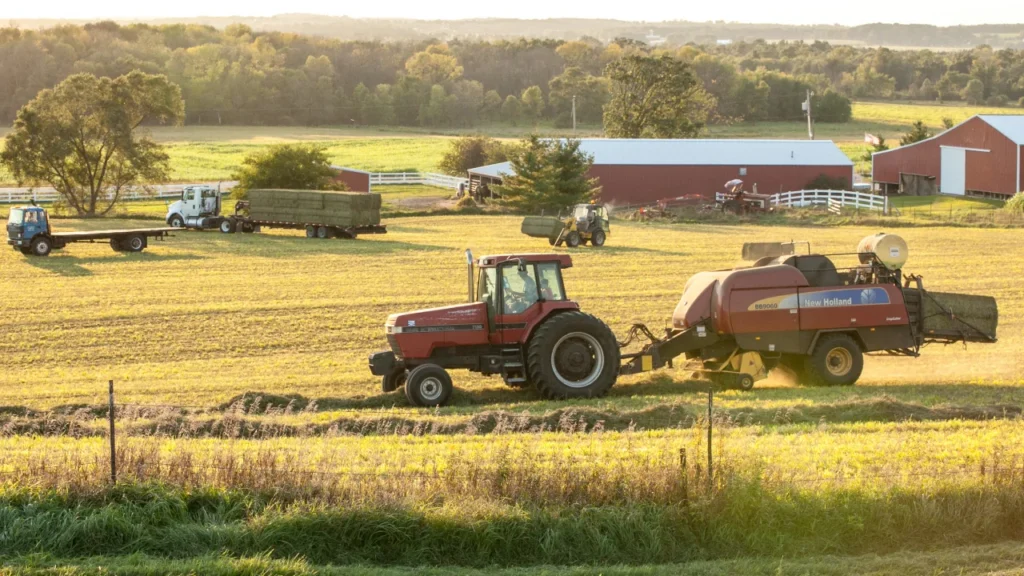
Agriculture presents a unique decision environment. Seasonal workload means many machines are active for relatively short annual periods. A combine harvester might run for 300–500 hours per year. A tractor used only for planting and grain cart work might clock 700 hours annually.
When Used Makes Sense for Farmers
Budget-limited operations expanding capacity: A farming operation adding a second harvester to cover more acres often cannot justify a $450,000 new combine when a 2019–2021 model with 800 hours is available for $280,000. The per-acre cost math changes completely.
Seasonal secondary machines: A tractor used only for hay work or cover crop seeding does not need to be new. A 2018 John Deere 8R with 1,400 hours at $180,000 does the same job as a new unit at $320,000.
Emerging market fleet expansion: Farm operations in growing regions frequently expand by adding used equipment rather than new, preserving liquidity for seed, fertilizer, and operating costs.
When New Agricultural Equipment Is Better
Precision farming technology: 2025–2026 model year equipment comes with integrated GPS automation, telematics, and AI-assisted yield monitoring that older machines simply do not have. If your operation depends on precision agriculture data, the upgrade value is real.
Government subsidy programs: Some national agricultural programs favor new equipment – certain EU CAP modernization schemes, for instance, require new machinery for grant eligibility. In the U.S., USDA Farm Service Agency programs (including Farm Storage Facility Loans) generally accept both new and used equipment, so buyers should check program-specific rules rather than assume new-only restrictions apply. These can shift the ROI math significantly.
Intensive daily use: A main harvesting combine running 800+ hours per season should probably be new or near-new. The cost of downtime during harvest season – potentially $10,000–$30,000 per day in lost productivity – makes reliability worth the premium.
The used vs new agricultural equipment decision ultimately depends on which machines are mission-critical versus supplemental. Keep your primary production equipment current. Expand support and secondary fleet with well-inspected used machines.
New vs Used Manufacturing Equipment Comparison
Manufacturing equipment decisions carry a different set of variables than field equipment. Production downtime in a factory costs money by the hour, often more predictably than in construction or agriculture.
Why Used Works Well in Manufacturing
Secondary production lines: Scaling output by adding a second line does not always require new machinery. A 2018 hydraulic press or CNC machining center in excellent condition can run at full capacity for years.
Emerging market expansion: Manufacturers setting up operations in developing markets often find that reliable used equipment – purchased at 40–50% of new cost – lets them reach breakeven faster, a critical factor in new market entry.
Startups scaling gradually: Capital preservation in early operational phases frequently points to used. A startup cannot always absorb the depreciation hit of new equipment before revenue stabilizes.
In a new vs used manufacturing equipment comparison, the key variable is tolerance for downtime. If a single machine’s failure halts an entire production line, the risk calculus shifts hard toward new.
When New Manufacturing Equipment Is Better
High-precision industries: Aerospace, medical device, and semiconductor manufacturing require tolerances that only new, calibrated equipment can guarantee. Used machines may have wear patterns that compromise output quality.
Automation-heavy production: Modern manufacturing increasingly relies on integrated automation systems. New equipment ships with native compatibility for robotic interfaces and IIoT sensors. Retrofitting older machines is possible but expensive.
Energy efficiency: Energy costs continue to rise. New industrial motors and hydraulic systems offer measurably lower energy consumption, which compounds over multi-year operation.
A thorough new vs used manufacturing equipment comparison must weigh not just purchase price but cost-per-unit-produced over a realistic operational period.
Risk Analysis: What Can Go Wrong
Risks When Buying New
Overpaying for unused capacity: A $500,000 crane that sits idle 60% of the time is destroying capital. Over-specifying for occasional demand is a common mistake.
Lead times: In 2026, certain new equipment categories still face production and delivery delays of 6–18 months depending on manufacturer and spec. If you need the machine in 90 days, new may not be an option at all.
Capital tied up: A large new equipment purchase can constrain operating liquidity. SBA lending programs (such as SBA 504 and 7(a) loans) can help domestic buyers finance equipment purchases, though availability varies by buyer profile. The U.S. Export-Import Bank, by contrast, is primarily an export-financing institution aimed at foreign buyers of U.S. goods or U.S. exporters, so it generally isn’t applicable to a typical domestic buyer’s working-capital needs.
Risks When Buying Used
Hidden mechanical issues: An engine that looks clean may have had its hour meter rolled back or its maintenance skipped. This is one of the most common fraud patterns in used equipment.
Incomplete service records: A machine without documented service history is a financial unknown. You are buying a black box.
Export compliance problems: Used equipment sold internationally must meet destination-country emissions and safety standards. Failing to verify this before purchase can result in machines stranded at port.
Reducing Risk When Buying Used Heavy Equipment
- Always require full service history documentation
- Use independent third-party inspection before payment
- Verify machine hours through engine control unit data, not just visual meter
- Check for liens or encumbrances on the title
- Confirm emissions compliance against your import country’s current standards
Financing Comparison
New equipment financing through manufacturer programs (Caterpillar Financial, John Deere Financial, Komatsu Financial) typically offers structured terms, competitive rates, and in some cases 0% promotional periods. These programs are accessible but tied to purchasing new from authorized dealers.
Used equipment financing is available through equipment lenders, regional banks, and specialized asset-based lenders. Key variables lenders evaluate: machine age, hours, brand, and buyer creditworthiness. Machines over 10–12 years old often face higher rates or lower loan-to-value ratios.
Cash flow impact example:
New excavator at $190,000 financed over 60 months at 5.5%: approximately $3,630/month.
Used excavator at $110,000 financed over 48 months at 7.5%: approximately $2,660/month.
Monthly difference: approximately $970. Over 48 months: approximately $46,500 in cash flow preserved.
For cross-border transactions, integrated financing solutions that also handle shipping, customs, and compliance reduce transaction friction and help buyers see total cost clearly before committing.
Scenario-Based Decision Framework
Scenario 1: International Buyer Expanding Fleet
A construction company in Mongolia needs three excavators to support infrastructure projects. Lead time from new manufacturers is 9 months. Budget is constrained.
Recommendation: Used, 3–5 years old, sourced from the U.S. or Europe, with verified service records and pre-purchase inspection. Prioritize brands with spare parts availability in your region.
Scenario 2: Local Contractor With Tight Budget
A mid-size U.S. contractor lands a 12-month project and needs a wheel loader immediately. Cash flow is tight but the project revenue is secured.
Recommendation: Used, with financing to preserve liquidity. Focus on a 2018–2021 model with under 4,000 hours. Budget $15,000–$20,000 per year for maintenance reserve.
Scenario 3: Large Manufacturing Facility Scaling Production
A manufacturing plant is adding a third production shift and needs two additional CNC machines and a hydraulic press. Downtime risk is high; production must be reliable from Day 1.
Recommendation: New for the precision CNC machines. Consider certified used for the hydraulic press if it is not inline with a continuous flow process.
Scenario 4: Agricultural Startup
A new farming operation in Egypt is beginning with 500 acres of grain production. Capital is limited. They need a tractor and harvesting capability.
Recommendation: Used, from a reputable U.S. source with full documentation and inspections handled before export. A 2018–2021 John Deere tractor with under 2,000 hours offers strong performance at manageable cost.
When Used Equipment Actually Delivers Higher ROI
This is the part of the new vs used heavy equipment discussion that gets overlooked.
When you buy at the bottom of the depreciation curve – typically Year 3–5 of a machine’s life – and operate it well for another 3–4 years, your ROI profile looks substantially better than new.
Why:
- Depreciation has already done its heaviest damage to the previous owner
- Your resale value after 3–4 years is more predictable and closer to your purchase price
- Lower capital outlay means lower financing cost and better cash flow throughout
- If the machine needs to be liquidated early, you face less loss
Per IFRS IAS 16 guidance, asset residual value must be reviewed regularly. Separately, buyers who purchase well-maintained used equipment near the bottom of the depreciation curve often see more predictable resale outcomes, since the asset’s value has already stabilized rather than being in a steep early decline.
This is not a fringe argument. It is the core reason why fleet managers at major rental companies consistently purchase used equipment at specific age and hour thresholds.
How to Inspect Used Heavy Equipment: Expert Checklist
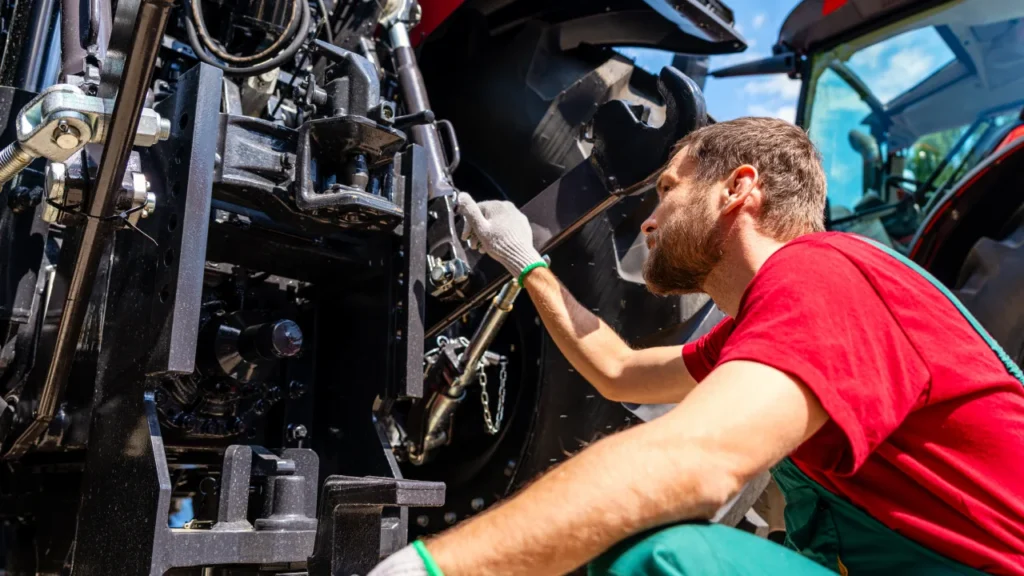
Before any purchase, conduct or commission the following:
Documentation
- Complete service history (digital or paper logs)
- Engine hours verified via ECU readout, not just dashboard display
- Title clearance and lien search
- Export documentation and emissions compliance for destination country
Mechanical Inspection
- Engine start-up behavior, oil pressure, exhaust color
- Hydraulic system – check for leaks, pressure drop, response time
- Undercarriage wear on tracked machines (rollers are typically monitored from ~50% diameter wear, bushings are often turned around 50% wear and retired near 100%; budget for full undercarriage replacement once components approach 80%+ wear, i.e., roughly 15–20% remaining life – full replacement is expensive)
- Transmission and drivetrain – listen for abnormal noise under load
Structural and Electrical
- Weld integrity on boom arms, frames, and lift components
- Electronic diagnostics scan for active and stored fault codes
- Cab condition including HVAC, controls, and safety systems
Market Context
- Verify comparable sales on market to confirm asking price is rational
- Check parts availability for this brand and model in your operating region
A professional independent inspection typically costs $500–$1,500 and can save you $20,000–$80,000 in unexpected repairs.
Final Verdict: It Depends on Your Strategy
Neither new nor used is universally superior. The right answer depends on your capital structure, urgency, operating environment, and risk tolerance.
Choose New if:
- Warranty protection is operationally critical
- You need the latest precision or automation technology
- Attractive manufacturer financing incentives are available
- Downtime from early failure would cost more than the price premium
Choose Used if:
- Lower capital exposure is a priority
- You are operating internationally and need export-ready flexibility
- You plan to resell within 3–5 years
- You have a reliable inspection and maintenance infrastructure
- You are expanding a fleet where some redundancy softens downtime risk
In a used vs new agricultural equipment context, the split often follows: new for primary machines, used for fleet expansion. In a new vs used manufacturing equipment comparison, it follows: new for precision-critical lines, used for capacity scaling.
Find Your Next Machine With Confidence
Instead of choosing blindly between options, the smarter approach is to compare verified listings, understand total landed cost – including shipping, compliance, and duties – and have financing options available in one place.
JumboBee is a global marketplace for heavy equipment with verified sellers, optional pre-purchase inspections, integrated shipping and export compliance support, and financing access. Whether you are sourcing a used tractor in the United States for delivery to Egypt, or a construction machine for a project in Eastern Europe, the platform is built to handle cross-border transactions without the usual complexity.
Explore available new and used equipment filtered by region, budget, machine type, and hours – and get full visibility on cost before you commit.



Be the first to leave a comment
There are no replies to this post yet. Share your thoughts and help start the conversation.