


 Trends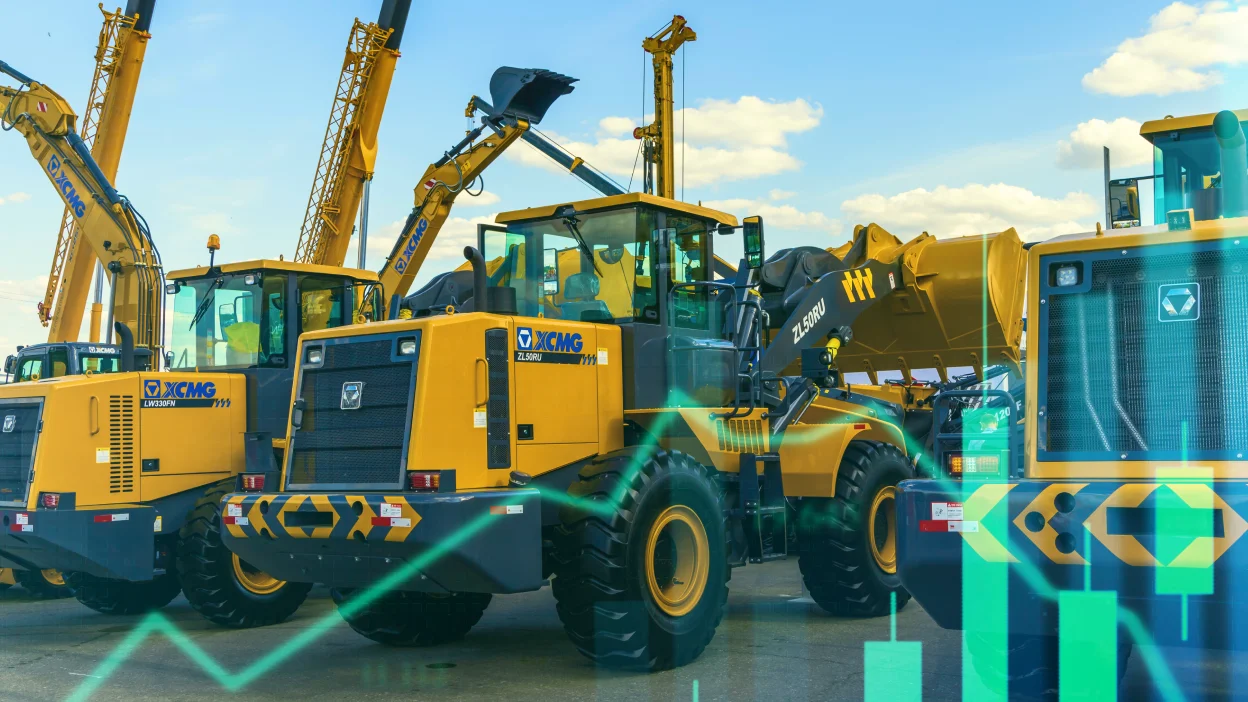
The heavy equipment industry, spanning earthmoving, lifting, transport, agricultural machines, and more, serves as a bellwether for infrastructure, construction, mining, and resource development activity. In 2025, the pricing dynamics within the heavy equipment industry trends showed signs of stabilization, softening, and selected pockets of pressure.
After a period of steep inflation in 2022–2024, many markets are transitioning from volatility into more balanced or even corrective phases. Understanding how new and used equipment prices are evolving, and what forces lie behind those movements, is critical for equipment buyers, fleet managers, resellers, and OEMs.
Market Overview & Recent Price Trends

1. Overall Market Size and Growth Outlook
To anchor our analysis, it’s useful to review the broader structural growth trajectory in heavy and construction equipment:
- According to The Business Research Company, the heavy construction equipment market is projected to grow from US$204.24 billion in 2024 to US$215.46 billion in 2025.
- In the construction equipment domain more broadly, a “Construction Equipment Strategic Industry Report 2025” values the global market at US$183.6 billion in 2024 and projects growth to US$239.5 billion by 2030 (CAGR ~4.5%)
- Some alternative forecasts suggest a more aggressive trajectory: Precision Business Insights estimates the 2024 market was US$224.5 billion and expects a rise toward US$394.9 billion by 2030 (CAGR ~8.4%)
- The aftermarket parts & services sector is also growing robustly: from US$26.87 billion in 2024 to about US$28.53 billion in 2025 (6.2% CAGR)
These data suggest a moderately expanding base demand trajectory, with room for cyclical variation in equipment acquisition and price movement.
2. Pricing Trends for New Heavy Equipment
After years of upward pressure, the new-equipment segment in 2025 exhibited signs of price moderating, relative stability, and selective softening:
- In 2024, new equipment prices saw steep rises across many classes (for example, some tractors rising by ~27%).
- For 2025, the escalation in new-equipment pricing appeared more moderate: for instance, tractor pricing is up ~16% year-over-year (versus the sharper jump in 2024)
- However, for other equipment types, declines are emerging: excavator prices, in some markets, are down ~18–19% relative to early 2024 levels.
- Some OEMs and dealers are rolling out incentives (free delivery, bundled maintenance, extended warranties) to maintain volume and absorb margin pressure.
- In Q2 2025, U.S. construction equipment pricing was down ~1% quarterly according to combined Ritchie Bros. and Rouse insights, while transportation-oriented heavy equipment remained flat quarter-on-quarter.
Thus, new-equipment pricing in 2025 largely reflected a softening from earlier runaway inflation, with pockets of downward pressure in the most oversupplied or overbought segments.
3. Pricing Trends for Used Equipment
Because used or resale units often respond more quickly to demand swings and financing pressures, they provide a useful barometer of market stress.
Key trends in 2025 included:
- In the third quarter of 2025, used equipment resale prices in the U.S. were down ~7.27% year-on-year, with auction prices down ~17.13% YoY.
- More granular U.S. data show that used heavy-duty construction equipment asking values declined 3.46% YoY in June 2025; M/M decline was 0.69%.
- Auction values in parallel were more stable – down 0.63% month-over-month, but up slightly 0.1% year-over-year.
- Inventory levels in certain used segments (e.g., wheel loaders) are trending sideways or modestly up, which can exert downward pressure on pricing.
- The pricing declines in used markets are moderate and measured, not a collapse, reflecting a rebalancing between supply and demand, and the impact of financing conditions and buyer caution.
In the composite, the used-equipment market is cooling from the overheated conditions of prior years, but not collapsing. The spread between asking and auction values (often called the “EVI spread”) is relevant, and in some segments remains wide, indicating liquidity/bidding stress.
4. Segment and Equipment-Class Variability
Not all heavy equipment segments move in lockstep. Some illustrative observations:
Thus, macro-level trends must be tempered by equipment-class and use-case dynamics.
Influencing Factors & Regional Dynamics
To understand why prices are behaving as they are, we must trace through the major influencing forces and then examine regional variation.
1. Macroeconomic & Financial Conditions
Interest Rates and Cost of Capital
Many heavy equipment acquisitions are financed; thus, interest rates influence affordability and buyer willingness. In 2025, as central banks considered rate cuts or loosening, financing became more favorable, supporting demand – and potentially lifting prices, particularly at the margin.
Conversely, periods of interest rate rigidity or tightening depressed demand and eroded pricing resilience.
Inflation and Input Costs
Steel, aluminum, rare earths, copper, hydraulic materials, and electronic components remained subject to volatility. Tariffs or supply disruptions in these inputs ripple into OEM cost bases and price setting.
As an example, Caterpillar has flagged up to a US$1.5 billion hit in tariff-related cost exposure in 2025.
Where OEMs struggle to absorb input cost inflation via productivity improvements, new-equipment price adjustments may resume.
Exchange Rates, Imports & Tariffs
Many machines or components (engines, electronics, hydraulics) are globally sourced. Currency depreciation (for equipment importers) or tariff shifts can materially impact landed cost.
Trade policy uncertainty in 2025 added a layer of risk, particularly for regions reliant on imported machines or parts.
Capital and Infrastructure Spending
Government-backed infrastructure investment remained a critical underpinning of heavy-equipment demand. Stimulus, public works programs, or national development pushes can buoy demand and pricing.
Conversely, fiscal tightening or project delays may soften demand unexpectedly.
2. Supply Chain, Production, and Logistics
Component Constraints & Lead Times
Over the past few years, supply chain disruptions – especially in semiconductors, hydraulic parts, and precision components – have constrained OEM throughput and constrained new-unit deliveries.
In 2025, while some bottlenecks were easing, certain high-complexity components still faced long lead times, which created scarcity premiums.
OEMs were responding with inventory buffers, dual sourcing, and regional manufacturing localization strategies.
Logistics, Shipping & Freight Costs
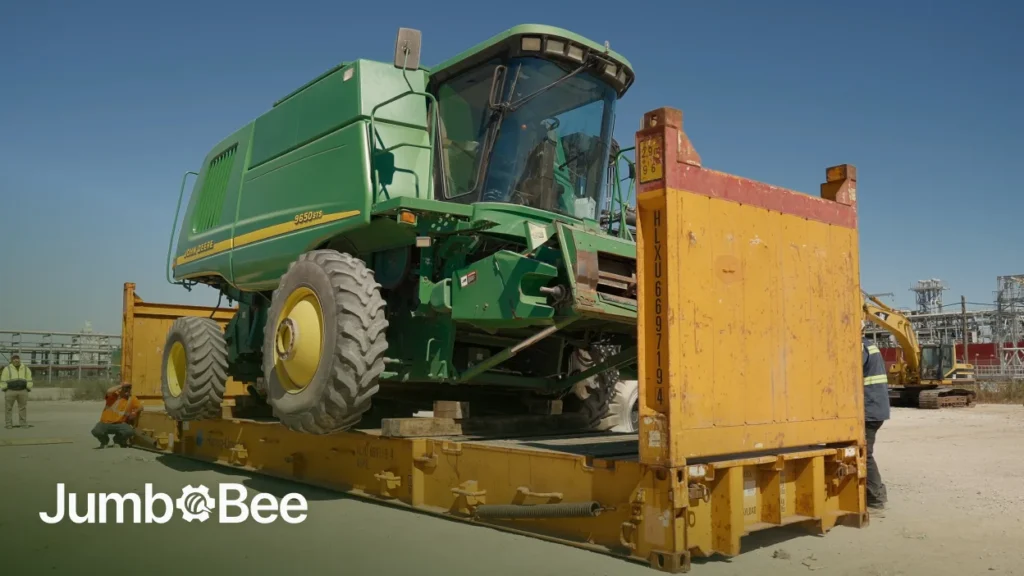
Heavy equipment is bulky and costly to ship. Elevated freight, port, and overland logistics costs can add materially to the final delivered cost, especially in remote or difficult logistics markets. Fuel price volatility and container/ship capacity constraints remain risk levers. Delays in transport can compound inventory and supply mismatches.
Dealer Networks & Distribution Constraints
Strong OEM-to-dealer relationships play a role in how much price hedging or buffer is embedded. Dealers may absorb some margin variation or maintain promotions to move stock in competitive environments. Independent and secondary-tier dealers may be more agile in pricing, which contributes to competitive dynamics, especially for used equipment.
3. Technological Advancements and Emissions / Regulatory Shifts
Electrification, Hybridization & Technology Premiums
More OEMs are introducing hybrid, electric, and low-emissions versions of heavy equipment. These newer variants often carry price premiums, which affect pricing dynamics for both new and legacy/diesel units. The pace of adoption is uneven; some buyers are early adopters in high-regulation markets, while others remain on conventional diesel platforms. As the technology matures, cost declines (battery, control modules) may compress the premium.
Telematics, Predictive Maintenance & Digital Value Add
Equipment with advanced telematics, connectivity, remote diagnostics, and predictive maintenance features may command a premium or more stable residual value. Buyers increasingly value the total cost of ownership (TCO) over sticker price, which can smooth pricing differences.
Regulatory / Emissions & Homologation Costs
Stricter emissions standards (e.g., Tier 5, Stage V, etc.) require engineering and aftertreatment systems, raising OEM cost bases. Compliance cost burdens may push OEMs to pass through more costs to buyers, especially in regulated markets.
4. Demand-side and Behavioral Dynamics
Infrastructure & Construction Demand
Public and private sector infrastructure spending (roads, rail, utilities, energy) continues to drive heavy equipment demand. In many regions, stimulus or recovery programs generate demand surges for earthmoving, cranes, transport, and mining equipment.
Mining, Energy & Commodities Trends
Fluctuations in commodity prices (oil, copper, minerals) feed into mining capital investment cycles and thus equipment ordering and pricing. For instance, disruptions to copper supply (e.g., the Grasberg mine accident) can feed into more intense mining activity in other regions, influencing demand. (Note: recent disruptions driving copper price tightening).
Replacement Cycles & Deferred Spending
Many heavy equipment users deferred purchases during volatile years; 2025 have had a catch-up demand, which reflated pricing in certain classes. However, overly aggressive replacement cycles risk flooding the used-equipment market and depressing residual values.
Buyer Caution and Cash Flow Constraints
Some project sponsors and contractors operated under tighter margins and higher capital constraints in 2025, slowing procurement cycles. Buyer conservatism in uncertain macro conditions can suppress pricing, especially for marginal new sales.
Fleet Utilization & Rental Alternatives
Rental or leasing alternatives can act as a cushion: when direct purchase becomes too costly or risky, firms may shift to renting and thereby moderate demand for new equipment. Rental fleets may also influence resale supply as older rental units are cycled out.
Regional & Country-Level Variations

While many forces are global, region-specific dynamics modulate pricing trends. Below, we compare several major geographies.
North America (U.S. & Canada)
U.S. auction & resale data in Q2 2025 show that construction equipment pricing was down ~1% QoQ, while transportation-oriented heavy equipment was relatively flat.
Canada saw contrasting behavior: construction equipment pricing increased ~6% QoQ in Q2, though transport gear declined ~9%.
OEMs such as Caterpillar are signaling weaker demand in North America caused by elevated interest rates and project slowdowns – Caterpillar warned of material margin exposure due to tariffs.
The U.S. dealer and auction markets are often the leading indicator for global heavy equipment pricing movements.
Europe & EMEA
Europe’s market is more sensitive to emissions regulation, supply chain constraints (e.g., sourcing from Asia), and energy/commodity costs.
Volatility in raw material (e.g., steel, aluminum) pricing due to energy prices can intrude on European OEM margins.
Some European manufacturers (e.g., Volvo) expect flat or soft markets ahead, given macro uncertainty.
China & Asia-Pacific
China remains a major hub for manufacturing and supply of heavy equipment and parts; currency shifts, export policy, and domestic demand trends strongly influence regional pricing.
In India, new policy initiatives are underway to promote local manufacturing and reduce import dependence on China/South Korea, which may influence future price dynamics.
For Southeast Asia, including Thailand, Malaysia, and Indonesia, demand is heavily infrastructure-driven; import duties, logistics costs, and dealer margins can substantially inflate delivered prices.
Latin America & South America
Currency volatility, import tariffs, logistic infrastructure challenges, and political cycles strongly influence delivered heavy equipment pricing.
In many Latin American markets, used equipment imports from North America or Asia remain important, and residual value dynamics feed back into local pricing.
Africa & Middle East
Mining demand in Africa (e.g., for minerals) helps sustain demand for heavy earthmoving / mining gear. However, infrastructure constraints, logistics costs, and limited financing can dampen new-equipment pricing power in many countries. Political risk, import licensing, and taxation often weigh heavily on equipment cost structures.
Given these regional nuances, global average trends must be interpreted carefully in local contexts.
Forecasts, Risks & Strategic Implications
1. Forecasts & Projections for 2026
Based on the trends and drivers assessed above, we can outline plausible trajectories with associated scenarios.
Base Case: Moderate Softening / Stabilization
- New-equipment prices in many mature markets will remain flat to slightly positive (0–3% growth), with selective downward pressure in oversupplied segments.
- Used-equipment prices may decline more noticeably (e.g., 3% to –7% YoY), particularly in segments with rising inventory or buyer hesitation.
- Technological or emissions-driven premium segments (e.g., electrified, telematics-rich units) may see mild appreciation or better hold.
- The aftermarket/parts sector will continue steady growth (6–7% range), reflecting aging fleets and maintenance focus.
- Auction values may underperform wholesale/resale asking values, increasing spread/liquidity discount risk.
Upside Scenario: Renewed Demand & Tight Supply
If interest rates decline more aggressively, financing loosens, and infrastructure funding expands, demand rebound may push upward pressure on new-equipment pricing (3–6% growth). Supply-chain constraints or component shortages (e.g., chips, rare earths) could pinch delivery capacity, creating scarcity premiums. In that scenario, used-equipment pricing decline may flatten or even reverse in the most popular classes.
Downside Scenario: Macroe Shock or Demand Pullback
If global recession risk materializes, or infrastructure budgets are cut, new-equipment demand may slump, and prices could decline (–3% to –8% or more) in vulnerable segments. Used-equipment markets could see steeper declines (–8% to –12%) as liquidity squeezes and buyers defer purchases. Equipment resale spreads could widen, leading to distressed-sale pricing in weaker geographies.
2. Key Risks and Uncertainties
Several key risks could influence the heavy equipment market in the near term. Central bank policy and interest rate trajectories remain a critical wild card, potentially affecting financing costs and buyer confidence. Volatility in raw material and component costs – driven by commodity shocks or supply disruptions, such as metals or semiconductor shortages – could reignite price instability.
Sudden shifts in tariff and trade policies may distort local pricing, while broader geopolitical tensions, pandemics, or supply-chain disruptions remain latent risk factors. Rapid adoption of electrification or automation may accelerate fleet technological obsolescence, reducing the value of legacy assets. Credit and liquidity stress among contractors could slow demand if clients face capital constraints or project cancellations. Finally, over-supply in the used equipment market, caused by aggressive fleet disposals, may depress resale values and residual pricing.
3. Strategic Implications for Stakeholders
Buyers / Contractors
In 2026, the heavy equipment market may hit a “sweet spot” for buyers, as price moderation follows a period of steep inflation and supply constraints, giving purchasers increased leverage. Buyers should prioritize equipment classes where pricing is trending downward or remaining stable, such as select earthmoving machinery and forklifts.
Adding high-telematics or electrified units can offer long-term benefits, but it’s important to balance the premium cost against potential adoption risks. Taking advantage of financing flexibility is also key, negotiating favorable terms early can hedge against potential interest rate increases.
Additionally, monitoring dealer incentives, including warranty bundles and trade-in support, can offset some of the purchase cost. Finally, exploring lightly used or off-lease equipment opportunities while prices remain soft can provide strategic value and cost savings.
Sellers / OEMs / Dealers
Margin pressure is expected to intensify, making selective pricing discipline essential for maintaining profitability. Emphasizing value-added features such as connectivity, service packages, and extended warranties can help differentiate products and justify pricing. Careful inventory management is crucial, avoiding overproduction in weaker segments, while localizing sourcing and maintaining supply chain flexibility can buffer against input cost shocks.
Expanding aftermarket, parts, and service revenue streams provides a reliable hedge against cyclical fluctuations. Additionally, close monitoring of resale markets is important, as trade-in volumes and residual value exposure continue to grow.
Investors and Financial Stakeholders
Used-equipment residual value risk deserves close scrutiny, particularly for leasing and rental firms that carry significant asset exposure. Monitoring the EVI spread, comparing asking prices to auction results, can serve as an early warning indicator of liquidity stress in the market.
At the same time, regions benefiting from policy tailwinds, such as infrastructure stimulus or reduced import duties, may present asymmetric return opportunities, offering strategic advantages for buyers and investors who can position themselves effectively.
4. Summary Forecast Table
| Metric / Segment | Expected 2026 Behavior | Key Drivers / Comments |
|---|---|---|
| New-equipment prices (global average) | Flat to modest + (0–3%) | Balanced supply, tempered demand, and input cost pass-through limited |
| Used / resale equipment prices | Moderate decline (–3% to –7%) | Buyer caution, inventory pressure, financing drag |
| Auction prices | Slight underperformance vs resale | Liquidity discount, bid shading |
| Segment outperformance | Electrified / telematics-rich units hold relatively better | Premium/differentiation value |
| Aftermarket/parts | Continued growth (6–7%) | Aging fleets, maintenance demand, retrofit opportunities |
| Regional divergence | High in constrained markets, soft in overstocked regions | Local demand, trade policy, and financing access |
Conclusion
The heavy equipment market in 2025 entered a transitional phase: having weathered years of sharp inflation and supply disruption, many segments now face a period of price moderation, selective softening, and more competitive dynamics.
New-equipment prices will likely see only modest gains (if any) in many mature markets, while used-equipment pricing is under more pressure, especially where inventory is rising or buyer sentiment is cautious. Nonetheless, segments with technology premiums or favorable regulatory tailwinds may buck the trend.
The interplay of interest rates, input costs, trade policy, and infrastructure funding will remain central to pricing outcomes. Regional nuances will matter greatly – what holds in North America may not apply in Southeast Asia or Africa.
For buyers, 2026 may offer opportunistic acquisition windows and better negotiating leverage. For OEMs and dealers, margin discipline, inventory agility, and aftermarket strength are imperative. For investors, residual-value risk and liquidity spread dynamics deserve attention.





Be the first to leave a comment
There are no replies to this post yet. Share your thoughts and help start the conversation.